
Reviewed · COOKING CLASSES
Marrakech: Traditional Moroccan Cooking Class & Market Visit
The best part of this Marrakech cooking class begins before you reach the kitchen. You walk through a local souk, choose fresh produce and other ingredients with your guides, then carry your shopping into a traditional riad in the Medina. Kawtar and Khmisa lead the session with local women who know Moroccan home cooking and catering.
I like two things right away: you learn the proper Moroccan mint tea ritual, not simply how to steep mint, and you take part in nearly every step of the meal. The food is plentiful, the recipes are sent afterward, and the $40 price includes the market visit, ingredients, meal, tea, and instruction. The main drawback is that this is a shared class, with groups of up to 12, and the meeting point can be hard to pinpoint unless you confirm the exact entrance in advance.
Key points to know before booking
- The market visit comes first: Shop for fresh ingredients in a less tourist-focused part of the souk.
- You cook a full Moroccan meal: Expect three to six dishes, often including salads, tagines, and milk pastilla.
- Mint tea gets proper attention: Learn the pouring and preparation ritual from local hosts.
- Local women lead the class: Kawtar, Khmisa, and their family cooking team create a warm, hands-on setting.
- The food is included: You eat the meal you prepare, with lunch or dinner depending on the session.
- Recipes come afterward: Electronic recipes make the dishes practical to repeat at home.
Starting in the souk with a shopping basket
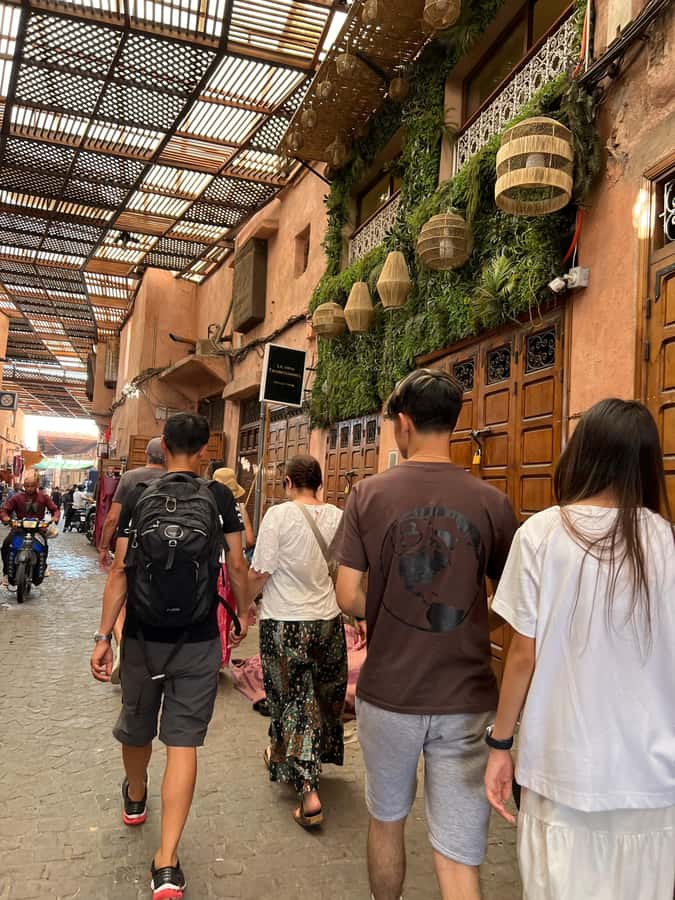
This experience treats the market as part of the lesson, not as a quick photo stop. After discussing food allergies and restrictions, your guide takes you into a local food market to select the ingredients for the meal.
That small detail matters. Moroccan cooking depends heavily on fresh vegetables, herbs, spices, preserved ingredients, and careful combinations. Seeing the raw ingredients before they reach the kitchen helps you understand the food in a way a standard restaurant meal cannot.
You may help choose vegetables, chicken, spices, and other products needed for the day’s recipes. The market walk is described as being away from the most tourist-focused side of Marrakech, giving you a more everyday look at food shopping in the Medina.
Keep your shoes comfortable. The class includes walking through the souk, and the surfaces in old Medina streets can be uneven. The meeting place also deserves attention: the general location may be obvious, but a large mosque or landmark can still have several possible entrances. Confirm the exact meeting point, especially the specific front entrance, before you set out.
More Cooking Classes in Marrakech
- Marrakech: Moroccan Cooking Class with Pickup
★ 4.6 · 1,862 reviews - Marrakesh: Moroccan Dishes Cooking Class with a Local Chef
★ 5.0 · 1,615 reviews - Moroccan Cooking Class & Marrakech Market Visit with Chef Khmisa
★ 5.0 · 1,504 reviews
Entering Khmisa’s traditional riad
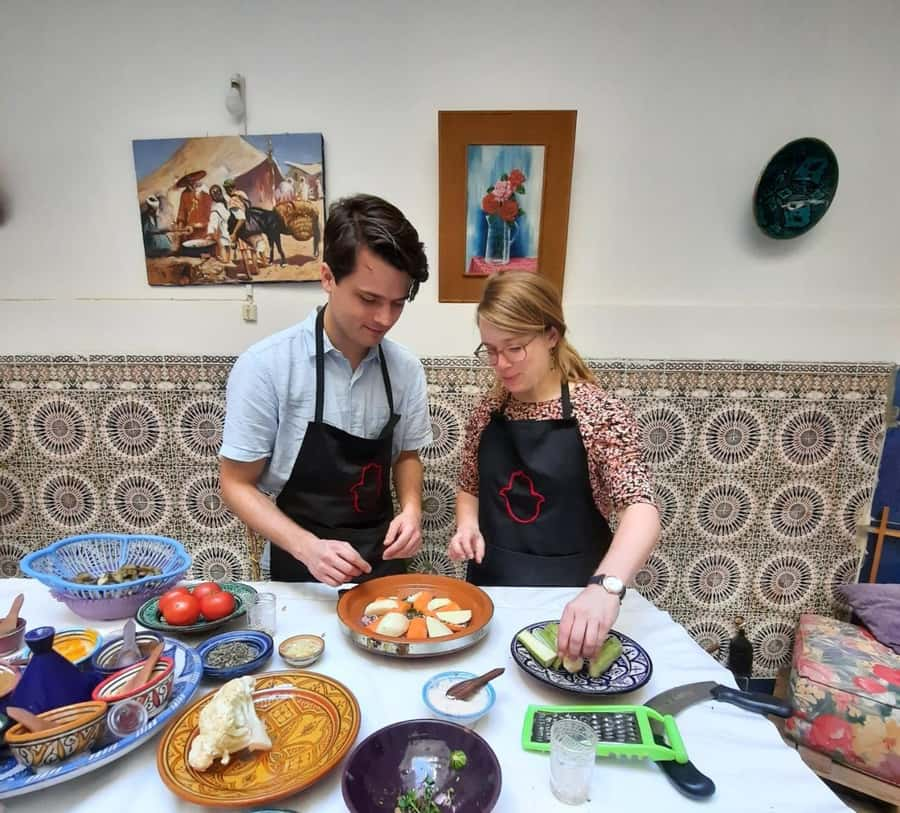
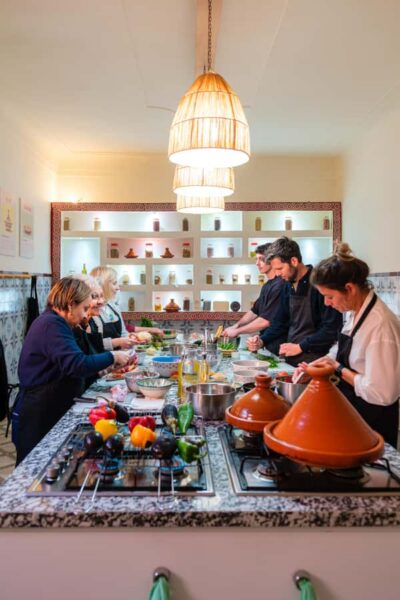
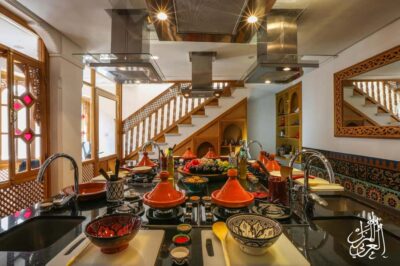
After shopping, you make your way to Khmisa’s workshop, an intimate riad in the heart of the Medina. The setting is part of the appeal. You are not simply standing at a demonstration counter while someone else cooks. You sit and work in a traditional Moroccan home-style space with the cooking team around you.
The hosts include local Moroccan women and chefs with years of cooking and catering experience. Kawtar often handles the welcome and explanations, while Khmisa and other members of the team help with the cooking. Some sessions also include a translator, such as Ilham, when needed.
Language should not stop you from booking. The class is offered in English, French, and Arabic, and the teaching style is built around showing, explaining, and involving you. Guests who do not share the same first language can still follow the work by watching each step and taking turns.
One useful feature is the air-conditioned cooking property mentioned by families who attended. That can make a real difference during hot weather, especially when several tagines and pots are cooking in a compact space.
Learning the Moroccan mint tea ritual
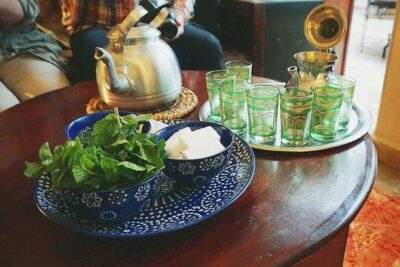
The class begins with traditional mint tea. This is more than a drink served while you wait for the meal.
The guides explain the preparation and pouring ritual, including the role of sugar, mint, and the way the tea is handled and served. If your usual method is simply to add mint to hot water, expect a few surprises. The class presents tea as a social practice and an important part of Moroccan hospitality.
This opening section is useful because it gives the session a clear cultural frame. You start with something Moroccan households and cafés serve throughout the day, then move into the food preparation. It is also a calmer way to get comfortable with the group before chopping and cooking begin.
You will want your hair tied back. A hair tie is specifically recommended, and comfortable clothes make sense for a hands-on kitchen session.
Preparing salads, tagines, and dessert
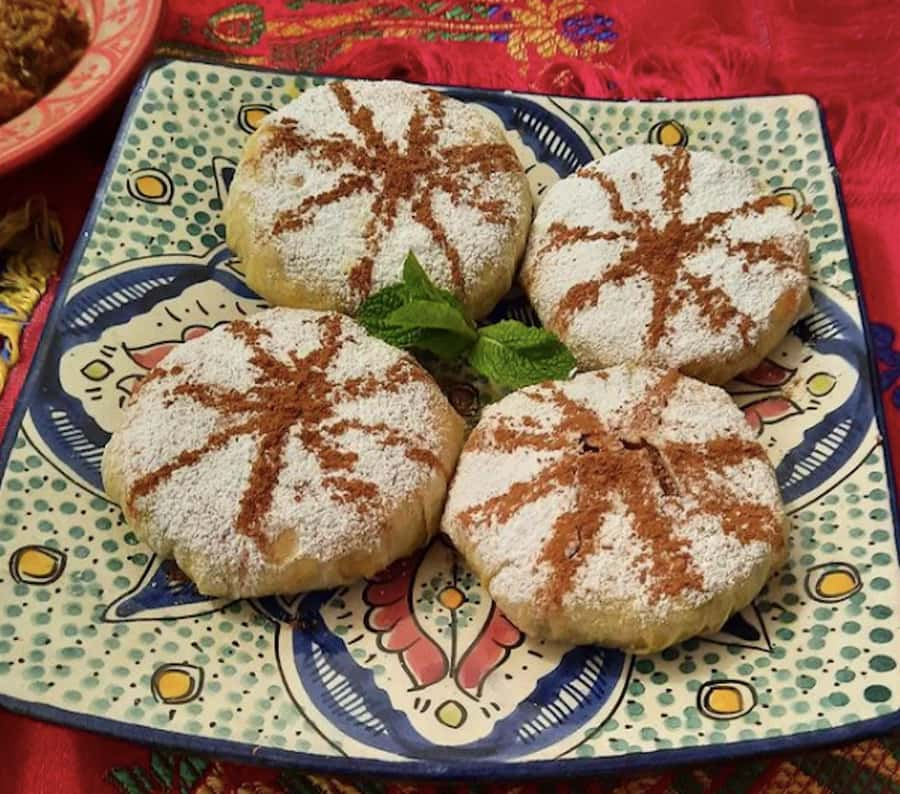
The menu changes, but the planned meal usually includes three to six Moroccan dishes. That can mean several starters, one or two main courses, dessert, and tea.
Past sessions have included four Moroccan salads or vegetable starters, a vegetarian tagine, a chicken tagine, and milk pastilla for dessert. Some groups prepare both chicken and vegetarian versions, which is helpful if your party has mixed preferences.
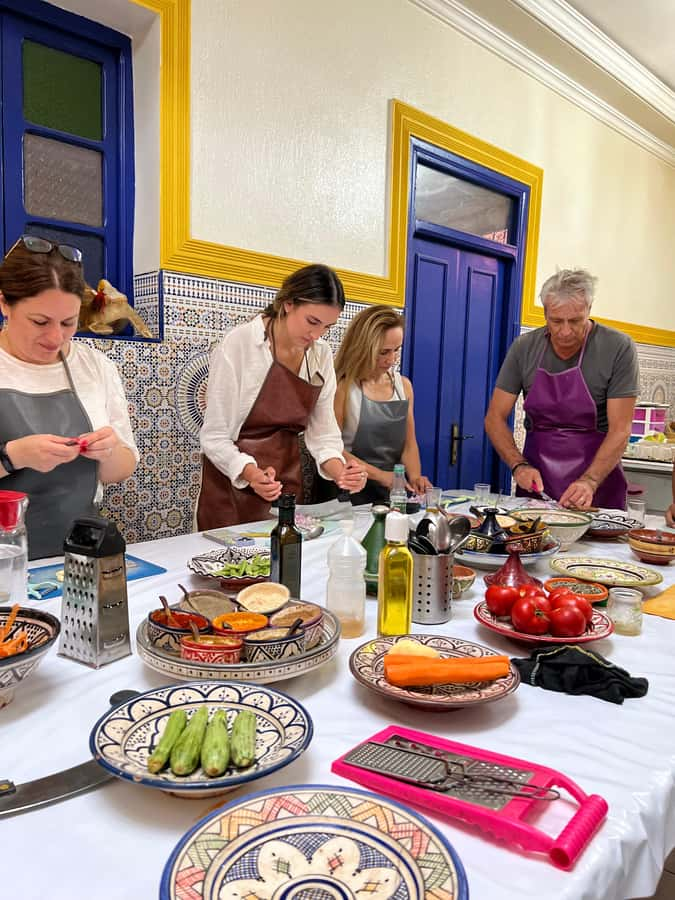
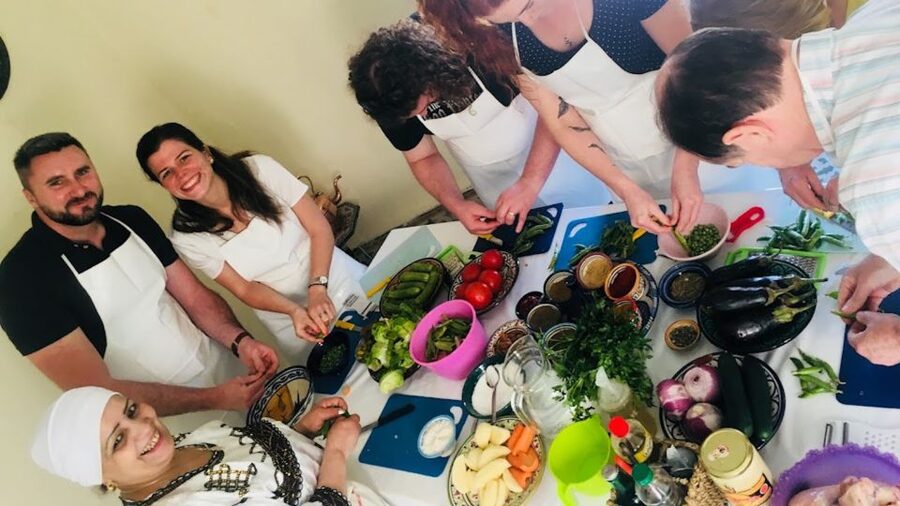
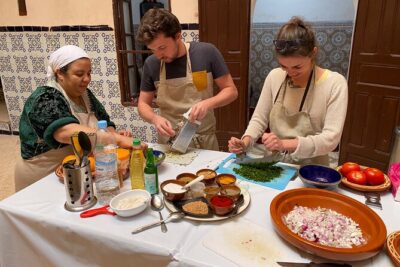
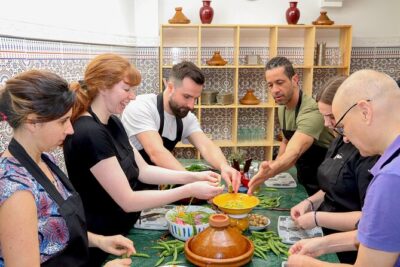
The class is organized as teamwork. You may chop vegetables, add spices, prepare ingredients for a tagine, and help assemble the dishes. The cooking team gives instructions and keeps everyone involved rather than allowing one person to do all the work.
This is a good format for families and mixed groups. An eight-year-old has taken part successfully, and families with teenagers have found enough jobs to keep everyone involved. It also works well for solo visitors because the shared cooking naturally gives you a way to meet people from different places.
The most useful part is the explanation of how the spices work together. You are not only handed a finished plate. You see how the ingredients are prepared and how the cooks adjust the balance as the food develops.
Some of the best lessons are practical rather than technical. You learn which ingredients are used together, how a tagine is built, and how Moroccan cooks bring several dishes to the table as one meal. The recipe sheets afterward help you repeat the process at home.
More Shopping Tours in Marrakech
- Marrakesh: Guided Souk Shopping Tour with a Local Guide
★ 4.9 · 651 reviews - Shopping in the Souks of Marrakech Private Tour
★ 5.0 · 620 reviews - Souks Shopping Tours
★ 5.0 · 395 reviews - Marrakech: Moroccan Cooking Class with Market Visit and Meal
★ 4.9 · 347 reviews
Eating the meal you helped make
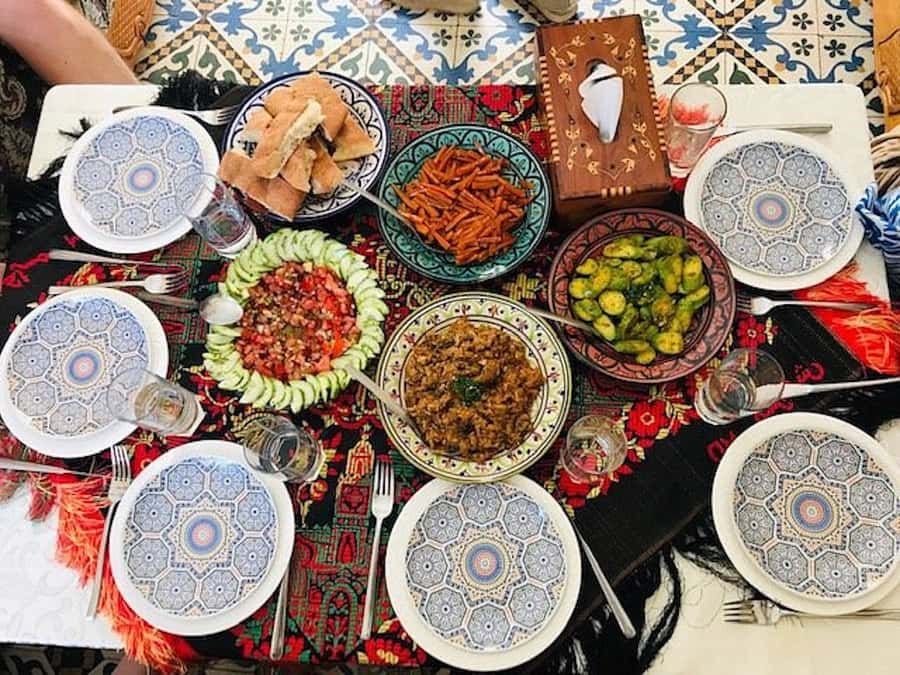
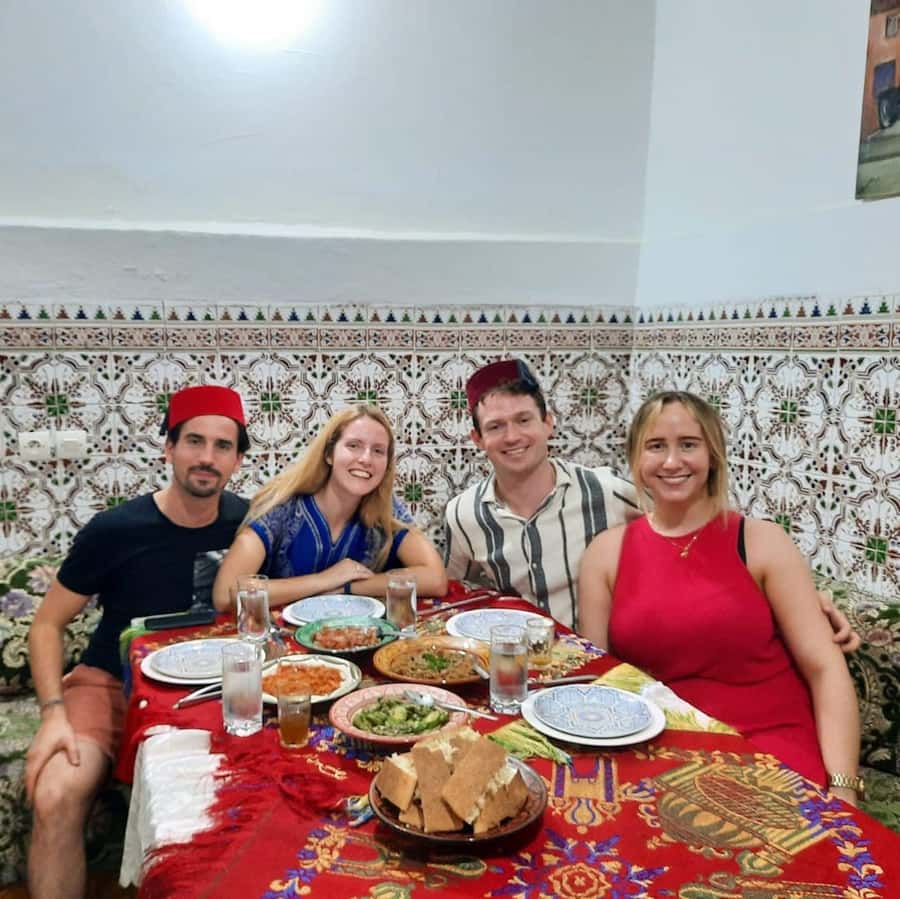
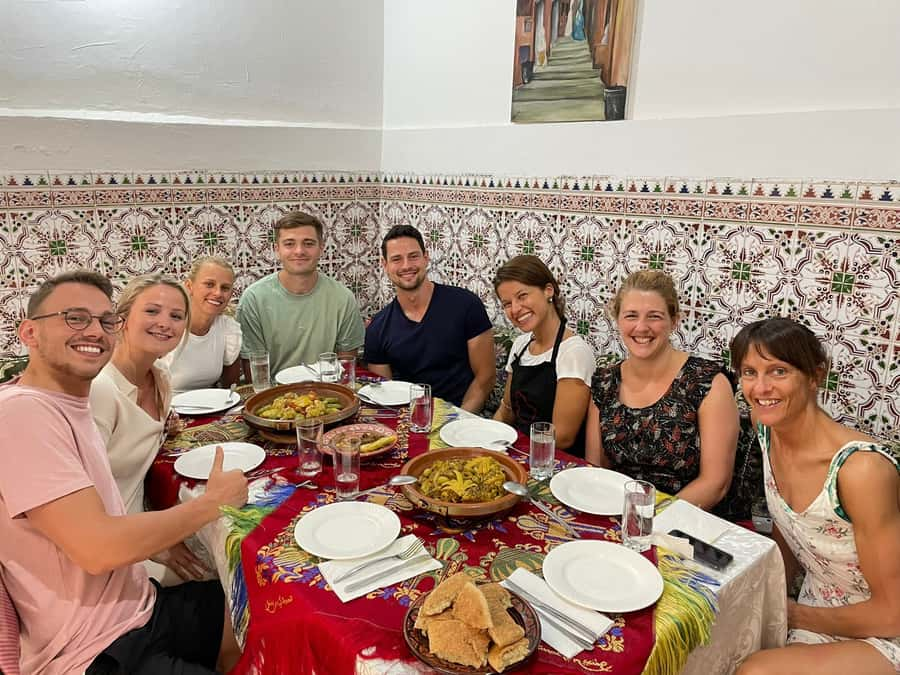
Once the cooking is finished, you sit down with the group and eat the food prepared during the session. This is a proper lunch or dinner, not a tiny tasting menu.
The amount of food can be generous. A session with multiple starters, two tagines, dessert, and tea is filling, so avoid planning an elaborate restaurant meal immediately afterward. The shared table also gives the experience a social finish. You have worked together, and then you share the results.
The chicken tagine has received particular praise, as have the potatoes and the vegetarian dishes. That does not mean every menu will be identical, but it gives you a useful idea of the class’s strengths. The food is intended to be practical Moroccan cooking, with dishes you can attempt again outside Morocco.
If you have allergies, dietary restrictions, or a strong food preference, discuss them before the market visit. The hosts ask about restrictions at the beginning, but it is still wise to communicate clearly when booking and again at the start of the class.
Vegetarians have found the range of food satisfying, with vegetable starters and vegetarian tagine options available in some sessions. The exact menu is not fixed, so ask if a particular dish or ingredient is important to you.
What makes the $40 price worthwhile
At $40 per person, this is good value if you want more than a meal. The price includes the guide, local chef, ingredients, short market walk, mint tea, and the lunch or dinner you prepare.
The market shopping adds value because it turns the class into a half-day-style cultural activity rather than a cooking demonstration alone. You also receive electronic recipes, which gives the experience some use after your holiday ends.
The group size can reach 12, although some sessions are much smaller. One group had six people, which allowed plenty of participation. A larger group may feel less personal, but the format includes shared tasks and turn-taking.
Private sessions are available on demand, but the standard experience is shared. If you want one-on-one instruction or a private family event, ask about the extra arrangement before paying.
The price does not include hotel pickup or drop-off. You need to make your own way to the meeting point in Marrakech. That is normal for a Medina cooking activity, but it means you should leave time to find the correct entrance.
Who will enjoy this class most
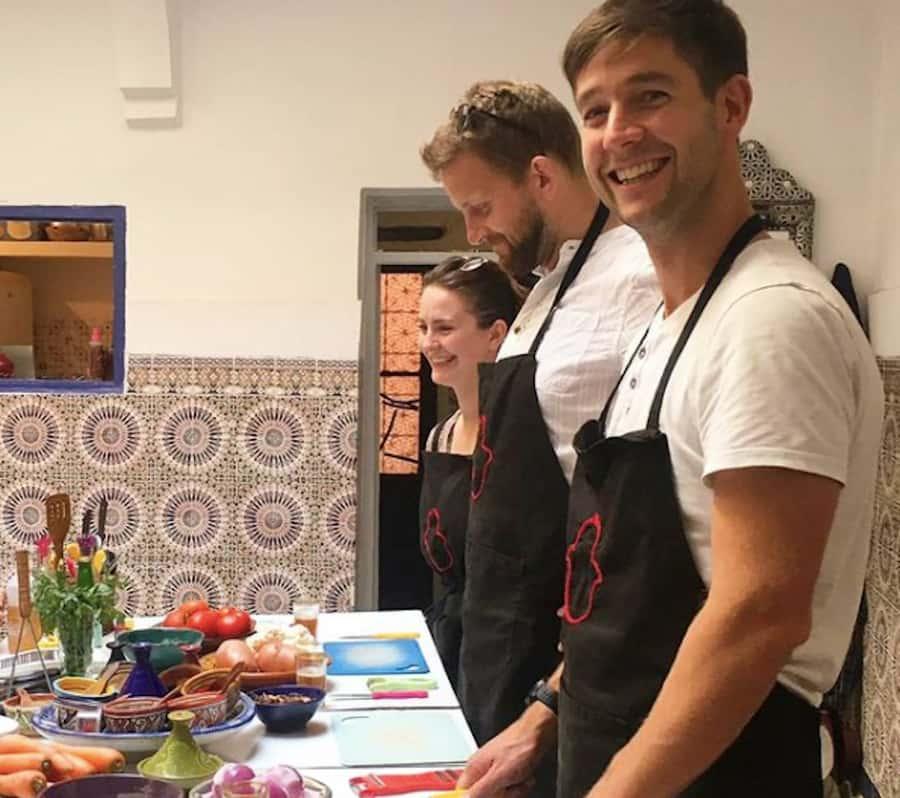
I would recommend this experience to anyone who wants a hands-on introduction to Moroccan food rather than a passive meal.
It suits:
- First-time visitors to Marrakech who want a clear connection between the souk, Moroccan hospitality, and local cooking.
- Families with older children and teenagers who can help shop, chop, stir, and set up the meal.
- Vegetarians, provided you confirm the menu and ingredients in advance.
- Solo visitors and couples who enjoy shared activities and meeting an international group.
- Home cooks who want recipes that can be attempted after returning home.
- People who care about local food traditions and want to learn from Moroccan women cooking in a family-style setting.
It may be less suitable if you dislike group activities, have limited mobility, or want a tightly timed private lesson. The experience is not suitable for wheelchair users, and the Medina market walk can be difficult if walking through old streets is a concern.
The class also follows a no-smoking and no-alcohol policy, and pets are not allowed.
Practical tips for a smoother session
Wear comfortable shoes and bring a hair tie. You will walk through the market and take part in food preparation, so this is not the time for formal footwear or loose sleeves.
Ask for the exact meeting point before the day of the class. A landmark such as a mosque may be easy to recognize but still too broad as a meeting instruction.
Tell the hosts about allergies and dietary restrictions before shopping. Since the ingredients are selected for the group’s meal, early notice gives the cooking team a better chance to adapt.
Do not expect a fixed menu with identical dishes every time. The description allows three to six dishes, and the sessions described have included different combinations of salads, tagines, and dessert.
Allow roughly two and a half hours for the cooking and meal based on the sessions described, while leaving extra time for the market walk and meeting arrangements. The exact schedule can vary, and some morning start times have changed with advance notice.
You can reserve now and pay later, which is useful if your Marrakech plans are still moving around. Cancellation is free up to 24 hours before the activity for a full refund.
Is this Marrakech cooking class worth booking?
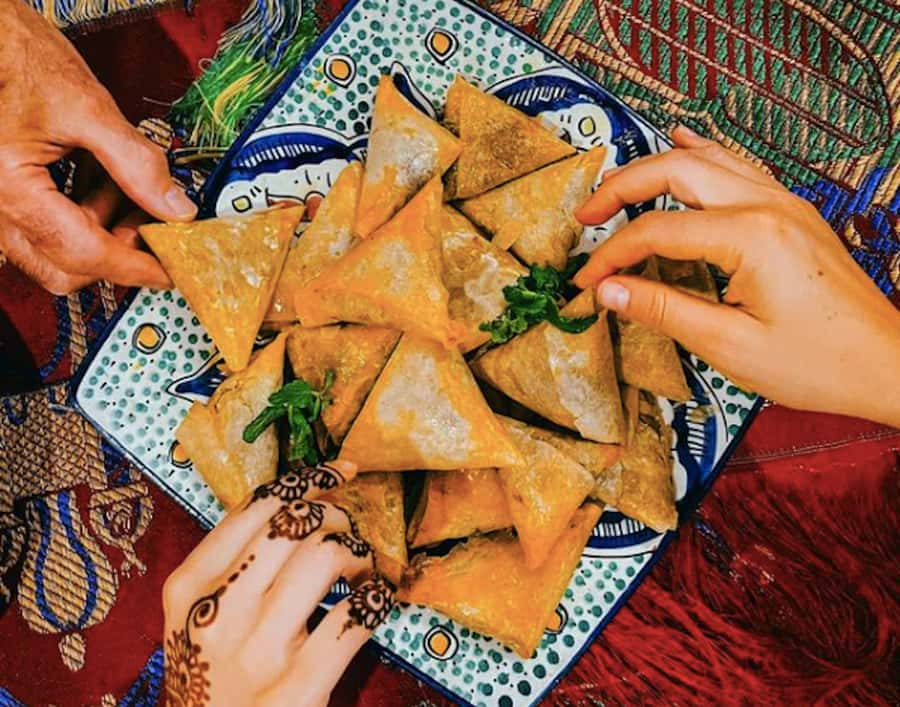
Yes, if you want a friendly, practical food experience with real participation. The strongest features are the market shopping, the careful mint tea lesson, the chance to cook several dishes, and the recipes you receive afterward.
I would choose it over a demonstration-only class because you do the work yourself, from selecting ingredients to preparing the meal. The local women leading the class also give it a family kitchen feel rather than a formal culinary-school atmosphere.
Book it if you are comfortable sharing a table, walking through the Medina, and accepting that the menu and group size may vary. Confirm the meeting point and any dietary needs in advance. For $40, this is a strong choice for a filling meal, a useful introduction to Moroccan cooking, and an experience you can continue in your own kitchen.
FAQ
How much does the Marrakech cooking class cost?
The price is $40 per person.
What does the price include?
It includes the market walk, all ingredients, a local guide, a Moroccan chef, Moroccan tea, lunch or dinner, and electronic recipes.
Is hotel pickup included?
No. Hotel pickup and drop-off are not included.
What languages are available?
The experience is offered in English, French, and Arabic.
How many dishes will I prepare?
The menu includes three to six Moroccan dishes. It can include starters, a main course, and milk pastilla for dessert.
Will I learn how to make Moroccan mint tea?
Yes. The class includes a lesson on the traditional Moroccan mint tea ritual and preparation ceremony.
Do I receive the recipes afterward?
Yes. The recipes are sent electronically after the class, by email or another electronic message method.
Is the cooking class suitable for vegetarians?
Vegetarian dishes and vegetarian tagines are offered in some sessions. Tell the hosts about your dietary needs before the market visit so the menu can be discussed.
Is the experience wheelchair accessible?
No. It is not suitable for wheelchair users.
Can I cancel for a full refund?
Yes. You can cancel up to 24 hours in advance for a full refund.
Just added around Marrakech
- Quad in the Palmeraie of Marrakech★ 5.0 · 41 reviews
- Marrakech Desert Camel Ride★ 5.0 · 17 reviews
- Sunset Camel Ride in the Palm Grove Of Marrakech★ 5.0 · 34 reviews
- Private Airport Transfer from or to Marrakech Menara Airport.★ 4.5 · 63 reviews
- Marrakech The History and Culture Day Trip★ 4.5 · 45 reviews
- Marrakech: Tailor-Made City Tour With Your Own Private Guide★ 4.9 · 236 reviews
- Marrakech palm grove: Sunset camel ride★ 4.8 · 194 reviews
- Marrakech: Cycling Tour in Palm Groove with Local Breakfast★ 4.7 · 73 reviews
Cooking Classes, compared.
Half-Day Cooking Class with Local Chef Laila in Marrakech
Read our review →
Marrakesh cooking class with chef Hassan – Local dishes
Read our review →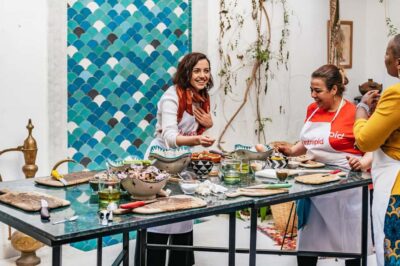
Marrakech Tour: Tajine Cookery Class Experience
Read our review →
Atlas Mountains Cooking Class with Berber Family
Read our review →Browse the lists this tour appears in