
Reviewed · CYCLING TOURS
Marrakech: Cycling Tour in Palm Groove with Local Breakfast
Marrakech’s palm oasis is not just a backdrop for fancy hotels and villa walls. It is a working place, where palm trees, village ovens, hand-built water channels, and small workshops still shape daily life. This 150-minute bike ride into the Palmeraie gives you a close look at that contrast, with young local guides leading you from the city toward quieter village roads.
I like the way the tour connects ordinary details to bigger ideas. You learn why water matters here, how bread fits Moroccan life, and why palm trees are so important to the oasis. I also like the stop at Aziz’s atelier, where tea, fresh bread, butter, olive oil, and pastries turn a short break into a real local welcome. The main consideration is the cycling itself: leaving and returning through Marrakech can feel busy, especially if you are nervous in city traffic.
Key points to know before you book
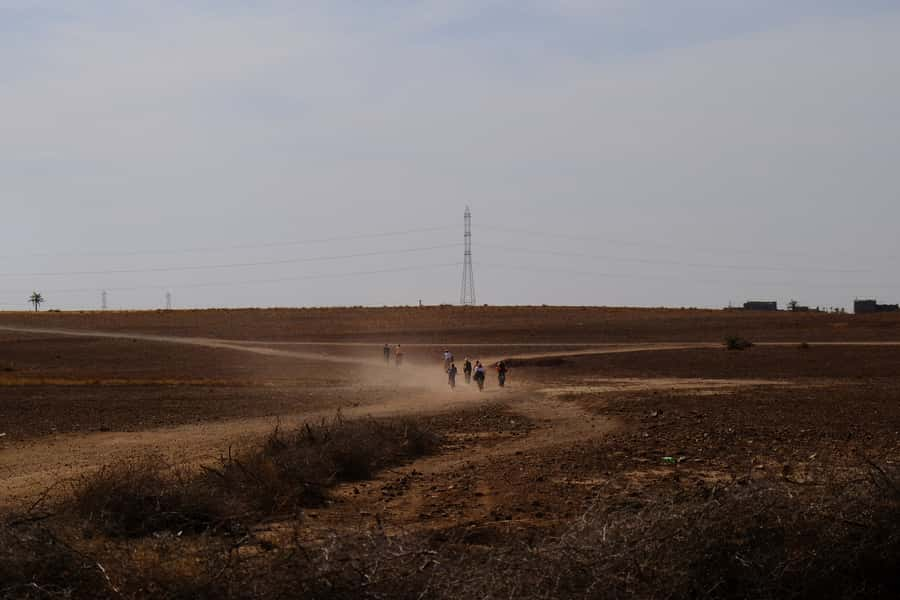
- A 17-kilometer ride with a mostly gentle route: The ride is described as flat, but the city section can be more demanding than the Palmeraie itself.
- A local breakfast at Aziz’s atelier: Expect tea or juice, fresh bread, butter, olive oil, and Moroccan pastries in a peaceful setting.
- Village life beside luxury compounds: The route passes large villas and castles before reaching small communities in the palm oasis.
- Real cultural stops, not just sightseeing: You may see a village bread oven, tile artisans working with zellige, and an old irrigation system.
- Young guides who lead from the front: Guides including Ahmed, Yassim, Ayoub, and Khawla have been praised for their care, clear explanations, and calm manner.
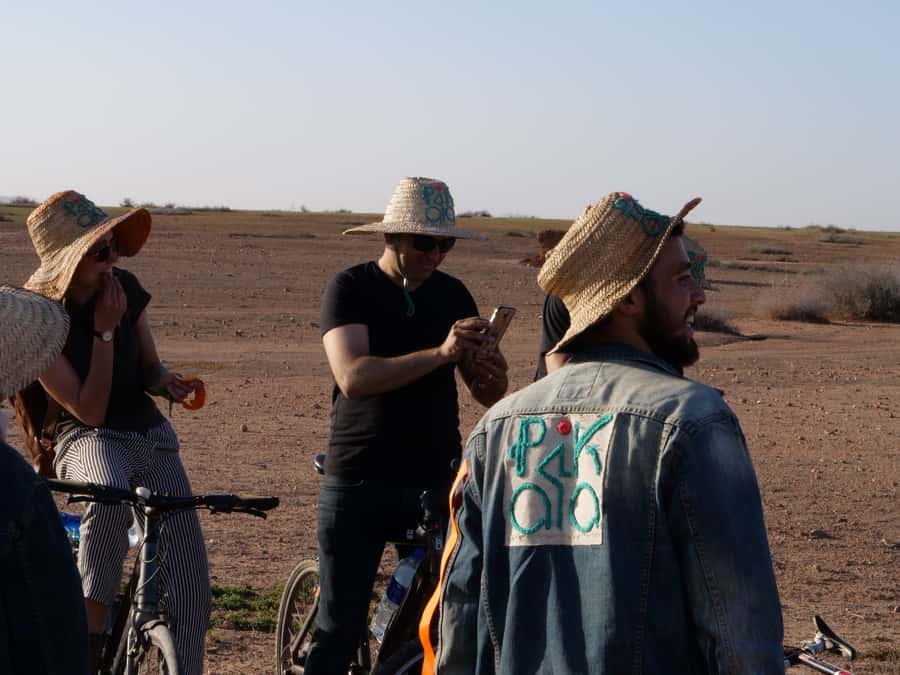
- A practical $34 experience: Bikes, water, suncream, drinks, and food are included, but transport to the Pikala Bikes headquarter is not.
From Pikala Bikes to the Palmeraie
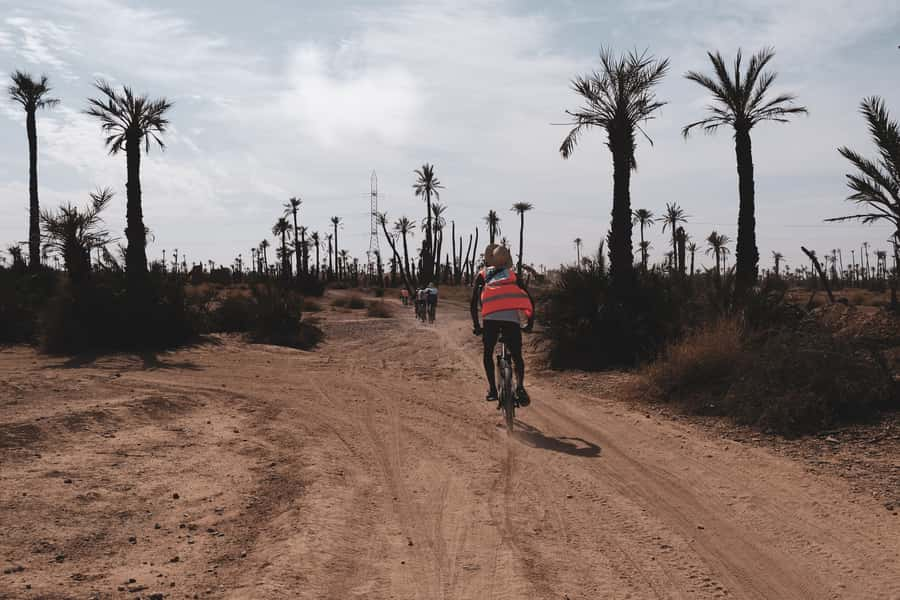
You meet at the Pikala Bikes headquarter in Marrakech city centre. The first part takes roughly 15 minutes of cycling through the city before the route opens toward the palm oasis. That short city section matters: it is the point where you get used to the bike, your guide’s signals, and the rhythm of riding around Marrakech.
If you are comfortable cycling at home, the ride itself should feel manageable. One detailed account described the full route as about 17 kilometers and mostly flat. Still, the start and finish can feel more challenging than the middle. You may need to ride through narrow streets and busy urban areas, so this is not a quiet countryside pedal from the first minute.
That is where the guide makes a difference. Ahmed has been praised for being patient, attentive, and careful about safety. Yassim has helped riders who cycle regularly at home but found the Medina section a little testing. A calm guide who gives clear tips can help you settle in quickly, but you should still be happy riding a bicycle in city traffic before booking.
The bikes are described as good quality, and water and suncream are included. Hotel or riad pickup is not included, so you need to make your own way to Pikala Bikes. Check the meeting point carefully, especially if your accommodation sits inside the Medina.
More Bike Tours in Marrakech:
- Cycling Adventure in Marrakech
★ 5.0 · 289 reviews - Dutch Bike Tour in Marrakech with Local Guide
★ 4.7 · 269 reviews - Marrakech:Guided City Cycling Tour – Culture, Colors & Charm
★ 4.7 · 231 reviews
Villas, castles, and working villages
Once you leave the more built-up streets, the ride shows you a very different side of Marrakech. The Palmeraie is often linked with luxury properties, and the route passes large villas and castle-like compounds. Then it turns onto off-track roads and reaches small villages where local life continues at a slower pace.
I like this contrast because it prevents the oasis from becoming a postcard-only experience. You see wealth and traditional village life close together, with palm trees and water systems tying the area together. The route is not simply a ride among palms. It is an introduction to how people live in a dry environment where water has always required care and cooperation.
The guides explain the importance of the palm trees to the oasis and the ways local communities manage difficult geographic conditions. These explanations give the ride some useful context. Instead of passing through the Palmeraie and seeing only scenery, you learn why the place exists and what keeps it functioning.
The route uses quieter roads beyond the city, but the exact riding surface can vary. You should expect an outdoor excursion rather than a polished cycle path. Wear practical clothes, bring a level of comfort with uneven or off-track riding, and remember that Marrakech sun can be strong even during a pleasant morning.
Breakfast with Aziz at his atelier
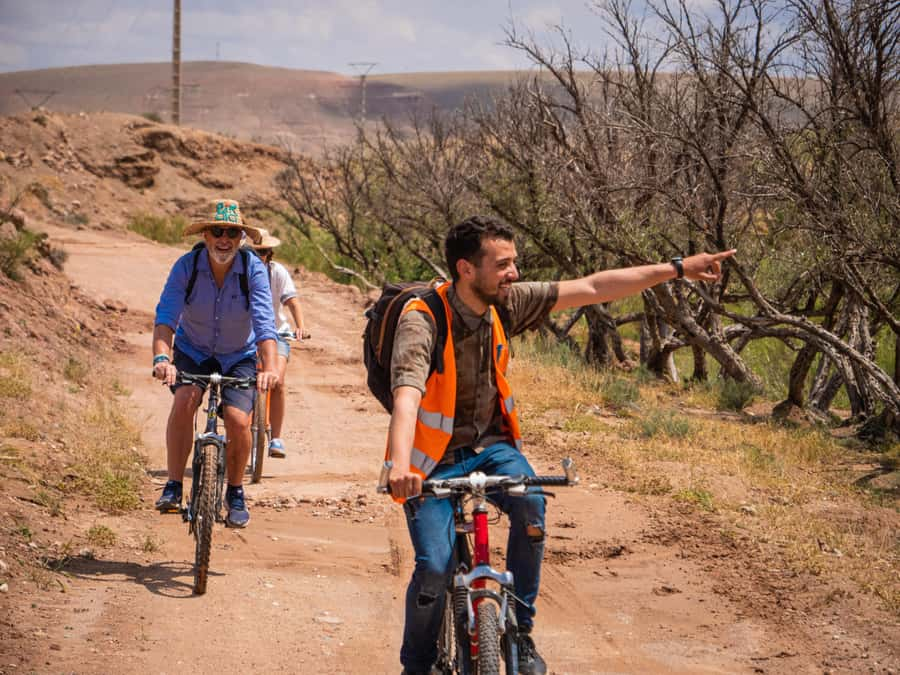
The food stop is one of the most appealing parts of the experience. At Aziz’s atelier, you share tea or juice with fresh bread, butter, olive oil, and Moroccan pastries. This is called a local breakfast, but it is also a chance to sit down, talk, and hear stories from your host.
The food is simple, which is part of its value. Warm bread with oil or butter says more about everyday Moroccan eating than a staged feast would. You are not being taken to a formal restaurant. You are stopping in a local setting and sharing food as part of the visit.
The pace also helps. A bike tour can become a blur of streets and stops, but breakfast gives you time to ask questions. Guides have been willing to discuss local culture, architecture, and their own experience of growing up in Morocco. Yassim, in particular, has been praised for sharing personal insight as well as information about the area.
You should not book this expecting a large meal or a long restaurant service. The supplied details point to bread, spreads, tea or juice, and pastries. For most people, it will be a welcome morning snack rather than a replacement for a full breakfast.
Water channels and the logic of the oasis
One of the tour’s strongest themes is water. The Palmeraie exists in a dry region, so the old irrigation system helps explain how village communities have been able to live and farm here. Your guide introduces the ways water is managed and takes you to see an old irrigation water system.
This stop gives the tour more substance than a simple scenic ride. Water is not an abstract subject here. It affects homes, gardens, agriculture, palm trees, and the future of the oasis. You get a practical look at the problem rather than only hearing a general statement about Morocco’s climate.
The experience does not include entry to the Water Museum. That is useful to know because the irrigation stop and the museum are separate things. If the museum is important to you, you would need to arrange it separately and confirm the details before your visit.
The guide’s role is especially important at this point. Old channels and waterworks may not explain themselves. A local guide can show you what to notice and connect the structure to community life. Khawla, who has led this route, has been praised for explaining culture and architecture with enthusiasm. The exact guide depends on the day, but the tour is offered in English or French.
A few more Marrakech days worth comparing
- Marrakech: Quad Bike Tour to Palm Oasis and Jbilat Desert
★ 4.8 · 11,831 reviews - Marrakesh: Majorelle Garden Entry Tickets
★ 4.5 · 9,651 reviews - Marrakech Quad Bike Experience: Desert and Palmeraie
★ 4.5 · 9,509 reviews - Marrakech: Balloon Flight, Berber Breakfast & Certificate
★ 4.8 · 8,164 reviews
Zellige tiles in tiny workshops
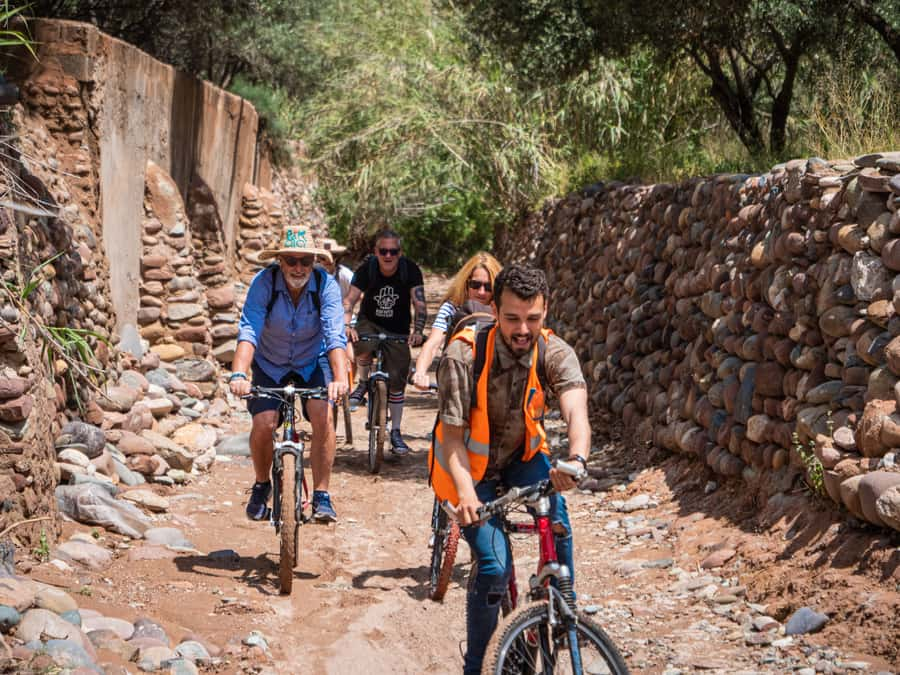
The ride includes several stops at small Moroccan craft ateliers, including places where artisans work with zellige tiles. Zellige is the traditional Moroccan tile art seen in geometric patterns across walls, fountains, floors, and buildings. Here, the interest comes from seeing the work in a small working setting rather than only admiring finished decoration in a palace.
The wording of the experience points to several brief stops, not a long workshop course. You are there to meet local craftspeople and see the artistry connected with Moroccan architecture. This makes the stop useful for anyone who has admired tilework in Marrakech but wants a better sense of how it relates to local craft.
Do not expect to produce a tile yourself unless your guide says otherwise. The confirmed focus is meeting artisans and learning about their work. The visit adds variety to the ride and gives you a reason to slow down between the palm groves and villages.
The craft stops also fit the wider idea of the tour. You are seeing how local skills, food traditions, water systems, and palm trees all form part of life in the oasis. None of these stops alone would fill a day, but together they make a solid two-and-a-half-hour outing.
Bread baked in a village oven
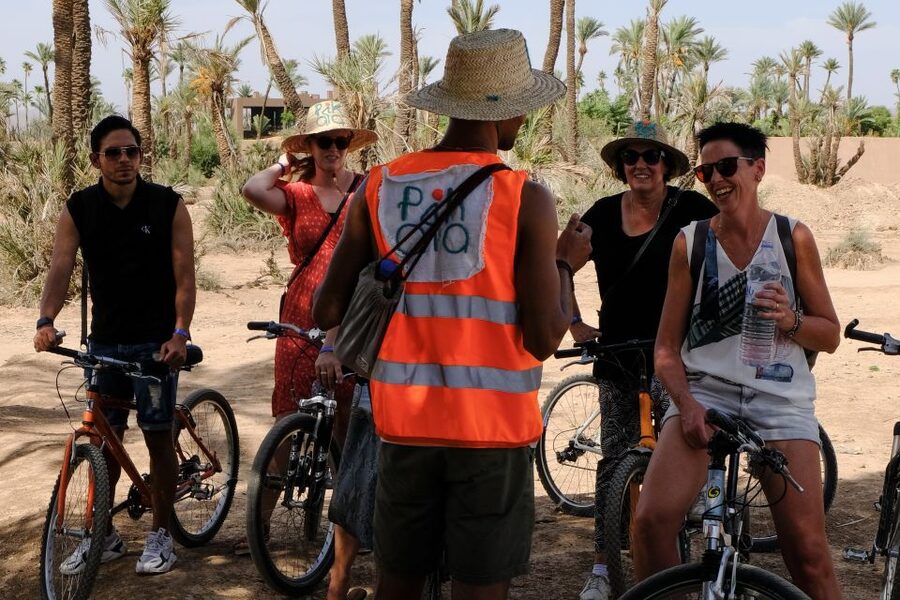
The village oven is another small stop with real cultural weight. You see villagers baking bread and learn why bread matters in Moroccan culture. This is an everyday activity, but that is exactly why it is worth your time.
Bread is not presented as a decorative food item. It is part of daily life and a social routine. Watching it being prepared in an open-air setting gives you a more grounded view of the village than a quick pass through a market would.
The stop may be especially interesting if you enjoy food traditions and practical history. You can connect the bread at Aziz’s table with the work being done at the oven. One is the meal you share, and the other is the community process behind it.
The visit is observational. The confirmed details do not promise a cooking class or hands-on baking, so book it for the chance to see and understand the tradition, not to make bread yourself.
What the ride feels like in practice
The tour lasts 150 minutes, so the schedule is full without taking up an entire day. You get a little city riding, the route to the Palmeraie, food and tea, village and craft stops, and the return to the city. Because several stops are included, the cycling is broken up rather than continuous.
The route is suitable for people who want active sightseeing without committing to a demanding mountain ride. The 17-kilometer distance is not extreme, and the route has been described as gentle and flat. The real test is urban cycling, not steep terrain.
Families and couples can enjoy the format, though every participant should be comfortable on a bicycle. It also suits solo visitors who want a structured way to reach the Palmeraie and meet local people. The young guides help give the experience a friendly, informal tone.
I would be more cautious if you dislike cycling near traffic or have limited bicycle confidence. One rider felt nervous about cycling in the Medina but became comfortable with help from the guide. That is encouraging, but it does not remove the need to judge your own ability honestly.
Is $34 good value?
At $34 per person, the price is fair for an outing that combines equipment, guiding, food, drinks, water, and several cultural visits. You are not paying only for bicycle hire. The cost covers a guide-led route, a breakfast stop, an introduction to irrigation, village life, bread baking, and zellige craft.
The value is strongest if you want context and contact with ordinary local life. If your only goal is to cycle among palm trees, you might find a simpler bicycle rental cheaper. But a rental would not provide the explanations, food stop, safety support, or village visits included here.
Suncream and water are included, which are useful practical touches. Tea or juice and Moroccan pastries are also included at Aziz’s place, along with fresh bread, butter, and olive oil. The Water Museum is not included, and hotel or riad transport is also outside the price.
The operator is Pikala Bikes, an organization with a clear local cycling focus. The tour’s format supports young Moroccan guides and brings visitors into contact with small local businesses and workshops. For you, that means the price buys an experience with more local connection than a standard sightseeing loop.
Booking details that affect your choice
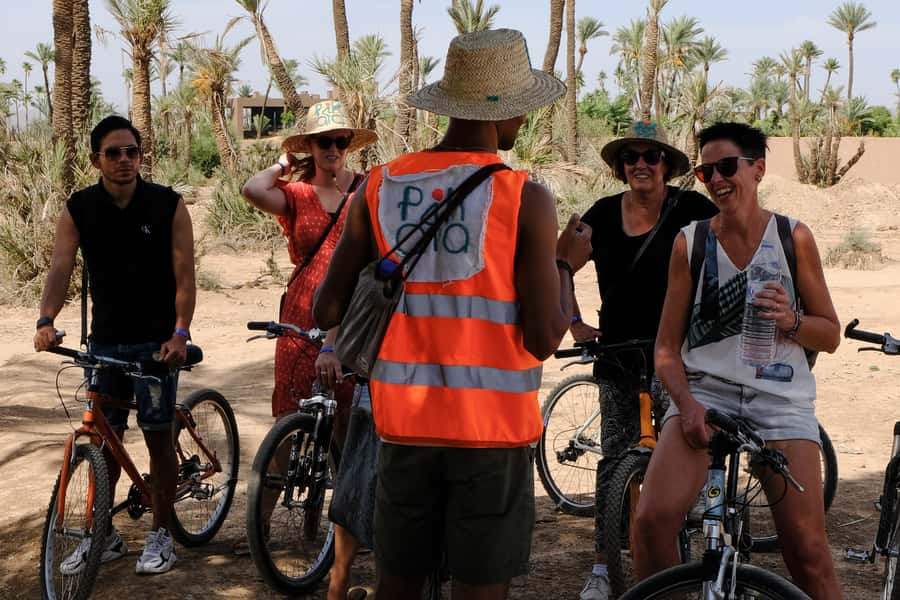
The tour runs in English and French, with a live guide. Starting times depend on availability, so check the schedule that appears for your date. You meet at the Pikala Bikes headquarter rather than being collected from your accommodation.
Free cancellation is available up to 24 hours before the activity for a full refund. You can also reserve and pay later, which helps if your Marrakech plans are still moving around.
The advertised rating is 4.7 from 73 reviews, and the praise is notably consistent around guide care, good bicycles, clear explanations, and the breakfast stop. Guides named in individual feedback include Ahmed, Yassim, Ayoub, and Khawla. You cannot assume a particular guide will lead your departure, but the comments give you a useful sense of the guiding style to expect.
Should you book this Palmeraie bike tour?
Book it if you want to see more than Marrakech’s central sights and enjoy an active morning with real local detail. The best reasons are the village oven, the irrigation system, Aziz’s breakfast stop, and the chance to see zellige craft in small ateliers. The route also gives you a useful look at the sharp contrast between luxury compounds and traditional village life.
Think twice if you want a silent countryside ride from start to finish, a full restaurant breakfast, or an entirely traffic-free route. The city section requires attention, and the food stop is modest rather than elaborate.
For confident cyclists, curious food lovers, and anyone who wants a human-scale look at the Palmeraie, I would book it. If you are nervous on a bicycle, tell the guide at the start and ride within your limits. The flat route, supportive guiding, and short duration make it approachable, but the Medina streets remain part of the deal.
FAQ
Where does the cycling tour meet?
You meet at the Pikala Bikes headquarter in Marrakech.
How long does the tour last?
The activity lasts 150 minutes, or two and a half hours.
How much does the tour cost?
The listed price is $34 per person.
What languages are available?
The live tour guide is available in English and French.
Is hotel or riad pickup included?
No. Hotel or riad pickup and drop-off are not included.
What food and drinks are included?
At Aziz’s place, you receive tea or juice, Moroccan pastries, fresh bread, butter, and olive oil.
Are bicycles provided?
Yes. Bikes are included, along with water and suncream.
Is the Water Museum included?
No. A visit to the Water Museum is not included.
Can I cancel for a refund?
Yes. You can cancel up to 24 hours in advance for a full refund.
Just added around Marrakech
- Quad in the Palmeraie of Marrakech★ 5.0 · 41 reviews
- Marrakech Desert Camel Ride★ 5.0 · 17 reviews
- Sunset Camel Ride in the Palm Grove Of Marrakech★ 5.0 · 34 reviews
- Private Airport Transfer from or to Marrakech Menara Airport.★ 4.5 · 63 reviews
- Marrakech The History and Culture Day Trip★ 4.5 · 45 reviews
- Marrakech: Tailor-Made City Tour With Your Own Private Guide★ 4.9 · 236 reviews
- Marrakech palm grove: Sunset camel ride★ 4.8 · 194 reviews
- Sparkling Marrakech through the eyes of your local Guide★ 4.7 · 247 reviews
Cycling Tours, compared.
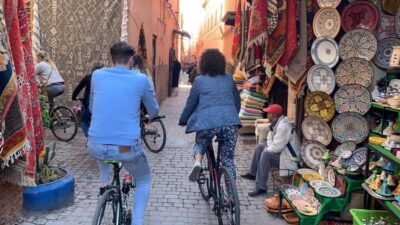
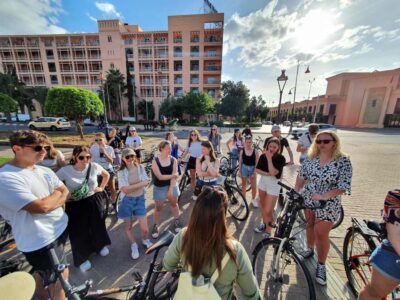
Guided City Cycling Tour – Culture, Colors & Charm
Read our review →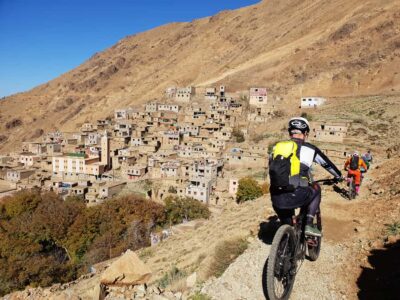
Toubkal National Park Mountain Bike Trip w/Lunch
Read our review →
Browse the lists this tour appears in