
Reviewed · COOKING CLASSES
Moroccan Cooking Class & Marrakech Market Visit with Chef Khmisa
Marrakech’s best food lesson begins before you reach the kitchen. You meet Chef Khmisa and Kawtar near Bab Doukkala Mosque, walk through a less touristy food souk, and help choose the fresh ingredients for your meal. I like that the shopping is part of the lesson, not just a quick stop. I also like the hands-on format, where you chop, season, and prepare food as a group before sitting down to eat it.
The main consideration is the shared group size, which can reach 15 people. That makes the class sociable and good for meeting people, but it may feel less personal than a private lesson. I would also ask about receiving the recipes before leaving, since recipe follow-up has not always been consistent.
Key points at a glance
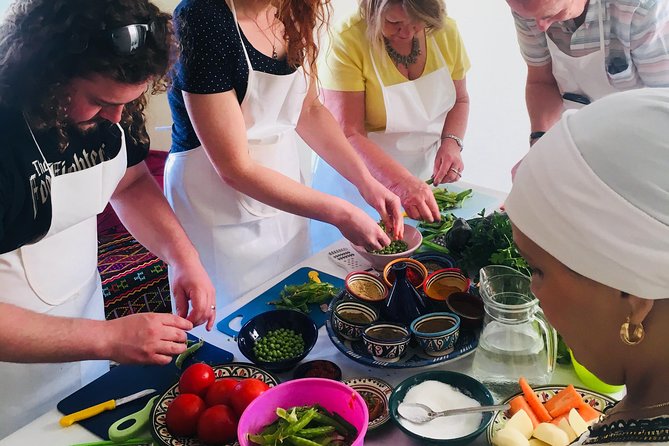
- A market-led cooking lesson: Shop for fresh ingredients in a local souk before entering the kitchen.
- Chef Khmisa’s 25 years of experience: She specializes in Moroccan cuisine and pastry, with work in hotels in Rabat and Marrakech.
- A traditional Medina setting: The class takes place in a Moroccan house in the heart of the old city.
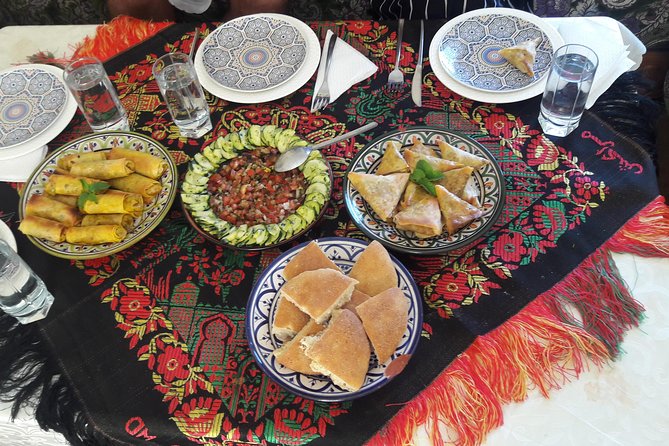
- A full three-course meal: The menu includes a starter, main course, and dessert, with vegetarian and vegan choices available.
- Mint tea is part of the lesson: You learn the tea ritual before beginning the cooking.
- Strong value at $39.39: The price includes the class, meal, tea or coffee, and a local French or English-speaking guide.
Starting at Bab Doukkala Mosque
The meeting point is Mosquée Bab Doukkala, a useful landmark on the edge of Marrakech’s old Medina. You do not get hotel pickup, so plan your route to the mosque in advance and arrive ready to walk.
The class lasts about three hours, but the timing is more than a kitchen demonstration. You begin by meeting the hosts, discussing food allergies and restrictions, and talking about the possible menu. This early conversation matters because Moroccan cooking can include preserved ingredients, strong spices, meat, and dairy, depending on the dishes chosen.
Kawtar helps with communication and the flow of the class. She has a bachelor’s degree in hospitality and tourism, while Chef Khmisa brings 25 years of cooking experience, with a focus on Moroccan dishes and pastries. That pairing gives you both practical instruction and help with questions in French or English.
I would treat the meeting point as the start of a walking lesson, not simply a place to gather before being driven somewhere. The old city is part of the setting, and the route into the souk helps you understand how the meal begins with shopping.
More Cooking Classes in Marrakech
- Marrakech: Moroccan Cooking Class with Pickup
★ 4.6 · 1,862 reviews - Marrakech: Traditional Moroccan Cooking Class & Market Visit
★ 4.8 · 1,861 reviews - Marrakesh: Moroccan Dishes Cooking Class with a Local Chef
★ 5.0 · 1,615 reviews
Shopping for ingredients in the local souk
After meeting, you walk with the chef into a food market away from the most tourist-focused parts of Marrakech. The market is filled with stalls selling fresh groceries, spices, herbs, and everyday ingredients used in Moroccan homes.
This section gives the cooking class a useful bit of context. Instead of receiving a premeasured basket of food, you see the ingredients being selected and bought. You can ask about spices as you go, compare fresh produce with packaged goods, and see how a home cook gathers what is needed for lunch.
The shopping walk is short, but it adds meaning to the meal. When you later sit down to eat, you know where at least some of the ingredients came from and how they entered the recipe. I especially like this part for first-time visitors to Morocco who want something more connected to daily life than a restaurant meal.
The souk is still a working market. You should expect a walk through narrow market passages and stalls rather than a polished culinary shop. Keep your group together, watch your footing, and allow the chef to lead the way. The point is not to spend time browsing souvenirs. It is to buy food and learn how local ingredients fit into Moroccan cooking.
Entering the traditional Medina house
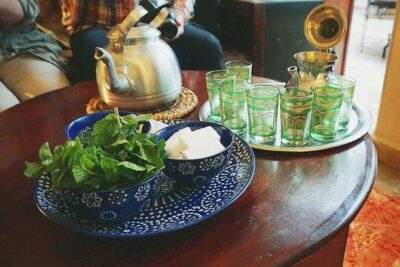
Once the shopping is complete, you return to Khmisa’s workshop, a traditional Moroccan house in the Medina. You are welcomed with mint tea before the cooking starts, and the tea ritual itself is part of the instruction.
This is more than a drink served while everyone settles in. The hosts explain how the tea is prepared and poured, and several people may have the chance to take part. The ritual offers a simple introduction to Moroccan hospitality before you move on to knives, bowls, herbs, and spices.
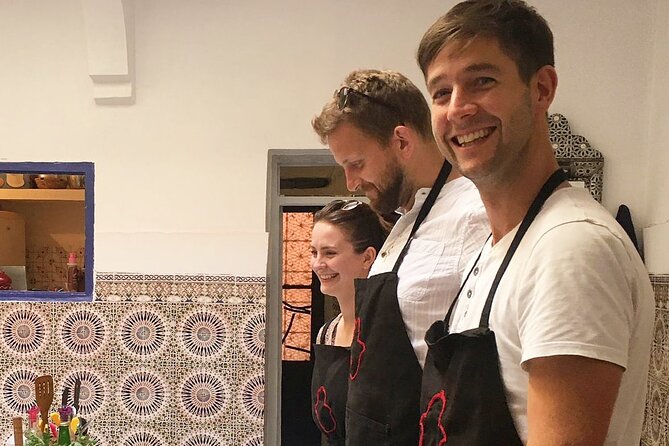
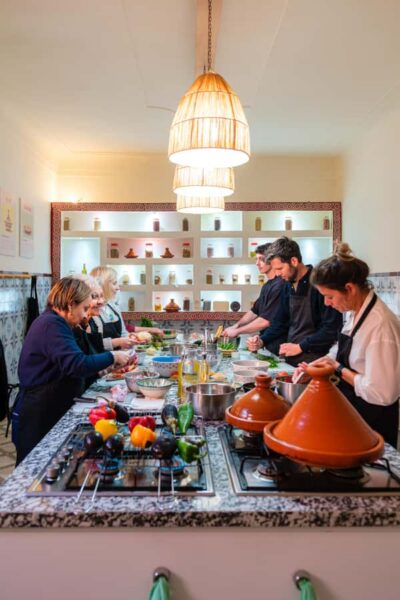
The house setting is one of the strongest reasons to choose this class. You are not in a large commercial cooking school with rows of separate stations. You are in a home-style space where the food, conversation, and meal are shared.
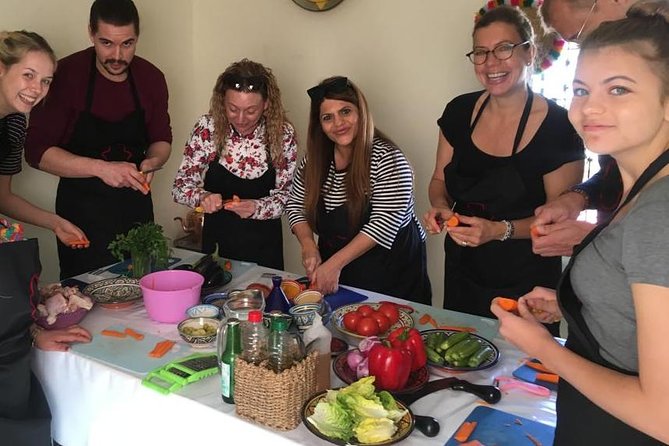
The trade-off is that the arrangement is communal. The class is shared and can include up to 15 people, so you may work in pairs or small teams rather than preparing every dish alone. If you want private instruction, private sessions are available on request, but you need to contact the provider directly.
Cooking a Moroccan starter, main course, and dessert
The menu is built around the familiar structure of a Moroccan meal: starter, main course, and dessert. The exact dishes can be discussed at the start, and the class focuses on typical Moroccan food and the spices that give it character.
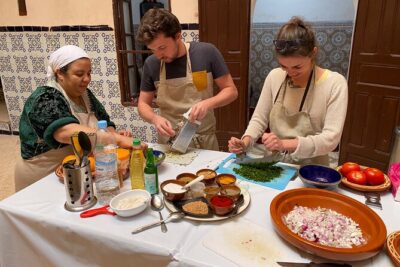
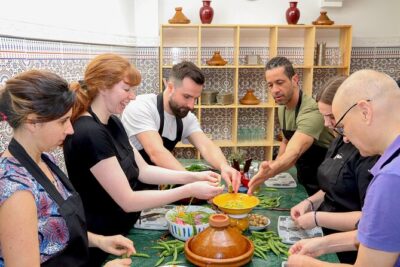
You help prepare the food as a team. The hosts explain the steps, guide the preparation, and involve the group in the work. This is not a watch-only demonstration, so wear something comfortable and be ready to take part.
Dishes described in the class include chicken tagine with preserved lemon, vegetable tagine, several appetizers, and a simple dessert. Not every session will necessarily prepare the same combination, so I would think of these as examples rather than a guaranteed menu.
The chicken tagine with preserved lemon has been a particular favorite, and it shows why a lesson like this can be useful. Moroccan cooking often depends less on complicated equipment than on the order of ingredients, the balance of spices, and patient cooking. Learning those choices in the kitchen gives you a better chance of repeating the dish at home.
The appetizer course can also be varied. One session included four appetizers, followed by chicken and vegetable tagines and a dessert. That is a generous amount of food for a three-hour class, though the time is shared between shopping, tea, cooking, and eating.
Vegetarian and vegan options are available. Tell the hosts about your needs before the market visit so the menu and shopping can be planned properly. The same applies to allergies and other restrictions.
More Shopping Tours in Marrakech
- Marrakesh: Guided Souk Shopping Tour with a Local Guide
★ 4.9 · 651 reviews - Shopping in the Souks of Marrakech Private Tour
★ 5.0 · 620 reviews - Souks Shopping Tours
★ 5.0 · 395 reviews - Marrakech: Moroccan Cooking Class with Market Visit and Meal
★ 4.9 · 347 reviews
Learning the tea ritual and Moroccan spice method
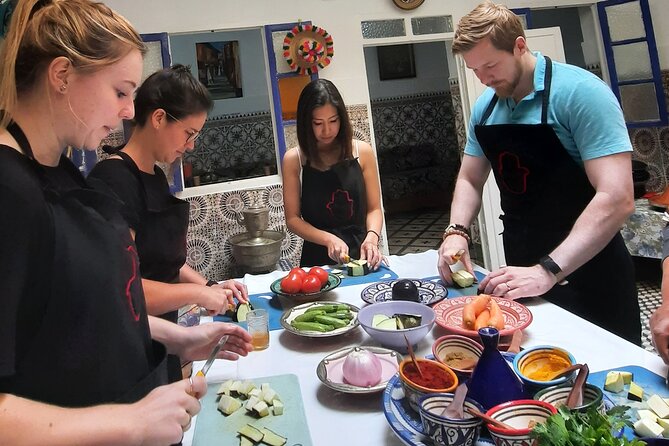
The class is most useful when you pay attention to methods rather than trying to copy every quantity. You learn how Moroccan cooks combine herbs, oils, vegetables, and spices, and you see how those ingredients are handled before they reach the tagine or serving dish.
You may want to bring a small notebook or use your phone for notes, provided the hosts are comfortable with it. Several people have expected recipes to be sent after the class and did not receive them, while others have left with recipes in hand. That inconsistency makes one tip especially practical: write down the ingredients, cooking order, and approximate amounts during the lesson.
Ask questions as the food is being made. How much spice is added? When does the preserved lemon go in? How long should the vegetables cook? Which ingredients can be substituted at home? The class is the right place to clarify those points.
The hosts also discuss Moroccan food traditions and the role of spices. You do not need to know anything about Moroccan cuisine in advance. The class is designed to bring everyone into the preparation, from beginners to people who already enjoy cooking.
Sitting down to eat what you prepared
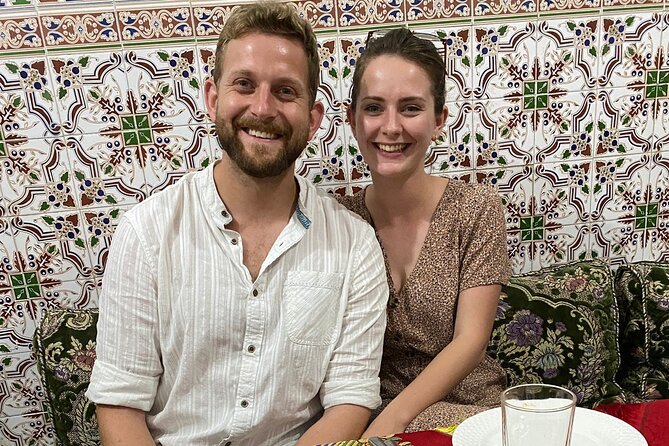
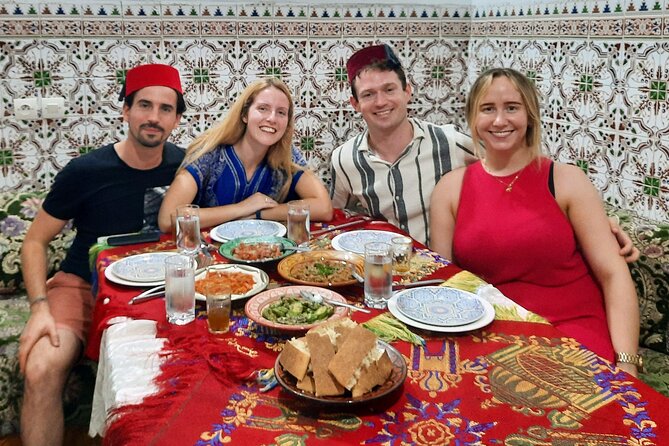
After the cooking, you sit down and share the finished food. The meal is included in the price, along with coffee or tea, so you are not paying for a lesson and then arranging lunch somewhere else.
The shared meal is an important part of the format. You eat with the people from your group, compare the work you have done, and get to know fellow participants. A class with visitors from different countries can feel social without requiring you to make separate evening plans.
The food itself is the reward for the preparation. Tagines, appetizers, and dessert are served after the work is finished, and the meal gives you a chance to judge the results while the techniques are still fresh in your mind.
There is also a practical advantage here. You can taste the seasoning and texture of the food as prepared by the chef, then ask what you might change when cooking at home. If you prefer a quiet meal or want a private table, the group format may not suit you as well.
Is $39.39 good value?
At $39.39 per person, this is a strong value for a three-hour activity that includes a market walk, cooking instruction, lunch, tea or coffee, and a French or English-speaking guide. You are paying for more than a recipe demonstration. The price covers the ingredients and the meal you help create, along with access to a local home setting.
The value is especially good if you want one activity that combines food, culture, and conversation. A standard restaurant meal may cost less, but it will not show you how the ingredients were selected or prepared. A private cooking school may offer more individual attention, but it will usually cost more.
The group size is the main factor to weigh. A maximum of 15 people keeps the price moderate and can create a lively atmosphere. It also means you should not expect uninterrupted one-to-one coaching from Chef Khmisa.
For a solo visitor, couple, or small group, the shared setting can be a pleasant way to meet people. Families may also enjoy it, since the cooking is practical and group members can take on different tasks. Guests who want a quiet, highly tailored lesson should ask about a private session instead.
Timing, meeting details, and cancellation
The activity begins and ends at the Bab Doukkala Mosque meeting point. Hotel pickup and drop-off are not included, and the experience is near public transportation. Since the cooking takes place inside the Medina, allow time to reach the mosque and find the correct meeting location.
Confirmation is provided at booking, and the class accepts mobile tickets. It is usually booked about 22 days ahead, so booking early is sensible if your Marrakech dates are fixed.
You can cancel for a full refund up to 24 hours before the local start time. Cancellations or changes made less than 24 hours before the start are not refunded or accepted. The class also requires a minimum number of participants, so if the provider cancels because that number is not reached, you can choose another date or receive a full refund.
Who should book this cooking class?
I would recommend it to anyone who wants to connect a Moroccan meal with the people, ingredients, and routines behind it. It is a particularly good choice for first-time visitors, food lovers, solo visitors looking for a social activity, and families who enjoy working together.
You should book it if you like active classes, communal meals, and practical skills you can use at home. The market visit and mint tea lesson add more than a standard cooking demonstration, while Chef Khmisa’s long experience gives the kitchen work a solid foundation.
I would hesitate only if you need a private class, dislike group activities, or require a guaranteed printed recipe afterward. In that case, contact the provider before booking and ask for a private session and clear recipe arrangements.
For most people, this is an easy activity to recommend. You walk through a local market, learn the tea ritual, cook a full Moroccan meal, and eat the results in a traditional Medina home. At $39.39, it offers a good balance of food, instruction, and local contact without taking up an entire day.
FAQ
Where does the Moroccan cooking class begin?
It begins at Bab Doukkala Mosque, Mosquée Bab Doukkala, Marrakech 40000, Morocco.
Where does the activity end?
The activity ends back at the meeting point near Bab Doukkala Mosque.
How long does the cooking class last?
The class and market visit take approximately three hours.
What food is included?
The meal includes a Moroccan starter, main course, and dessert. Coffee and/or tea are also included.
Are vegetarian and vegan choices available?
Yes. Vegetarian and vegan options are available, and you should discuss food allergies and restrictions before the market visit.
How many people can join the class?
The shared activity has a maximum of 15 participants.
Can I cancel for a full refund?
Yes. You can cancel at least 24 hours before the local start time for a full refund. Cancellations made less than 24 hours before the start are not refunded.
Just added around Marrakech
- Quad in the Palmeraie of Marrakech★ 5.0 · 41 reviews
- Marrakech Desert Camel Ride★ 5.0 · 17 reviews
- Sunset Camel Ride in the Palm Grove Of Marrakech★ 5.0 · 34 reviews
- Private Airport Transfer from or to Marrakech Menara Airport.★ 4.5 · 63 reviews
- Marrakech The History and Culture Day Trip★ 4.5 · 45 reviews
- Marrakech: Tailor-Made City Tour With Your Own Private Guide★ 4.9 · 236 reviews
- Marrakech palm grove: Sunset camel ride★ 4.8 · 194 reviews
- Sparkling Marrakech through the eyes of your local Guide★ 4.7 · 247 reviews
Cooking Classes, compared.
Half-Day Cooking Class with Local Chef Laila in Marrakech
Read our review →
Marrakesh cooking class with chef Hassan – Local dishes
Read our review →
Marrakech Tour: Tajine Cookery Class Experience
Read our review →
Atlas Mountains Cooking Class with Berber Family
Read our review →Browse the lists this tour appears in