
Reviewed · COOKING CLASSES
Marrakech: Cultural Bicycle Tour with Pastry and Tea
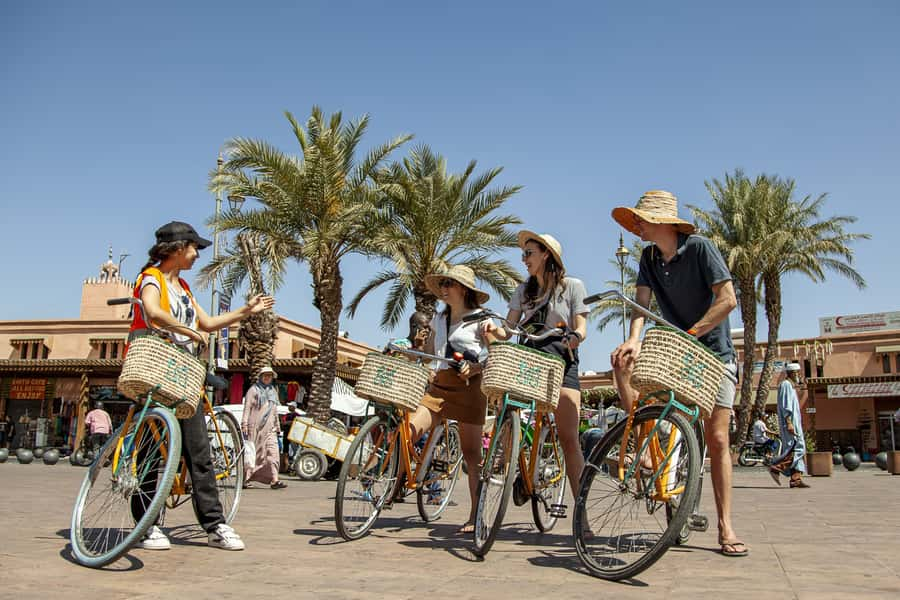
Marrakech’s best stories are often found beside the famous sights. This three-hour ride takes you from a community bakery and zellige workshop to the Royal Palace gardens, a public hammam, and the newer Gueliz and Hivernage districts. You see how ordinary life works, not just the postcard version of the Red City.
I like the way the tour connects culture to daily routines, especially the meaning of bread and the social role of the hammam. I also like its social purpose: Pikala Bikes trains Moroccan young people as guides and supports local businesses. The main drawback is traffic. You need to be a confident cyclist, since mopeds, donkeys, carts, pedestrians, and other bikes share tight lanes.
Key points at a glance
- Bread is part of the lesson: Watch loaves bake in a clay oven and taste fresh Moroccan bread.
- Zellige becomes understandable: See tile artisans shape and assemble the geometric mosaics by hand.
- The route crosses two Marrakechs: Ride from the old medina and souks to the broad roads of Gueliz and Hivernage.
- Guides make the difference: Young local hosts such as Ayoub, Rabab, Hamid, Yassir, Kenza, and Sayid have been praised for warmth and clear explanations.
- The cycling is the adventure: The route is mostly gentle and flat, but the first hour can feel hectic in narrow streets.
- $34 buys more than transport: Water, fruit, sunscreen, local stops, and pastries, tea, or juice are included.
Why this bicycle tour shows more than Marrakech’s famous sights
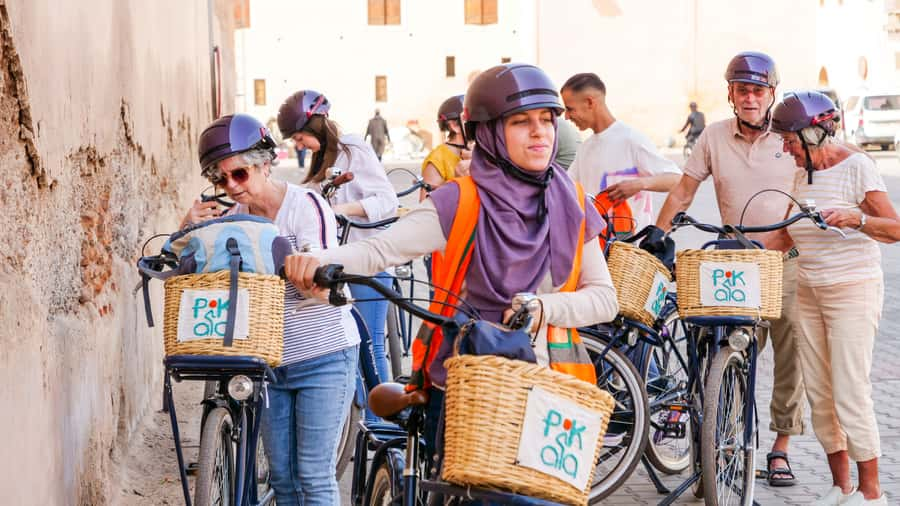
A walking tour can reveal the medina’s details, but a bicycle gives you a wider sense of how the city fits together. You move from the old walled town to modern boulevards in one outing, with pauses that explain what you are seeing.
The point is not speed. The bikes move at an easy pace, and the group stops often. The value comes from the local context: why bread is shared, how Moroccan tile is made, what happens in a hammam, and how the monarchy shapes the city.
Pikala’s approach also gives the ride a personal feel. The guides are Moroccan young people being trained through a social enterprise. Names appearing among the guide team include Ayoub, Rabab, Hamid, Yassir, Kenza, Sayid, Yasmin, Khawla, Iman, and Khalil. Your guide will depend on the day, but the repeated strength of the program is its local voice and friendly care for the group.
More Cooking Classes in Marrakech
- Marrakech: Moroccan Cooking Class with Pickup
★ 4.6 · 1,862 reviews - Marrakech: Traditional Moroccan Cooking Class & Market Visit
★ 4.8 · 1,861 reviews - Marrakesh: Moroccan Dishes Cooking Class with a Local Chef
★ 5.0 · 1,615 reviews
Starting at Pikala Bikes in the medina
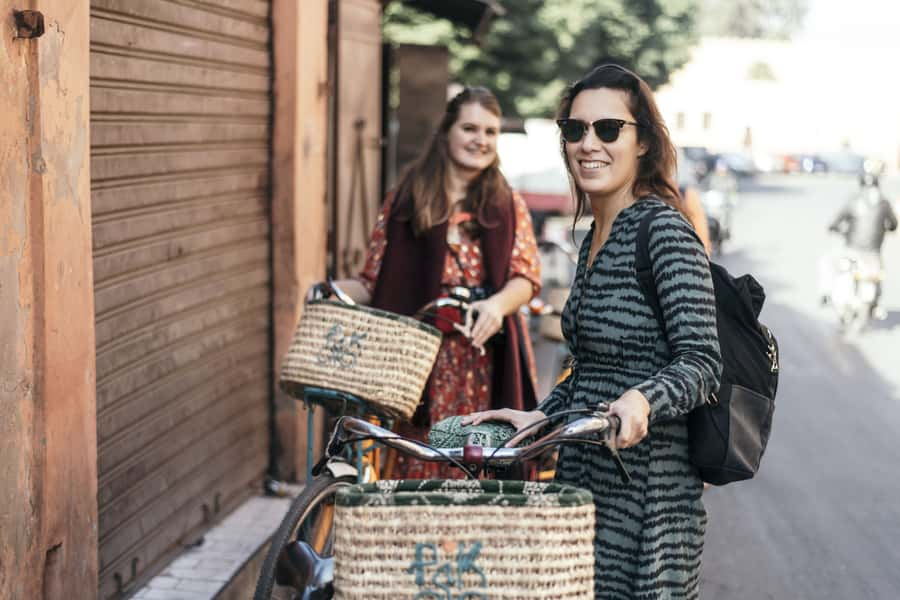
The tour begins at Pikala Bikes headquarters. You receive a bicycle, water, and sunscreen before setting off. The bikes are Dutch-style and have comfortable saddles, although some riders find them heavy to handle in tight spaces.
Wear casual clothes that let you move freely. Long dresses and skirts can catch on the bike, so trousers or shorts are more practical. Bring a light layer too. One rider found a jumper useful when the sun disappeared.
The early section is the part to take seriously. You may be riding through narrow medina lanes where pedestrians, mopeds, donkeys with carts, and other cyclists all negotiate the same space. The pace is not described as fast, but you need to steer, brake, and remain alert.
Marrakech traffic can look unstructured at first. Your guide leads the way, gathers the group at crossings, and checks behind for stragglers. Still, this is not the place to learn to ride a bicycle. If you are rusty, uncomfortable in traffic, or easily rattled by close passing, this tour may feel like work rather than fun.
Sidi Bel Abbas and the first glimpse of local Marrakech
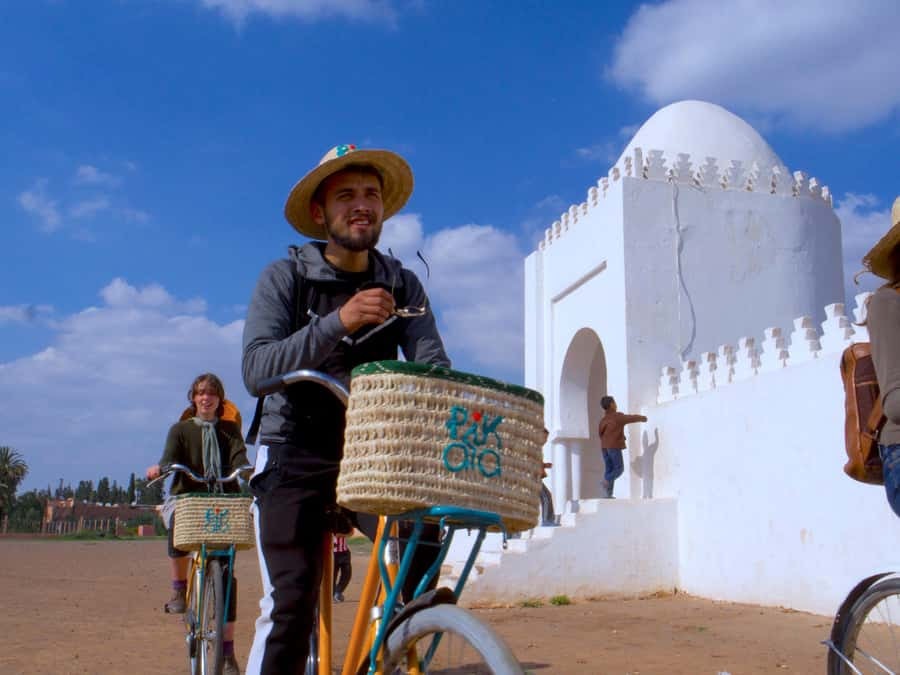
One of the early stops is the Zawiya of Sidi Bel Abbas. You pause for photographs and an explanation of the site, then continue through the surrounding streets.
This stop helps set the tone. The tour is not simply a procession of major monuments. It uses religious buildings, neighborhood lanes, workshops, and public spaces to explain how the city works. You will see familiar Marrakech colors and architecture, but the guide’s comments connect them to local customs and everyday use.
Because the stop lasts only around 15 minutes, expect an introduction rather than a long architectural lecture. That is useful on a three-hour ride. You keep moving, but you have enough time to understand why the place matters.
The community bakery and why bread matters
The local bakery is one of the strongest parts of the outing. You step inside, watch bread bake in a clay oven, and taste fresh Moroccan bread.
This is a small stop with a large payoff. Bread is a daily staple, and the bakery shows a practical side of Moroccan life that can be easy to miss when you spend your time in restaurants and souks. The clay oven, the shared neighborhood function, and the fresh loaf make the tradition concrete.
The visit is brief, around 10 minutes, so do not expect a full cooking class. You are there to watch, learn, and taste. It is also a good example of the tour’s wider method: ordinary places become meaningful when someone explains their role.
A completely different kind of day in Marrakech:
- Marrakech: Quad Bike Tour to Palm Oasis and Jbilat Desert
★ 4.8 · 11,831 reviews - Marrakesh: Majorelle Garden Entry Tickets
★ 4.5 · 9,651 reviews - Marrakech Quad Bike Experience: Desert and Palmeraie
★ 4.5 · 9,509 reviews - Marrakech: Balloon Flight, Berber Breakfast & Certificate
★ 4.8 · 8,164 reviews
Through the souks to Place des Ferblantiers
After the bakery, the ride continues through less obvious parts of the medina and souks. You pass small businesses and lanes where the main challenge is sharing space. This is where the bicycle gives you a close view of daily activity, but it is also where concentration matters most.
The route reaches Place des Ferblantiers, where you get about 20 minutes for a break, photographs, and free time. The square is a welcome pause after the narrow lanes. You can look around, take pictures, and let the group regroup.
Several riders especially enjoyed the way the tour moves through working areas rather than staying on the standard sightseeing path. You may not be told every stop in advance, which keeps the ride fresh, but the tradeoff is that the route is not a fixed list of grand attractions. Its pleasure comes from the links between places.
Zellige tile work, from pattern to craft
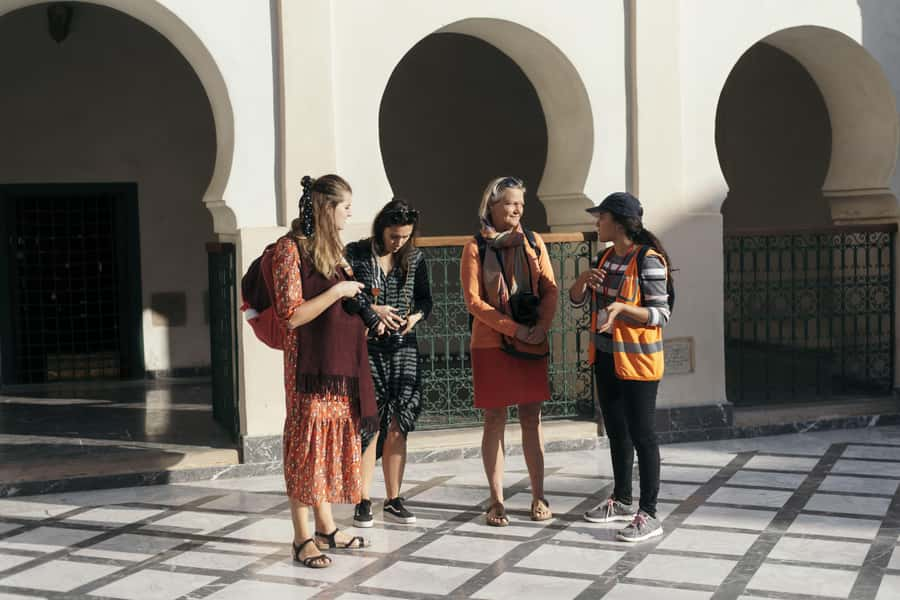
The Moroccan tile workshop offers a closer look at zellige, the geometric tilework used in palaces, mosques, courtyards, and fountains. You meet artisans and see how the pieces are shaped and assembled.
Zellige is easy to admire and easy to misunderstand. From a distance, it can look like a repeated printed pattern. At the workshop, you learn that the design depends on careful handwork and the patient arrangement of small cut pieces.
This stop is particularly useful if you plan to visit palaces or riads later in your trip. You will notice the tilework differently after seeing how much labor sits behind a finished wall. The visit also gives you a direct connection to Moroccan craft, rather than treating decoration as background scenery.
The Royal Palace gardens and the public view
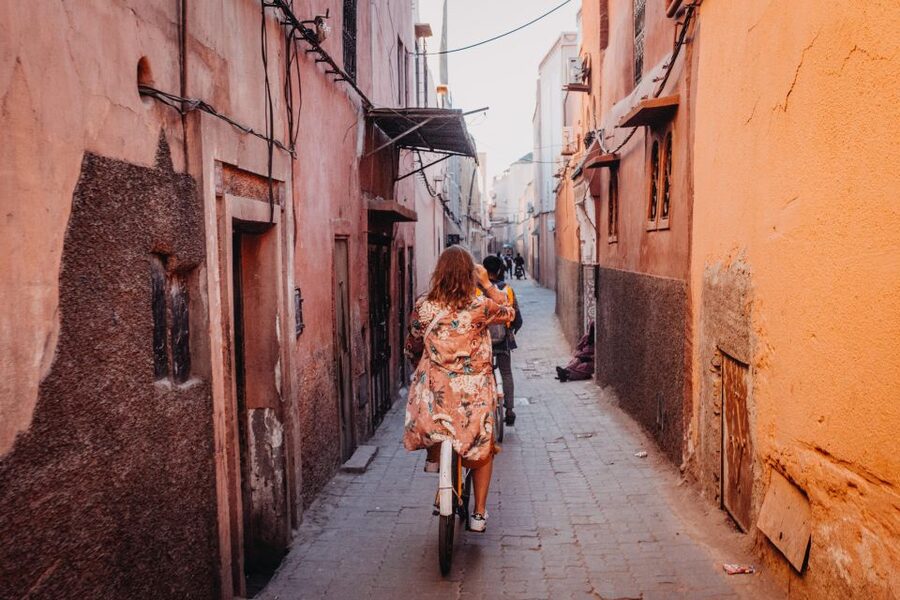
The ride passes the public gardens around the Royal Palace, Dar El-Makhzen. You admire the architecture from outside and learn about its place in Morocco’s monarchy and political history.
Do not expect to enter the palace. This is an exterior view from public space, with time to stop, photograph, and listen. That limitation is worth knowing before you book, especially if you are looking for an indoor palace visit.
The stop works well in the sequence because it adds a national and royal layer to the neighborhood-level stories. You have just seen bread baked for daily use and tile made by artisans. Here, the guide explains how similar traditions appear in places connected to the monarchy.
The hammam as a place for daily life
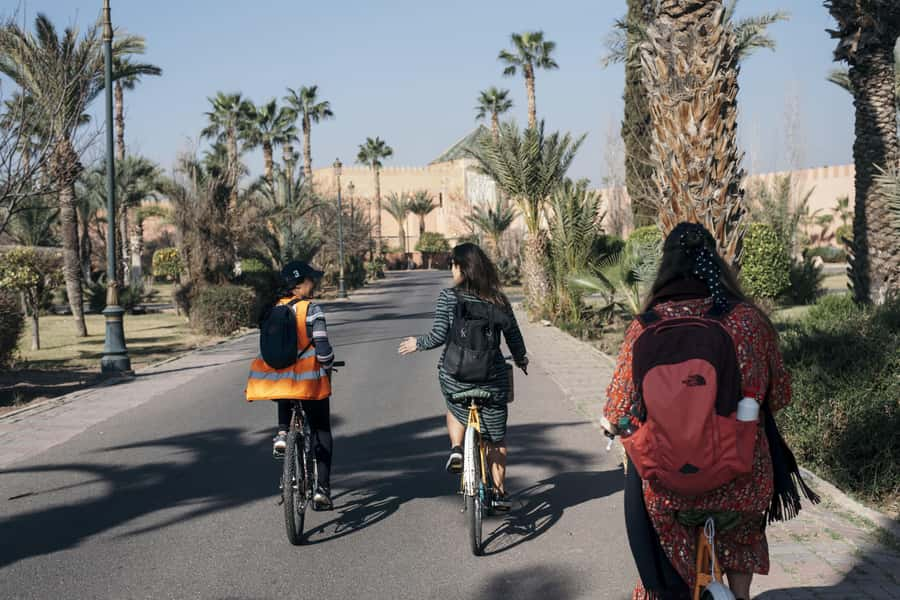
The traditional hammam stop explains the rituals and social role of the Moroccan public bathhouse. The focus is cultural, not a spa treatment. You learn what the hammam means in everyday Moroccan life and how the custom fits into community routines.
This is another reason the tour is more useful than a simple city ride. A hammam can look mysterious from the street, and a guide gives you enough background to understand it without turning the visit into a staged performance.
The stop may be especially interesting if you have seen hammams advertised as tourist experiences. Here, the emphasis is on the institution and its place in local life. The schedule allows about 10 to 15 minutes at several smaller stops, so expect explanation and observation rather than a long stay.
Koutoubia, the Church of the Holy Martyrs, and the city’s mixed story
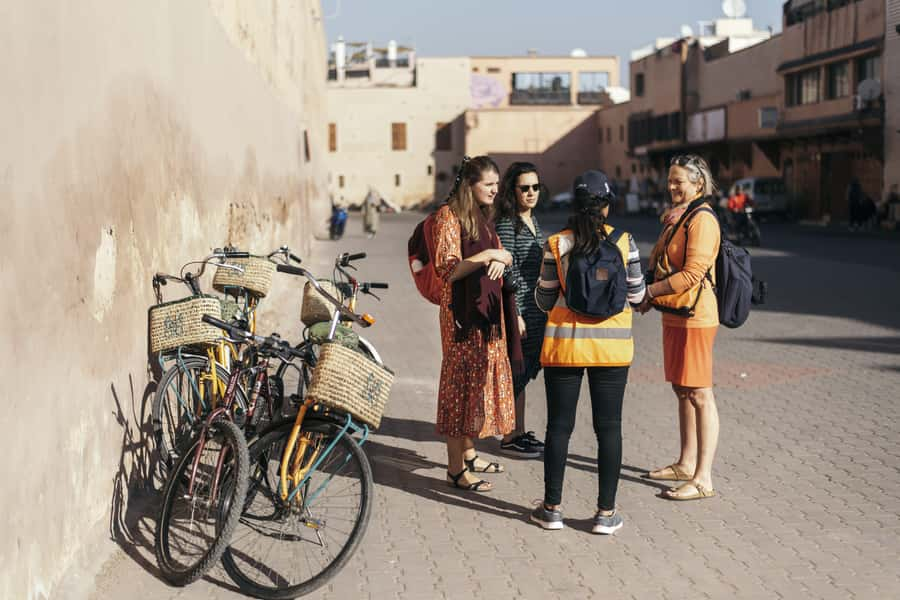
The route passes Koutoubia Mosque, one of Marrakech’s best-known landmarks. This is a sightseeing stop rather than an interior visit. Your guide can place the mosque within the city route and explain its importance as you continue.
You also pause at the Church of the Holy Martyrs. Seeing a mosque and a church on the same bicycle tour adds useful context to Marrakech’s religious and civic history. The stop is brief, but it widens the story beyond the usual image of the medina.
Do not judge these places only by stop length. The tour is designed to connect many parts of the city, so the guide has to balance explanation with riding time. If you want long visits inside major monuments, book a dedicated walking or museum tour instead.
Gueliz and Hivernage, Marrakech after the medina
The final stretch heads into modern Marrakech, including Gueliz and Hivernage. Wide boulevards, cafes, luxury hotels, and newer city planning replace the tight lanes of the old town.
This contrast is one of the tour’s smartest features. Without leaving the city, you see how Marrakech balances tradition with newer forms of business, leisure, and urban life. The older quarter is not the whole story.
The modern roads can feel intimidating at first. They are wider and faster than the souk lanes, and you may need to adjust to a different rhythm. Guides keep the group together and lead crossings, but you still need to pay attention. One rider found the new town unnerving at the beginning and comfortable soon after.
Mint tea, pastries, and the Pikala Cafe finish
The ride ends at Pikala Cafe, with about 20 minutes for tea, coffee, local snacks, Moroccan pastries, fruit, and juice. Mint lemonade and spiced cookies have also been part of the refreshments provided on some outings.
This finish is more than a sweet reward. It gives you time to ask questions and talk with the guide after the road work is done. If you are already planning where to eat in Marrakech, the cafe can also give you a useful local stop to remember.
Water and fruit are included during the activity, along with sunscreen and free entry to the local stops. Hotel pickup and drop-off are not included, so you need to make your own way to Pikala Bikes headquarters.
What $34 gets you, and who should book
At $34 per person, this is good value if you want a broad introduction to Marrakech rather than a single monument. You receive a three-hour guided ride, a bicycle, cultural visits, drinks and snacks, sunscreen, and a local guide who can explain daily life in English or French.
The strongest value is the range. In one morning or afternoon, you cover the medina, souks, bakery, craft workshop, hammam tradition, Royal Palace exterior, Koutoubia area, church, modern districts, and cafe. A private taxi could move you between these areas, but it would not provide the same local explanation or the same close look at neighborhood life.
Small groups are another advantage. The exact size can vary, but outings described by participants included groups of six, families of five, and even a private ride when only one person booked. Smaller groups make it easier for the guide to watch the road and answer questions.
I would choose this tour early in a Marrakech visit. It gives you a useful map of the city and helps you understand places you may later revisit on foot. It suits active adults, confident cyclists, curious families, and anyone who prefers local stories to a checklist of monuments.
It is less suitable for a hesitant cyclist, anyone seeking a quiet sightseeing ride, or someone who wants a relaxed palace or museum visit. A 72-year-old rider managed the outing with a tandem, but the practical lesson is to discuss your needs with Pikala before booking if you need special equipment or extra support. The supplied details confirm tandem use in one case, but not a general equipment policy.
Cancellation is free up to 24 hours before the start, and you can reserve now and pay later. Starting times vary, so check availability when choosing your date. The meeting point is Pikala Bikes, not your hotel.
Should you book the Pikala Cultural Bicycle Tour?
Book it if you want to understand Marrakech through bread ovens, tile tools, bathhouse customs, working neighborhoods, and the sharp contrast between the medina and modern town. The guides, including names such as Rabab, Hamid, Yassir, Kenza, and Sayid, are central to the experience, and the program gives young Moroccan hosts a real role in presenting their city.
Skip it if you are not comfortable riding around mopeds, donkeys, carts, pedestrians, and cars. For everyone else, the traffic is part of the challenge and part of the story. At $34, this is a strong choice for a first look at Marrakech, provided you arrive ready to ride alertly and keep an open mind.
FAQ
How long does the cultural bicycle tour last?
The tour lasts three hours, although one outing was described as taking about three and a half hours.
How much does the tour cost?
The listed price is $34 per person.
Where does the tour start and finish?
It starts and ends at Pikala Bikes headquarters.
Which languages are available?
Live guiding is available in English and French.
Is hotel pickup included?
No. Hotel pickup and drop-off are not included.
What food and drinks are included?
The experience includes water and fruit, plus juices and Moroccan pastries at Pikala Cafe. Tea, coffee, and local snacks are also available at the cafe stop.
Do I need to be an experienced cyclist?
You should be a confident cyclist and comfortable staying alert around mopeds, donkeys, carts, pedestrians, and other vehicles. The route is generally gentle and flat, but the medina lanes can feel hectic.
Do I need special clothing?
Wear casual, comfortable clothes. Long dresses and skirts can be awkward on a bicycle, so practical cycling clothes are better. A light jumper may be useful if the weather cools.
Can I cancel the booking?
Yes. You can cancel up to 24 hours in advance for a full refund. You can also reserve now and pay later.
Just added around Marrakech
- Quad in the Palmeraie of Marrakech★ 5.0 · 41 reviews
- Marrakech Desert Camel Ride★ 5.0 · 17 reviews
- Sunset Camel Ride in the Palm Grove Of Marrakech★ 5.0 · 34 reviews
- Private Airport Transfer from or to Marrakech Menara Airport.★ 4.5 · 63 reviews
- Marrakech The History and Culture Day Trip★ 4.5 · 45 reviews
- Marrakech: Tailor-Made City Tour With Your Own Private Guide★ 4.9 · 236 reviews
- Marrakech palm grove: Sunset camel ride★ 4.8 · 194 reviews
- Sparkling Marrakech through the eyes of your local Guide★ 4.7 · 247 reviews
Cooking Classes, compared.
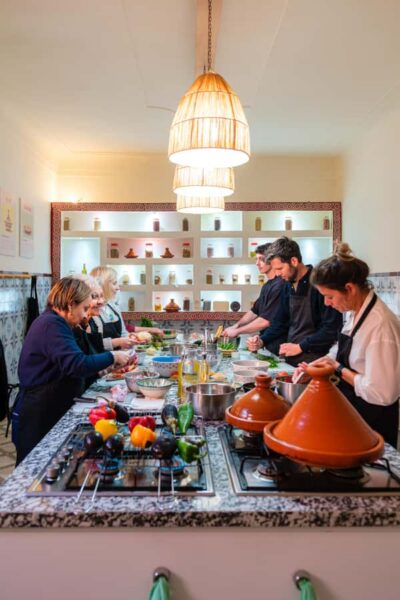
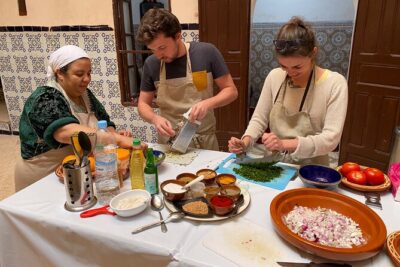
Half-Day Cooking Class with Local Chef Laila in Marrakech
Read our review →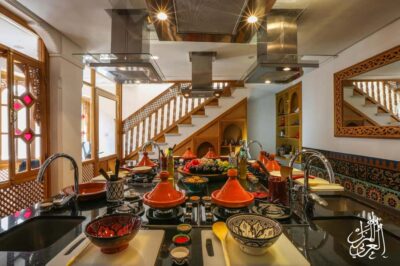
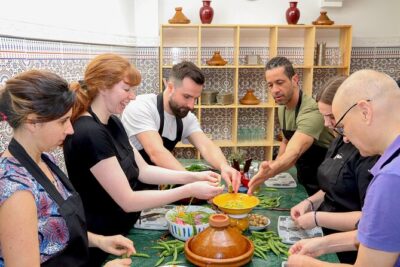
Marrakesh cooking class with chef Hassan – Local dishes
Read our review →
Marrakech Tour: Tajine Cookery Class Experience
Read our review →
Atlas Mountains Cooking Class with Berber Family
Read our review →
Cook Moroccan Food & Try on Traditional Clothes like a local
Read our review →Browse the lists this tour appears in