
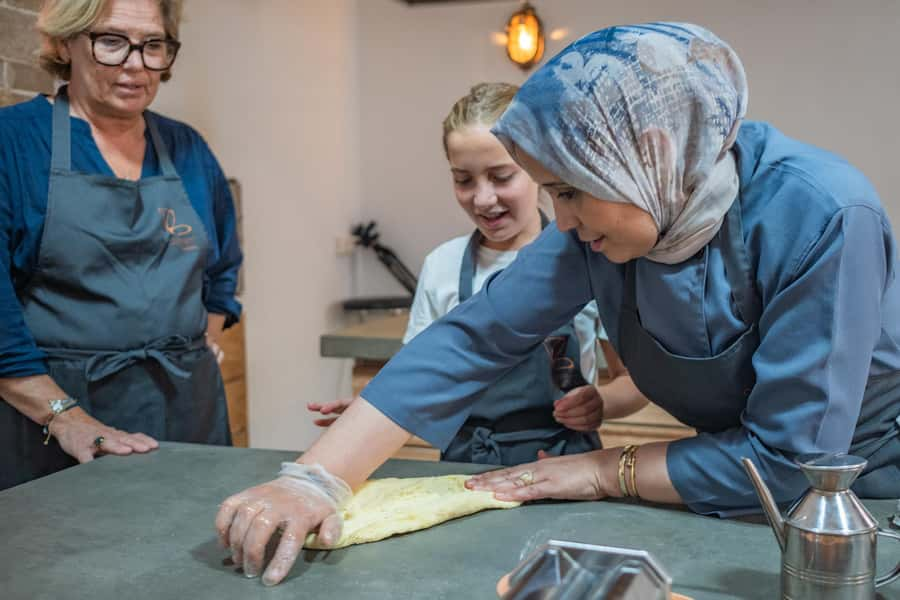
Reviewed · COOKING CLASSES
Essaouira: Moroccan pastry workshop
The best part of this Essaouira workshop is that you do not simply watch Moroccan sweets being made. You shape gazelle horns, prepare sesame-and-dried-fruit cakes, then taste your work during a proper mint tea ceremony. It is a hands-on look at a part of Moroccan home cooking that is easy to miss between sightseeing stops.
I like the small group size, capped at nine, and the fact that instruction is available in Arabic, French, and English. I also like the practical finish: you leave with a box of cakes, not just a few bites eaten at the table. The main consideration is timing. The class begins at 3:30 p.m., so it takes up much of your late afternoon and does not include hotel pickup or extra café purchases.
Key details at a glance
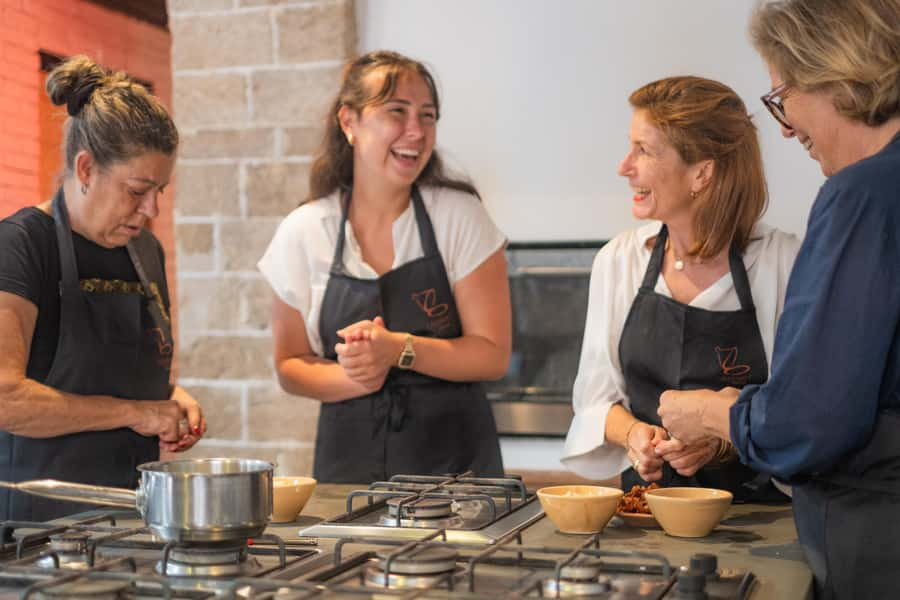
- Two Moroccan pastries: You make gazelle horns and cakes with dried fruit and sesame seeds.
- A real tea ceremony: Mint tea is prepared, shared, and paired with the pastries you have made.
- Small groups: No more than nine participants means more room for questions and hands-on help.
- Three teaching languages: Instruction is offered in Arabic, French, and English.
- Take-home box: Your finished cakes are packed so you can continue tasting them later.
- A focused afternoon activity: The class starts at 3:30 p.m. and lasts about 1 hour and 45 minutes, with roughly two hours allowed overall.
Entering the pastry workshop in Essaouira
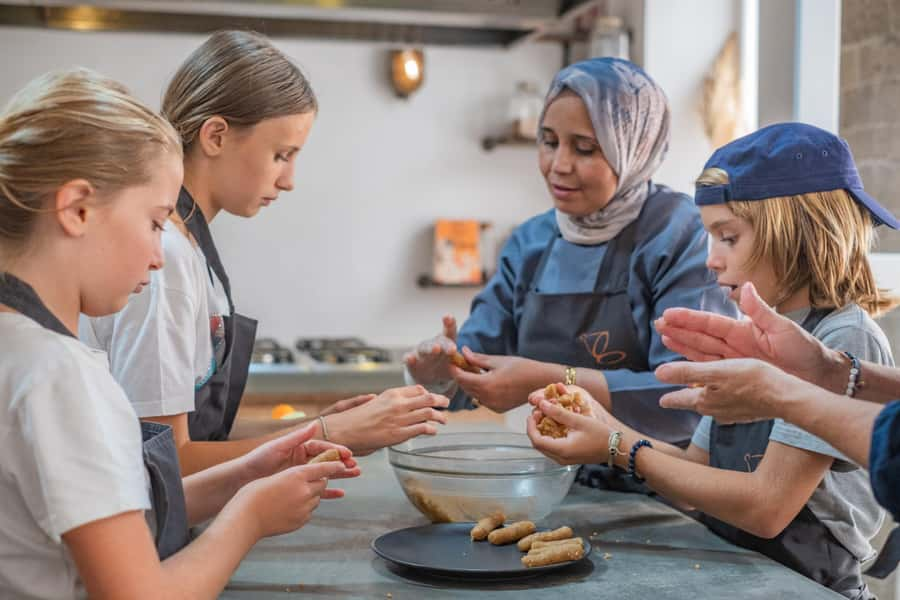
This is a compact food experience rather than a long cooking course. You arrive for the afternoon session, meet the teaching team at l’Atelier Essaouira, and settle in for a guided class built around two familiar Moroccan sweets.
The setting has been described as attractive, and the workshop itself is lively without being a large production. That matters here. Pastry work is easier to follow when you can see the demonstration and get help with your own dough, fillings, and shaping. With a maximum of nine people, you should have a fair chance to participate rather than stand behind a crowd.
The instructors are described as a chef and an activity host. Their names are not provided, but the teaching approach is clear: they demonstrate the process, explain the ingredients, and help you as you work. The class is offered in Arabic, French, and English. If your group is mixed, the language arrangement may vary, so it is sensible to check availability when booking.
Younger children under eight are not accepted. That rule makes sense for a pastry session that involves careful shaping and several stages of preparation. Families with older children may find it a pleasant shared activity, while adults looking for a quiet, technical baking lesson should remember that the mood is social and interactive.
More Cooking Classes in Essaouira
- Essaouira: HOW TO BE A REAL MOROCCAN CHEF
★ 4.9 · 154 reviews - l’Atelier – Moroccan Cooking Workshop in Essaouira
★ 5.0 · 110 reviews - How To Be A Real Moroccan Chef
★ 5.0 · 101 reviews
Making gazelle horns by hand
Gazelle horns, known in Morocco as kaab el ghazal, are among the country’s best-known pastries. Their name comes from the slim, curved shape, not from an ingredient. The pastry is usually associated with a delicate outer layer and a sweet almond-based center, although the exact recipe used in this workshop is not specified.
You will learn by watching the process and then trying it yourself. The useful part is not simply eating the finished pastry. It is seeing how the dough is handled, how the filling is prepared, and how the shape is formed without losing the pastry’s neat crescent profile.
This is where the small group earns its keep. Pastry shaping can look simple during a demonstration and become less simple once the dough is in your hands. Patient help is available, and the teaching team has been praised for explaining ingredients clearly and giving participants time to work.
Do not expect every piece to look like a bakery display model. That is part of the charm. The workshop gives you a working understanding of the method, and you get to taste the results even if your first few crescents are slightly uneven.
The recipe also has value beyond the afternoon itself. The workshop provides its recipes online after you return home, so you can try to repeat the experience in your own kitchen. That makes this more useful than a one-time tasting, especially if you enjoy bringing food skills home from a trip.
Preparing dried-fruit and sesame cakes

The second pastry is a cake made with dried fruit and sesame seeds. It offers a different lesson from the gazelle horns, with ingredients that bring sweetness, texture, and a nutty flavor to the mixture.
Fresh, local ingredients are used in the recipes. The available information does not provide a full ingredient list or identify the exact dried fruits, so you should not expect a detailed menu in advance. What you can expect is an explanation of the ingredients as the class progresses and a chance to test your understanding while preparing the cakes.
This recipe is likely to feel more forgiving than the shaped gazelle horns because it is less dependent on a precise crescent form. Still, the class is not just a demonstration. You take part in the preparation, and the instructors guide you through the steps.
The two pastries make a good pair. One shows off delicate shaping, while the other focuses more on a cake mixture, seeds, and dried fruit. You get variety without spending half a day learning a long list of recipes.
At the end, your pastries are placed in a box for you to take with you. The box is a useful touch for anyone staying in Essaouira for several days, and it also gives you something to share later rather than finishing everything during the tea service.
The mint tea ceremony and tasting
Moroccan mint tea is not just a drink served beside food. The ceremony gives the workshop its cultural center. Once the pastries are prepared, the class turns to tea, and the group shares the drink while tasting what it has made.
You will be taught the ceremony rather than simply handed a glass. The workshop presents the preparation as part of Moroccan hospitality, which helps connect the recipes to everyday food culture. Tea and sweets are a natural pairing in Morocco, so this portion feels like more than an add-on.
The tasting also gives you a chance to compare the two pastries while they are fresh. That is useful because texture matters as much as flavor in Moroccan pastry. A sweet can be crisp, tender, dense, or crumbly, and the tea helps balance the richness.
The tea service is shared with the other participants, so this is a social part of the afternoon. If you prefer a private, quiet cooking lesson, the group format may feel less personal. If you enjoy talking while you work, the arrangement should suit you well.
The class is also a good choice for a rainy afternoon or for a break from walking around Essaouira. It gives you a place to sit, work with your hands, and learn something tied directly to local customs.
A completely different kind of day in Essaouira:
- From Marrakesh: Essaouira Full-Day Trip
★ 4.6 · 8,137 reviews - From Marrakech: Small Group to Essaouira & Sekkala Day Trip
★ 4.9 · 6,671 reviews - From Marrakech: Essaouira Day Tour with Optional Activities
★ 4.3 · 5,125 reviews - From Marrakesh: Small Group To Essaouira With Opt Activities
★ 4.8 · 2,633 reviews
What the two-hour schedule feels like
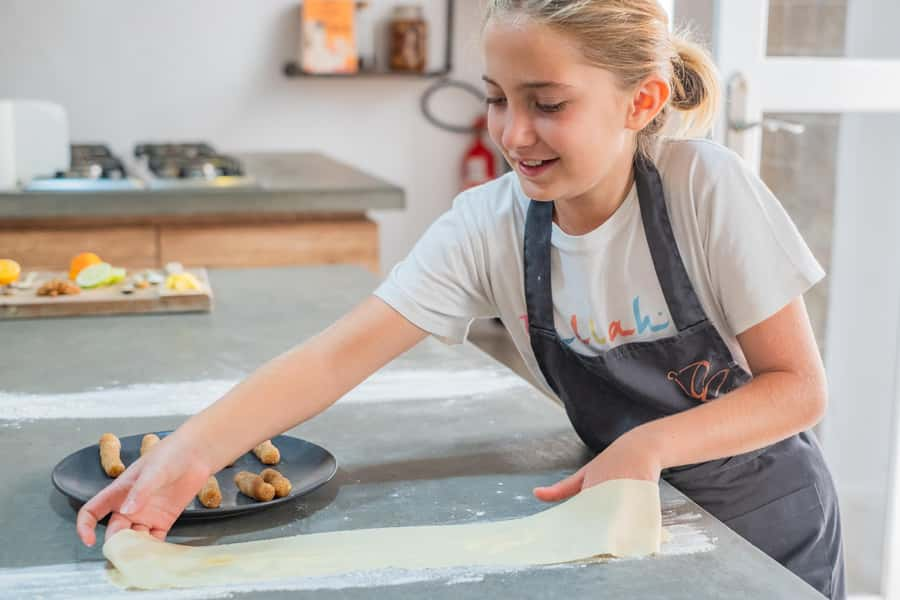
The class begins at 3:30 p.m. and the active session lasts about 1 hour and 45 minutes. The experience is described as lasting two hours, so I would set aside the full two-hour window rather than plan another fixed activity immediately afterward.
The timing is convenient if your morning and early afternoon are already filled with sightseeing. It is less convenient if you have an evening transfer, a dinner reservation directly after class, or a day trip returning late to Essaouira.
The session follows a clear sequence:
- You meet the teaching team and learn about the ingredients.
- The instructors demonstrate the two pastry recipes.
- You prepare gazelle horns and dried-fruit sesame cakes.
- You learn the Moroccan mint tea ceremony.
- You taste the pastries with tea.
- You receive a box of cakes to take home.
This is a focused program, not an open-ended cooking afternoon. You will not make a full Moroccan meal, visit a market, or receive hotel transportation. That narrow focus is a strength if you specifically want pastry and tea. It is a limitation if you are hoping for a broader food tour.
Is 300 dirhams good value?
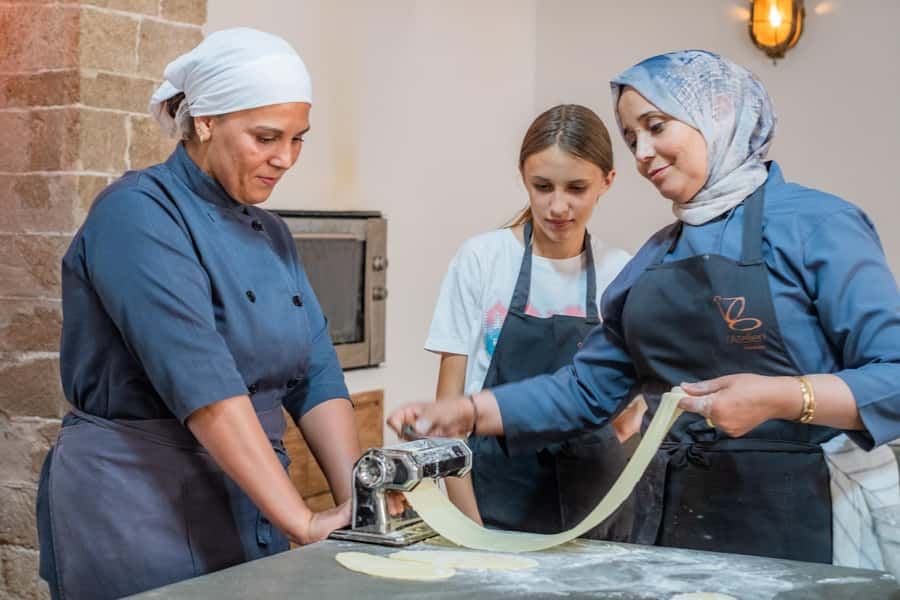
The price is 300 Moroccan dirhams per person, listed at about $34. Exchange rates change, but the cost is reasonable when you count the nearly two-hour class, instruction, ingredients, tea service, tasting, and take-home box.
You are paying for participation rather than just consumption. A café visit might give you tea and a pastry, but it would not show you how the sweets are made or provide recipes for later use. The take-home box adds practical value, particularly if you want a snack for the next day or a small food gift.
The price does not include hotel pickup. You also pay separately for any additional items ordered at the Atelier café. Those exclusions are simple, but they matter if you are trying to keep the afternoon budget tight.
I would consider this good value for someone who enjoys food activities and wants a local skill to take home. It is less compelling if you are not interested in baking, since the class is built around hands-on pastry work rather than sightseeing or a broad cultural talk.
Who will enjoy this class most?
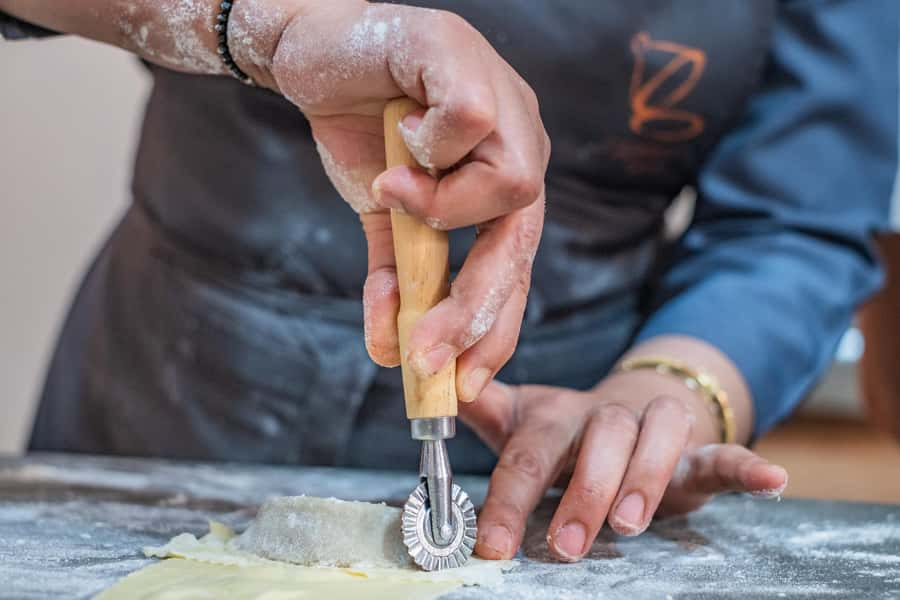
I would recommend it first to adults, couples, solo visitors, and families with children eight or older who like making things together. The class does not require advanced cooking experience, and the teaching style is patient and practical.
Solo participants should also feel comfortable booking. The small group can make it easier to meet people, and the class remains worthwhile even if you do not arrive with a companion.
It is especially useful for you if:
- You want a break from walking and sightseeing.
- You enjoy Moroccan food but want to understand how it is made.
- You would like recipes to try again at home.
- You prefer a small group to a large cooking demonstration.
- You value an activity that includes both food and a cultural ritual.
- You want a take-home souvenir that is edible and made by you.
You may want to skip it if you are looking for a full meal, a market visit, or a longer culinary course. It is also not suitable for children under eight, and anyone with a tight evening schedule should account for the 3:30 p.m. start and two-hour commitment.
Language, teaching style, and group size
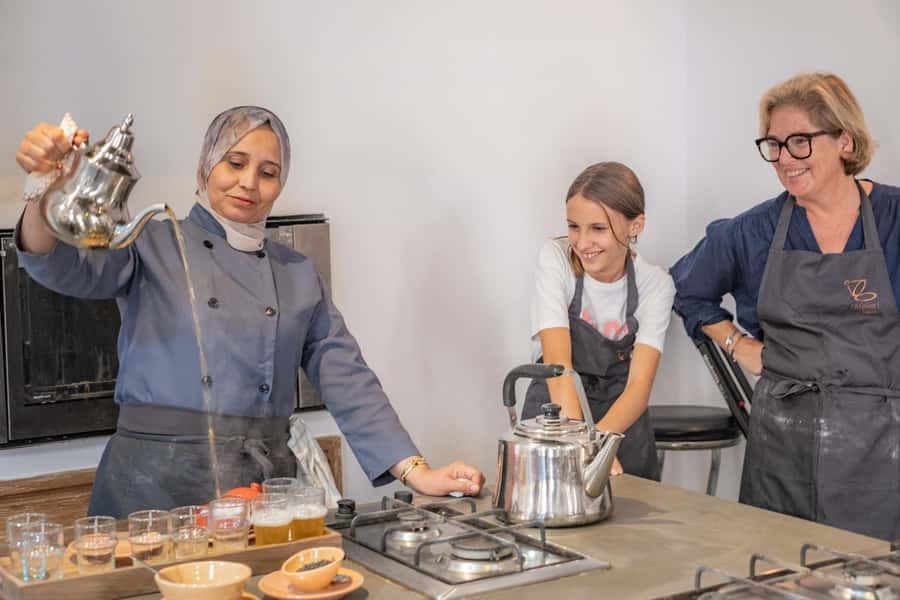
The class is taught in Arabic, French, and English. That broad language range is helpful in an international group, though the exact language used may depend on the participants and instructor available that day.
The teaching style is a major part of the experience. The class uses demonstrations, explanations of ingredients, and guided practice. You are not left to copy a recipe from a card without help.
The teaching team has been praised for patience, kindness, and clear instruction. One session was attended by a single participant, who received close attention from two women leading the activity. That suggests the class can remain personal even when attendance is light.
At the same time, the group limit is nine rather than one-on-one instruction as a standard promise. If your booking happens to be busy, you will share the work area and the instructor’s attention. The cap still keeps the experience manageable, but it is worth keeping expectations realistic.
Booking details worth knowing
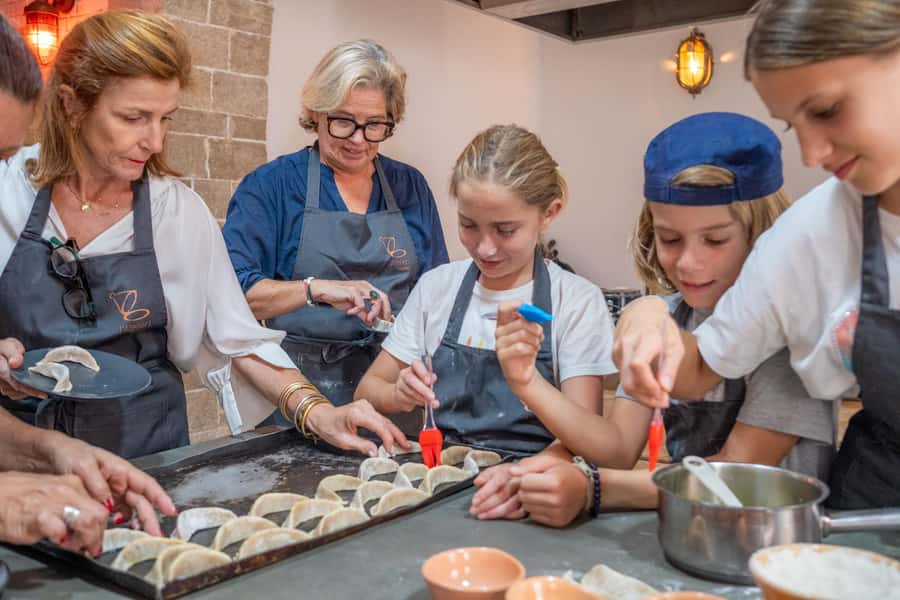
You can cancel up to 24 hours before the activity for a full refund. The reserve-now, pay-later option lets you hold a place without paying at the time of booking, which is useful when your Essaouira schedule is still shifting.
Check the available starting time before committing, since the advertised class begins at 3:30 p.m. The exact meeting arrangements are not described in the supplied details, and hotel pickup is not included, so you should confirm where to meet and plan your own way there.
The activity provider is l’Atelier Essaouira. Some content may be presented in its original language, but instruction is available in Arabic, French, and English.
Should you book the Essaouira pastry workshop?
Book it if you want a friendly, hands-on afternoon built around two Moroccan sweets, mint tea, and a take-home box. The small group, multilingual teaching, fresh local ingredients, and online recipes give the class more substance than a simple pastry tasting.
I would give it extra weight if you are staying in Essaouira for several days and want an activity that feels different from sightseeing. The main trade-offs are the fixed 3:30 p.m. start, the lack of hotel pickup, and the narrow focus on pastries rather than a complete Moroccan meal.
For about 300 dirhams, this is a sensible choice for food-minded visitors who value participation and cultural context. If you would rather spend the afternoon outdoors or are not interested in baking, use the time elsewhere. If the thought of shaping gazelle horns, sharing mint tea, and carrying home your own box of sweets sounds appealing, this workshop is an easy choice.
FAQ
Where does the pastry workshop take place?
The workshop takes place at l’Atelier Essaouira in Essaouira, within Morocco’s Marrakesh-Safi region.
What time does the class begin?
The class begins at 3:30 p.m.
How long does the experience last?
The activity lasts about two hours. The pastry class itself is described as approximately 1 hour and 45 minutes.
Which pastries will I make?
You will make two types of Moroccan pastries: gazelle horns and cakes made with dried fruit and sesame seeds.
Is mint tea included?
Yes. The class includes instruction in the Moroccan mint tea ceremony, followed by tea shared while tasting your pastries.
Are ingredients included?
Yes. The class uses fresh, local ingredients for the recipes.
What languages are available?
Instruction is available in Arabic, French, and English.
Can children join the class?
Children under eight are not permitted to participate.
Is hotel pickup included?
No. Hotel pickup is not included, and additional consumption at the Atelier café is also separate.
How many people can join the class?
The activity is limited to nine participants.
Do I get to take pastries home?
Yes. You leave with a box of the cakes you made during the class.
Can I cancel the booking?
You can cancel up to 24 hours in advance for a full refund. The reserve-now, pay-later option is also available.
Just added around Essaouira
- Individual Lessons of Kite Surf in Essaouira★ 5.0 · 113 reviews
- Private Kitesurf Lesson in Essaouira Morocco★ 5.0 · 38 reviews
- Surf Rental★ 5.0 · 31 reviews
- Surf Lesson with local surfer in Essaouira Morocco★ 5.0 · 166 reviews
- Essaouira: Private Transfer from or to Essaouira Airport★ 5.0 · 17 reviews
- Private Surf Lesson★ 5.0 · 21 reviews
- Kitesurf Rental★ 5.0 · 55 reviews
- Traditional Moroccan and Berber cooking classes★ 5.0 · 40 reviews
Cooking Classes, compared.
Half-Day Cooking Class with Local Chef Laila in Marrakech
Read our review →
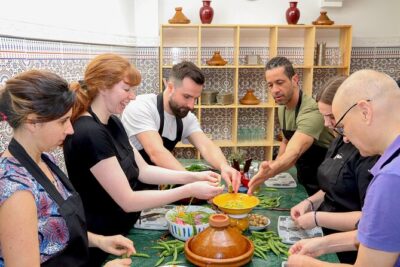
Marrakesh cooking class with chef Hassan – Local dishes
Read our review →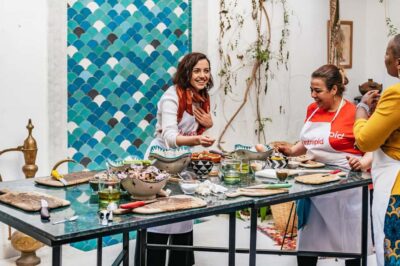
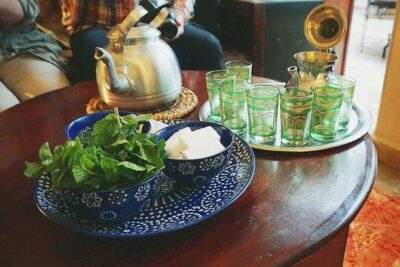
Marrakech Tour: Tajine Cookery Class Experience
Read our review →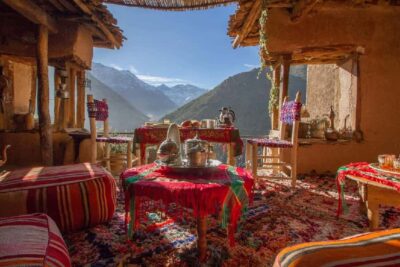
Atlas Mountains Cooking Class with Berber Family
Read our review →Browse the lists this tour appears in