
Reviewed · COOKING CLASSES
Traditional Moroccan and Berber cooking classes
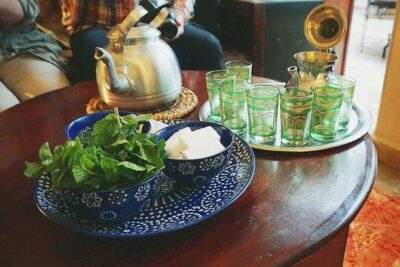
The best part of this Essaouira experience is that you do not simply watch someone cook. You help prepare a Moroccan meal from the first cut of a carrot to the final seasoning, then sit down and eat it together in a private Moroccan setting. Khadija welcomes you with mint tea, small cakes, and an easy introduction to the day.
I like the chance to work with real Moroccan staples such as preserved lemon, olives, cumin, saffron, and ras el hanout. I also like that the class covers more than one headline dish, with salads, cooking methods, dessert, and tea included. The main consideration is time: three hours gives you a good taste of Moroccan cooking, but not enough time for a long list of recipes.
Key points to know before booking
- Khadija leads a private class: Your group is the only group taking part, which makes it easier to ask questions and request help.
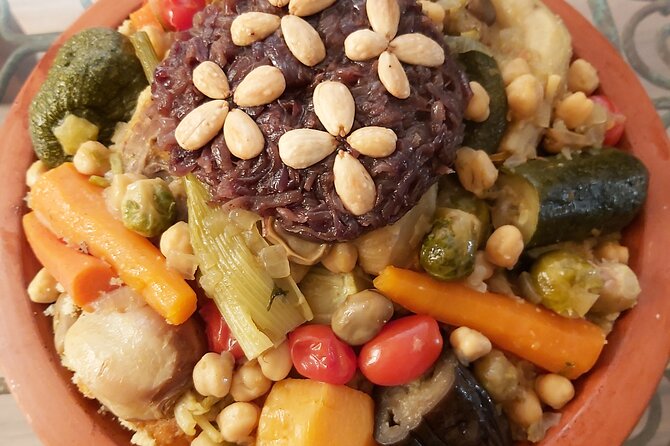
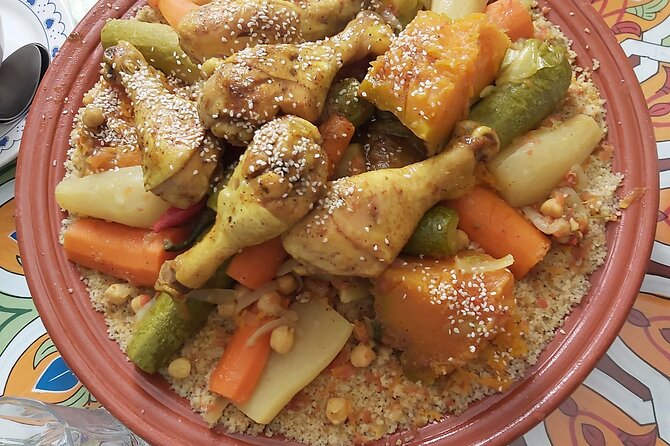
- You cook the full meal: Depending on the chosen menu, you may prepare tajine, couscous, pastilla, Moroccan salads, and dessert.
- The spice lesson matters: You learn how cumin, saffron, cinnamon, preserved lemon, olives, and ras el hanout shape Moroccan food.
- The meal is part of the class: After cooking, you sit at the table and eat what you prepared together.
- It suits several languages: Khadija speaks French, English, Arabic, and Berber.
- The price covers more than instruction: At $58.31 per person, you also receive tea or coffee, water, Moroccan cakes, the shared meal, and recipe cards.
A welcoming start with mint tea and Moroccan cakes
The class begins at 21 Av. Princesse Lalla Amina in Essaouira. You return to this same meeting point at the end, and private transportation is not included, so plan your route there on your own.
Khadija starts the session in a Moroccan setting with mint tea or spiced coffee and small Moroccan cakes. This opening is useful rather than decorative. You get time to settle in, hear the plan for the class, and learn about the preparation of mint tea before moving to the cooking area.
I like this gentle beginning because it puts the food in context. Moroccan tea is not just a drink added to the menu. The preparation is part of the country’s hospitality, and learning it at the start gives the class a cultural thread that runs through the meal.
The tone also seems well suited to people who prefer conversation over a formal demonstration. Khadija speaks four languages, so you can take part in French, English, Arabic, or Berber. If your group includes people with different language preferences, this range can make the session easier for everyone.
More Cooking Classes in Essaouira
- Essaouira: HOW TO BE A REAL MOROCCAN CHEF
★ 4.9 · 154 reviews - l’Atelier – Moroccan Cooking Workshop in Essaouira
★ 5.0 · 110 reviews - How To Be A Real Moroccan Chef
★ 5.0 · 101 reviews
Choosing a menu and meeting the Moroccan spice cupboard
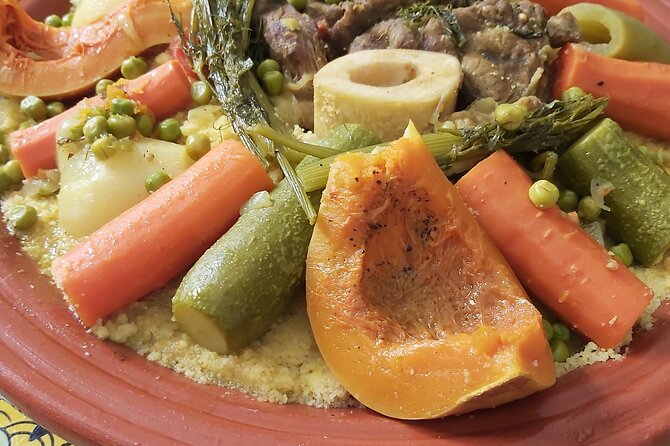
After tea, Khadija introduces the recipes for the day. The available dishes can include tajine, couscous, pastilla, Moroccan salads, and homemade desserts. The exact menu is chosen for the class, so you should not assume that every dish will appear in one three-hour session.
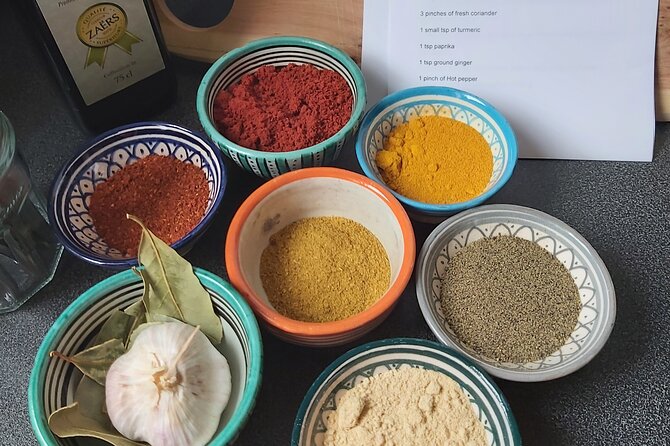
The spice presentation is one of the most useful parts for anyone who wants to repeat the recipes at home. You learn about ras el hanout, cumin, saffron, cinnamon, preserved lemon, and olives, along with the role each ingredient plays.
That distinction matters. A Moroccan dish can look simple on paper, yet its flavor depends on when an ingredient goes in and how much it contributes. Preserved lemon brings a different character from fresh lemon. Cinnamon can support a sweet or savory dish. Cumin works very differently in a salad than it does in a slow-cooked meal.
You will also get a feel for the balance between spices and condiments. The aim is not simply to make food hot. Moroccan cooking often builds flavor through measured seasoning, herbs, preserved ingredients, and long cooking.
From chopping to seasoning, you take part in every stage
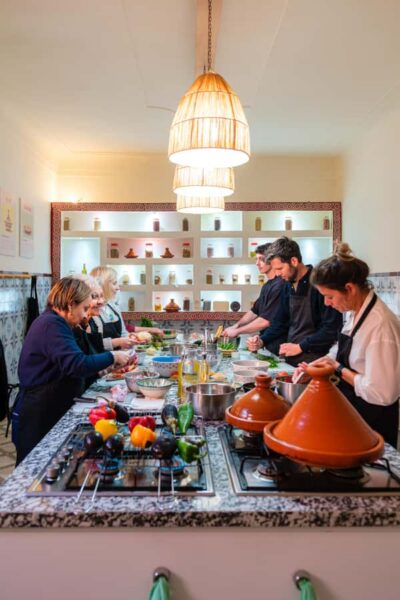
This is a hands-on class. You help cut ingredients, season them, and prepare the dish rather than standing at a distance while a cook completes the work.
That makes the session especially useful for first-time Moroccan cooks. A recipe card can tell you what to add, but working through the steps helps you understand the texture and order of preparation. You can ask about the size of a cut, the amount of seasoning, or the point at which a dish is ready.
The class also shows different cooking methods depending on the menu. A tajine is simmered, couscous is steamed, and pastilla is prepared for a crisp finish. These are not interchangeable techniques, and seeing the difference gives you a better chance of getting the dish right in your own kitchen.
There is a practical limit here. A three-hour class cannot offer a full course in every Moroccan cooking method. If you want a detailed lesson on all three main dishes, ask about the menu before booking. The experience is better viewed as a focused introduction with a complete meal, not a professional culinary school session.
Moroccan salads add color, freshness, and useful technique
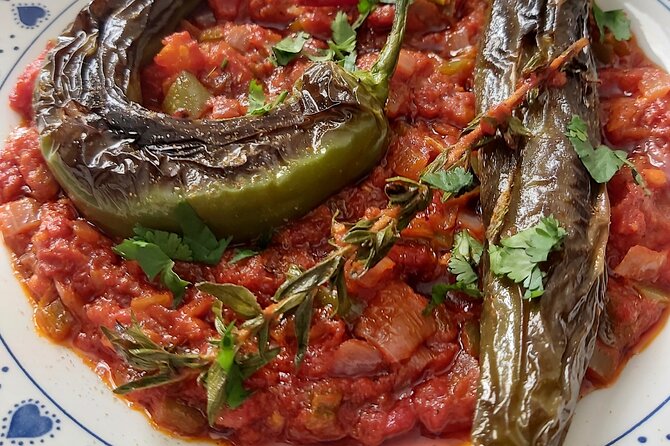
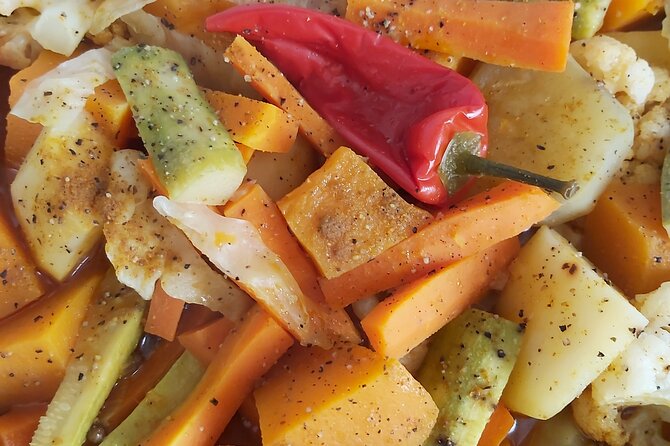
The salad portion gives the meal balance. You might prepare carrot salad with chermoula, aubergine zaalouk, or taktouka. These dishes are not simply side plates added to fill the table. They show how Moroccan cooking uses vegetables with herbs, spices, and careful cooking.
A carrot salad with chermoula can teach you how a raw or lightly cooked vegetable takes on flavor from a herb-based dressing. Zaalouk shows what happens when aubergine is cooked down until soft and seasoned. Taktouka gives you another way to handle vegetables with a cooked, spiced preparation.
I like this part because salads are among the easiest dishes to recreate after returning home. A slow-cooked tajine may require a suitable pot and patience, while a vegetable salad can fit into an ordinary home meal.
The vegetable recipes also help keep the class from becoming too heavy. After tea, cakes, a main course, and dessert, a few fresh or cooked salads give the shared meal more range.
A completely different kind of day in Essaouira:
- From Marrakesh: Essaouira Full-Day Trip
★ 4.6 · 8,137 reviews - From Marrakech: Small Group to Essaouira & Sekkala Day Trip
★ 4.9 · 6,671 reviews - From Marrakech: Essaouira Day Tour with Optional Activities
★ 4.3 · 5,125 reviews - From Marrakesh: Small Group To Essaouira With Opt Activities
★ 4.8 · 2,633 reviews
The shared table is the payoff
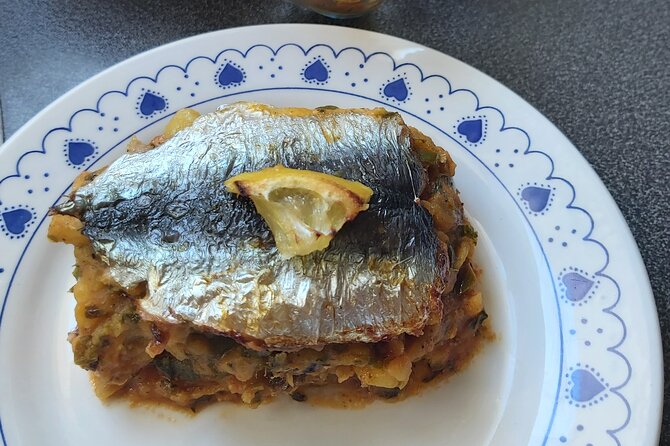
Once the cooking is finished, you sit down and eat the food prepared by the group. This is a shared meal rather than a quick tasting, and it gives you time to discuss what you have made.
The setting is part of the appeal. The class takes place in a Moroccan home environment, and the purpose is not only to hand you instructions. Khadija’s welcome centers on sharing, respect, and Moroccan hospitality.
A previous class with sisters was described as warm and convivial, with both participants learning to make typical Moroccan dishes. Another account noted that special food preferences were taken into consideration and that the cooking and meal took place in a very private setting. That suggests you should mention important preferences when booking, rather than waiting until the class begins.
The private format is a real advantage. You are not trying to hear an instructor over a large group, and you can spend more time on the steps that confuse you. It also makes the meal feel more personal.
The tradeoff is that a private class depends on the chemistry of your own group. If you are traveling alone and want to meet a larger mix of people, this is not designed as a social group tour. It is better for couples, families, friends, or a small group that wants an informal session.
Recipe cards make the experience useful after Essaouira
At the end, Khadija distributes recipe cards and holds a final discussion. This is a small but important detail. Without written recipes, the memory of spice amounts and cooking order can fade quickly once you leave Morocco.
The cards cannot replace the hands-on lesson, but they give you a practical reference for trying the food again. I would keep notes during the class as well, especially if you have questions about substitutions or cooking time.
The final discussion is also your chance to ask about the parts you found hardest. You may want to clarify how to steam couscous, how long to simmer a tajine, or how to prepare a salad in advance. The exact answers will depend on the menu selected that day.
What $58.31 buys you in Essaouira
At $58.31 per person, this is not the cheapest way to eat lunch or dinner in Essaouira. That is not really the point. You are paying for roughly three hours of instruction, a private setting, hands-on preparation, tea or coffee, bottled water, Moroccan cakes, the meal, and recipe cards.
The value is strongest if you want to learn. A restaurant can serve you tajine or couscous, but it will not show you how to prepare the spices, cut the ingredients, or choose the right cooking method. This class turns a meal into a practical activity.
The price also makes more sense for a small private group. You are not paying only for a seat at a communal demonstration. Your group receives the host’s attention, and the menu can take food preferences into account.
Still, you should book it for the instruction and personal setting, not just for the amount of food. If you want a quick, inexpensive meal, a local restaurant will be a better fit. If you want to understand what is on the plate and take the method home, the price is reasonable.
The experience is often booked about 13 days ahead, so I would not leave it until the last morning of your Essaouira stay. Booking earlier also gives you more time to ask about the menu and share dietary preferences.
Who will enjoy this cooking class most
I would recommend this class to you if you enjoy food, conversation, and active participation. It is a strong choice for couples, families, and friends who want a private cultural activity away from a standard restaurant table.
It also suits cooks at different levels. Beginners can follow the step-by-step preparation, while more experienced home cooks can focus on Moroccan spice combinations and techniques such as steaming couscous or preparing pastilla.
Parents should consider the three-hour length and the hands-on format when deciding if it suits younger children. The available information confirms a private activity, but it does not give a specific child age policy, so ask before booking if that matters for your group.
This is less suitable if you want a large group atmosphere, a market visit, or a broad sightseeing tour. There is no private transportation included, and the class begins and ends at the stated Essaouira address.
Practical details that can affect your plans
You receive booking confirmation at the time of booking, and the experience is offered with a mobile ticket. Service animals are allowed, and the meeting point is near public transportation.
The booking has free cancellation up to 24 hours before the start time for a full refund. Cancellations or changes made less than 24 hours before the local start time are not accepted for a refund.
The class requires good weather and a minimum number of participants. If poor weather or an insufficient number of participants causes a cancellation, you are offered another date or experience, or a full refund.
These rules are worth checking if your Essaouira schedule is tight. The class itself ends back at the meeting point, but you should leave enough time before your next activity since the stated duration is approximately three hours.
Should you book this Essaouira cooking class?
Book it if you want to do more than sample Moroccan food. The strongest reasons are the private format, Khadija’s language range, hands-on preparation, clear spice introduction, shared meal, and recipe cards for later use.
I would especially choose it early in an Essaouira visit if you want to understand Moroccan flavors before eating at local restaurants. You may begin noticing preserved lemon, cumin, cinnamon, olives, and slow cooking in a more informed way.
Skip it if your priority is a short meal, a large social group, or an activity that includes transportation and sightseeing. For everyone else, $58.31 buys a focused and personal introduction to Moroccan and Berber home cooking, with enough practical detail to keep the experience useful after you leave Essaouira.
FAQ
Where does the cooking class take place?
The class begins at 21 Av. Princesse Lalla Amina, Essaouira 44000, Morocco, and ends back at the same meeting point.
How long does the experience last?
The cooking class lasts approximately three hours.
How much does the class cost?
The listed price is $58.31 per person.
What dishes might I prepare?
The menu can include tajine, couscous, pastilla, Moroccan salads, and homemade desserts. The exact selection is chosen for the class.
Is food and drink included?
Yes. The experience includes mint tea or spiced coffee, bottled water, small Moroccan cakes, and the meal prepared during the class.
Is the class private?
Yes. Only your group participates in the activity.
Which languages does the host speak?
The host speaks French, English, Arabic, and Berber.
Is transportation included?
No. Private transportation is not included. The meeting point is near public transportation.
Can I cancel for a refund?
You can cancel at least 24 hours before the local start time for a full refund. If the class is canceled because of poor weather or because the minimum number of participants is not met, you are offered another date or experience, or a full refund.
Just added around Essaouira
- Individual Lessons of Kite Surf in Essaouira★ 5.0 · 113 reviews
- Private Kitesurf Lesson in Essaouira Morocco★ 5.0 · 38 reviews
- Surf Rental★ 5.0 · 31 reviews
- Surf Lesson with local surfer in Essaouira Morocco★ 5.0 · 166 reviews
- Essaouira: Private Transfer from or to Essaouira Airport★ 5.0 · 17 reviews
- Private Surf Lesson★ 5.0 · 21 reviews
- Kitesurf Rental★ 5.0 · 55 reviews
- Private Surf Lessons★ 5.0 · 28 reviews
Cooking Classes, compared.
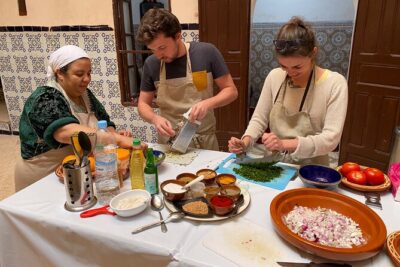
Half-Day Cooking Class with Local Chef Laila in Marrakech
Read our review →
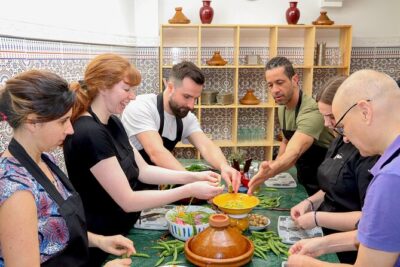
Marrakesh cooking class with chef Hassan – Local dishes
Read our review →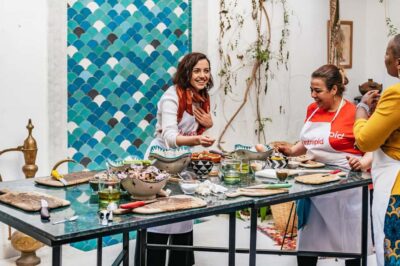
Marrakech Tour: Tajine Cookery Class Experience
Read our review →
Atlas Mountains Cooking Class with Berber Family
Read our review →Browse the lists this tour appears in