
Reviewed · COOKING CLASSES
Marrakech: Moroccan Cooking Workshop at La Maison Arabe
Marrakech’s best cooking lessons do more than show you how to stir a tagine. At La Maison Arabe, you work at your own station, use fresh local ingredients, and eat what you prepare. The three-hour option adds starters, dessert, bread, and a Moroccan tea ceremony, while the one-hour class keeps things brisk with a main dish.
I like the small-group setup and the live translation, which make the lesson easy to follow even when several languages are in the room. I also like the clean, modern kitchen, plus the warm teaching style of cooks such as Hayat, Wafa, Sanaa, and Fatiha.
The main drawback is price. At $35 per person, this costs more than some Marrakech cooking classes, and the one-hour version offers only a taste of the full program. Children under 12 and wheelchair users cannot take part.
Key points to know before booking
- Choose your pace: The one-hour express class focuses on a Moroccan dish, while the three-hour session includes several courses, tea, bread, and more cultural background.
- Cook at your own station: You do not simply watch a demonstration. You chop, season, stir, and prepare the food yourself.
- Expect chicken tagine often: The exact dish can vary, but many sessions feature chicken tagine, and vegetarian cooking is accommodated.
- Tea is part of the lesson: You learn about the Moroccan tea ritual, not just how to drink the finished tea.
- Eat what you make: The class ends with a sit-down meal, so this is both a lesson and lunch.
- Meet at La Maison Arabe: Go to the front desk of La Maison Arabe, near the medina, rather than arranging separate transport.
Cooking at your own station near La Maison Arabe
The workshop begins at the front desk of La Maison Arabe, a convenient meeting point close to Marrakech’s medina. From there, you are directed to the cooking school, described as being near the riad-hotel or in a quieter garden setting away from the busiest lanes.
That location matters. You get the atmosphere of a traditional Marrakech cooking lesson without having to search through the medina for an obscure doorway. There is no transport included, so plan to reach La Maison Arabe on your own. If you are staying nearby, walking is likely the simplest option, though the activity information does not provide a transfer service.
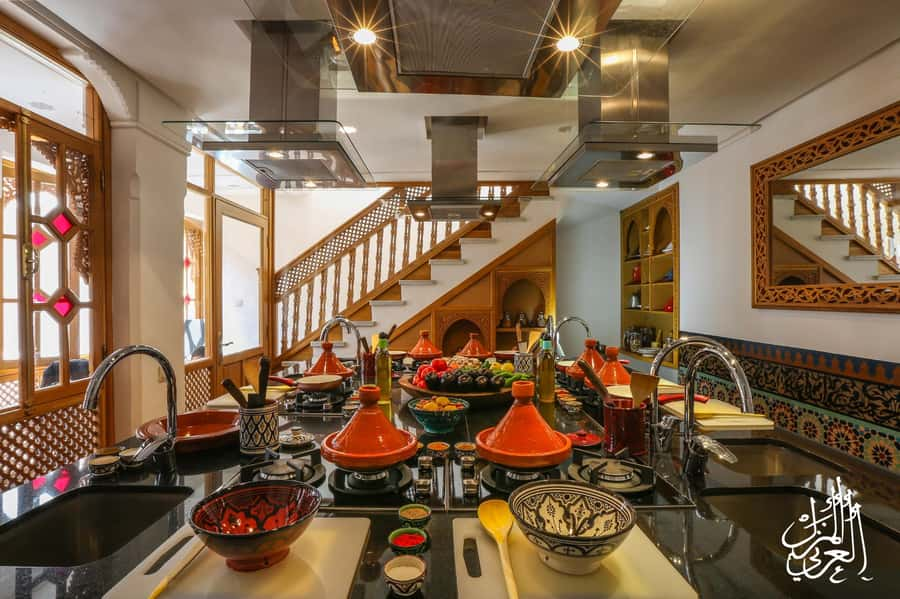
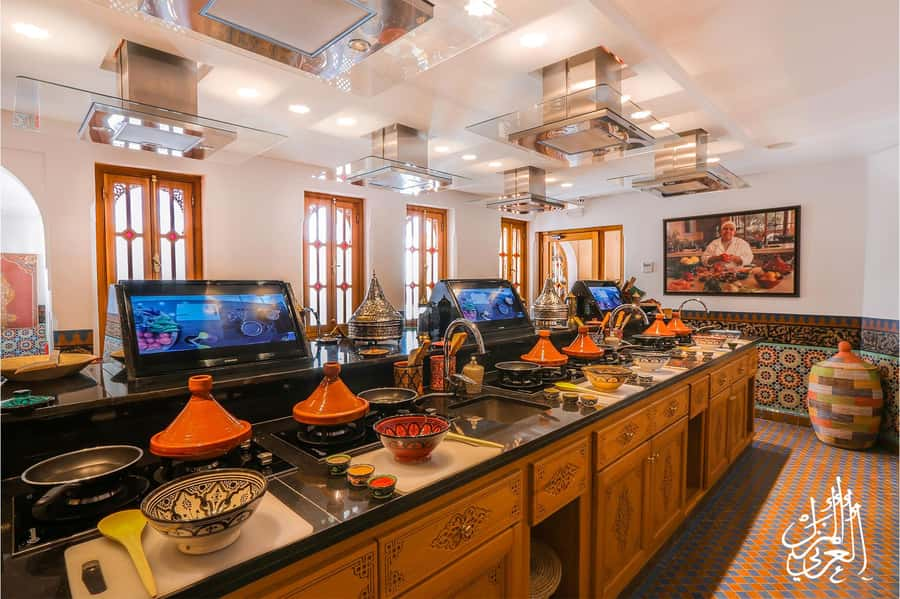
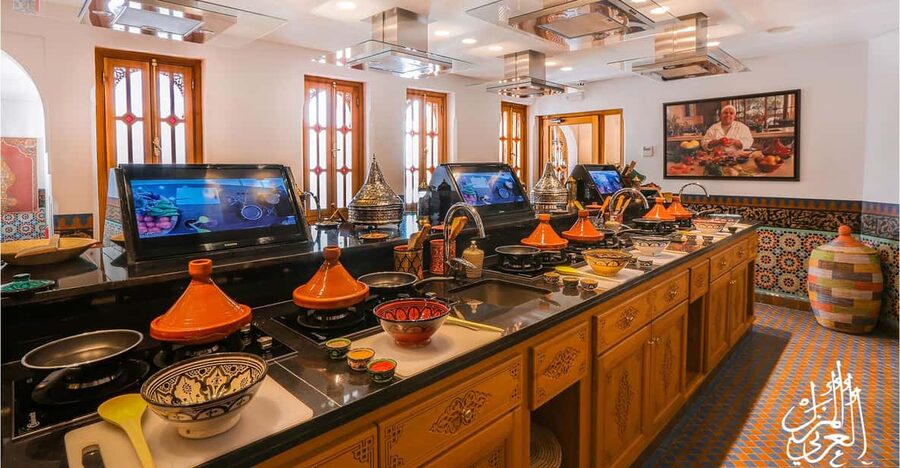
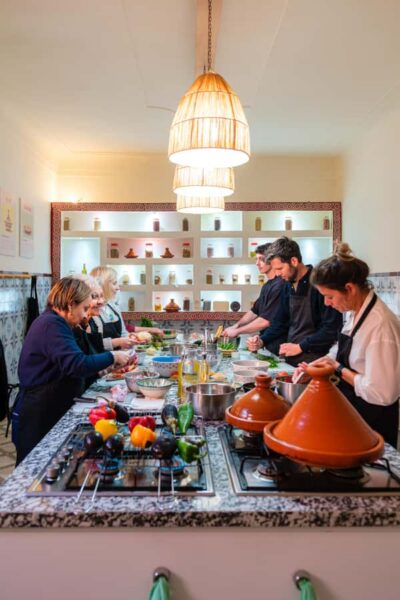
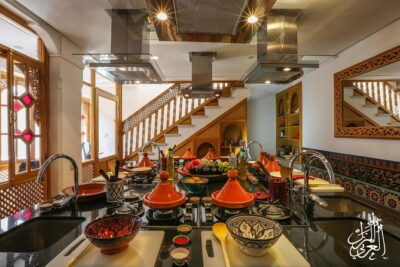
The kitchen is one of the strongest parts of the class. It has individual workstations and modern equipment, so you can actually take part rather than crowd around a single counter. The setup also helps the instructors keep the lesson orderly. You are given ingredients and guidance at your station, then work through the recipe step by step.
That is especially useful if you are not an experienced cook. The recipes are presented as manageable home cooking rather than restaurant tricks. A screen may be used to help explain the recipe, and the staff translate instructions into Arabic, English, or French.
More Cooking Classes in Marrakech
- Marrakech: Moroccan Cooking Class with Pickup
★ 4.6 · 1,862 reviews - Marrakech: Traditional Moroccan Cooking Class & Market Visit
★ 4.8 · 1,861 reviews - Marrakesh: Moroccan Dishes Cooking Class with a Local Chef
★ 5.0 · 1,615 reviews
The one-hour express class: a focused taste of Morocco
The one-hour option is designed for a short itinerary. You move fairly quickly into the cooking, with little time spent on extra courses or extended discussion. It is a good choice if you have a packed day in Marrakech, want a hands-on activity before sightseeing, or are not sure you want to commit three hours to a food class.
Chicken tagine is a frequent focus of the shorter lesson. You prepare the ingredients, follow the instructions, and then eat the finished dish. The reward is immediate, and you leave with a practical sense of how Moroccan flavors come together.
The short class can still include Moroccan tea and an interactive teaching style, but you should not book it expecting the full meal and cultural program. The three-hour session is the better pick if you want starters, dessert, handmade bread, and a longer explanation of spices, food traditions, and tea.
For solo visitors, the express class is also an easy fit. You join a small group and cook alongside other participants rather than needing to bring a partner. The class is social, but the individual stations mean you still have something useful to do.
The three-hour class: starters, tagine, dessert, and tea
The longer class gives the food more room to unfold. You may prepare two starters and a main course, often tagine or couscous, then sit down to dessert, bread, and tea. The exact menu can vary, but the structure is much broader than the express option.
You are not chopping continuously for three hours. There are demonstrations, explanations, pauses, and time to eat. That makes the length feel less like a long kitchen shift and more like a meal built around a lesson.
The three-hour class is the right choice if you want a fuller introduction to Moroccan cooking. You learn how individual ingredients fit into a meal, rather than leaving with one recipe alone. You also get more time to ask about Moroccan food and culture through the translator.
Several instructors are mentioned by name in the class experience, including Hayat, Wafa, Sanaa, Fatiha, Rokaya, Hasna, Habiba, and Muhammad. The teaching team varies, but the pattern is consistent: one cook leads the practical work while a translator or manager helps keep the instructions clear for the whole group.
A useful detail is that the meal is not rushed at the end. You sit down to eat the food you prepared, sometimes in the hotel restaurant or on a rooftop setting. The meal gives you time to talk with the other people in your group, which can be a pleasant extra for couples, families with older children, and work groups.
The Moroccan tea ceremony and flatbread lesson
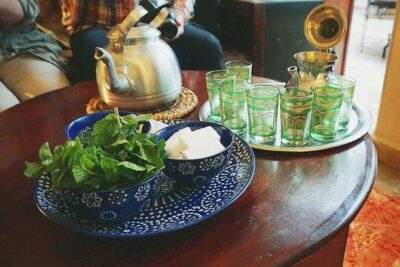
Tea is treated as part of Moroccan food culture, not a drink added at the last minute. You see how the ceremony is performed and learn about the role tea plays in welcoming people. The class may feature saffron tea, and the staff explain the process while serving it.
The flatbread demonstration adds another useful piece. Bread is central to eating Moroccan food, especially when you want to scoop up sauce from a tagine. You may not spend a long time making it yourself, but seeing the method helps connect the polished restaurant meal with everyday Moroccan cooking.
This cultural layer is one reason the longer session offers better value. You are not only copying a recipe. You gain a little context about spices, tea, cooking styles, and the way Moroccan dishes are served.
A completely different kind of day in Marrakech:
- Marrakech: Quad Bike Tour to Palm Oasis and Jbilat Desert
★ 4.8 · 11,831 reviews - Marrakesh: Majorelle Garden Entry Tickets
★ 4.5 · 9,651 reviews - Marrakech Quad Bike Experience: Desert and Palmeraie
★ 4.5 · 9,509 reviews - Marrakech: Balloon Flight, Berber Breakfast & Certificate
★ 4.8 · 8,164 reviews
What the food preparation is really like
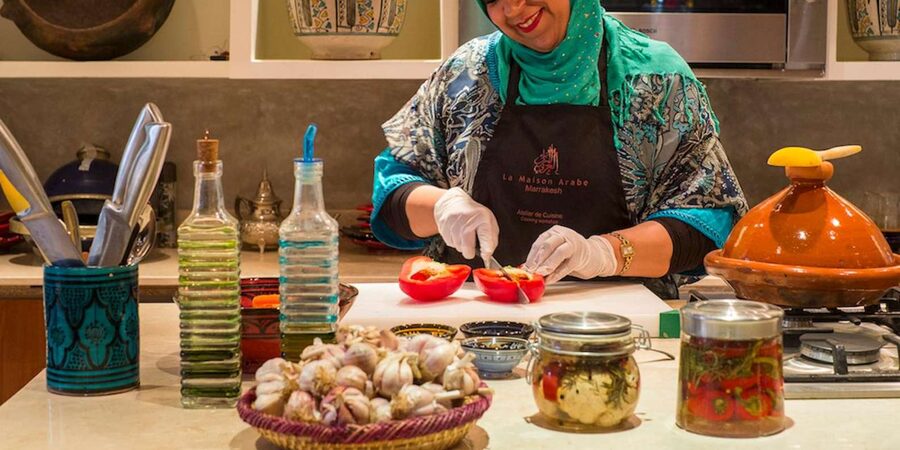
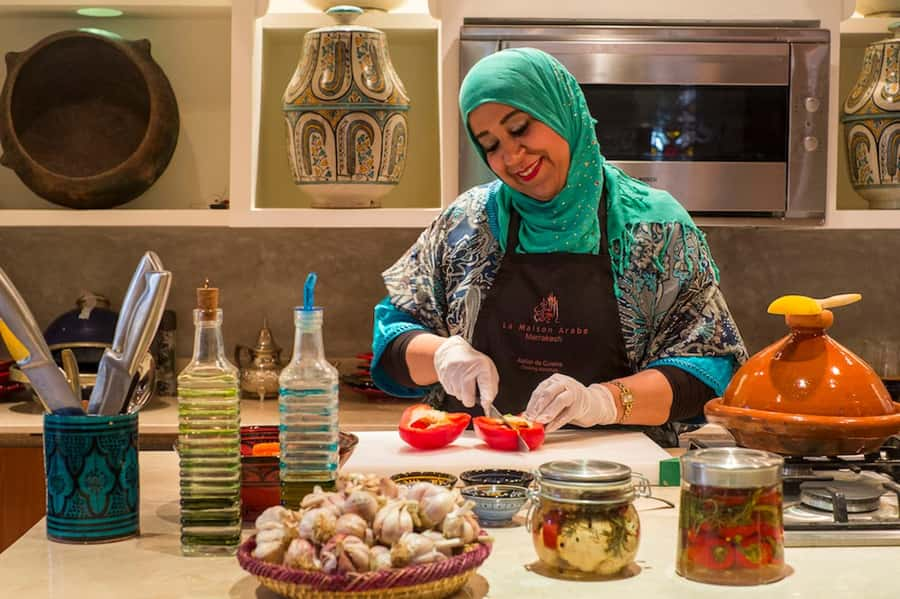
The class uses fresh local ingredients, with each participant working from an individual station. You can expect to chop, season, and assemble the dish under direct instruction. The aim is participation, not a cooking show where the staff do everything while you watch.
Tagine is a particularly good dish for this format. The method is straightforward enough for a beginner, but the finished result feels distinctive because of the seasoning and slow cooking. You also learn that Moroccan food is not automatically difficult or mysterious. With the right ingredients and a clear sequence, many of the techniques can be repeated at home.
The instructors are patient with questions. That matters in a translated class, where small details can otherwise get lost. You can ask about spices, Moroccan history, and local food customs as you cook.
Vegetarian participants can be catered for, according to the experience provided. It is still sensible to state dietary needs when booking or on arrival, since the exact menu is not fixed in the information available.
At the end, you eat the food you made. This is more satisfying than receiving a recipe and leaving hungry, and it gives you a clear test of your work. Several participants found the tagine good enough to try at home, and a recipe is provided to help with that.
A polished kitchen, with a warm local feel
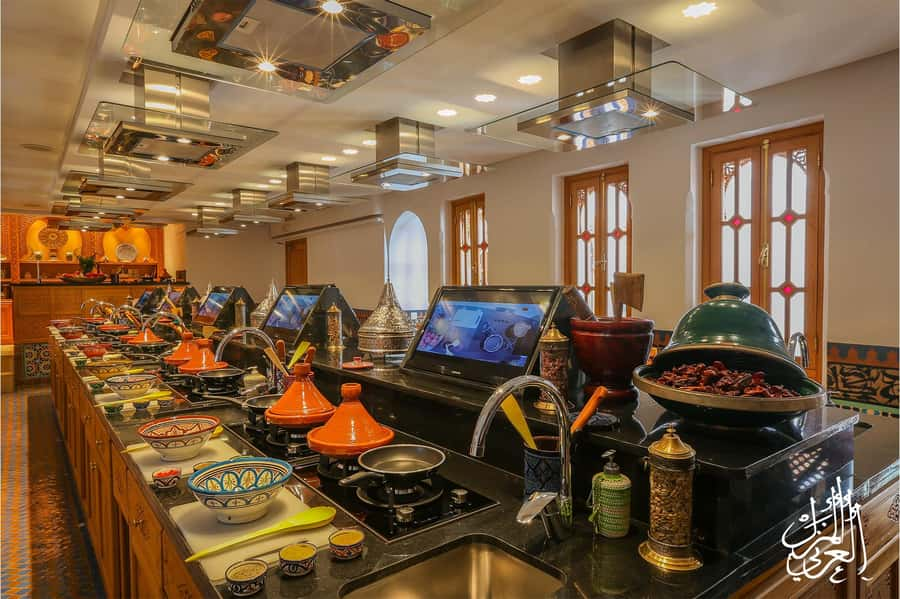
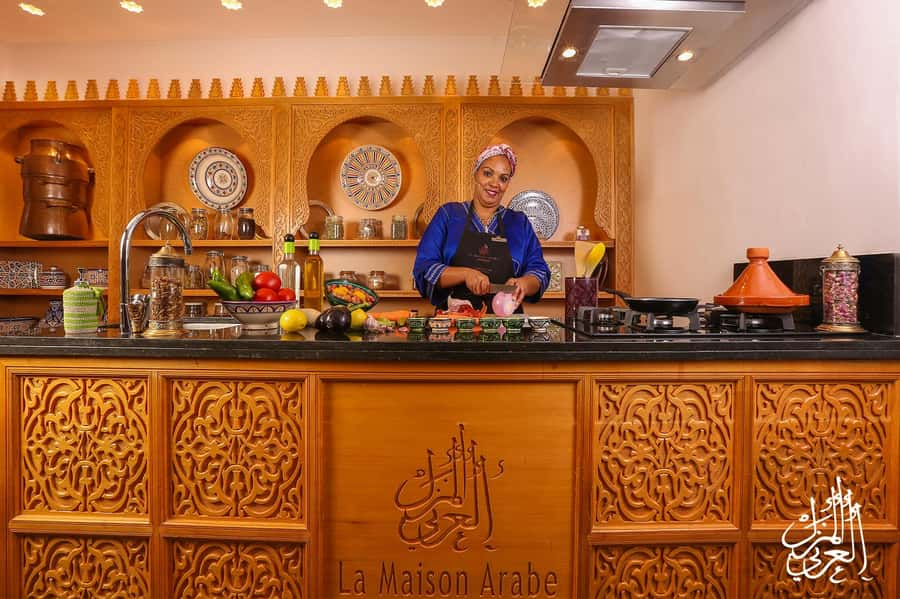
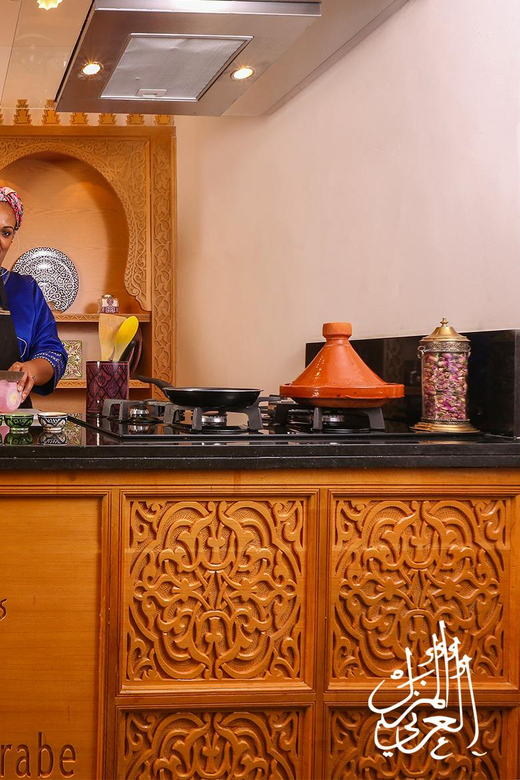
La Maison Arabe’s workshop combines two things that do not always come together: professional facilities and a personal teaching style. The equipment is modern and the cooking area is carefully prepared, yet the class is led by a dada, a traditional Moroccan cook.
That contrast works well. You get clean counters, organized ingredients, and reliable equipment, but the cooking is still explained through local practice. The instructors do not treat the food as a museum display. They show you how it is prepared and why the ingredients matter.
The staff can be playful and chatty without losing control of the class. That is helpful when a group includes different ages, nationalities, and cooking abilities. The teaching is designed to keep everyone involved, rather than rewarding only the person who already knows their way around a kitchen.
The setting may appeal to you if you want something more comfortable than a rough market-to-kitchen lesson. The tradeoff is that the polished setup contributes to the higher price. You are paying for the location, equipment, individual stations, translation, meal, and organized instruction, not just for a recipe.
Is $35 a fair price?
At $35 per person, this is not the cheapest cooking class in Marrakech. You can find simpler lessons elsewhere, especially if you only want to make one tagine and do not care about the setting.
The value improves considerably if you choose the three-hour session. Your fee includes the cooking lesson, food tasting, lunch, afternoon tea, the tea ceremony, flatbread instruction, and the meal you prepare. You also receive live guidance in Arabic, English, or French and, in some cases, a small tagine or another gift at the end.
The gift is a pleasant surprise, but it should not be the reason you book. The real value is the combination of a meal and a useful lesson in a clean, well-equipped setting. If you compare the price with a restaurant lunch alone, the workshop gives you far more to remember and repeat at home.
The one-hour session may be the better value for a tight schedule. It lets you cook and eat a Moroccan specialty without taking half a day. Still, if you already know you want a full food experience, paying for the longer class from the start avoids wishing you had more time.
Who should take this class?
I would recommend the workshop to first-time visitors who want a direct connection to Moroccan food. It is also a good choice for couples, solo visitors, groups of friends, and company outings because the individual stations keep everyone involved.
Families can take part with children aged 12 and older. A 12-year-old enjoyed the activity alongside an older family member, but the official rules exclude children under 12. The activity is not suitable for wheelchair users.
You do not need advanced cooking skills. The instructions are designed for ordinary home cooks, and the teachers help you through each stage. If you already cook Moroccan food regularly, the class may feel basic, but the cultural explanation and tea ceremony can still add interest.
The express class suits anyone fitting the workshop between other plans. The three-hour version suits you if food is one of the main reasons you came to Marrakech and you want the full meal rather than a quick demonstration.
Bring water and wear comfortable clothes. Outside drinks are not permitted, while tea and the included food are provided. Since no transport is included, allow enough time to reach the La Maison Arabe front desk.
Should you book La Maison Arabe’s cooking workshop?
Book it if you want to do more than eat tagine in Marrakech. The individual station, clear translation, fresh ingredients, and meal at the end make this a practical class rather than a passive demonstration.
Choose the three-hour session if you want starters, dessert, bread, tea, and more conversation about Moroccan food and culture. Choose the one-hour class if your schedule is tight or you simply want to learn one dish.
I would skip it only if you are looking for the lowest possible price, need wheelchair access, or are bringing a child under 12. For everyone else, especially first-time visitors and home cooks who want to repeat the recipe, this is a well-organized and genuinely useful Marrakech activity.
FAQ
Where does the cooking workshop meet?
Meet at the front desk of La Maison Arabe in Marrakech. The cooking school is near the riad-hotel, with the experience also described as taking place in a garden setting away from the busiest part of the medina.
How long does the activity last?
You can choose between a one-hour express workshop and a three-hour cooking workshop. Starting times depend on availability.
What is included in the one-hour class?
The express class focuses on preparing and tasting a traditional Moroccan dish, often chicken tagine. It is intended as a shorter introduction to Moroccan cooking.
What does the three-hour class include?
The longer class can include starters, tagine or couscous, dessert, a tea ceremony, flatbread making, and a sit-down meal using the food you prepare.
Is food included?
Yes. Food tasting and lunch are included, and you eat the meal prepared during the class. Drinks beyond the included tea are not included.
Are drinks included?
Afternoon tea is included. Other drinks are not included, and outside drinks are not allowed.
What languages are available?
The instructors and translation are available in Arabic, English, and French.
Do I need cooking experience?
No specific cooking experience is required. The instructors explain the recipe and guide you through the preparation at your own workstation.
Can vegetarians take part?
Vegetarian participants can be accommodated. Since the exact menu can vary, tell the provider about your dietary needs when arranging the activity.
Is the class suitable for children and wheelchair users?
The activity is not suitable for children under 12 or for wheelchair users. Participants should wear comfortable clothes and bring water.
Can I cancel the booking?
You can cancel up to 24 hours in advance for a full refund. A reserve-now-and-pay-later option is also available.
Just added around Marrakech
- Quad in the Palmeraie of Marrakech★ 5.0 · 41 reviews
- Marrakech Desert Camel Ride★ 5.0 · 17 reviews
- Sunset Camel Ride in the Palm Grove Of Marrakech★ 5.0 · 34 reviews
- Private Airport Transfer from or to Marrakech Menara Airport.★ 4.5 · 63 reviews
- Marrakech The History and Culture Day Trip★ 4.5 · 45 reviews
- Marrakech: Tailor-Made City Tour With Your Own Private Guide★ 4.9 · 236 reviews
- Marrakech palm grove: Sunset camel ride★ 4.8 · 194 reviews
- Sparkling Marrakech through the eyes of your local Guide★ 4.7 · 247 reviews
Cooking Classes, compared.
Half-Day Cooking Class with Local Chef Laila in Marrakech
Read our review →
Marrakesh cooking class with chef Hassan – Local dishes
Read our review →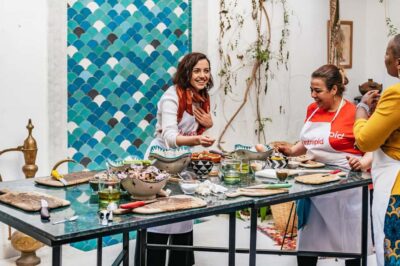
Marrakech Tour: Tajine Cookery Class Experience
Read our review →
Atlas Mountains Cooking Class with Berber Family
Read our review →Browse the lists this tour appears in