
Reviewed · COOKING CLASSES
Moroccan Cooking Workshop in Marrakech
Moroccan food becomes much more useful once you know how to make it. At La Maison Arabe, you sit at your own workstation, follow a traditional Dada’s instructions, and turn fresh local ingredients into a meal you can try again at home. The tea ceremony and bread demonstration give the class a cultural edge, not just a recipe-card feel.
I like the private workstation, which lets you cook rather than simply watch. I also like the short one-hour format, plus the chance to taste your work afterward. The main consideration is time: one hour gives you a lively introduction, but not the leisurely pace or range of dishes you may get from a longer class.
Key points
- A Dada leads the cooking: Learn traditional Moroccan methods from a local cook, with interpretation in English and/or French.
- Your own cooking station: Prepare the food yourself instead of standing behind a demonstration counter.
- Tea and bread come first: The session includes a Moroccan tea ceremony and a demonstration of traditional bread-making.
- The meal is part of the lesson: Taste the dishes you prepare, with Moroccan wine available as an option.
- A useful short format: The advertised class lasts about one hour, while longer class choices are also available.
- A central Marrakech setting: Meet at Hotel La Maison Arabe in the medina, with no transport included.
Cooking at La Maison Arabe, not just watching
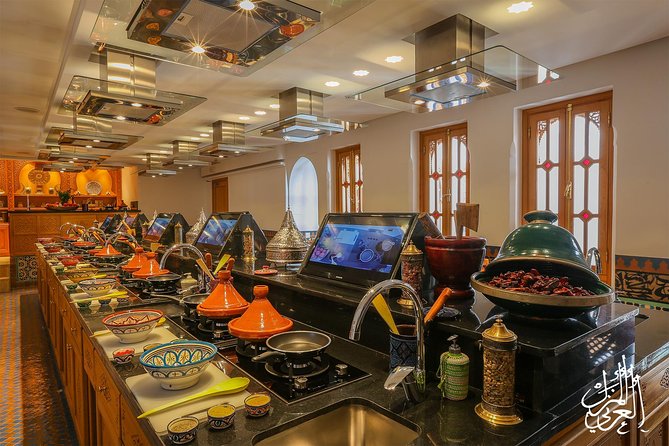
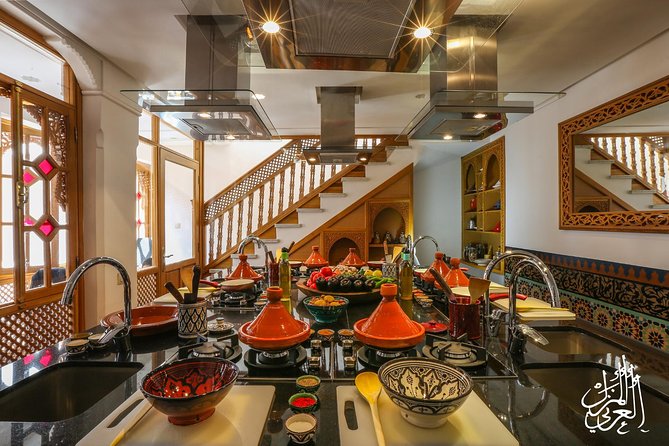
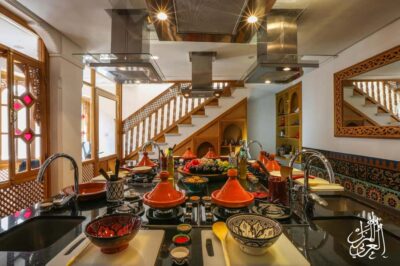
This workshop gives you a practical introduction to Moroccan cuisine inside Hotel La Maison Arabe at 1 Derb Assehbi. You are not simply shown a finished tagine and sent away with a smile. You get a personal workstation and take part in the preparation under the guidance of a Moroccan cook.
That distinction matters. A restaurant meal tells you what Moroccan food tastes like. This class helps explain how the flavor is built, from the use of spices to the way ingredients are prepared and cooked. You can also adjust the food to your own taste. One particularly useful detail from the class experience is that participants have been able to add more garlic or make other small choices during preparation.
The teaching team may include instructors such as Mohammad, Hasna or Hasina, Wafa, Fatiha, and Dada Habiba, depending on the session. The exact staff is not guaranteed, but the format includes a cook plus an interpreter in French and/or English. That helps if you want more than a silent cooking demonstration.
The setting is more polished than a basic home kitchen, with an organized workspace and a strong hotel backdrop. That makes the class comfortable for first-time cooks, though it may feel less like shopping and cooking in a Moroccan family home. You get a clean, structured lesson rather than a rough-and-ready market-to-table outing.
More Cooking Classes in Marrakech
- Marrakech: Moroccan Cooking Class with Pickup
★ 4.6 · 1,862 reviews - Marrakech: Traditional Moroccan Cooking Class & Market Visit
★ 4.8 · 1,861 reviews - Marrakesh: Moroccan Dishes Cooking Class with a Local Chef
★ 5.0 · 1,615 reviews
The opening tea ceremony sets the tone
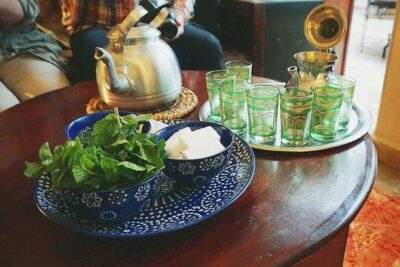
The class begins with a welcome, an introduction, and a Moroccan tea ceremony. Mint tea is not treated as a quick drink before the real activity. You learn about its preparation and the ceremonial way it is served.
This is a smart opening because tea gives you an immediate piece of Moroccan food culture that you can repeat almost anywhere. Several participants have found the tea lesson especially useful, including the proper method and ceremony. If you enjoy small cultural details, this part may be as memorable as the cooking itself.
Afternoon tea is included, while drinks beyond what is provided are not. The information also lists Moroccan wine with the tasting as an optional discovery, so check what is available in your selected session rather than assuming wine is included in the base price.
The one-hour version moves at a brisk pace. You should arrive ready to start rather than expect a long, slow social afternoon. If you want time for questions, several recipes, and a relaxed meal, choose one of the longer class options if available for your date.
The Moroccan bread demonstration adds a useful skill
Next comes a demonstration of Moroccan bread-making. You may not spend the whole class baking bread yourself, but seeing the process gives useful context for the meal and for the role of bread at a Moroccan table.
This is one of the details that keeps the workshop from becoming a narrow tagine lesson. Moroccan cooking is not only about the famous conical pot. Bread, tea, spices, side dishes, and shared eating all belong to the picture. The demonstration helps connect those parts.
The class is aimed at practical learning, so pay attention to technique rather than trying to memorize every ingredient on the spot. If you are cooking at home later, a recipe book is available to buy, and one participant considered it a worthwhile purchase. That is a useful extra for anyone who wants a better chance of recreating the dishes.
Cooking with a Dada and local spices
The central lesson is led by a Dada, the traditional Moroccan name used here for the cook guiding the class. She demonstrates the preparation while you work at your own station.
The exact menu can vary. A chicken tagine appears in the class experience, and other sessions have included a starter, a main course, a side dish, and a dessert prepared by the teaching team. You should confirm the menu if a particular dish matters to you, since the supplied information does not promise one fixed recipe for every date.
Spices are a major part of the lesson. The teaching team explains how Moroccan cuisine uses them, and the class gives you a chance to connect those seasonings with the finished food rather than treating them as mysterious ingredients from a market stall. Mohammad, in particular, has been singled out for clear explanations of Moroccan spices.
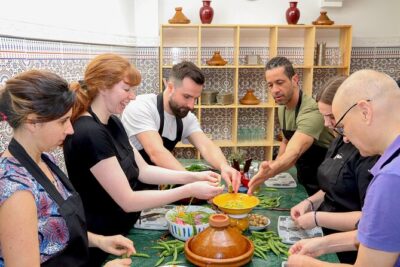
You will not be left alone with a pile of ingredients. The instructors circulate and help with difficult steps. That is important in a short workshop, where one missed instruction could leave you behind. The multilingual setup also makes the lesson more accessible to English and French speakers.
The one-hour class is best viewed as a focused introduction. You learn key methods, prepare a dish or dishes, and get a taste of Moroccan food culture. You do not get an exhaustive course in regional cuisine, and the short schedule may leave little room for long conversations.
A completely different kind of day in Marrakech:
- Marrakech: Quad Bike Tour to Palm Oasis and Jbilat Desert
★ 4.8 · 11,831 reviews - Marrakesh: Majorelle Garden Entry Tickets
★ 4.5 · 9,651 reviews - Marrakech Quad Bike Experience: Desert and Palmeraie
★ 4.5 · 9,509 reviews - Marrakech: Balloon Flight, Berber Breakfast & Certificate
★ 4.8 · 8,164 reviews
The final tasting turns the lesson into lunch
After the preparation, you sit down and taste what you have made. Lunch and food tasting are included, so the class does not end with you carrying an uncooked recipe out the door.
This is more satisfying than it sounds. Eating your own tagine or side dish gives you a clear sense of how the spices, texture, and cooking method came together. It also lets you ask final questions while the flavors are fresh.
The food has been described as delicious, and the cooking setup as professional and pleasant. I would still keep expectations sensible: your result depends partly on the dish offered, the time available, and how much hands-on work the session includes. The point is not a restaurant-level performance. It is learning enough to understand and repeat a Moroccan preparation.
The tasting can also include Moroccan wine as an option. Drinks are otherwise not included, so budget for anything beyond the included tea and meal components.
Why the one-hour format can work well
At about $34.76 per person, this is priced like a modest paid activity rather than a full-day culinary program. The value comes from the combination of instruction, personal workspace, tea, food preparation, and lunch or tasting in a well-known hotel setting.
For a short visit to Marrakech, the one-hour format is easy to fit between sightseeing stops. It also works well if you have a flight later in the day. One couple selected the one-hour lesson because they could not fit the three-hour option around their departure, and still found the session worthwhile.
The tradeoff is depth. A longer class should give you more time with the recipes and a less hurried meal, though the exact content of those longer options is not specified. If you are mainly curious about Moroccan cuisine and want one practical dish to take home, the shorter class offers good value. If cooking is the main reason for your Marrakech visit, pay for the longer option if your schedule and booking choice allow it.
The activity is often booked about 21 days ahead. That is a useful planning signal, especially if you have fixed sightseeing plans or a tight departure date. Confirmation arrives within 48 hours of booking, subject to availability.
Group size, family rules, and the hotel location
The activity information lists a maximum of two participants. At the same time, one class experience describes a group of 14 people, so the actual class arrangement may vary by booking channel, date, or session. If a very small class is essential to you, confirm the group size before paying.
Children under 12 are not permitted for security reasons. A 14-year-old has taken part successfully with a parent, so the experience can suit older children and teenagers, provided they meet the age requirement and enjoy hands-on cooking.
You meet at Hotel La Maison Arabe, 1 Derb Assehbi, Marrakech 40000. The activity ends at the same meeting point. Transportation to or from attractions is not included, but the location is near public transportation. Plan your own route and allow time to find the hotel in the medina.
The mobile ticket makes the entry process simple. Bring the booking confirmation on your phone, and check the confirmed start time carefully since the cancellation cut-off uses local Marrakech time.
Who will get the most from this class
I would choose this for a first visit to Marrakech when I want a local food activity without giving up half a day. It suits solo participants, couples, and parents with children aged 12 or older. The individual workstation also makes it a good choice if you prefer doing the work yourself rather than sharing one cooking surface.
It is especially useful for people who enjoy taking travel skills home. The tea method, spice lessons, and tagine preparation can all influence what you cook after Morocco. Buying the recipe book may make sense if you want a more reliable reminder once you are back in your own kitchen.
This is less suitable if you want a market visit, a full restaurant tour, or a long food-focused outing. No transport to attractions is included, and the information does not promise a market-shopping stop. It is also not the right pick for children under 12.
The class may appeal to experienced cooks, but you should not expect advanced professional training. The teaching is aimed at helping you understand and prepare traditional Moroccan food. That is its strength.
Booking, timing, and cancellation details
Free cancellation is available if you cancel at least 24 hours before the local start time. Cancel within 24 hours, or make changes that late, and the amount paid is not refunded.
I would book earlier than the last minute because the activity is commonly reserved around three weeks ahead, and confirmation remains subject to availability. If you have a flight on the same day, choose a start time that leaves a wide margin. The class ends back at La Maison Arabe, but you are responsible for getting to the airport or your next stop.
The listing includes afternoon tea, food tasting, lunch, live commentary, and live entertainment. Some of those descriptions may reflect the wider activity format, so ask at booking if live entertainment or a particular drink matters to you. Drinks beyond the included items are not included.
Should you book the La Maison Arabe cooking workshop?
Yes, if you want a short, practical introduction to Moroccan food and a meal you help prepare yourself. The strongest reasons are the personal workstation, patient hands-on assistance, tea ceremony, spice instruction, and the chance to eat the finished food.
Choose the one-hour session when your Marrakech schedule is tight. Choose a longer option if you want more recipes and a slower pace. I would also confirm the menu and group size if those details matter to you, since the class setup and dishes can vary.
At $34.76, this is a sensible food experience for the price, especially when you count the instruction, ingredients, tea, and tasting. It will not teach you all of Moroccan cuisine in an hour, but it can give you a useful tagine, better knowledge of spices, and a small piece of Moroccan table culture to take home.
FAQ
Where does the Moroccan cooking workshop start?
The workshop starts at Hotel La Maison Arabe, 1 Derb Assehbi, Marrakesh 40000, Morocco.
Where does the activity end?
The activity ends back at the meeting point at Hotel La Maison Arabe.
How long does the cooking class last?
The advertised workshop lasts approximately one hour. Longer cooking class options are also available.
What is included in the experience?
The experience includes afternoon tea, food tasting, lunch, live commentary, and live entertainment as listed in the activity details.
Are drinks included?
Drinks are not included. Moroccan wine may be available as an optional part of the tasting.
Is transportation included?
No. Transportation to and from attractions is not included.
Are children allowed to join?
Children under 12 are not permitted in the cooking classes for security reasons.
Is the class offered in English?
The welcome and interpretation may be provided in English and/or French. The activity may be operated by a multilingual guide.
How many people can join?
The activity information lists a maximum of two participants, although class arrangements may vary by session.
Can I cancel for a full refund?
Yes. You can receive a full refund if you cancel at least 24 hours before the local start time. Cancellations or changes made within 24 hours are not refunded.
Just added around Marrakech
- Quad in the Palmeraie of Marrakech★ 5.0 · 41 reviews
- Marrakech Desert Camel Ride★ 5.0 · 17 reviews
- Sunset Camel Ride in the Palm Grove Of Marrakech★ 5.0 · 34 reviews
- Private Airport Transfer from or to Marrakech Menara Airport.★ 4.5 · 63 reviews
- Marrakech The History and Culture Day Trip★ 4.5 · 45 reviews
- Marrakech: Tailor-Made City Tour With Your Own Private Guide★ 4.9 · 236 reviews
- Marrakech palm grove: Sunset camel ride★ 4.8 · 194 reviews
- Sparkling Marrakech through the eyes of your local Guide★ 4.7 · 247 reviews
Cooking Classes, compared.
Half-Day Cooking Class with Local Chef Laila in Marrakech
Read our review →
Marrakesh cooking class with chef Hassan – Local dishes
Read our review →
Marrakech Tour: Tajine Cookery Class Experience
Read our review →
Atlas Mountains Cooking Class with Berber Family
Read our review →Browse the lists this tour appears in