
Reviewed · COOKING CLASSES
Marrakesh: Moroccan Dishes Cooking Class with a Local Chef
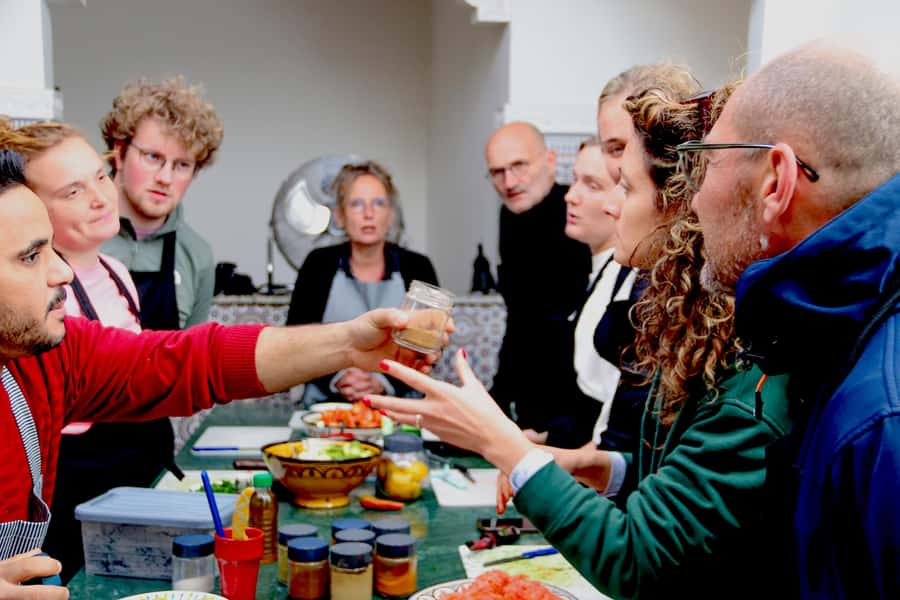
Moroccan cooking is built on small, useful lessons: how to balance sweet fruit with savory meat, when to add spices, and why a tagine needs gentle cooking. This class puts those lessons to work, starting with a short market visit before you return to the cooking house. The best part is the shared meal at the end, made by the whole group.
I like the market stop, where you help choose the vegetables and other supplies, and the wide menu, which can include four tagines plus two salads or side dishes. I also like that Hassan and Ahmed keep the class social and practical, with recipes sent afterward so you can try the dishes at home.
The main consideration is that the food is prepared collectively, so you do not make one complete dish alone from start to finish. The class may also be bilingual in English and French, and the cooking room can feel cool, so bring a light sweater.
Key points to know before booking
- Shop before you cook: Begin near Pharmacie Bab Doukkala with a 15-minute food market visit and help select ingredients.
- Six dishes are possible: The usual spread includes several tagines, kefta, shakshouka, zaalouk, and other side dishes.
- Hassan leads the cooking: He and Ahmed explain techniques, customs, and the role of food in Moroccan family life.
- The meal is the reward: Everything is served buffet-style with bread, water, and tea after the cooking.
- Recipes come afterward: You receive an online link to the dishes made in class and other Moroccan recipes.
- Plan for a small group: The normal maximum is nine people, with ten possible in limited circumstances.
A market start near Bab Doukkala
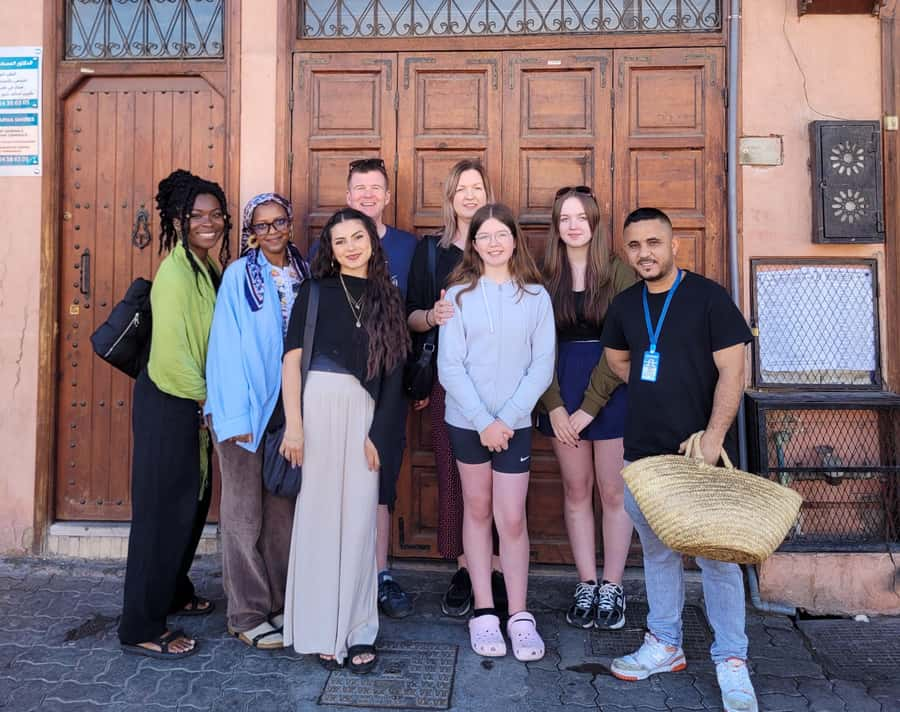
Your meeting point is Pharmacie Bab Doukkala. Use the exact pharmacy name in Google Maps, since Marrakesh has plenty of similar-sounding streets and landmarks. Hotel pickup is not included, so you need to make your own way there.
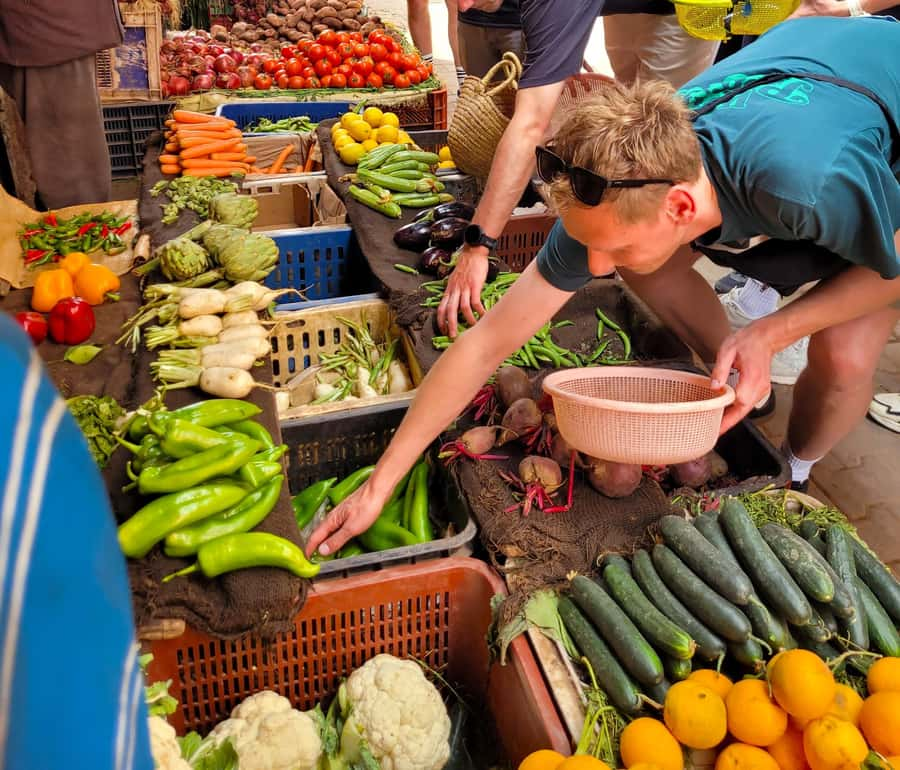
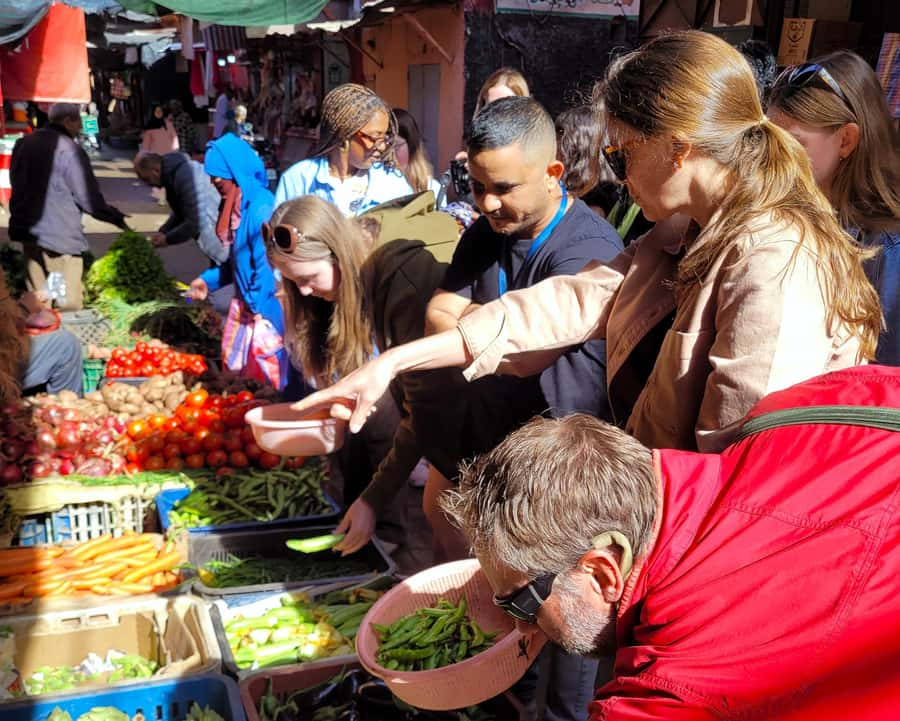
From the pharmacy, you take a short walk through a nearby food market. This part lasts about 15 minutes, so think of it as a focused introduction rather than a full market tour. You help select vegetables and other ingredients needed for the class.
That short stop matters. You see the raw materials before they become a finished tagine, and you get a practical look at how local shopping works. It also gives the group something to do together right away. Instead of arriving at a kitchen and waiting for instructions, you begin by handling the ingredients and making choices.
Do not expect a long lesson on every stall or spice seller. The market visit is brief because most of the four-hour session is reserved for cooking. If you want extended time in the souks, plan a separate visit.
More Cooking Classes in Marrakech
- Marrakech: Moroccan Cooking Class with Pickup
★ 4.6 · 1,862 reviews - Marrakech: Traditional Moroccan Cooking Class & Market Visit
★ 4.8 · 1,861 reviews - Moroccan Cooking Class & Marrakech Market Visit with Chef Khmisa
★ 5.0 · 1,504 reviews
Mint tea before the knives come out
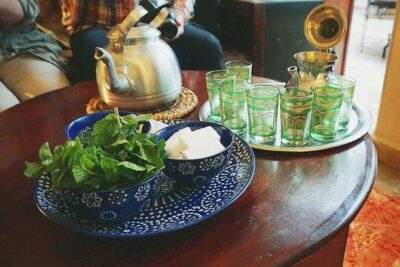
Back at the cooking house, Ahmed or another member of the team leads a 30-minute tea ceremony. You learn the traditional way to prepare Moroccan mint tea, then drink it while getting acquainted with the group.
This is more than a welcome drink. Moroccan tea is tied to hospitality and daily life, so the demonstration gives you useful cultural context before the cooking begins. It also slows the pace at the start. You can settle in, ask questions, and learn how the class will work.
The tea portion is especially useful if you have never cooked Moroccan food before. It introduces the idea that food is not just a list of ingredients. Preparation, presentation, and sharing all matter.
Tea and water are included. Additional drinks are not, so do not assume anything beyond the stated refreshments is covered.
What you actually cook in three hours and 15 minutes
The cooking section lasts about three hours and 15 minutes. The menu can change with the group size and dietary needs, but the usual list is extensive:
- Beef tagine with prunes
- Chicken tagine with preserved lemon
- Vegetable tagine
- Kefta, or meatballs with tomato sauce and eggs
- Shakshouka with sweet peppers
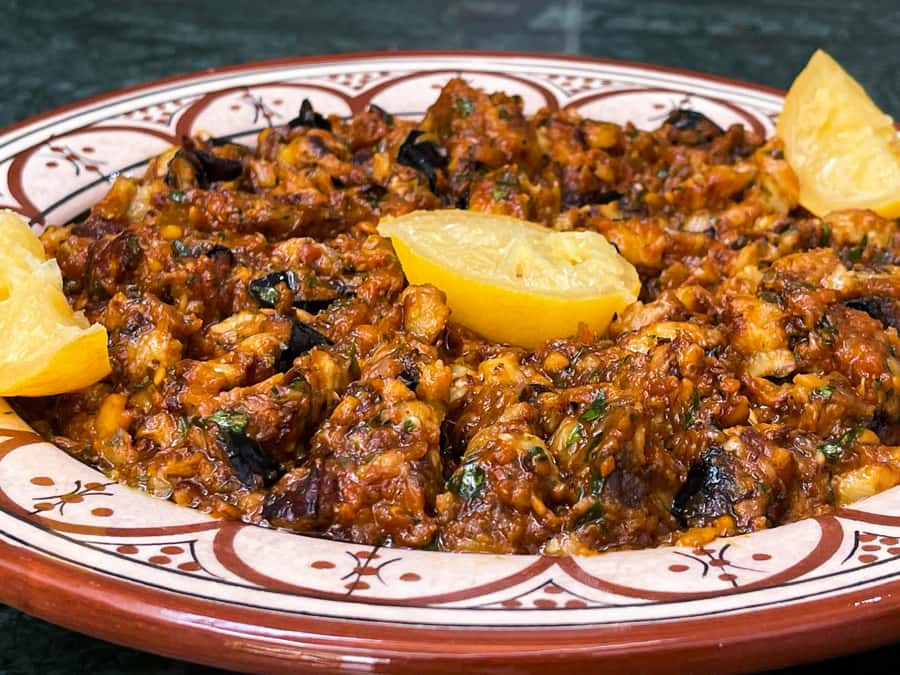
- Zaalouk, a fried or grilled aubergine salad
You may prepare four tagines and two side dishes, or a slightly smaller selection. The class says it usually makes around six dishes in one session, though the exact number depends on group size and the day’s setup.
That variety is one of the strongest reasons to choose this class. A single-dish workshop can teach you one recipe well, but this format lets you compare different spice combinations, textures, and cooking methods. You see how preserved lemon changes chicken, how prunes work with beef, and how vegetables become a substantial main dish rather than an afterthought.
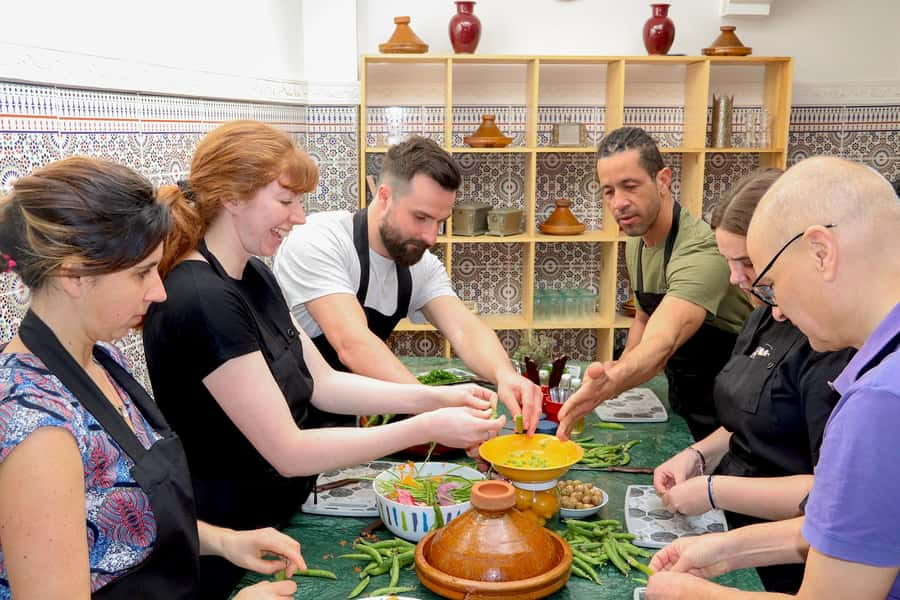
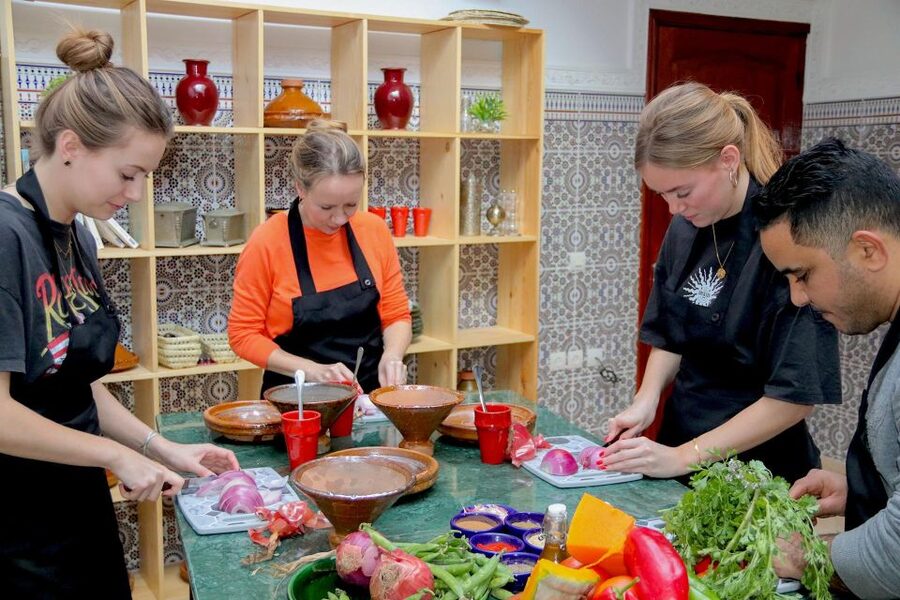
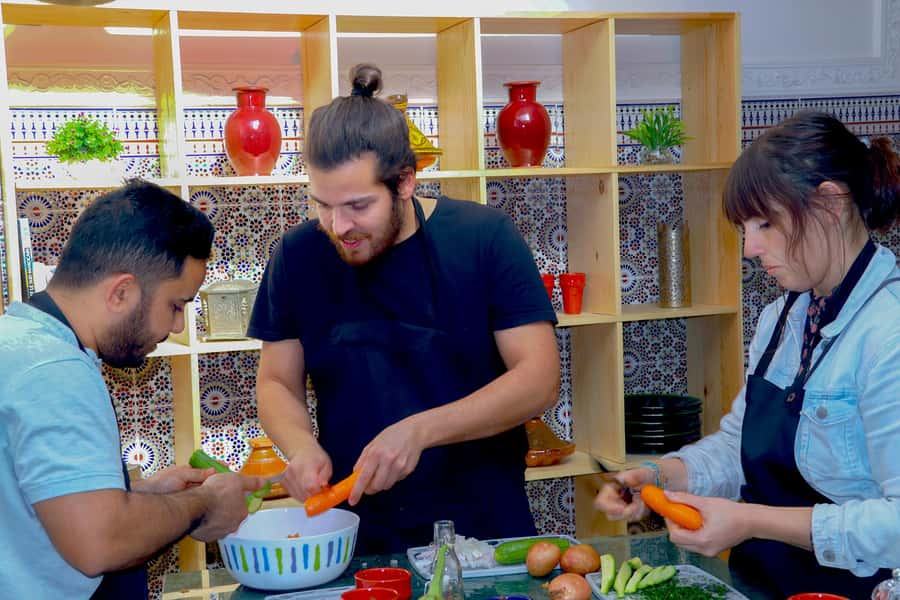
You also learn basic kitchen work, including peeling, chopping, seasoning, and preparing tagines. The aim is not formal culinary training. It is to give you techniques you can repeat in your own kitchen.
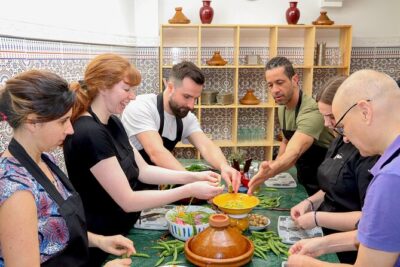
The food is made as one team. Hassan assigns tasks so everyone has a role, and you work on several dishes rather than cooking alone. That arrangement makes the class friendly and efficient, but it also means you may not control every step of every recipe.
If you want a private lesson focused on one dish, this may not be the right format. If you want to learn a broad range of Moroccan food while meeting other people, the team approach works well.
Hassan and Ahmed make the lesson feel personal
The human side of this class receives as much attention as the food. Hassan leads the cooking with humor and patience, while Ahmed helps explain tea and Moroccan customs. Their role is not simply to give instructions. They answer questions and connect the food to family practices, celebrations, and everyday meals.
That cultural explanation gives the recipes more meaning. You learn not only what spice to add, but also how Moroccan households use tagines and how food fits into ordinary and special occasions.
The class is offered in English and French. If everyone speaks the same language, it is held in that language. If the group includes both English and French speakers, the session is bilingual. This is useful to know because a bilingual class may take a little longer to explain certain steps.
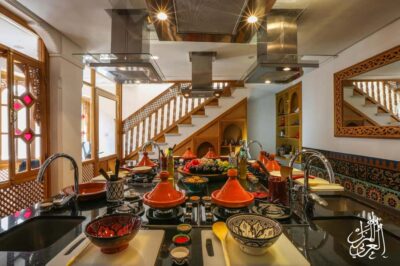
The setting is described as a home cooking environment with an air-conditioned cooking area. The room is organized and clean, but one participant found it cold. A sweater is a sensible addition, particularly for a winter afternoon or evening class.
A completely different kind of day in Marrakech:
- Marrakech: Quad Bike Tour to Palm Oasis and Jbilat Desert
★ 4.8 · 11,831 reviews - Marrakesh: Majorelle Garden Entry Tickets
★ 4.5 · 9,651 reviews - Marrakech Quad Bike Experience: Desert and Palmeraie
★ 4.5 · 9,509 reviews - Marrakech: Balloon Flight, Berber Breakfast & Certificate
★ 4.8 · 8,164 reviews
The shared feast at the end
At the end, the food is served buffet-style. You can sample the dishes made by the group, along with bread, water, and tea. This is a satisfying finish because you see the whole meal at once instead of eating one dish immediately after preparing it.
A buffet also lets you compare the dishes. You might find that you prefer the bright, salty flavor of chicken with preserved lemon, the sweet and savory beef with prunes, or the smoky softness of zaalouk. The menu gives you several ways to understand Moroccan seasoning.
The portions are intended to be shared, and the supplied information says there is enough food for the group. Still, the precise selection and number of dishes can vary. If a particular recipe is the reason you want to book, ask ahead rather than assuming it will be prepared that day.
The meal is the strongest value point. At $47 per person, you are paying for a four-hour activity, instruction, a market visit, tea, a full meal, and recipes to use later. Marrakesh has many inexpensive places to eat, so this is not the cheapest way to get dinner. It is good value if you treat it as both a meal and a cultural activity.
Recipes you can use after Marrakesh
The class sends a link to the recipes in the evening. That makes the experience more useful than a meal that ends when you leave the table.
The recipes allow you to recreate the dishes for friends and family, though your home equipment may differ from the cooking setup in Marrakesh. You also leave with a better sense of how Moroccan seasoning works across several dishes, rather than memorizing one fixed formula.
A few of the menus use familiar ingredients in combinations that may be new to you. Preserved lemon, prunes, sweet peppers, aubergine, and Moroccan spices each play a different role. The class explains those choices while you cook, so the recipes are easier to understand later.
The instruction is also suitable for beginners. The focus is on simple kitchen skills and correct seasoning, not on advanced culinary technique. You do not need to arrive with cooking experience.
Dietary needs, children, and physical limits
The class can prepare vegan, vegetarian, and gluten-free food. Contact the provider before booking if you have dietary restrictions, since the dishes are cooked collectively and menu planning may depend on the group.
There is an important limit: the class is not suitable for people with onion or garlic allergies. Those ingredients are common in Moroccan cooking, and the information specifically warns against booking with either allergy.
Children aged six and older may join. The class is not suitable for children under six, wheelchair users, or people with back problems. The four-hour length also matters for children. One family found that an 11-year-old stayed involved throughout, but younger children may not be ready for a long session of chopping, preparation, and shared cooking.
The kitchen area is air-conditioned. That is welcome in Marrakesh’s warmer months, though it may explain why the room feels cool at other times of year.
Group size and the pace of the afternoon
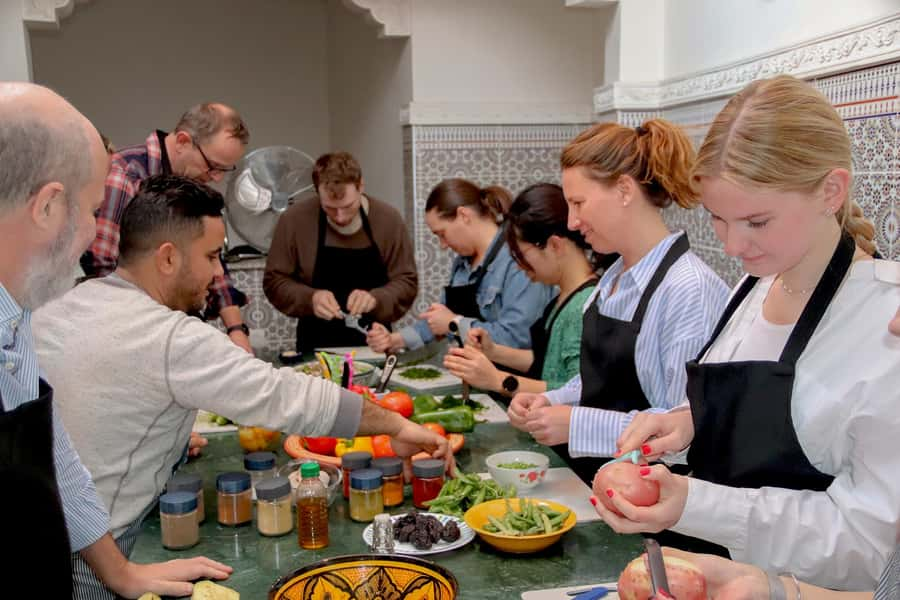
The normal maximum is nine people. Ten may be allowed in an unexpected overbooking or a private group, but a smaller group is the usual arrangement.
A small group gives Hassan more room to include each person. You can ask questions and take a turn with the preparation. At the same time, the class remains social rather than private. You will share the kitchen and meal with people you may not know.
The experience runs for four hours from meeting point to meal. It is not designed as a rushed demonstration. The team allows time for tea, shopping, preparation, conversation, and eating.
That relaxed pace is a real advantage, but keep the timing in mind when planning your day. The cooking class alone lasts more than three hours, and the market and tea portions come before it. Do not schedule a tight appointment immediately afterward.
You need at least two participants for a booking to operate. If you are traveling alone, contact the provider before booking to check if another participant is already scheduled.
When to fit this into your Marrakesh stay
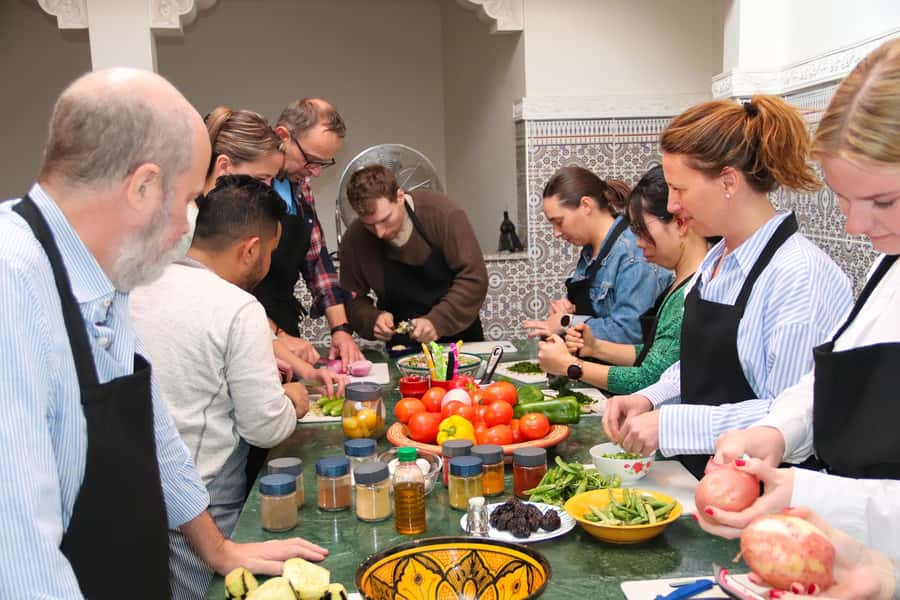
I would place this class early in your visit if you want a useful introduction to Moroccan food. You will recognize the tagines, spices, tea service, and side dishes more easily during the rest of your stay.
There is also a case for booking it near the end. By then, you may have tasted several versions of Moroccan cooking and can compare them with what you prepare yourself. Either way, avoid putting it on a day when you need to rush across town afterward.
The class works particularly well for couples, families with older children, solo visitors who enjoy group activities, and friends who want something more active than a restaurant meal. It is also a good choice for anyone who enjoys cooking but does not need a formal culinary course.
You should think twice if you dislike group participation, have serious food allergies, or want a private kitchen lesson. The food is collectively prepared, and the menu can change.
Booking details worth knowing
The price is $47 per person. The experience lasts four hours and includes the guide, cooking class, meal and bread, water, tea, apron, and recipes sent after the workshop.
Hotel pickup and drop-off are not included. Meet at Pharmacie Bab Doukkala, using the exact name in Google Maps. The class allows free cancellation up to 24 hours before the start time, and you can reserve now and pay later.
The experience operates during Ramadan. The language is English or French, with bilingual instruction when needed.
Should you book this cooking class?
Book it if you want a hands-on introduction to Moroccan food, a proper shared meal, and recipes you can take home. The combination of market shopping, mint tea, several tagines, side dishes, and cultural explanation gives you much more than a standard cooking demonstration.
I especially recommend it for first-time visitors to Marrakesh and for people who want to understand the food beyond ordering it in a restaurant. Hassan and Ahmed give the class a warm, social feel, and the variety of dishes makes the $47 price sensible.
Skip it if you need a private lesson, cannot eat onion or garlic, or find four hours of group cooking too long. For most people who enjoy food and conversation, this is one of the better ways to spend an afternoon or evening in Marrakesh.
FAQ
Where does the Marrakesh cooking class meet?
Meet at Pharmacie Bab Doukkala. Search for the exact pharmacy name in Google Maps to find the correct location.
How long does the cooking class last?
The full experience lasts four hours. This includes a 15-minute market visit, a 30-minute tea ceremony, and about three hours and 15 minutes of cooking and dining.
What dishes might I cook?
The usual dishes include beef with prunes tagine, chicken with preserved lemon tagine, vegetable tagine, kefta with tomato sauce and eggs, shakshouka, and zaalouk. The exact number and selection can change with group size and dietary needs.
Is the meal included?
Yes. The food prepared during the class is served buffet-style, with bread, water, and tea included. Additional drinks are not included.
Will I receive the recipes?
Yes. A link to the recipes for the dishes prepared in class, along with additional recipes, is sent after the workshop.
Is the class suitable for vegetarians or vegans?
The class can prepare vegan and vegetarian food. Contact the provider before booking to discuss your dietary needs.
Can children join the class?
Children aged six and older are allowed. Children under six are not permitted.
Is the class taught in English?
The class is available in English and French. If participants speak different languages, the class is bilingual. If everyone speaks the same language, it is held in that language.
Is hotel pickup included?
No. You need to reach Pharmacie Bab Doukkala yourself, as hotel pickup and drop-off are not included.
Just added around Marrakech
- Quad in the Palmeraie of Marrakech★ 5.0 · 41 reviews
- Marrakech Desert Camel Ride★ 5.0 · 17 reviews
- Sunset Camel Ride in the Palm Grove Of Marrakech★ 5.0 · 34 reviews
- Private Airport Transfer from or to Marrakech Menara Airport.★ 4.5 · 63 reviews
- Marrakech The History and Culture Day Trip★ 4.5 · 45 reviews
- Marrakech: Tailor-Made City Tour With Your Own Private Guide★ 4.9 · 236 reviews
- Marrakech palm grove: Sunset camel ride★ 4.8 · 194 reviews
- Sparkling Marrakech through the eyes of your local Guide★ 4.7 · 247 reviews
Cooking Classes, compared.
Half-Day Cooking Class with Local Chef Laila in Marrakech
Read our review →
Marrakesh cooking class with chef Hassan – Local dishes
Read our review →
Marrakech Tour: Tajine Cookery Class Experience
Read our review →
Atlas Mountains Cooking Class with Berber Family
Read our review →Browse the lists this tour appears in