
Reviewed · COOKING CLASSES
Marrakech: Traditional Moroccan Crepes & Bread Cooking Class
Marrakech’s best food lessons often begin with something simple: flour, water, heat, and a good pair of hands. This small-group class takes you through three Moroccan staples, Msemen, Harcha, and Batbout, then turns the finished breads into a shared snack with mint tea. I like the practical format and the chance to learn food you can try again at home. I also like the setting near Bab Doukkala, where reaching the workshop takes you through local food markets rather than a polished tourist zone.
The class is limited to 10 people, so you should have a fair chance to ask for help while shaping and cooking. Fatima and Jamila are among the hosts associated with the experience, and guests have found the demonstrations hands-on even when spoken language was limited. The main consideration is that this is a bread-focused lesson, not a full Moroccan meal, and it is not suitable for children under four, people with food allergies, or anyone with gluten intolerance.
Key points to know before booking
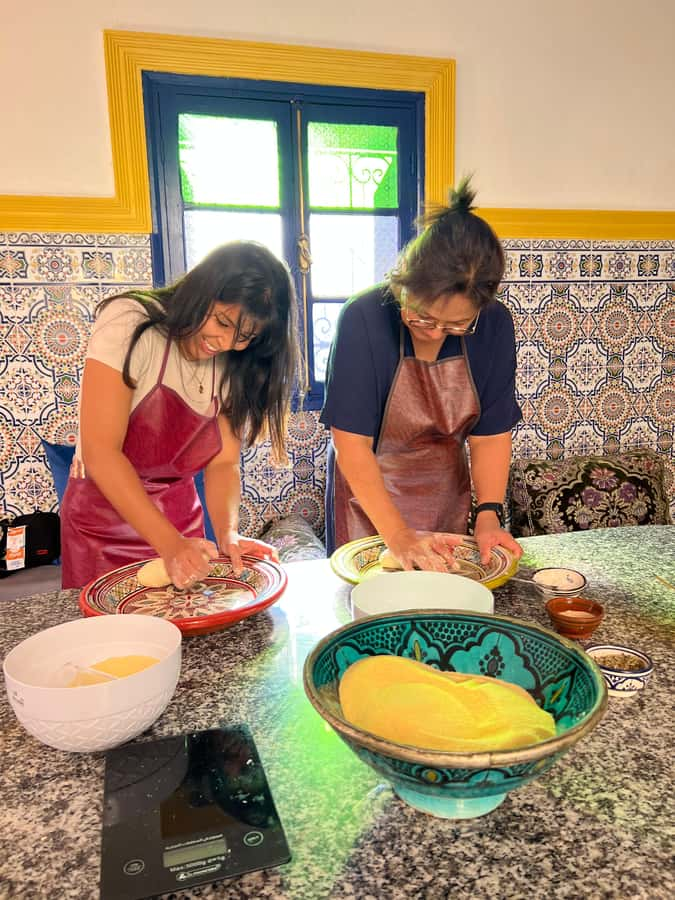
- Three breads in two hours: Make Msemen, Harcha, and Batbout, each with its own dough and cooking method.
- Mint tea is part of the lesson: Prepare and pour the classic Moroccan tea to serve with your baking.
- Small groups matter: The workshop accepts up to 10 participants, with some sessions becoming even smaller.
- You eat what you make: Enjoy the breads with accompaniments such as olives, jam, honey, or similar items, depending on the session.
- Recipes are provided electronically: They are intended to help you repeat the breads at home, though one participant had to follow up to receive them.
- Come ready for hands-on work: An apron, utensils, ingredients, and instruction are included, but transportation is not.
Three Moroccan breads, three different lessons
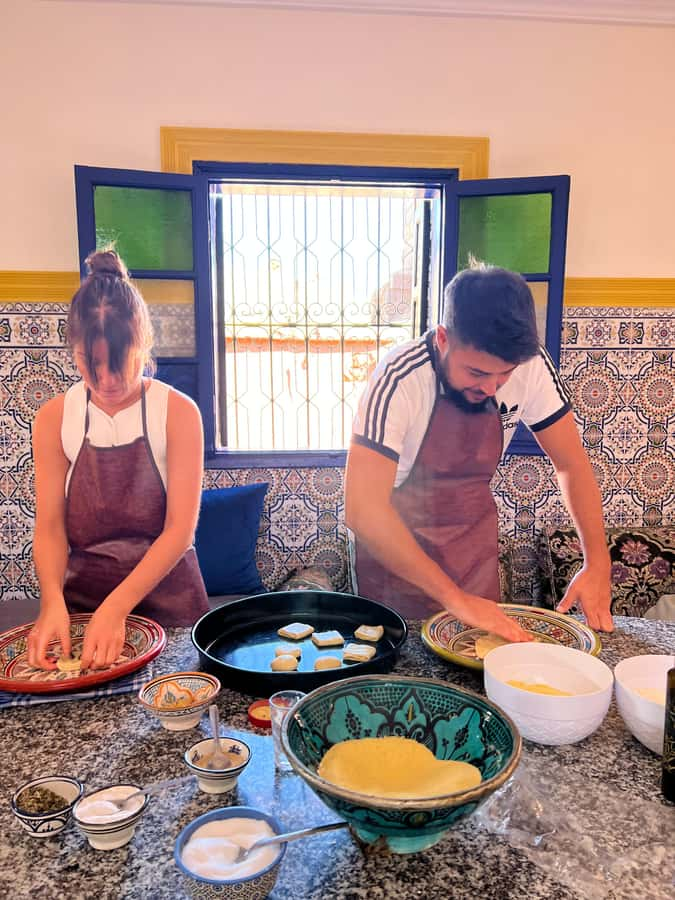
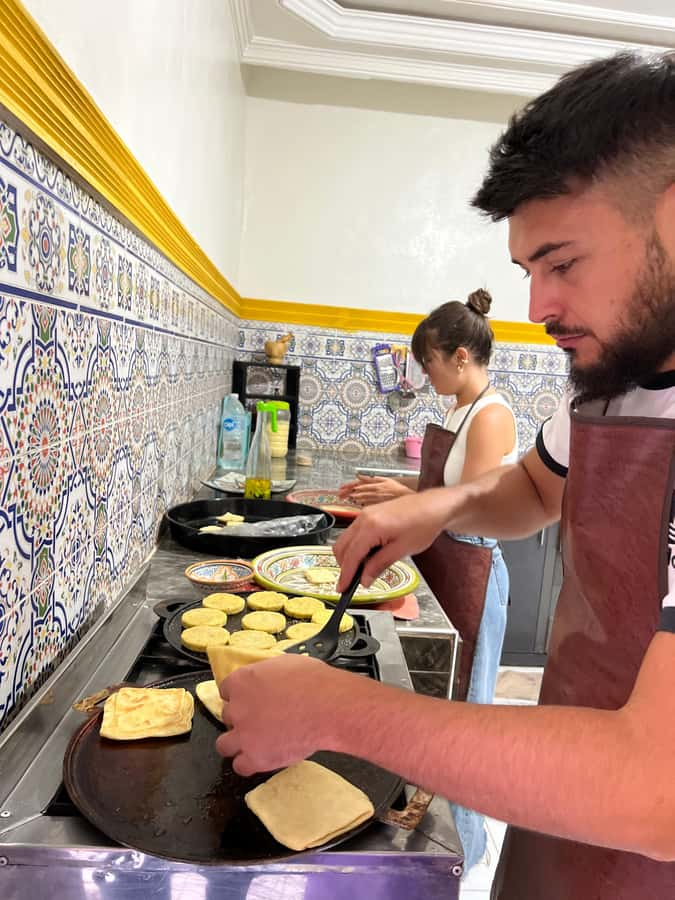
The class is built around three well-known Moroccan breads and crepes. That makes it more useful than a demonstration where you watch a cook work and then receive a plate at the end. You handle the dough, see how texture changes, and take part in cooking from start to finish.
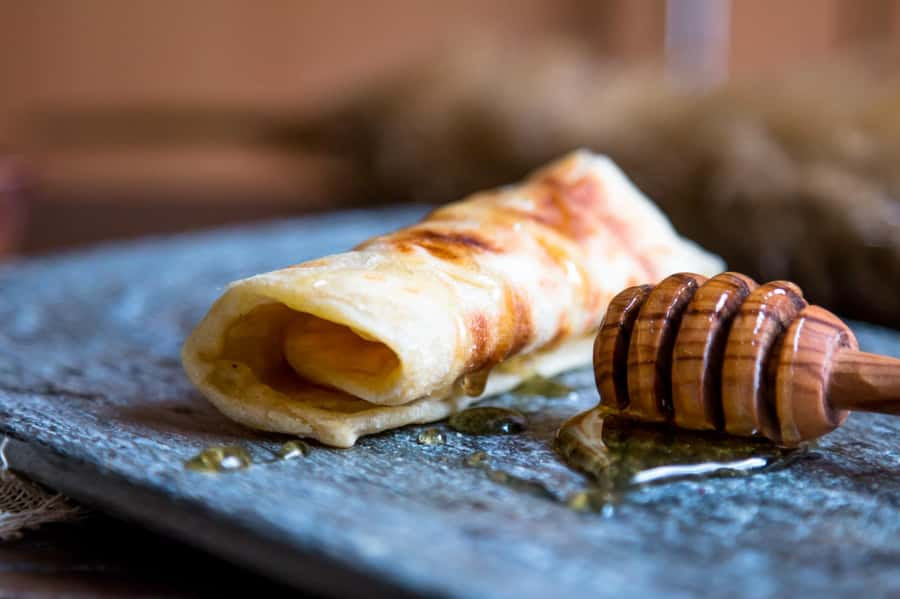
Msemen is the folded Moroccan crepe many people recognize from breakfast tables and hotel buffets. It is one reason this class appeals to visitors who have been eating Moroccan bread throughout their trip and want to understand how it is made. The lesson focuses on the traditional technique rather than simply handing you a finished crepe.
Harcha is presented as a Moroccan pancake or galette, giving you a different style of dough and a different result on the pan. Batbout is the Moroccan pita-style bread in the class. Learning all three together gives you a useful comparison: these are not three versions of the same recipe, but separate preparations with different cooking methods.
You are given the required ingredients and utensils, along with an apron. That matters because you can arrive with only comfortable clothes and water, rather than trying to bring equipment or shop for ingredients before class. Wear something suitable for baking, since flour and dough work are part of the lesson.
More Cooking Classes in Marrakech
- Marrakech: Moroccan Cooking Class with Pickup
★ 4.6 · 1,862 reviews - Marrakech: Traditional Moroccan Cooking Class & Market Visit
★ 4.8 · 1,861 reviews - Marrakesh: Moroccan Dishes Cooking Class with a Local Chef
★ 5.0 · 1,615 reviews
What happens during the two-hour workshop
The experience begins at the workshop at 44 Der Hajra, near Bab Doukkala. You are responsible for getting there, so allow time to find the address. The walk may take you through food markets used more by local residents than by sightseers, which adds a useful slice of everyday Marrakech to the outing. Directions have been sent by WhatsApp before some sessions, and that can be especially helpful if you are unfamiliar with the Bab Doukkala area.
Once inside, the host introduces the breads and the basic process. The class is designed to be interactive, so expect to measure, mix, shape, and cook rather than simply sit and take notes. The pace is fairly brisk because three recipes are covered in two hours, but the group limit of 10 keeps the lesson manageable.
The instructor demonstrates the techniques, then helps you work through them. That hands-on approach is one of the strongest reasons to book. A demonstration can show you what a finished Msemen looks like, but making it yourself gives you a better sense of how the dough should feel and how the folds come together.
Language should not stop you from booking, but it is worth understanding the setup. The experience is offered in Arabic, French, and English. Some sessions have included a translator, while other participants found that the teacher communicated mainly through demonstration and direct help. The practical nature of bread making makes this possible, though you may not get a long verbal answer to every question.
Making Msemen, Harcha, and Batbout
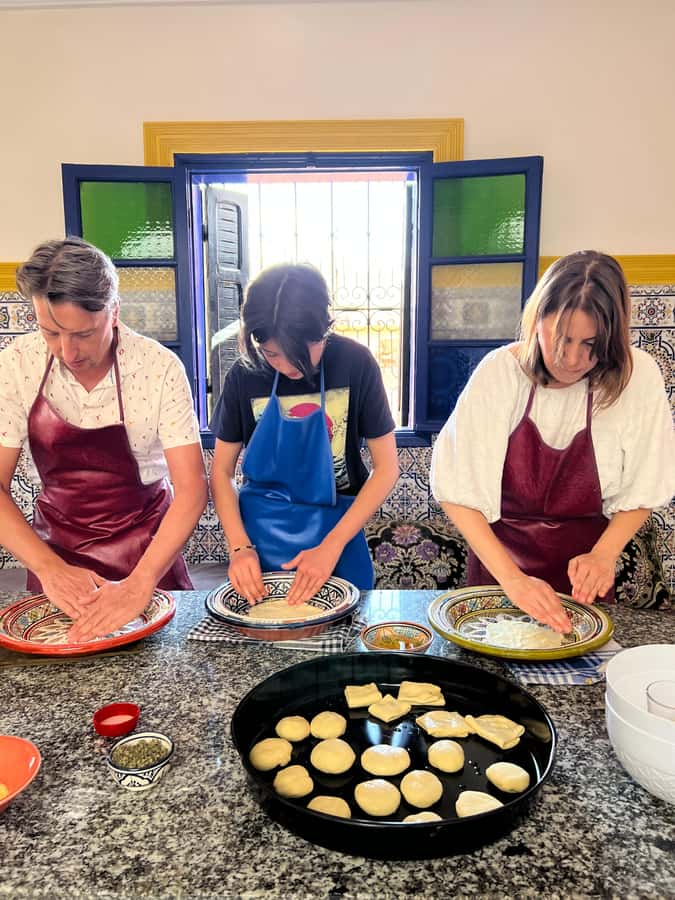
The class gives each bread a place in the process rather than rushing through a single recipe. Msemen introduces you to Moroccan crepe making, with attention to the traditional way of preparing and cooking it. It is the bread you may most want to recreate after returning home, especially if you have been ordering it with breakfast.
Harcha gives you a second texture and shape. It is described as a pancake or galette, and making it alongside Msemen helps you see how two pan-cooked Moroccan specialties differ. You get to practice another method without committing to a separate cooking class.
Batbout completes the trio with a pita-style bread. The class lets you compare the three finished results while they are fresh. For a short activity, that range is a real strength. You are not spending two hours learning one basic flatbread and calling it a day.
The host guides the shaping and baking, and the instruction is meant to help you succeed rather than test your culinary skill. You do not need prior experience. The class is described as suitable for beginners, and the practical format means you can copy the technique as it is shown.
One small drawback is that the class may produce more bread than you can comfortably eat in one sitting. Participants have sometimes been given a box for leftovers, which solves the immediate problem, but you should be prepared to carry extra food away. If you are staying in a riad or hotel, that is a pleasant bonus. If you are traveling with very little room, it is worth keeping in mind.
The mint tea ritual adds more than a drink
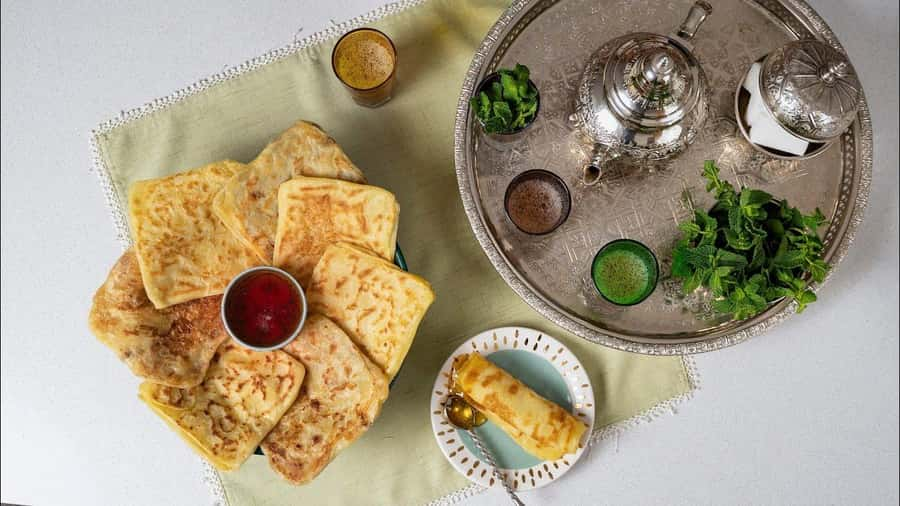
After the dough work and cooking, the group prepares Moroccan mint tea. This is not just a beverage placed beside the bread. The tea preparation is treated as part of the traditional ritual, including making and serving it together.
That final stage slows the class down. You have finished the messy work, the breads are ready, and the tea gives everyone a reason to sit and talk. It also makes the food feel connected to Moroccan hospitality rather than just a baking exercise.
You can enjoy the bread with accompaniments such as olives, jam, and honey. The exact serving choices can vary, but the basic idea is consistent: taste the work while it is fresh and share it around the table. This is also a good time to chat about your trip to Morocco and ask practical food questions.
The tea ritual may be especially useful if you have seen mint tea everywhere but have not learned how it is prepared. You leave with more than a recipe for bread. You also gain a small piece of the social rhythm that makes tea an important part of time spent together.
A completely different kind of day in Marrakech:
- Marrakech: Quad Bike Tour to Palm Oasis and Jbilat Desert
★ 4.8 · 11,831 reviews - Marrakesh: Majorelle Garden Entry Tickets
★ 4.5 · 9,651 reviews - Marrakech Quad Bike Experience: Desert and Palmeraie
★ 4.5 · 9,509 reviews - Marrakech: Balloon Flight, Berber Breakfast & Certificate
★ 4.8 · 8,164 reviews
Why the small group improves the lesson
A maximum of 10 participants is a sensible limit for a class involving dough, cooking surfaces, and several recipes. You can see the demonstration without standing far back, and you should have a better chance of getting help when your dough does not behave as expected.
The group may be smaller. One session had only two people, while another became a private-feeling class for three. That changes the experience in a good way because the instructor can spend more time correcting technique and answering questions. It can also mean you leave with more leftover bread.
The mood is informal and social. You are invited to chat about your Moroccan trip while the bread cooks, so the class does not feel like a strict school lesson. Families with older children can enjoy it too. One family of four, including two children, found the activity fun and manageable, but the stated minimum age is four.
If you want a quiet, private lesson with detailed culinary theory, the group format may feel less tailored. If you want to cook, laugh, eat, and learn a few useful skills in a short time, the arrangement works well.
The local setting near Bab Doukkala
The address at 44 Der Hajra places the workshop near Bab Doukkala, one of Marrakech’s familiar city areas. The walk to the house can take you through food markets that feel more local than the main tourist lanes. That approach is part of the experience, though you should still use the directions sent by the host and leave time to find the entrance.
Transportation is not included. You need to make your own way to the workshop, and there is no hotel pickup listed. For many people staying in or near the medina, this is a straightforward addition to a day of exploring. If you are staying farther away, factor in the cost and time of reaching Bab Doukkala.
The workshop itself is described as a beautiful Moroccan home or home-style setting. That helps explain why the class can feel more like cooking with someone at home than attending a formal culinary school. The tradeoff is that you should expect a personal, practical environment rather than a polished professional kitchen built for demonstrations.
Is $37 a fair price?
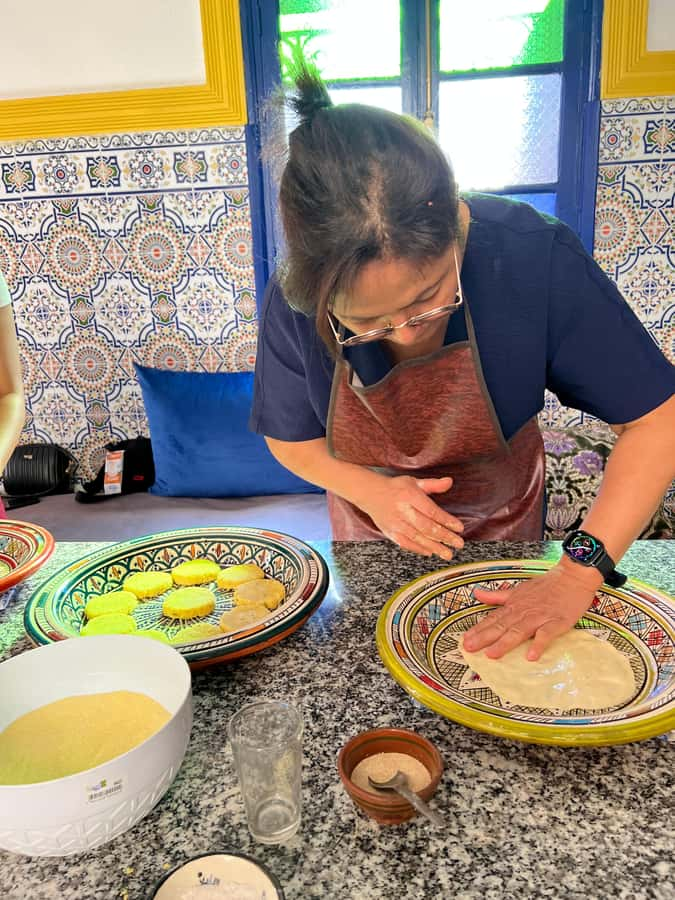
At $37 per person, the value depends on how much you want to take part. You receive a two-hour interactive class, all ingredients and utensils, an apron, instruction, tasting, mint tea preparation, and electronic recipes. You also eat the bread you make, with accompaniments included during the tasting.
That is a reasonable package for a hands-on Marrakech activity, especially because you are learning three recipes instead of one. The recipes can continue paying off after your trip if you actually make them at home. Msemen, Harcha, and Batbout use different methods, so the lesson gives you more practice than a single-recipe snack class.
The price does not include transportation or personal expenses. It also does not promise a full lunch or dinner, so do not book it expecting a large Moroccan feast. The finished bread is described as plentiful, but the main value is the activity and the skills, not a restaurant-style meal.
I would compare this class with the rest of your Marrakech plans rather than judging it as a food purchase. If you want a short cultural activity that leaves you with something useful, $37 is easy to justify. If you only want to eat Moroccan bread and have no interest in making it, you can find cheaper food elsewhere.
Practical tips for a smoother class
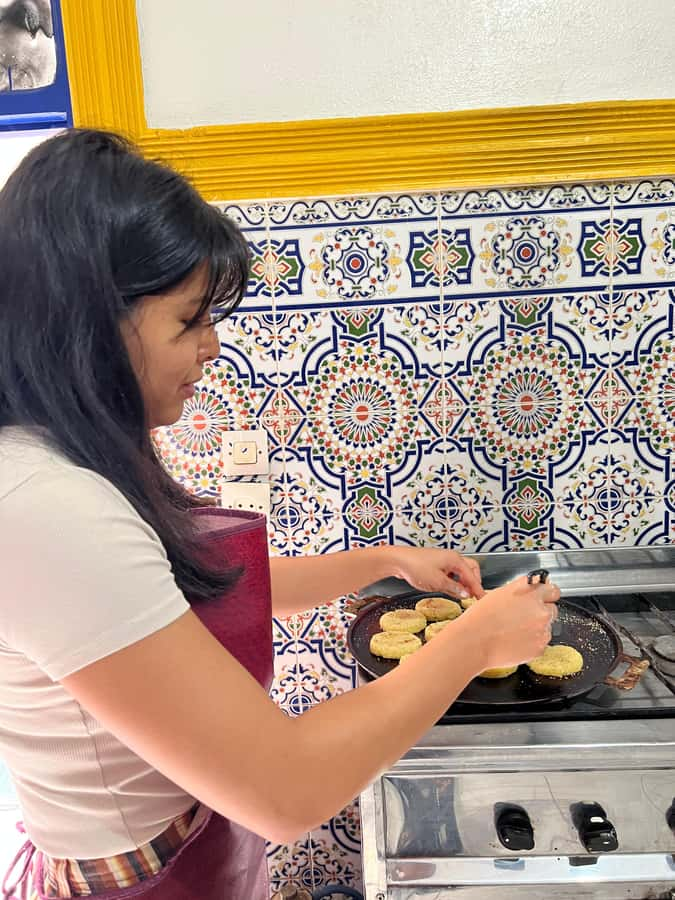
Wear comfortable clothes that are suitable for baking. You will be working with dough and flour, and a relaxed outfit is more useful than anything formal. Bring water, since the class involves active preparation and cooking.
Bring your appetite, but also expect to take food away if you cannot finish everything. A box has been provided in some sessions, and the amount can be more than one person wants to eat immediately.
If you have a food allergy or gluten intolerance, do not book this activity. The experience is specifically built around bread and crepes, and it is listed as unsuitable for people with food allergies and gluten intolerance.
The electronic recipes are part of the package. Most importantly, save the message or file when it arrives. One participant had not received the recipes and needed to chase them, so it is sensible to check before leaving or contact the provider afterward if necessary.
For language, choose a group with an instructor or support person who matches your needs when possible. Arabic, French, and English are listed, but the level of spoken explanation may vary. The food itself can still be taught through demonstration, and the hosts have been able to guide people directly through the techniques.
Free cancellation is available up to 24 hours before the activity for a full refund, and you can reserve now and pay later. Check the available start times when booking, since the two-hour class does not list one fixed daily departure.
Who will enjoy this class most?
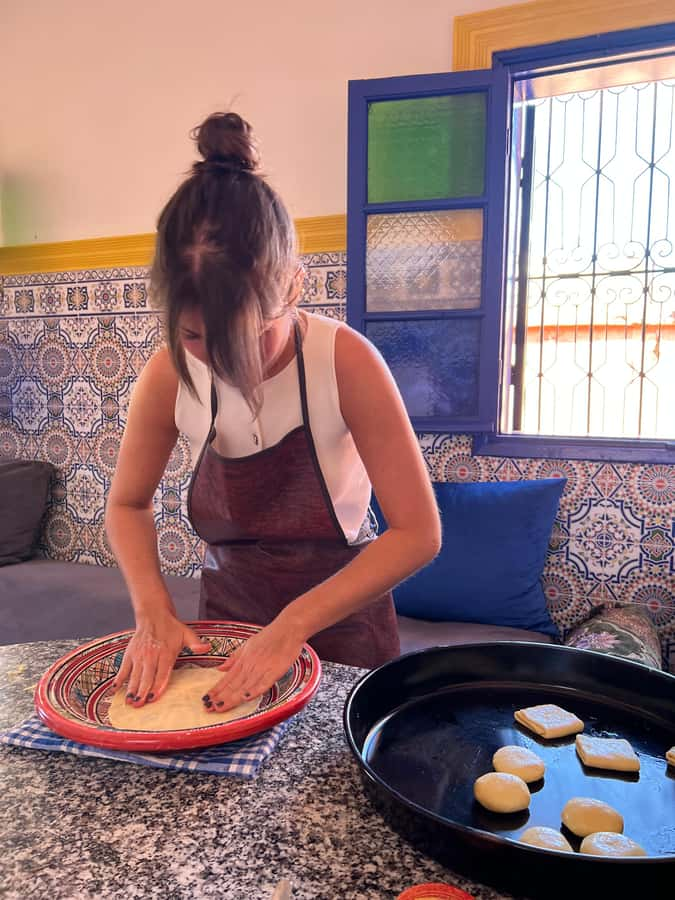
I would recommend it first to people who have already fallen for Moroccan bread and want to know how it is made. It also suits couples, families with children aged four and up, solo visitors who enjoy meeting a small group, and anyone who prefers an activity with a clear result.
It is a good choice for a slower morning or afternoon away from monument visits. The class gives you something to do with your hands, then gives you time to sit down and share the result. That balance is welcome after a day of navigating Marrakech’s crowded streets.
It may not suit you if you need strict control over ingredients, cannot eat gluten, or want a broad Moroccan cooking course covering tagine, salads, and main dishes. This lesson stays focused on crepes, flatbread, pancakes, and tea.
Khmisa Workshops also offers other Moroccan cooking sessions, including tagine and broader Moroccan cooking classes. If you enjoy this format, you may want to consider those on a later visit, but this particular class is firmly about bread.
Should you book the Marrakech bread class?
Book it if you want a friendly, hands-on introduction to three Moroccan breads, a taste of local home cooking, and a simple skill you can carry home. The strongest points are the small group size, the personal demonstrations, the fresh tasting, and the chance to make Msemen, Harcha, and Batbout in one sitting.
Think twice if you need a full meal, dislike working with flour, or have dietary restrictions. Also plan your route to Bab Doukkala and confirm that the electronic recipes arrive after class.
For most visitors who enjoy food and want more than another guided walk, this is a good-value two-hour activity. You leave with warm bread, mint tea practice, and recipes that can bring a little Marrakech into your own kitchen.
FAQ
How long does the Moroccan crepes and bread class last?
The class lasts two hours. Check availability when booking to see the starting times.
Where is the workshop located?
The workshop is at 44 Der Hajra, near Bab Doukkala in Marrakech. Transportation to and from the experience is not included.
Which breads will I learn to make?
You will make three Moroccan specialties: Msemen, Harcha, and Batbout. The class covers different preparation and cooking methods for each one.
Is mint tea included?
Yes. You will help prepare traditional Moroccan mint tea and taste it with the breads you make.
What is included in the $37 price?
The price includes the interactive baking class, an apron, ingredients, utensils, host guidance, tasting of the baked creations, mint tea preparation and tasting, and electronic recipes.
Is the class suitable for children or people with dietary restrictions?
Children under four are not permitted. The activity is not suitable for people with food allergies or gluten intolerance because the class centers on bread and crepes.
Just added around Marrakech
- Quad in the Palmeraie of Marrakech★ 5.0 · 41 reviews
- Marrakech Desert Camel Ride★ 5.0 · 17 reviews
- Sunset Camel Ride in the Palm Grove Of Marrakech★ 5.0 · 34 reviews
- Private Airport Transfer from or to Marrakech Menara Airport.★ 4.5 · 63 reviews
- Marrakech The History and Culture Day Trip★ 4.5 · 45 reviews
- Marrakech: Tailor-Made City Tour With Your Own Private Guide★ 4.9 · 236 reviews
- Marrakech palm grove: Sunset camel ride★ 4.8 · 194 reviews
- Sparkling Marrakech through the eyes of your local Guide★ 4.7 · 247 reviews
Cooking Classes, compared.
Half-Day Cooking Class with Local Chef Laila in Marrakech
Read our review →
Marrakesh cooking class with chef Hassan – Local dishes
Read our review →
Marrakech Tour: Tajine Cookery Class Experience
Read our review →
Atlas Mountains Cooking Class with Berber Family
Read our review →Browse the lists this tour appears in