
Reviewed · COOKING CLASSES
Marrakech: Moroccan Cooking Class with Local Chef
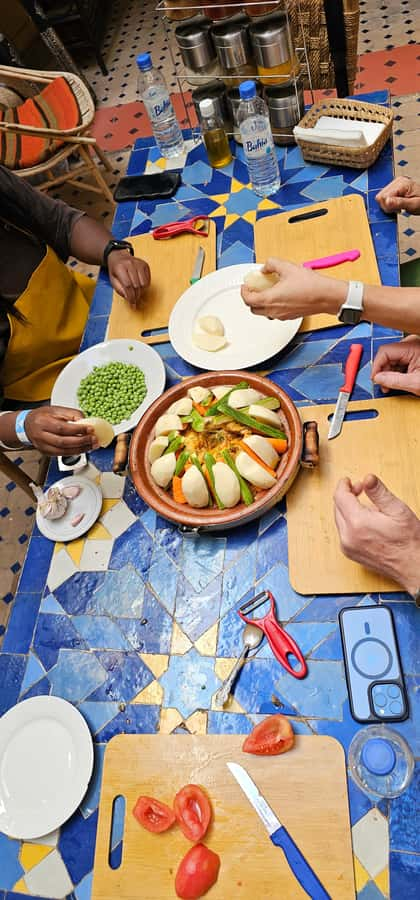
The best part of this Marrakech experience starts before you touch a cooking pot. You meet near Café de France on Jemaa el Fna, walk into a local food souq, and help choose the vegetables, spices, and other ingredients for your meal. Back at Riad Black Doors, Marouane and Abdou guide you through Moroccan cooking in a small, family-style setting.
I like the market stop because it gives the meal a clear connection to daily life in Marrakech. I also like the hands-on format, especially the chance to learn the Moroccan mint tea ritual and leave with recipes you can try at home. The main drawback is timing: once a tagine is prepared, it may need 1 to 1.5 hours to cook, and one session left people waiting with little to do.
Key points at a glance
- Market before cooking: Shop for fresh ingredients in a local souq, except on Fridays and during Ramadan.
- Chefs with hotel experience: Marouane and Abdou bring professional Moroccan and pastry experience to the class. Some sessions are led by Khalid.
- A full meal: Prepare starters, a main course, dessert, and tea before eating together.
- Berber and Moroccan culture: The class can include conversation about Amazigh, or Berber, identity, family traditions, and Moroccan food customs.
- Five-hour commitment: Allow most of an afternoon for the market, cooking, tea, waiting time, and meal.
- Good value at $35: The price includes the guide, class, tea, and meal, but not transport to the meeting point.
Meeting at Café de France and entering the Medina
Your meeting point is in front of the main door of Café de France on Jemaa el Fna Square. This is a sensible place to start because the square is easy to find, but it can be crowded and confusing, especially if you are arriving for the first time. Give yourself extra time to locate the correct door rather than waiting somewhere inside the café.
From there, you walk for about five minutes. The short walk matters because the cooking takes place in the Medina, at Riad Black Doors, rather than in a purpose-built school outside the old city. That setting gives the class a more personal feel, though you should expect a traditional Medina layout and not a large, polished teaching kitchen.
The class is offered in English, French, and Arabic. The exact guide can vary. The experience is described around Marouane and Abdou, two Moroccan Berber chefs with experience in hotels and restaurants in Morocco and abroad. Recent sessions have also been led by Khalid, who talks about his Amazigh background and life in Marrakech.
That variation is worth knowing if you have your heart set on meeting one particular chef. The consistent idea is a local chef-led class, but the individual host may depend on the day.
More Cooking Classes in Marrakech
- Marrakech: Moroccan Cooking Class with Pickup
★ 4.6 · 1,862 reviews - Marrakech: Traditional Moroccan Cooking Class & Market Visit
★ 4.8 · 1,861 reviews - Marrakesh: Moroccan Dishes Cooking Class with a Local Chef
★ 5.0 · 1,615 reviews
Shopping for ingredients in a local souq
The market visit is one of the most useful parts of the afternoon. Rather than simply watching someone cook, you help select the food that will become your lunch or dinner. You may see fresh vegetables, spices, herbs, and local specialties as you move through the souq away from the most tourist-focused parts of Marrakech.
The guides also use this time to discuss allergies and dietary restrictions. Tell them clearly what you can and cannot eat before shopping begins. One group prepared both a chicken version and a vegetarian version, which shows that the menu can sometimes be adjusted when the chefs know in advance.
The market stop is not included on Fridays or during Ramadan. On those dates, the experience begins differently, so check the operating details before booking if shopping is the part that interests you most.
This is not a quick photo stop. The shopping adds local context and helps you understand that Moroccan cooking starts with choosing the right produce. You also get a better sense of the role of spices and vegetables before the first knife comes out.
Learning at Riad Black Doors
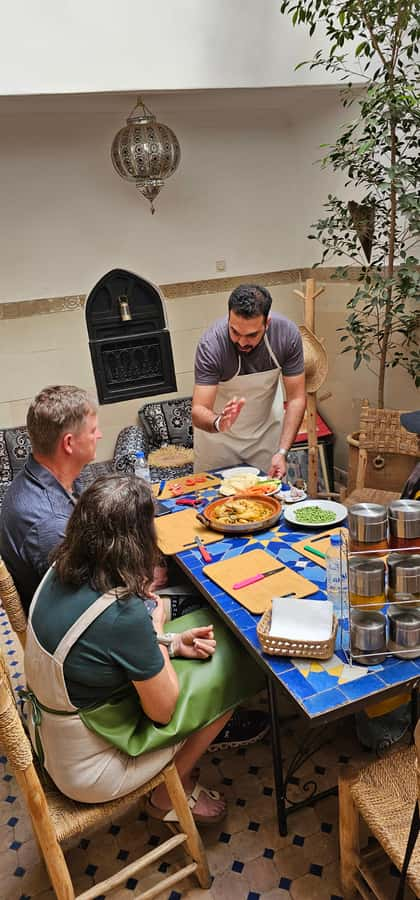
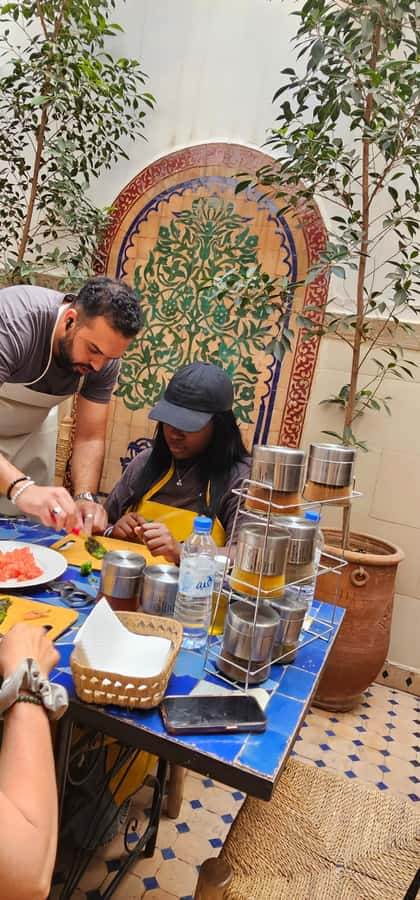
Back at the riad, you are welcomed with tea before the cooking starts. The setting is described as warm and family-friendly, and the class is designed so everyone takes part. You should expect to chop, mix, season, and help assemble the dishes rather than sit at a counter and watch a demonstration.
The chefs explain Moroccan cooking methods as you work. Their advice can include family-style tips, the handling of spices, and ways to build flavor in a tagine or salad. This is where the class earns much of its $35 price. You are not only paying for a meal. You are getting guided practice, cultural conversation, and recipes you can use after Morocco.
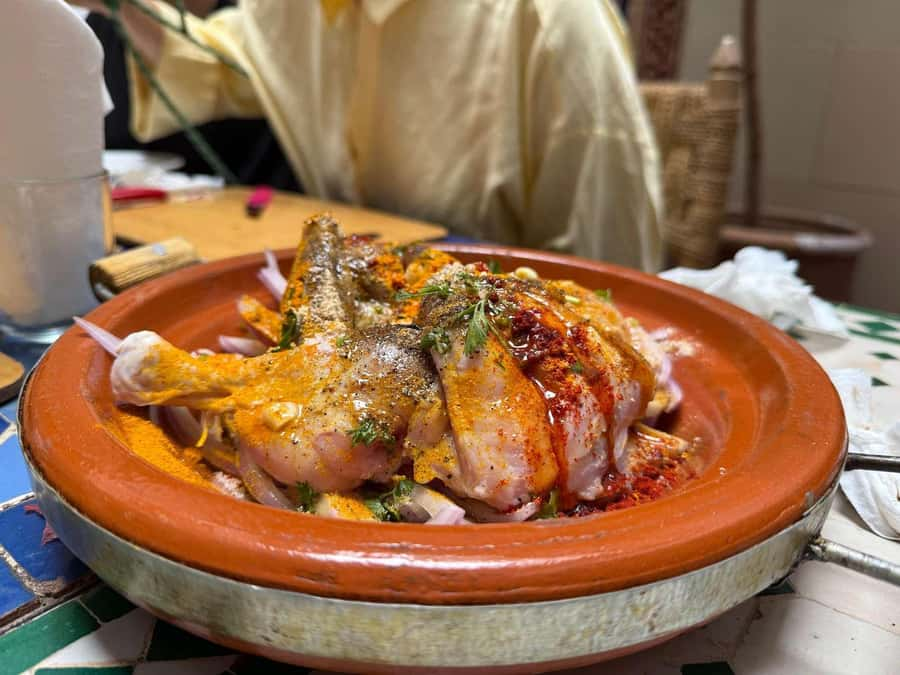
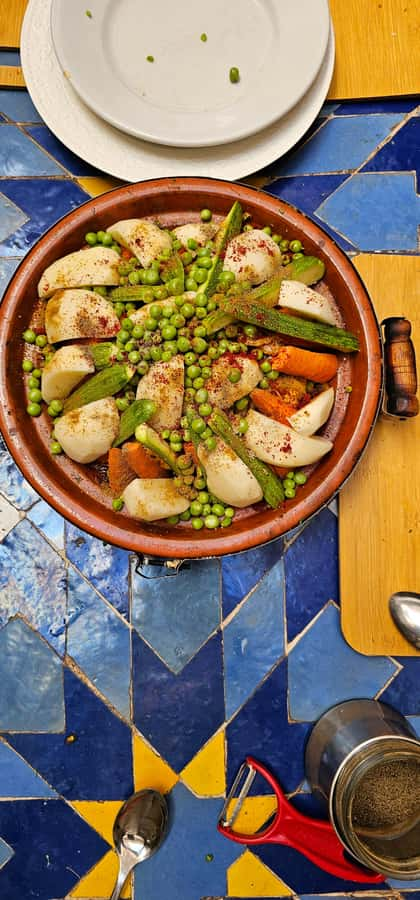
The planned menu includes starters, a main course, and dessert, though the exact dishes can change. Dishes described from recent sessions include Moroccan salad, zaalouk made with eggplant, and chicken tagine. Another group prepared chicken and vegetarian versions with several side dishes.
Zaalouk is especially useful to learn at home because it shows how Moroccan cooks turn simple vegetables into a strongly seasoned dish. The tagine offers the classic centerpiece, with the cooking vessel and slow preparation shaping both the taste and the pace of the class.
Mint tea is part of the lesson
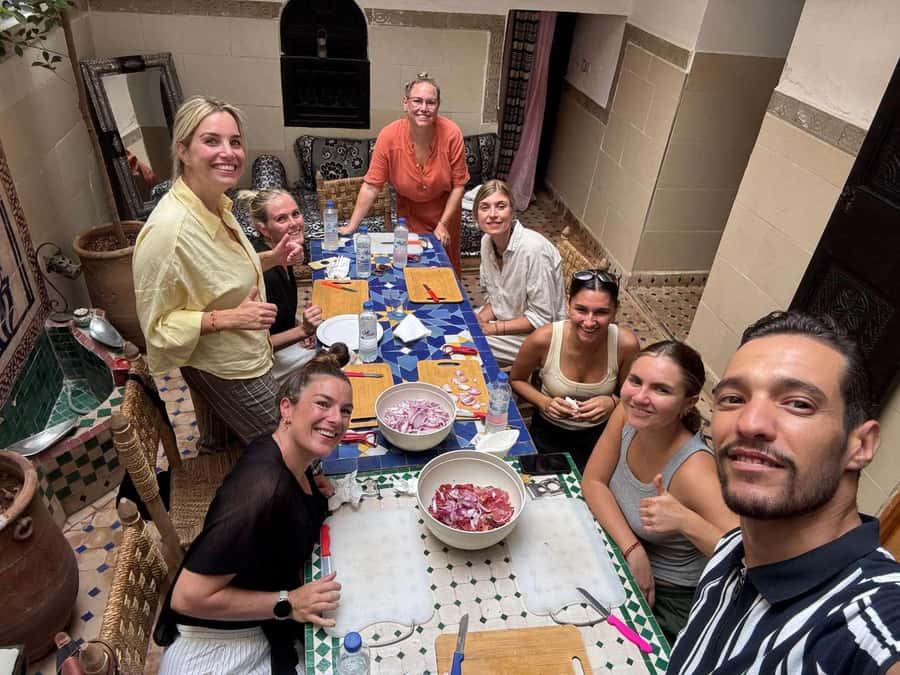
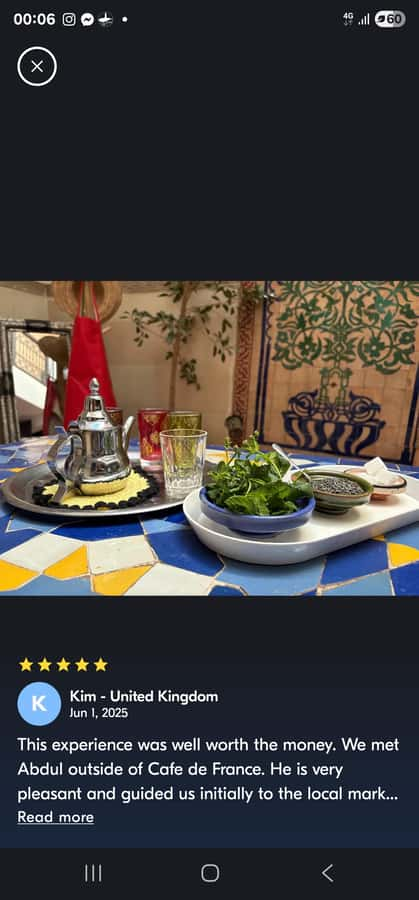
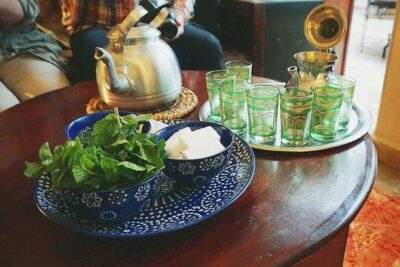
Tea is not just a drink served while you wait. It has its own ritual, and the chefs explain how it is prepared. The experience includes traditional Moroccan mint tea, with one session also describing tea with absinthe on the riad terrace.
The tea segment lasts about 30 minutes in the published schedule. That gives you time to watch the preparation and ask questions about Moroccan customs. It also creates a relaxed pause between shopping and cooking, or between preparation and the meal, depending on how the class is organized that day.
I like this part because it connects food with hospitality. Moroccan mint tea is often offered as a welcome, and learning the method gives you something practical to repeat at home. It is also one of the less rushed moments of the afternoon, when you can talk with the chef about architecture, family, culture, or Amazigh roots.
A completely different kind of day in Marrakech:
- Marrakech: Quad Bike Tour to Palm Oasis and Jbilat Desert
★ 4.8 · 11,831 reviews - Marrakesh: Majorelle Garden Entry Tickets
★ 4.5 · 9,651 reviews - Marrakech Quad Bike Experience: Desert and Palmeraie
★ 4.5 · 9,509 reviews - Marrakech: Balloon Flight, Berber Breakfast & Certificate
★ 4.8 · 8,164 reviews
The cooking pace and the tagine wait
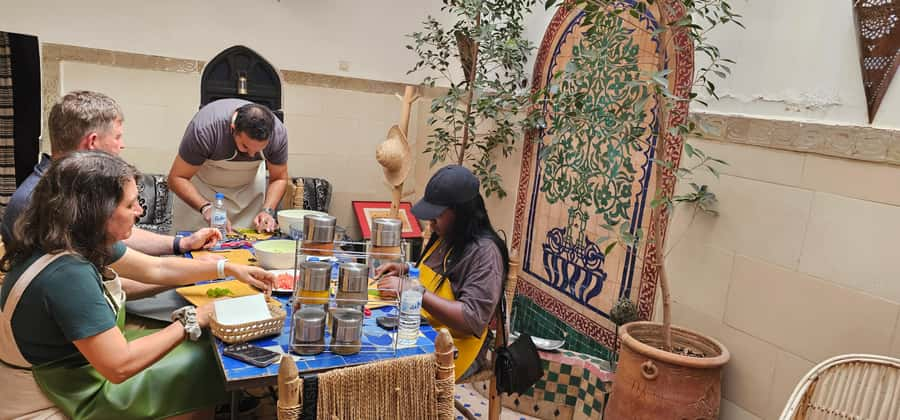
The published schedule lists about 1.5 hours for the cooking class, 30 minutes for tea, and one hour for eating. The full experience lasts five hours, which includes the market visit, walking, preparation, cooking time, and other pauses.
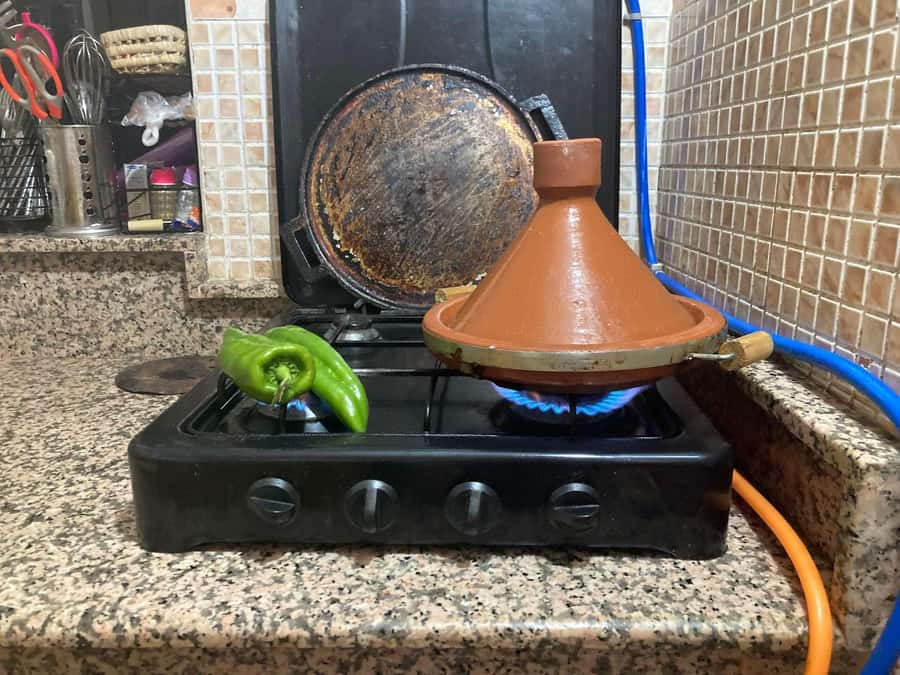
Here is the practical issue: tagine takes time. Once preparation is finished, the dish may need 1 to 1.5 hours before it is ready. In one session, the group sat around with little to do during that wait. If you expect five nonstop hours of instruction, this may feel slow.
The chefs could use that period for another small recipe or a fuller demonstration, but the information provided does not promise an extra activity. You may want to treat the waiting time as part of the meal’s rhythm rather than a tightly packed lesson. Bring questions and be ready for a social afternoon, not a fast cooking seminar.
The upside is that slow cooking is part of understanding Moroccan food. You see that a tagine is not a dish to rush. Still, if you have limited time in Marrakech or dislike unstructured pauses, this is the biggest point to consider before booking.
Eating the food you prepared
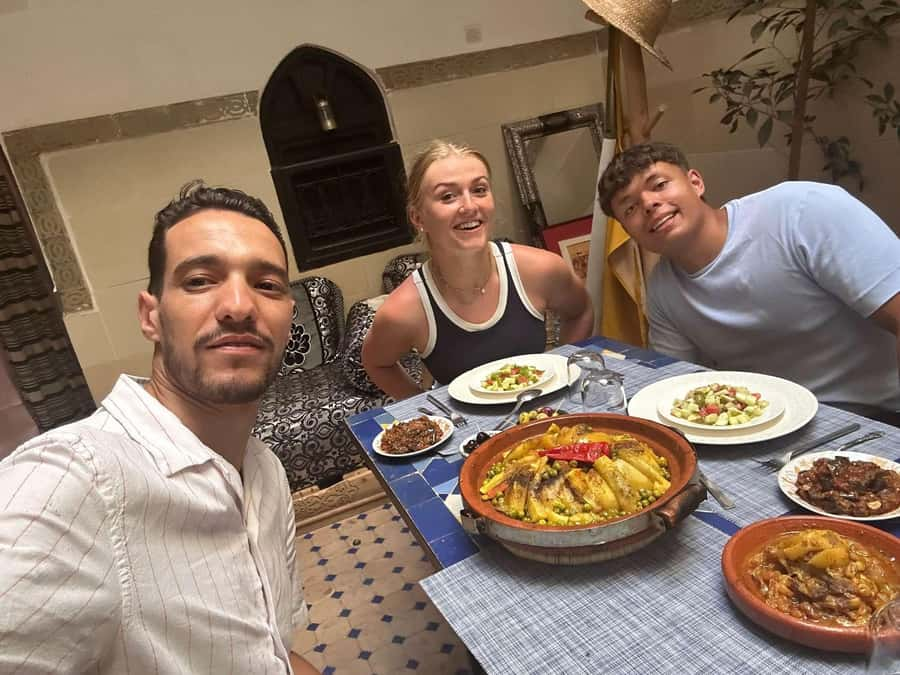
After the dishes are cooked, you sit down and eat the meal you helped make. This is the payoff, but it is also another chance to understand Moroccan dining customs. The meal can include salads, zaalouk, tagine, accompaniments, dessert, and tea, depending on the day’s menu.
I find this format more useful than simply eating a restaurant meal because you know how the food was assembled. You can taste the effect of the spices and cooking methods while the chef is still nearby to answer questions.
The atmosphere appears to be social rather than formal. One group of four described feeling quickly included, and the class can give you time to talk with the host and other people at the table. If you are traveling alone, that shared meal may be a welcome change from eating by yourself. If you prefer a private lesson, private sessions can be arranged on request.
The meal is included in the price, as are tea, the cooking class, and the guide. Pickup is not included, so you must reach Café de France on your own and return there after the experience. The listed route ends back at the square.
What the $35 price really gives you
At $35 per person, this is a strong value if you want more than a standard restaurant meal. You receive a guided market visit when available, instruction from a Moroccan chef, ingredients, tea, and the meal you prepare.
The value is strongest for people who care about process. You learn how ingredients are selected, how Moroccan salads are assembled, how a tagine is prepared, and how tea is served. You also gain recipes and cooking ideas to take home.
The price is less compelling if your main goal is simply to eat. A five-hour activity is a large part of an afternoon, and the tagine wait can reduce the amount of active instruction. You are paying for a social cultural experience as much as for cooking lessons.
The class also includes conversation that a regular restaurant cannot offer. Khalid, for example, has discussed his Amazigh identity and life in Marrakech while cooking. Marouane and Abdou bring professional kitchen experience, including Moroccan pastry, which may appeal to anyone interested in technique rather than just sightseeing.
Who should book this class?
I would recommend it to you if you enjoy food markets, want direct contact with local hosts, and prefer learning by doing. It suits couples, families, and small groups, and it can work well for solo visitors who like shared meals and conversation.
It is also a good choice for anyone with an interest in Moroccan culture beyond the major sights. The discussion may cover family food traditions, Berber identity, architecture, and daily life, depending on the chef and the questions you ask.
Families should find the friendly setting appealing, though the five-hour duration and waiting period may be tiring for very young children. Anyone with allergies or dietary restrictions should raise the issue before shopping so the chefs can plan the menu.
You should think twice if you want a short, tightly scheduled class with constant activity. The preparation is hands-on, but the cooking time can create a long pause. You also need to make your own way to the meeting point, since pickup is not included.
Booking details worth knowing
The experience costs $35 per person and lasts five hours. Starting times vary, so check availability for your chosen date.
You can cancel up to 24 hours in advance for a full refund, and the reserve-now, pay-later option lets you hold a place without paying immediately. The guide may speak English, French, or Arabic.
The market visit is not offered on Fridays or during Ramadan. If the souq is central to your decision, confirm what will happen on your date before you reserve.
The meeting point is the main door of Café de France on Jemaa el Fna Square. There is no included pickup. After the meal, you return to the same general meeting point.
Should you book the Marrakech cooking class?
Book it if you want a personal, food-centered afternoon with a local chef, a market visit, and a meal you help prepare. The strongest features are the market shopping, the warm host interaction, the mint tea lesson, and the chance to discuss Moroccan and Amazigh culture over food.
Skip it if you need a fast class with no waiting. Tagine cooking can leave you sitting for an hour or more after preparation, and the exact chef and menu may vary.
For most food-minded visitors, $35 is fair value. Just treat it as a relaxed half-day with cooking, conversation, and a long lunch, not as a nonstop professional workshop.
FAQ
Where does the cooking class meet?
Meet in front of the main door of Café de France on Jemaa el Fna Square in Marrakech.
Is hotel pickup included?
No. Pickup is not included, so you must reach Café de France on your own.
How long does the experience last?
The experience lasts five hours. The schedule includes a walk, about 1.5 hours of cooking, 30 minutes of tea, and about one hour of food tasting, along with the market visit and cooking time.
Which languages are available?
The live guide may speak English, French, or Arabic.
Is the market visit included every day?
No. The market visit is not included on Fridays or during Ramadan.
What is included in the price?
The price includes the guide, tea, cooking class, and meal. It does not include pickup.
Just added around Marrakech
- Quad in the Palmeraie of Marrakech★ 5.0 · 41 reviews
- Marrakech Desert Camel Ride★ 5.0 · 17 reviews
- Sunset Camel Ride in the Palm Grove Of Marrakech★ 5.0 · 34 reviews
- Private Airport Transfer from or to Marrakech Menara Airport.★ 4.5 · 63 reviews
- Marrakech The History and Culture Day Trip★ 4.5 · 45 reviews
- Marrakech: Tailor-Made City Tour With Your Own Private Guide★ 4.9 · 236 reviews
- Marrakech palm grove: Sunset camel ride★ 4.8 · 194 reviews
- Sparkling Marrakech through the eyes of your local Guide★ 4.7 · 247 reviews
Cooking Classes, compared.
Half-Day Cooking Class with Local Chef Laila in Marrakech
Read our review →
Marrakesh cooking class with chef Hassan – Local dishes
Read our review →
Marrakech Tour: Tajine Cookery Class Experience
Read our review →
Atlas Mountains Cooking Class with Berber Family
Read our review →Browse the lists this tour appears in