
Reviewed · COOKING CLASSES
Cook Moroccan Food & Try on Traditional Clothes like a local
The best part of this Casablanca experience happens around a family kitchen table, not in a restaurant. Wissal and her mother guide you through several Moroccan dishes, share family recipes, and welcome you into their home with tea, sweets, and conversation. You also get to try caftans and takchitas, which adds a colorful cultural touch beyond the cooking.
I like the personal scale and the range of food. You may prepare tagine, couscous, pastilla, salads, tea, and drinks in one visit, rather than spending four hours on a single recipe. I also like that Wissal asks about food allergies and preferences and can adapt the private class for vegetarian and vegan diets.
The main consideration is that this is a real home visit, not a polished cooking school with a commercial kitchen. That is the point for many people, but you should be comfortable entering a family home, following the host’s customs, and allowing the pace to be social as well as practical.
Key points
- Four hours in a Casablanca home: Cook, eat, talk, and learn about Moroccan customs with Wissal and her mother.
- Several dishes, not just one: The menu can include tagine, couscous, pastilla, local salads, mint tea, cookies, and virgin mojitos.
- Traditional clothing included: Try authentic Moroccan caftans and takchitas and take memorable photos.
- Private and adaptable: Only your group participates, with vegetarian and vegan choices available by request.
- Lunch or dinner timing: You can choose the option that fits your day.
- Personal transport help: Wissal has arranged taxis for some visitors, so ask ahead if you need help reaching her home.
A family kitchen instead of a standard cooking school
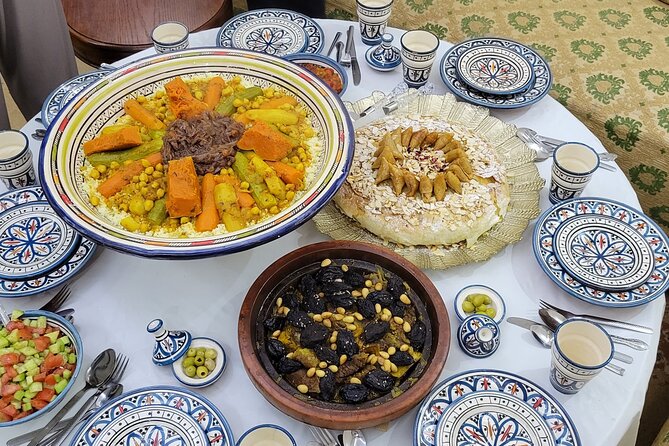
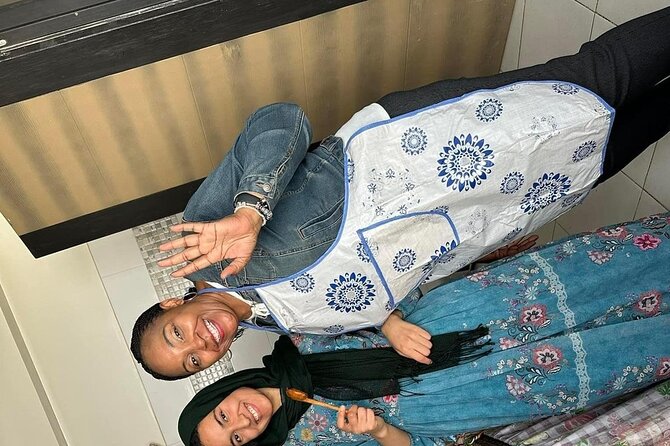
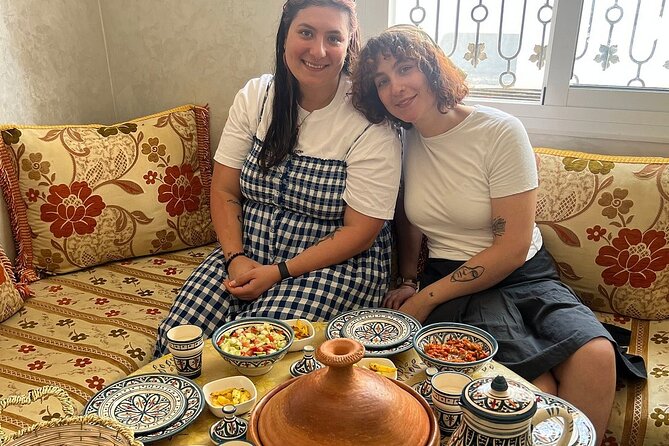
This is a cooking class with a strong family welcome. You meet Wissal and her mother at their Casablanca home, where the setting includes traditional Moroccan decoration and the feel of a private visit.
That difference matters. A commercial class usually gives you a workstation and a fixed lesson. Here, you are part of a home-style meal, with family recipes passed down from Wissal’s grandmother. I would choose this experience if your main goal is to understand how Moroccan food fits into daily life, not simply to copy a recipe.
The class is private, so you do not share the kitchen with a large group. That gives Wissal room to answer questions, adjust the menu, and talk with you about Moroccan life, family customs, music, clothing, and religion. Families with children, couples, solo visitors, and small groups can all fit the format, as long as everyone is happy with a personal home setting.
The activity lasts about four hours. That sounds long for a cooking lesson, but the time includes tea, sweets, preparation, cooking, eating, conversation, clothing, and photos. You are not expected to rush from one station to another.
More Cooking Classes in Casablanca:
- Old local Market visit+Moroccan cooking class with a local family
★ 5.0 · 84 reviews - Private Casablanca Market Tour and Cooking Class with Chamsi
★ 5.0 · 33 reviews - Casablanca : Traditional Moroccan Cooking Class with Locals
★ 5.0 · 22 reviews
Mint tea, cookies, and the first taste of Morocco
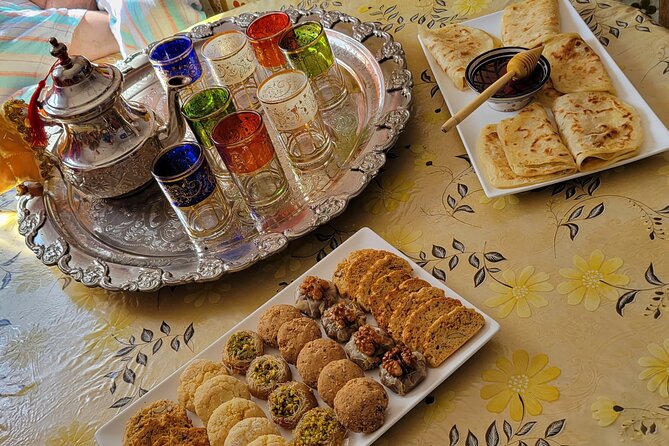
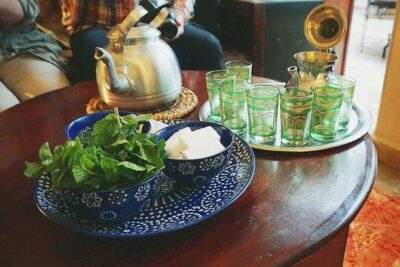
Your visit begins with traditional mint tea and homemade cookies. Some sessions have also included Arabic coffee, Moroccan pastries, and a spice-guessing activity. These opening snacks do more than fill time while the kitchen is prepared. They give you a gentle introduction to the flavors you will use later.
Moroccan mint tea is an important part of hospitality, and preparing or drinking it during the class helps place the meal in its cultural setting. You may also enjoy virgin mojitos and other nonalcoholic drinks during the visit.
I appreciate that the food experience starts before the main dishes. You have time to settle in, meet the family, and discuss what you would like to cook. Wissal has contacted visitors before the class to ask about allergies and preferences, so give her useful information early.
Come hungry. The class can include multiple courses and snacks, and the meal is part of the lesson. If you are planning this on a busy sightseeing day, leave enough room in your schedule and appetite for a substantial lunch or dinner.
Choosing and preparing the Moroccan menu
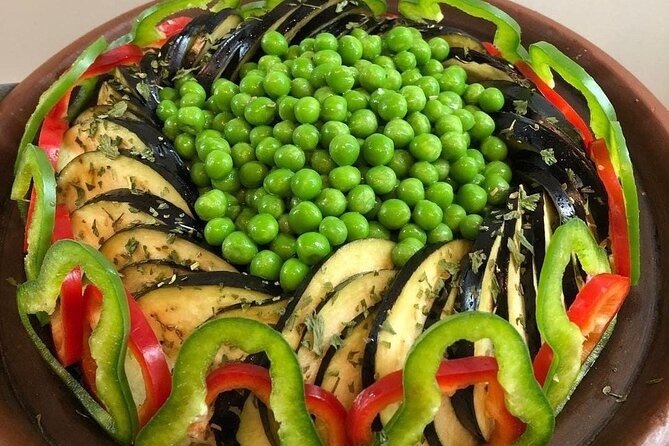
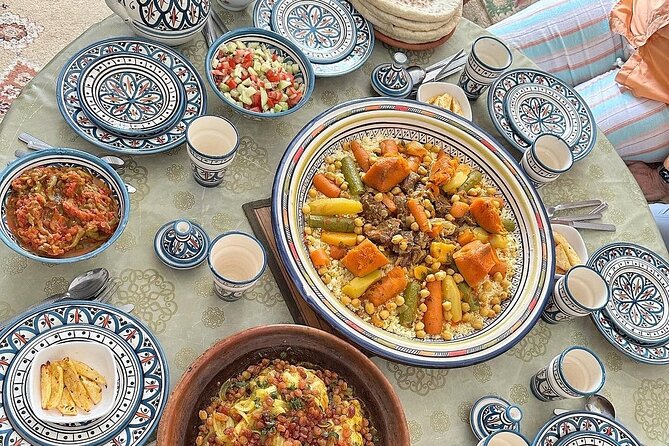
After the welcome, you select from classic Moroccan dishes. The exact menu can vary, and the private format allows some adjustment. Past classes have included chicken tagine, vegetable tagine, cucumber and tomato salad, a warm salad, couscous, pastilla, mint tea, and other traditional preparations.
Tagine is usually the star. You learn how Moroccan cooks build flavor with spices, vegetables, meat, and slow cooking in the familiar conical pot. The value here is not just eating a good tagine. Wissal explains the family method so you can try to recreate the dish at home.
You may prepare more than one tagine, including a meat version and a vegetable version. That is useful if members of your group have different diets or if you want to understand how the same cooking method works with different ingredients.
Couscous gives the class another look at Moroccan food. It is not simply a side dish to scoop onto a plate. Preparation, texture, vegetables, and serving style all matter. If couscous is one of your reasons for booking, mention it when Wissal asks what you want to learn.
Pastilla provides a different lesson in texture and presentation. This traditional dish combines crisp pastry with a seasoned filling and is often associated with special occasions. The recipe can require more care than a simple salad or tagine, so it helps show the range of Moroccan home cooking.
The salads are a good counterpoint to the cooked dishes. A fresh cucumber and tomato salad and a warm salad bring sharper flavors and lighter textures to the meal. They also give you recipes that may be easier to prepare in your own kitchen after returning home.
Learning from recipes passed down through generations
Wissal teaches recipes from her grandmother, with her mother adding another generation of cooking experience. That family connection is one of the strongest reasons to book this instead of a generic food demonstration.
You are not just watching someone make a dish. You take part in preparation and can ask why a spice is used, how a dish is adjusted, or when a recipe is served. The class includes conversation about how Moroccan families shop and cook, which gives you useful context for the ingredients on your plate.
Wissal speaks good English, according to the details provided by past visitors, and has been described as patient and engaging. That matters in a hands-on class. Cooking instructions can be hard to follow when communication is rushed or unclear, so the chance to talk throughout the process is a real advantage.
The class also works well as an introduction to Moroccan food if you are arriving in Casablanca for the first time. You learn the names and uses of dishes you will likely see elsewhere in Morocco, then taste them in a personal setting.
If you already know Moroccan food, you can use the private format to ask for specific dishes or techniques. One visitor arranged a menu around personal interests after contacting Wissal before the class. That flexibility is worth requesting, though you should not assume every dish is available unless it is confirmed in advance.
A few more Casablanca days worth comparing
- From Marrakech: Casablanca Tour with Hassan II Mosque Visit
★ 4.7 · 4,756 reviews - Casablanca: Hassan II Mosque Premium Tour with Entry Ticket
★ 4.5 · 2,971 reviews - Casablanca City Tour with Hassan II mosque ticket
★ 5.0 · 2,480 reviews - Casablanca Day Tour from Marrakech and Big Mosque Visit
★ 4.8 · 2,394 reviews
Trying on caftans and takchitas
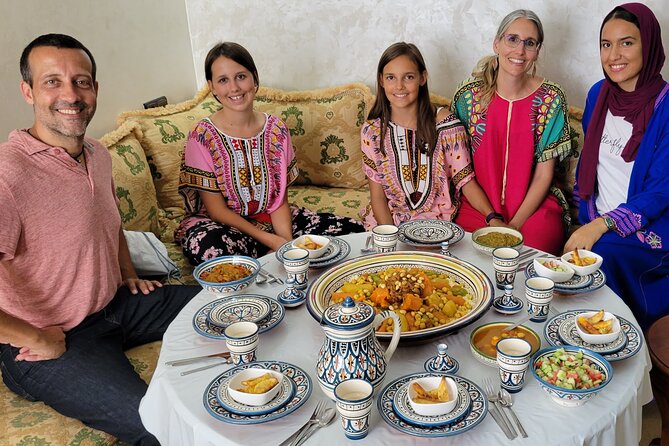
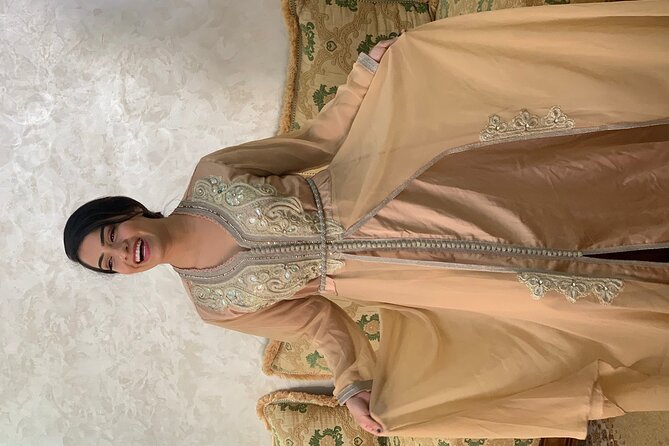
The clothing portion adds something most cooking classes do not. You can try on traditional Moroccan clothing, including caftans and takchitas, and take photos in the home.
Wissal explains when these garments are typically worn. That makes the clothing more than a costume change for the camera. You get some background on Moroccan dress and the role of formal clothing at celebrations and family occasions.
I would especially recommend this part for families and groups of friends. It breaks up the kitchen work and creates a shared memory. Solo visitors can enjoy it too, particularly if they like photography or want a visual record of the experience.
You should treat the clothing and home with care. This is a private family space, and respectful behavior is important. Follow Wissal’s guidance about changing, handling garments, and taking photos.
The experience can also include Moroccan music, dancing, and introductions to members of the family. These elements are not presented as a formal stage show. They are part of the warm, informal atmosphere that develops during a long meal and conversation.
Eating the meal you helped make
After the preparation, you sit down to eat the food you helped create. The meal may include several dishes, salads, drinks, tea, and sweets. Homemade cookies and Moroccan desserts can appear alongside the tea, and the food is served in a family setting rather than a restaurant dining room.
This is where the four-hour length makes sense. You are not grabbing a quick sample before moving on. You have time to taste each dish, ask questions, compare flavors, and talk about Moroccan customs.
The meal also gives you a practical test of the recipes. If a tagine tastes different from what you expected, you can ask about the spices or cooking method while everything is fresh. That kind of immediate explanation is more useful than taking notes during a demonstration and trying to remember details later.
Do not expect a formal restaurant service. The charm is the home setting, and the pace may feel more relaxed and conversational. If you prefer a tightly timed class with exact measurements and a printed curriculum, this may feel informal. If you enjoy learning through talk, tasting, and participation, the format should suit you well.
A small local gift may be given at the end. It is a thoughtful extra, but the food, recipes, and time with the family are the main value of the experience.
Getting there and planning your four hours
The stated meeting point is at the angle of Boulevard Tahar and Boulevard Mohammed VI in Casablanca, and the activity ends back at the meeting point. The wording suggests you should read the arrival instructions carefully and confirm the exact meeting details before the day of the class.
Wissal has helped arrange taxis for some visitors, including pickups from hotels and the cruise terminal. A driver named Abdul was mentioned as punctual and English-speaking, but taxi arrangements are not clearly listed as a standard included feature. Ask Wissal in advance if you need transport help, and confirm the fare and pickup point before setting off.
The class is available as a lunch or dinner experience. I would consider booking it near the start of your Morocco trip. The recipes and customs can help you understand meals you encounter later, and the relaxed welcome can make a good first day in Casablanca.
It is also a sensible choice for a cruise stop or a short stay because the activity lasts about four hours and returns to the starting point. Still, leave extra time for getting to and from the meeting point. Casablanca traffic and an unfamiliar address can make a tight schedule stressful.
The tour accepts mobile tickets, and confirmation is provided at booking. Service animals are allowed, and the meeting area is near public transportation. Free cancellation is available if you cancel at least 24 hours before the local start time. Changes or cancellations made later are not accepted for a refund.
Is $61.20 a fair price?
At $61.20 per person, the value depends on what you want from a food experience. You are paying for about four hours, a private class, several dishes, snacks, drinks, tea, a full meal, traditional clothing, cultural conversation, and a small gift. Compared with a short tasting walk or a one-dish demonstration, that is a generous amount of time and activity.
The private format is important to the price. You are not simply joining a large group at a fixed cooking station. Wissal can speak directly with you, adjust food choices, and include your group in the conversation.
I would consider the price strong for families and small groups who want both food and personal contact. It may feel less attractive if you only want to learn one specific recipe or if you dislike long meals in private homes.
The experience has a 5.0 rating with 213 reviews and a 100 percent recommendation rate. Those figures do not remove the need to consider the home setting, but they do show unusually consistent satisfaction with Wissal’s welcome, the food, and the cultural side of the visit.
Who should book this Casablanca experience?
I would recommend it to you if you:
- Want to cook several Moroccan dishes in one session
- Prefer a private home visit to a large commercial class
- Enjoy meeting a local family and asking personal cultural questions
- Are interested in Moroccan clothing and photography
- Need vegetarian or vegan options
- Are traveling with children or a small private group
- Want a lunch or dinner activity that fits around sightseeing
- Hope to learn recipes you can make after returning home
I would think twice if you want a market tour, a formal restaurant kitchen, or a fast lesson with strict timing. This experience is about hospitality as much as technique. You will cook, but you will also sit, talk, drink tea, eat sweets, and spend time with the family.
It is also important to be a considerate visitor. You are entering Wissal’s personal home, not a public attraction. Dress and behave respectfully, ask before taking photos of family members, and follow her instructions about traditional clothing.
Should you book it?
Yes, if you want Casablanca food served with family context. The strongest reasons are the private home setting, the chance to prepare several dishes, the mother and daughter teaching team, and the added clothing experience.
I would book this early in a Morocco itinerary and contact Wissal about dietary needs, preferred dishes, and transport before the visit. At $61.20, it offers good value for a four-hour meal and cultural visit, especially for a couple, family, or small group.
Skip it only if you want a highly structured professional cooking school or a market-focused excursion. For a personal introduction to Moroccan food and hospitality, this is one of the more useful ways to spend an afternoon or evening in Casablanca.
FAQ
How long does the cooking experience last?
The activity lasts approximately four hours.
Where does the experience begin?
It begins at the angle of Boulevard Tahar and Boulevard Mohammed VI in Casablanca, Morocco.
Where does the experience end?
It ends back at the meeting point.
Is this a private activity?
Yes. Only your group participates in the activity.
Can I choose lunch or dinner?
Yes. Lunch and dinner options are available.
What Moroccan dishes might I prepare?
The menu can include tagine, couscous, pastilla, local salads, and other traditional dishes. The exact choices can be discussed with Wissal.
Are vegetarian and vegan options available?
Yes. Vegetarian and vegan participants are welcome, and suitable choices can be requested.
Can I try traditional Moroccan clothing?
Yes. You can try traditional Moroccan clothes such as caftans and takchitas and take photos.
Are drinks and sweets included?
The experience begins with mint tea and homemade traditional cookies. It can also include local salads, virgin mojitos, Moroccan pastries, and other sweets.
Can I cancel for a full refund?
Yes, if you cancel at least 24 hours before the experience start time. Cancellations or changes made less than 24 hours before the start time are not accepted for a refund.
Just added around Casablanca
- Exclusive tour of Casablanca with access to the Hassan II Mosque★ 5.0 · 205 reviews
- Your Private Casablanca Transfer★ 5.0 · 52 reviews
- Casablanca Airport Transfer from hotel in Casablanca★ 5.0 · 18 reviews
- 14 Days From Casablanca- Morocco Grand Tour★ 5.0 · 24 reviews
- Marrakeck City tour from Casablanca all the day around trip★ 5.0 · 35 reviews
- Casablanca City Tour: Hassan II Mosque, Medina & Hidden Gems★ 4.5 · 38 reviews
- Religious Casablanca: Private Spiritual Tour Including Hassan II Mosque Visit★ 5.0 · 33 reviews
- Casablanca Night Tour with Andalusian Dinner Show★ 4.5 · 25 reviews
Cooking Classes, compared.
Half-Day Cooking Class with Local Chef Laila in Marrakech
Read our review →
Marrakesh cooking class with chef Hassan – Local dishes
Read our review →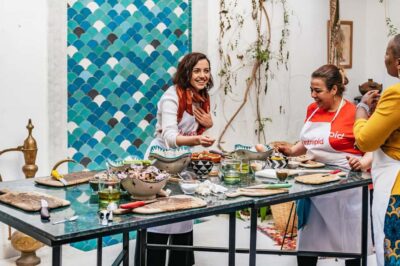
Marrakech Tour: Tajine Cookery Class Experience
Read our review →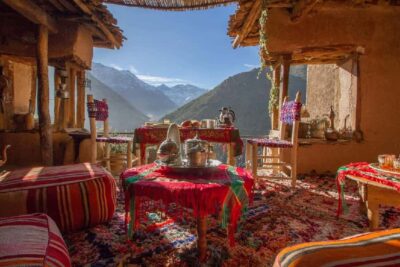
Atlas Mountains Cooking Class with Berber Family
Read our review →Browse the lists this tour appears in