
Reviewed · CRAFT WORKSHOPS
Marrakech: Pottery Workshop
Marrakech’s pottery workshop gets you past the finished souvenir and into the work behind it. You handle the clay, try the traditional wheel, and learn a second method, molding, while an experienced craftsman guides your hands. The best part is the craft itself, not simply taking home an object.
I like the chance to see the full process, from preparing clay to firing and glazing. I also like the small cultural pause built into the four hours: herbal tea and Moroccan cakes with the craftsman. At $93 per person, though, this is not a bargain class, so it suits you best if hands-on learning matters more than buying a cheap souvenir.
Key points
- Two Moroccan shaping methods: Try the turning technique on a traditional potter’s wheel and learn how molding works.
- A look behind the finished piece: Follow the workshop process from clay preparation through firing and glazing.
- Patient personal instruction: The craftsman helps you shape and control the clay, with support in English, French, or Arabic.
- A proper Moroccan break: Tea, water, and local pastries are included midway through the class.
- Private group format: The class is arranged for a private group rather than a large public crowd.
- Simple meeting point: Meet at the post office in Medina, beside Jemaa el Fna Square.
Why a Marrakech pottery class is worth four hours
Many Marrakech activities show you a finished craft. This one lets you see how the object comes into being, and how much skill sits behind a simple bowl, cup, or decorative form.
The workshop near Marrakech is organized around the pottery process. You learn about the clay and the materials before trying to shape them. Then you can watch how the workshop handles later stages, including firing and glazing. That wider view matters because it places your own attempt in the proper context. Your first piece may wobble. The professional work will not.
The class lasts four hours, which gives you more time than a quick craft demonstration. You are not limited to watching a potter turn clay for a few minutes before moving on. You have room to ask questions, try the techniques, and understand why the material behaves as it does.
I would choose this class for travelers who want an activity with a clear connection to Moroccan daily life and artisan work. It is also a useful change of pace after the noise and movement around the Medina. You will still be learning about Morocco, but your attention shifts from bargaining and sightseeing to touch, pressure, balance, and patience.
More Craft Workshops in Marrakech
- Marrakech: Pottery Workshop with Moroccan Tea
★ 4.8 · 756 reviews - Marrakech: Make Your Own Moroccan Zellige Mosaic Masterpiece
★ 4.8 · 103 reviews - Lamsaty Pottery Workshop with Moroccan Tea
★ 5.0 · 75 reviews
Meeting at Jemaa el Fna before leaving the Medina
The meeting point is in front of the post office at Medina Jemaa el Fna Square. This is a practical spot if you are already exploring the old city, but the square can be busy and confusing, so arrive with enough time to find the post office rather than aiming for the last minute.
The meeting arrangement is important because the workshop is near Marrakech, not directly at the square. The supplied details do not specify the exact transport method or travel time to the workshop, so confirm those points when you book or contact the provider. Do not assume the pottery studio is a short walk from Jemaa el Fna.
The guide support is available in English, French, and Arabic. One guide named Wiam has been praised for fluent English translation, which is useful when the craftsman is explaining technical points or local terms. Names can vary by date, so treat Wiam as a helpful possibility, not a guaranteed guide for every departure.
Preparing clay before you touch the wheel
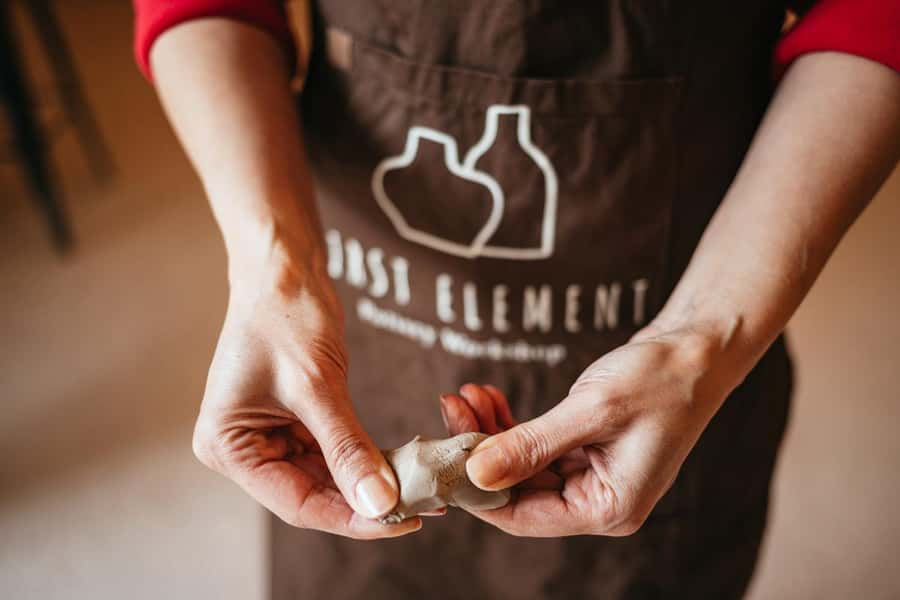
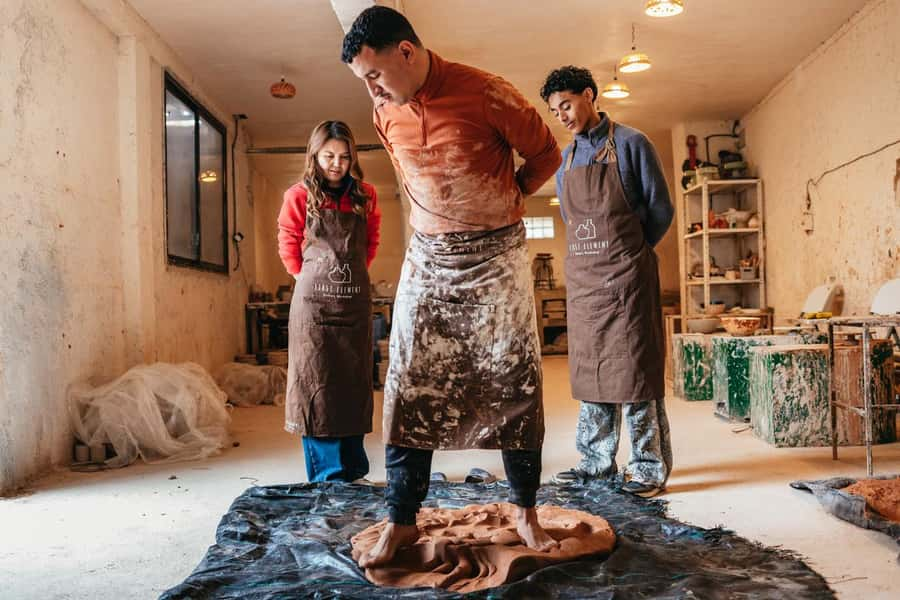
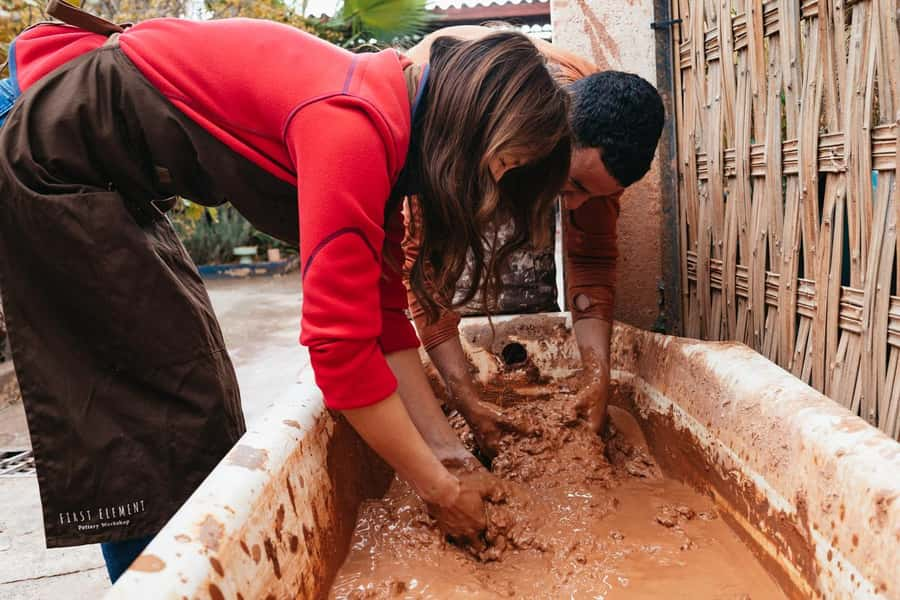
The class begins with the material itself. You learn about the clay soil and how it is prepared before it can become pottery. This is one of the most valuable parts for anyone who has only seen the polished end result in a shop.
Clay looks simple, but pottery depends on its condition. It must be prepared so it can be shaped without crumbling or becoming too soft. The workshop gives you a chance to see this early stage rather than treating the clay as a ready-made prop.
The craftsman helps you understand how to handle it and how pressure changes the form. Expect a practical lesson rather than an academic talk. You will learn through demonstration and doing, with help as your hands get used to the material.
This is also where comfortable clothes matter. Clay work can be messy, and the activity specifically advises comfortable clothing and shoes. Wear something you will not worry about marking. Good footwear is sensible because you are spending several hours in a working workshop, not sitting in a polished showroom.
Turning clay on the traditional potter’s wheel
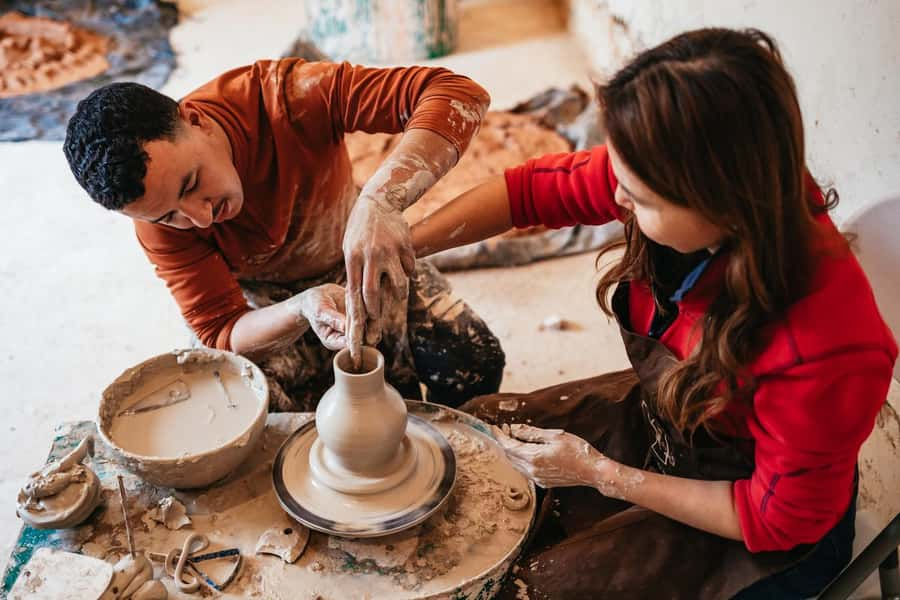
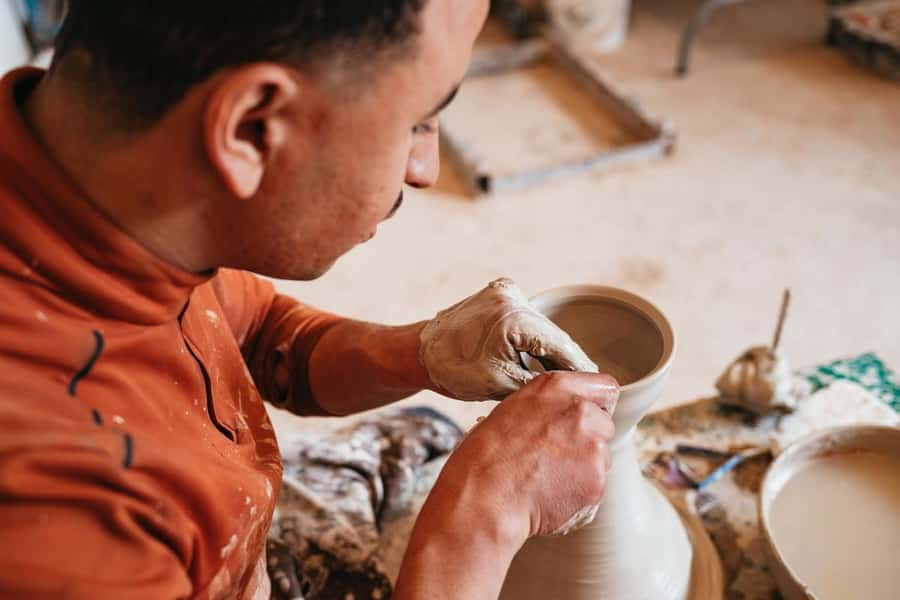
The turning method is the most recognizable part of the class. You place the prepared clay on the traditional potter’s wheel and learn how to form it as it turns.
The wheel demands steady pressure. Push too hard and the shape changes quickly. Lose control and the clay can lean, collapse, or spread. That is not a failure of the class. It is the point of trying the technique yourself. You begin to understand why a trained potter can make the process appear effortless.
The experienced craftsman is there to help you correct your hand position and guide the form. The instructor’s patience matters more here than a long lecture. A gentle correction at the right moment can show you how to center the clay and keep the walls even.
Tariq is one craftsman associated with this class, and he has been singled out for his skill as both tutor and artist. If he is leading your session, you can expect the emphasis to be on learning by practice. The staff names may differ, but the format remains a guided class with an experienced artisan.
You should not book this expecting to produce professional pottery in one sitting. Book it to feel the technique, understand the control involved, and create something shaped by your own hands. That difference is important when deciding if $93 feels fair.
A completely different kind of day in Marrakech:
- Marrakech: Quad Bike Tour to Palm Oasis and Jbilat Desert
★ 4.8 · 11,831 reviews - Marrakesh: Majorelle Garden Entry Tickets
★ 4.5 · 9,651 reviews - Marrakech Quad Bike Experience: Desert and Palmeraie
★ 4.5 · 9,509 reviews - Marrakech: Balloon Flight, Berber Breakfast & Certificate
★ 4.8 · 8,164 reviews
Comparing the wheel with Moroccan molding
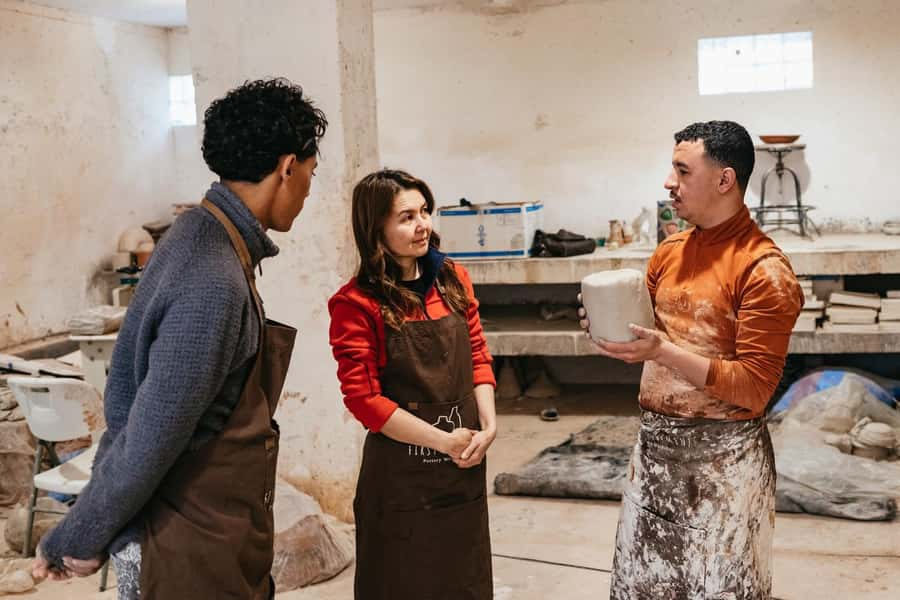
The class also introduces molding, the second shaping method taught here. This gives you a useful comparison between forming clay by hand around a mold and building a shape through the spinning wheel.
The two methods show different sides of Moroccan pottery. The wheel is about motion, balance, and continuous control. Molding gives you another way to achieve form, and it can help explain how repeated shapes are made.
You may find that one method suits you better. Some people enjoy the rhythm of the wheel. Others prefer the more controlled structure of molding. Even if you do not become skilled at either technique, trying both makes the workshop more useful than a single-method demonstration.
The class is designed to explain the materials and craftsmanship, so ask questions as you go. The instructor languages are English, French, and Arabic. If you need detailed technical explanations, tell the guide early which language works best for you.
Seeing firing and glazing, not just shaping
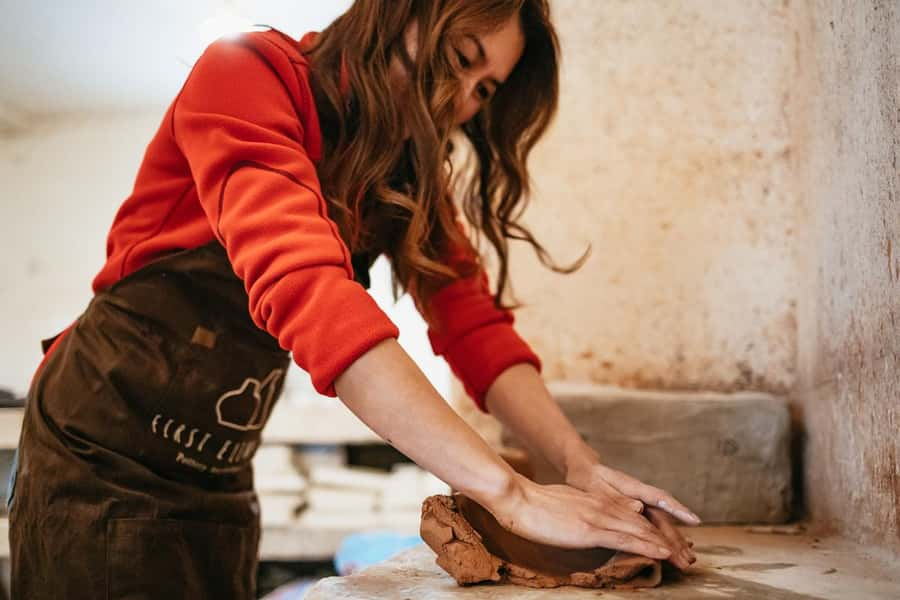
A major strength of the workshop is the chance to see what happens after the clay has been formed. The process includes firing and glazing, two stages that can be easy to ignore when you are focused on the wheel.
Firing changes the fragile shaped clay into a more durable ceramic form. Glazing then adds a finished surface and can change the look and feel of the object. Seeing these stages helps you understand why pottery takes time and why handmade work costs more than a factory-made trinket.
The information provided does not promise that your piece will be fired and glazed during the four-hour visit or delivered later. Ask the provider what happens to objects made in class. This is one of the most useful questions to settle before booking, especially if you hope to take your own finished pottery home.
Even without a completed object, watching the full workshop process adds value. You see how the artisan’s work continues long after the shaping stage ends. The class is therefore part hands-on lesson and part working workshop visit.
Tea, Moroccan cakes, and a welcome pause
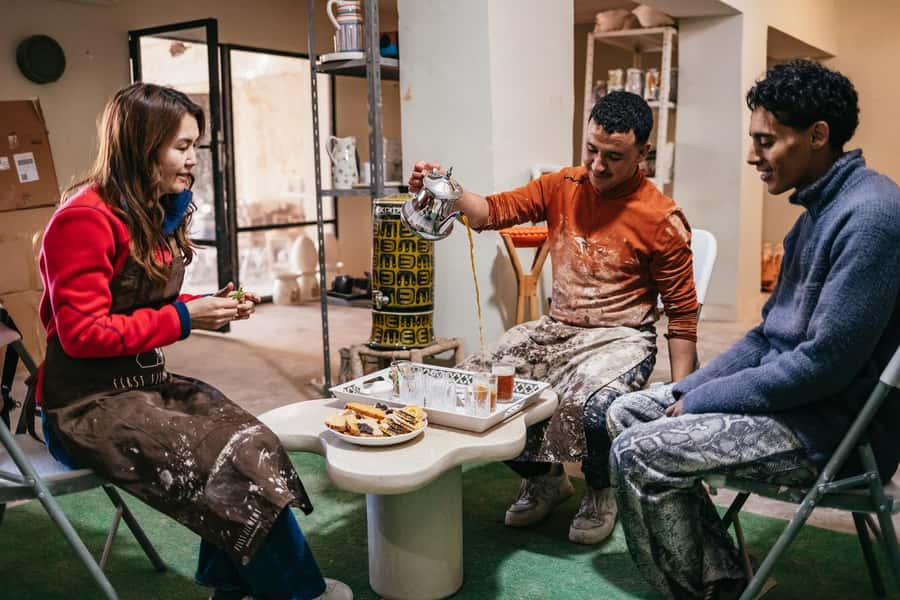
Halfway through the class, you take a break for local herbal tea and Moroccan cakes. Water is also included.
This pause is more than a snack stop. It gives you time to chat with the craftsman and your group, and it fits the social side of Moroccan hospitality. After concentrating on clay, a cup of tea and a sweet pastry also gives your hands and attention a rest.
Do not expect a full meal. The included food is a tea break with Moroccan pastry, not lunch. If you are booking the class around a meal, plan accordingly.
The break also helps give the four-hour schedule a comfortable rhythm. You begin with materials and preparation, work through the shaping methods, pause for tea, and then continue with the wider workshop process. That is a better pace than four straight hours at the wheel.
What the private group format changes
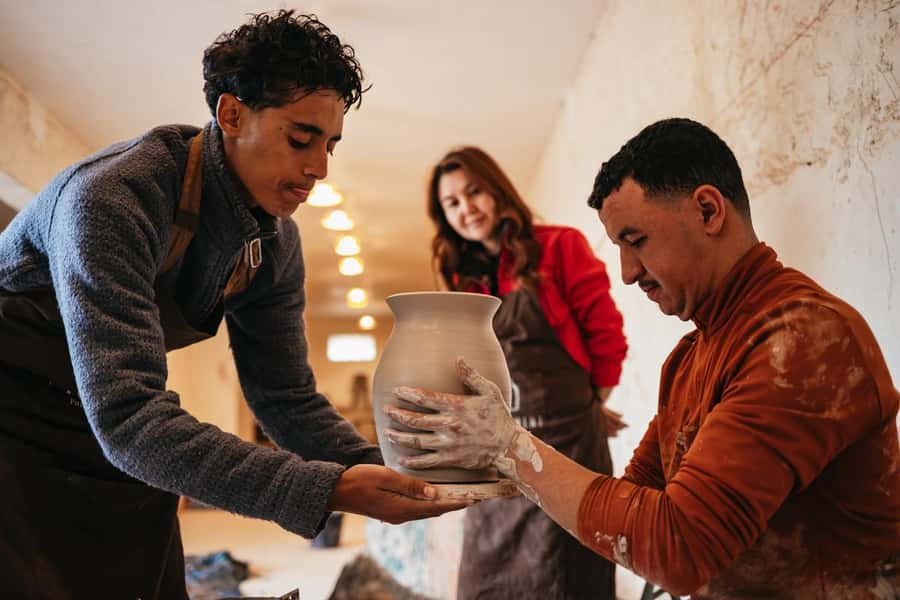
This is a private-group activity. That can make a real difference in a pottery class, where the instructor needs time to watch each person’s hands and answer questions.
A private format may let the craftsman spend more time correcting your technique rather than repeating the same instructions for a large crowd. It should also make the session feel less like a staged show. Still, the exact group size is not provided, so do not assume it means a one-to-one lesson.
The language support is another practical advantage. English, French, and Arabic are available, and Wiam has been noted for helping with fluent English translation. Clear communication matters when instructions involve pressure, speed, and hand position. A small misunderstanding can send a lump of clay in the wrong direction.
The class includes photographing, so photos can be part of the record of your visit. Keep your focus on the work, though. Clay-covered hands and a moving wheel are more important than posing beside a finished display.
Is $93 fair for this pottery experience?
The price is $93 per person. That is a fairly serious cost for a four-hour craft activity in Marrakech, and one person specifically found it a little expensive for what was included.
I would judge the price based on what you want from the day. If you only want a small souvenir or a quick introduction to pottery, the cost may feel high. If you value private instruction, a working workshop setting, a full explanation of Moroccan techniques, tea and pastries, and time to try both wheel work and molding, the price is easier to defend.
The value also depends on how much direct help you receive. An attentive craftsman can make the difference between a memorable class and a messy demonstration where you barely get a turn. The strongest praise has focused on the instructors, especially Tariq’s teaching and Wiam’s translation, as well as the patience, humor, and kindness of the people leading the session.
There is no promise of a finished item to take home in the supplied information. Confirm that point before paying. If you want a guaranteed ceramic souvenir, a shop purchase may be simpler. If you want the process, the price covers more than an object. It pays for time, instruction, access to the workshop, and a closer look at Moroccan craft.
Who should book this class?
I recommend it for you if you enjoy making things, asking questions, and accepting a few imperfect results. Families with older children may like it, though the provided details do not set an age range, so check before booking for young children.
It also suits couples or private groups looking for a quieter activity between major Marrakech sights. The four-hour length gives you enough time to settle into the process rather than rushing from one short stop to another.
You may want to skip it if you dislike getting your clothes dirty, prefer a polished sightseeing tour, or have only a few hours in Marrakech. It is also not the best choice if you are paying mainly for a finished item and do not care about learning how pottery is made.
Wear comfortable clothes and shoes. Keep your schedule flexible around the four-hour duration, since starting times vary by availability. Free cancellation is available up to 24 hours before the activity, and you can reserve now and pay later, which helps if your Marrakech plans are still changing.
Should you book the Marrakech pottery workshop?
Book it if you want a hands-on look at Moroccan pottery rather than another pass-by photo stop. The two shaping methods, the view of clay preparation, and the explanation of firing and glazing give the class real substance.
I would be more cautious if $93 is near the top of your activity budget. The class is not cheap, and you should confirm what happens to anything you make. But for a private group that values patient instruction, local craft, and a relaxed tea break with the artisan, it offers a memorable four hours and a useful look at work that is usually hidden behind the shop counter.
FAQ
Where is the meeting point?
Meet in front of the post office at Medina Jemaa el Fna Square in Marrakech.
How long does the pottery workshop last?
The workshop lasts four hours. Starting times vary, so check availability when booking.
Which pottery techniques will I learn?
You will learn about two common Moroccan shaping methods: turning clay on a traditional potter’s wheel and molding.
What languages are available?
Instruction and guide support are available in English, French, and Arabic.
Are tea and food included?
Yes. The activity includes a tea break, Moroccan pastry, and water.
Can I cancel or pay later?
You can cancel up to 24 hours in advance for a full refund. You can also reserve your place and pay later.
Just added around Marrakech
- Quad in the Palmeraie of Marrakech★ 5.0 · 41 reviews
- Marrakech Desert Camel Ride★ 5.0 · 17 reviews
- Sunset Camel Ride in the Palm Grove Of Marrakech★ 5.0 · 34 reviews
- Private Airport Transfer from or to Marrakech Menara Airport.★ 4.5 · 63 reviews
- Marrakech The History and Culture Day Trip★ 4.5 · 45 reviews
- Marrakech: Tailor-Made City Tour With Your Own Private Guide★ 4.9 · 236 reviews
- Marrakech palm grove: Sunset camel ride★ 4.8 · 194 reviews
- Sparkling Marrakech through the eyes of your local Guide★ 4.7 · 247 reviews
Craft Workshops, compared.
Pottery and Mosaic Workshop in Fes Led by Local Artisans
Read our review →

Vibrant Souks, Local Artisans & Medina Experience
Read our review →
Marrakech Hammam, Massage & Berber Carpet Weaving Workshop
Read our review →
Fez Guided Tour of Artisans and Handicrafts Full-Day Private Tour
Read our review →
Artisan for a Day: Pottery & Zellige Workshop in Fez
Read our review →Browse the lists this tour appears in