
Reviewed · CRAFT WORKSHOPS
Marrakech: Pottery Workshop with Moroccan Tea
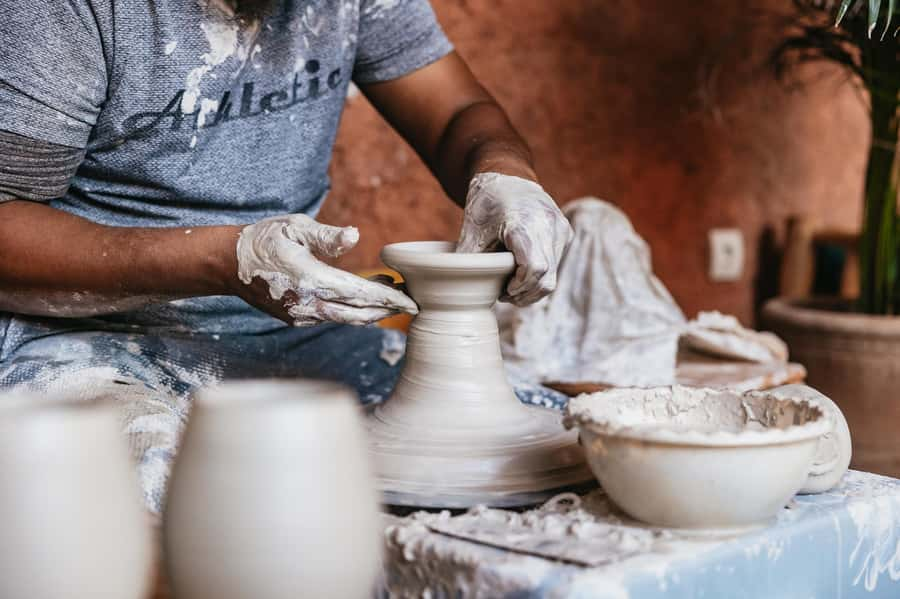
The best part of this Marrakech activity is that you do not simply watch a craft demonstration. You work the clay yourself, with a chance to shape a small object by hand and try the pottery wheel. Asma and the other women at Atelier Lamsaty explain each step patiently, including hand position and basic forms on the wheel.
I like the mix of creative freedom and clear help. You can make a cup, box, tagine, or decorative piece, while the instructors step in when your clay starts to misbehave. I also like the calm break for Moroccan mint tea, a small local touch that gives the two-hour class a pleasant rhythm.
The main point to consider is the location. The studio is about 10 minutes from central Marrakech by taxi and roughly 15 minutes from the Medina, so transport costs and finding the entrance at Al Massar can add time. The wheel session may also be brief when several people are sharing the equipment.
Key points before you book
- Try two pottery methods: Shape clay by hand, then test your balance and timing on the pottery wheel.
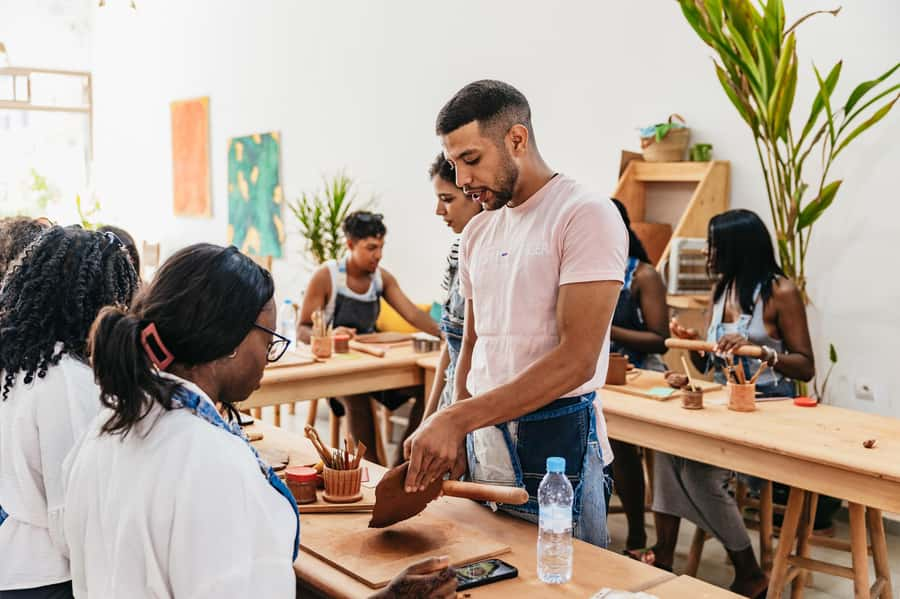
- Asma and her team guide beginners: English, French, and Arabic are spoken, with patient help throughout the class.
- Your work goes home with you: Pieces are wrapped at the end, but they are unfired and need careful drying.
- Tea is part of the pause: A glass of Moroccan mint tea is included during the workshop.
- Allow extra time for the taxi: The Al Massar studio is outside the Medina and can be harder to find than a central attraction.
- The class suits first-timers: You need no pottery background, though children under 90 centimeters are not suitable.
What the two-hour Marrakech pottery class is really like

This is a hands-on craft session rather than a formal ceramics course. You arrive at Atelier Lamsaty Pottery and Embroidery Activity, located in front of the AHMA Construction building, and settle into a family-run studio with clay, tools, work surfaces, and pottery equipment ready to use.
The class begins with about 15 minutes of demonstration. This matters because clay looks easy until it collapses, cracks, or refuses to hold the shape you have in mind. The instructor shows you the basic methods of modeling, sculpture, and turning before you start making your own piece.
You then choose what kind of object to create. A cup, box, tagine, clay tag, or free-form design are all possible options. You are not locked into one model, so the class works well if you want a useful souvenir or simply want to experiment with form.
The instructors do not take over the project for you. That is one of the strongest features of the experience. You get direct help when needed, but your hands remain on the clay. For a first attempt, that balance is important: you learn by doing without being left to guess what went wrong.
More Craft Workshops in Marrakech
- Marrakech: Make Your Own Moroccan Zellige Mosaic Masterpiece
★ 4.8 · 103 reviews - Lamsaty Pottery Workshop with Moroccan Tea
★ 5.0 · 75 reviews - Marrakech Medina Basket Embroidery Workshop
★ 4.9 · 69 reviews
Hand-building clay into a personal souvenir
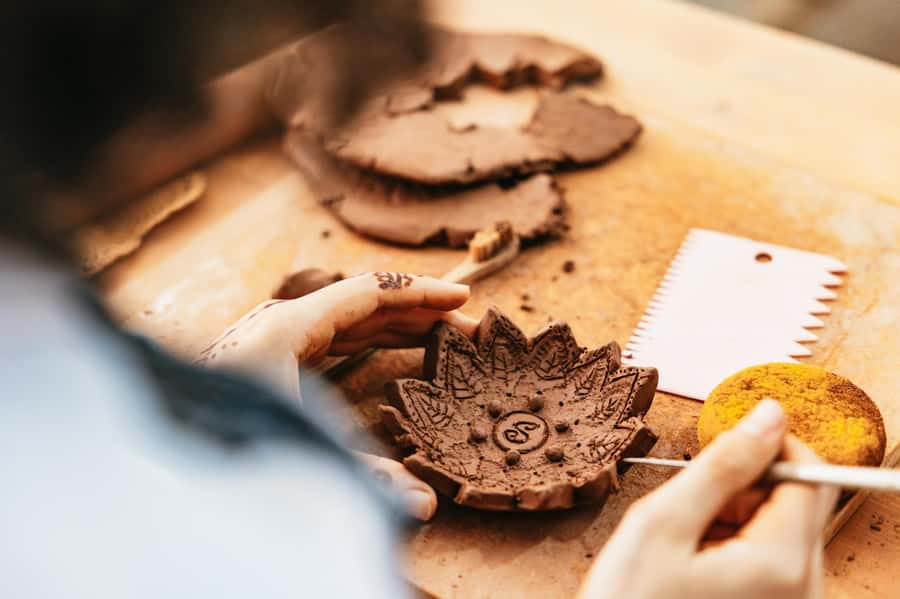
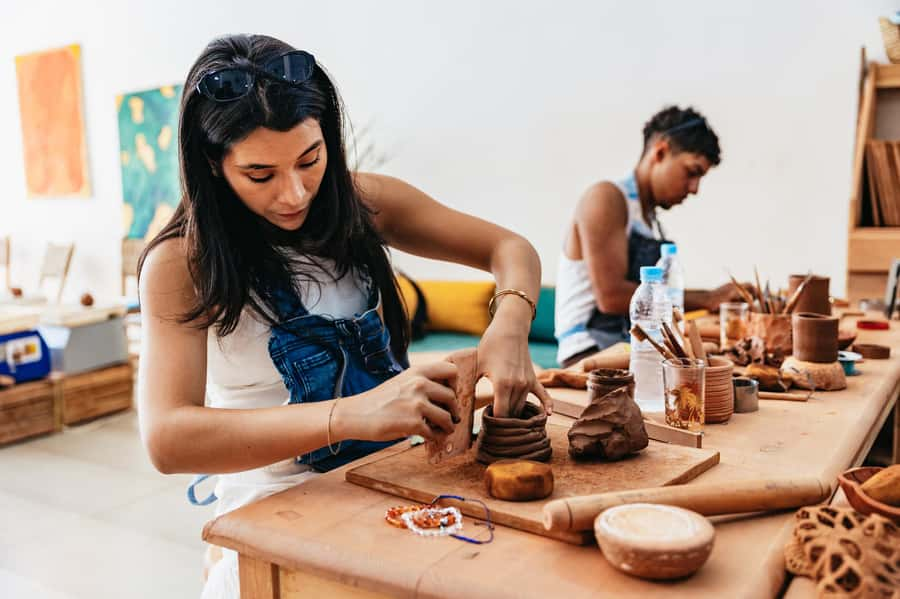
The hand-building section is the more relaxed part of the class. You can press, join, cut, and shape the clay with the supplied tools, then add patterns or simple decorative details. The studio has different pattern options and cut-outs, which help if you arrive with no clear artistic plan.
I would choose this part if you want the best chance of leaving with a recognizable object. Hand-building gives you more control than the wheel, especially during a short session. It also lets you make something personal rather than producing a standard item that looks like everyone else’s.
The instructors are available to explain how to form the clay and correct weak joins. That practical help can save a piece from splitting apart before it is even finished. Several activities are suitable for complete beginners, and the guides explain techniques in English, French, or Arabic.
You should still expect rough edges and small imperfections. This is a two-hour introduction, not a professional studio course. That is part of the appeal. Your finished piece records what you learned that day, rather than pretending to be a factory-perfect souvenir.
The pottery wheel: fun, difficult, and worth trying
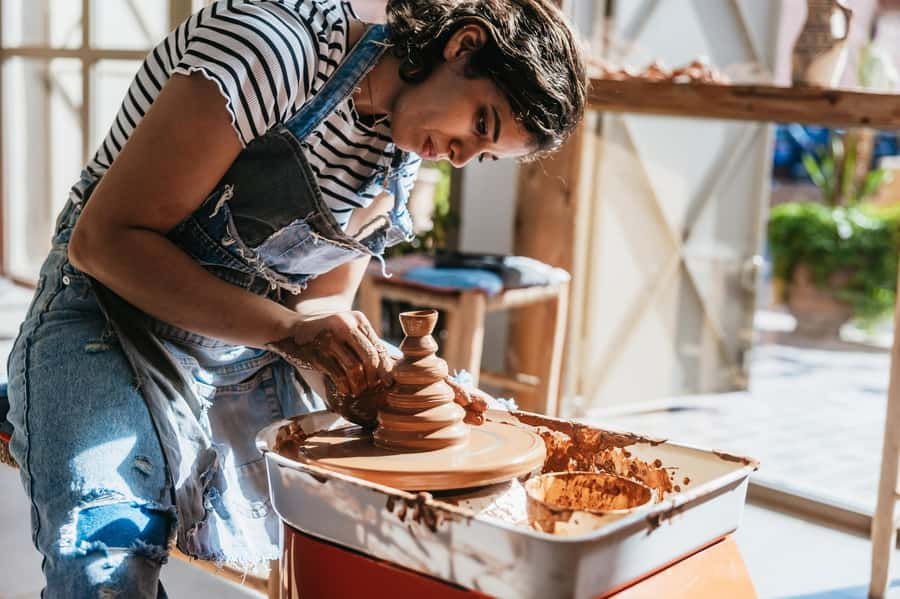
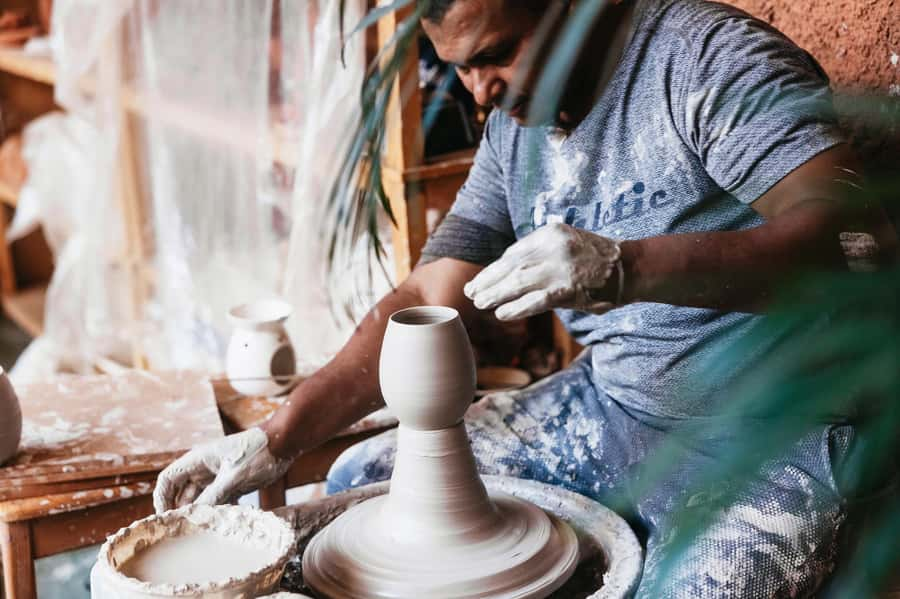
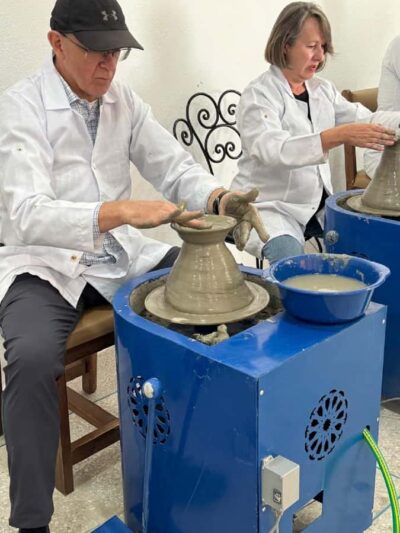
The wheel is the most memorable part for many people, but it is also the part that demands the most patience. You place your hands around spinning clay and try to keep the form centered while applying steady pressure. Small changes in finger position can alter the entire shape.
The instructors give guidance on hand placement and help you begin forming different shapes. You get to try the machine yourself, rather than watching a staff member make the piece for you. Still, the exact amount of wheel time depends on the pace of the session and how many people are taking part.
This is worth knowing before you book. If your main goal is a long, technical wheel lesson, two hours may feel short. One class participant found that the spinning machines were used only briefly, which is understandable when the session also includes hand-building, instruction, tea, and cleanup.
I would treat the wheel as an introduction and a playful challenge. You may produce a small bowl or an uneven shape, or you may need help to keep the clay upright. Either way, you learn quickly why professional potters make the process look effortless.
The studio has music during some sessions, and the atmosphere is described as calm and friendly. That helps take the pressure off. You can laugh at a lopsided first attempt, try again, and still have time to make a hand-built piece.
Moroccan tea gives the class a local rhythm
About halfway through, the class pauses for Moroccan tea. This is not a meal, and food is not included, but the warm glass of mint tea gives you a welcome break from concentrating on the clay.
The tea is called atay in Morocco, and here it works as more than a drink. It slows the pace and gives you a moment to look at what you have made before returning to the worktable. For a craft activity in Marrakech, it is a simple but fitting cultural detail.
Do not expect a full café stop. The included drink is Moroccan tea, while other refrigerated drinks may be available to buy at the studio. Bring cash or a card if you want to purchase something from the workshop shop, where handmade items are also sold.
A completely different kind of day in Marrakech:
- Marrakech: Quad Bike Tour to Palm Oasis and Jbilat Desert
★ 4.8 · 11,831 reviews - Marrakesh: Majorelle Garden Entry Tickets
★ 4.5 · 9,651 reviews - Marrakech Quad Bike Experience: Desert and Palmeraie
★ 4.5 · 9,509 reviews - Marrakech: Balloon Flight, Berber Breakfast & Certificate
★ 4.8 · 8,164 reviews
Taking your pottery home safely
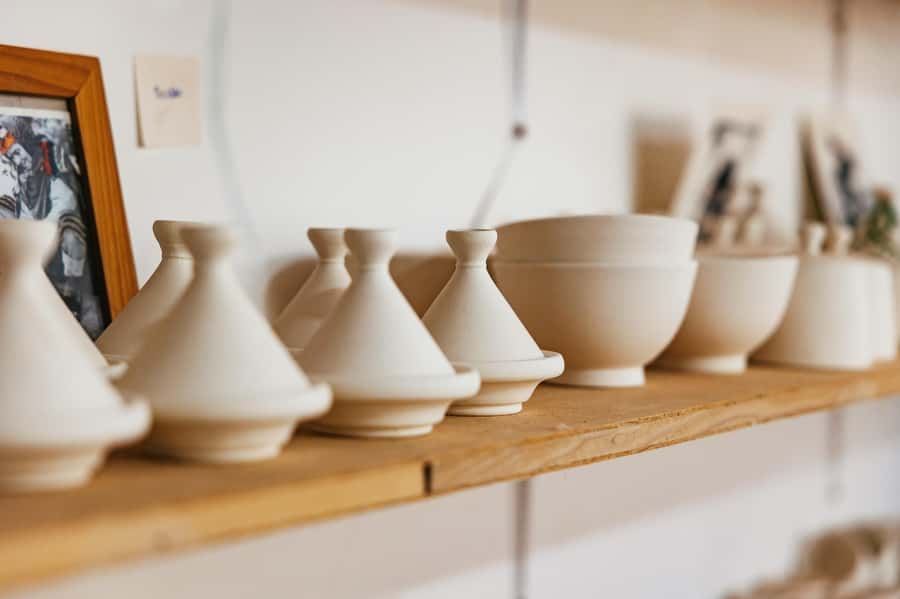
At the end of the workshop, your pieces are carefully wrapped for transport. This is useful if you are leaving Marrakech soon, but remember that the clay is not yet a finished ceramic object. Handle the package gently and keep the pieces protected during the rest of your trip.
The instructions say to let the pieces dry before decorating them with the paint of your choice. The drying details matter. A piece with water trapped inside can explode in the kiln, so six days of drying are needed before firing.
If you remain in Marrakech for at least one week after the class, the studio can also fire your pieces with a biscuit firing before you decorate them. This is an important distinction. The standard experience lets you take the unfired creations home, while firing is only possible under the stated timing conditions.
If you are staying less than a week, plan on decorating the dry clay yourself rather than expecting a completed glazed ceramic. The activity is still a good souvenir-making experience, but it does not promise a finished, kiln-fired item during a short visit.
Why the $45 price can make sense
At $45 per person, this is not the cheapest way to spend two hours in Marrakech. The value depends on what you want from the activity.
The price includes the workshop, an instructor, clay and tools, Wi-Fi, and Moroccan tea. You also keep what you make. For someone who wants a guided activity with a personal souvenir, that is a fair package. The instructors provide hands-on help, and the studio atmosphere adds something you would not get from simply buying a ceramic item in a shop.
The value is weaker if you only want extended wheel time. The class covers several techniques, and the wheel may be shared for a short period. You are paying for a complete introduction to pottery, not a specialist wheel-throwing lesson.
Transport is the extra cost to watch. One person paid 500 MAD for a taxi from a resort, though that was a particular journey rather than a fixed rate for every visitor. The studio is outside the central sightseeing area, and a taxi may cost more than you expect if you are coming from a distant resort.
You might compare taxi options before leaving. One participant noted that the InDrive app can be cheaper, and public transport such as the L15 may be possible if you know the area. The meeting point is in front of the AHMA Construction building, so save the location details and allow time to find it.
The family-run setting and teaching style
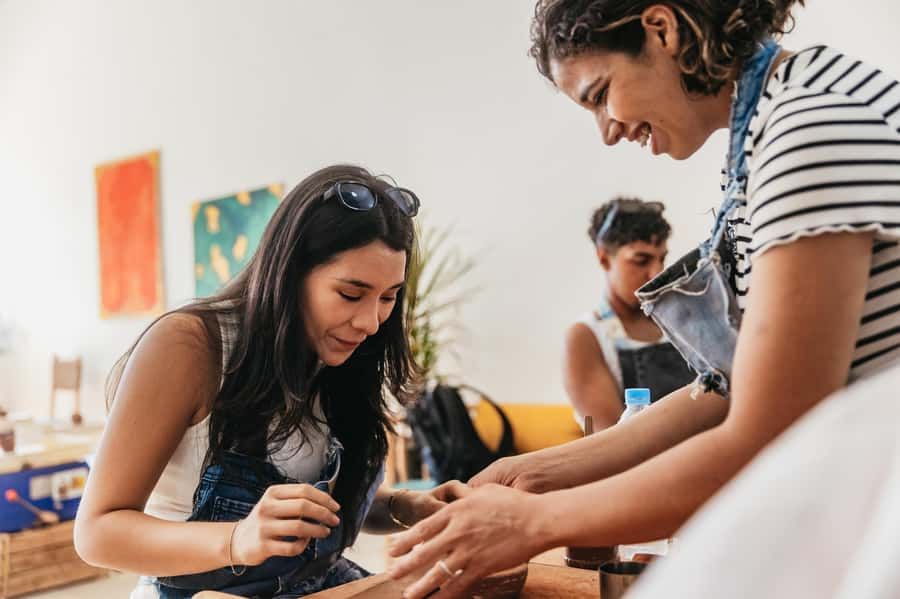
Atelier Lamsaty is run by a family, and that shapes the feel of the class. The women working there are welcoming, patient, and ready to answer questions. Asma is specifically noted for explaining the process clearly, including repeating instructions in French when needed.
English, French, and Arabic are available, which makes the workshop practical for an international group. Communication is especially useful when the instructor is correcting hand position or showing how to join pieces of clay. Those are physical skills, and a quick demonstration often says more than a long explanation.
The studio is described as clean, organized, spacious, and air-conditioned. An apron is provided, which is a good detail because clay can get messy. Wear clothes you do not mind working in anyway, and keep your valuables simple since both hands will be busy.
The setting is not a grand historic building or a central Medina courtyard. It is a working craft studio in a newer district. That is less atmospheric for some people, but it gives you a practical place to focus on the activity without the crowds and noise of the old city.
Who will enjoy this most
I would recommend this class to first-time potters, couples, friends, and families with children who are tall enough to take part safely. It offers enough variety to keep a mixed group interested. One person can focus on hand-building while another tries the wheel.
It is also a good choice if you want a quiet break from sightseeing. The class is creative without being physically demanding, and the tea break gives you time to reset. You do not need to arrive with a design in mind because the staff can suggest shapes, patterns, and tools.
Families should note the stated restriction for children under 90 centimeters. Older children may be able to take part with close help, and the staff have been accommodating with younger family members, but the activity is still built around clay tools and a pottery wheel.
I would not choose it if you need a fully finished ceramic souvenir before your flight the same day. Your pieces need drying time, and firing requires a stay of at least one week. I would also think twice if you want a long technical class focused only on the wheel.
Practical details for a smooth visit
The experience lasts two hours, though I would allow extra time for transport. The workshop is about 10 minutes from the city center by taxi and around 15 minutes from the Medina, but traffic and finding the exact entrance can affect the journey.
Bring a credit card and some cash. Cash is useful for small purchases or transport, while a card may be useful at the studio. Pets are not allowed.
The experience includes no transportation and no food beyond the Moroccan tea. If you need a full meal, plan that separately. Other drinks may be available to purchase, but they are not part of the included package.
Free cancellation is available up to 24 hours before the activity for a full refund, and you can reserve now and pay later. Starting times vary, so check availability when choosing your date.
Should you book Atelier Lamsaty?
Book it if you want to make something with your own hands, meet a friendly local craft team, and try the pottery wheel without committing to a long course. The strongest reasons are the patient instruction, the choice between hand-building and turning, and the fact that you take your creations home.
Think carefully about the location and the unfinished pottery. A taxi adds to the cost, and a two-hour workshop cannot provide a full ceramics course. If you accept those limits, $45 buys a personal activity rather than another passive sightseeing stop.
For most beginners, couples, friends, and creative families, I think it is a good Marrakech choice. Go for the experience of shaping clay, not for perfect ceramics. The uneven little object in your suitcase may end up being the souvenir that best brings the afternoon back to life.
FAQ
How long does the pottery workshop last?
The class lasts two hours. It includes a 15-minute demonstration, practical pottery work, a pottery-wheel session, and a Moroccan tea break.
Where is Atelier Lamsaty located?
The workshop is in front of the AHMA Construction building in Marrakech’s Al Massar district. It is about 10 minutes from the city center by taxi and 15 minutes from the Medina.
What does the $45 price include?
The price includes the pottery workshop, an instructor, tools and materials, Wi-Fi, and Moroccan tea. Transportation and food are not included.
Can I try the pottery wheel?
Yes. The session includes an opportunity to try wheel throwing with guidance from the instructors. The amount of time on the wheel may be limited when several people share the equipment.
Can I take my pottery home?
Yes. Your pieces are carefully wrapped at the end of the session. They need to dry before you decorate them, and a piece must dry for six days before firing.
Can the studio fire my pottery?
The studio can provide a biscuit firing if you stay in Marrakech for at least one week after the workshop. The activity information does not include firing for visitors leaving sooner.
Just added around Marrakech
- Quad in the Palmeraie of Marrakech★ 5.0 · 41 reviews
- Marrakech Desert Camel Ride★ 5.0 · 17 reviews
- Sunset Camel Ride in the Palm Grove Of Marrakech★ 5.0 · 34 reviews
- Private Airport Transfer from or to Marrakech Menara Airport.★ 4.5 · 63 reviews
- Marrakech The History and Culture Day Trip★ 4.5 · 45 reviews
- Marrakech: Tailor-Made City Tour With Your Own Private Guide★ 4.9 · 236 reviews
- Marrakech palm grove: Sunset camel ride★ 4.8 · 194 reviews
- Sparkling Marrakech through the eyes of your local Guide★ 4.7 · 247 reviews
Craft Workshops, compared.
Pottery and Mosaic Workshop in Fes Led by Local Artisans
Read our review →

Vibrant Souks, Local Artisans & Medina Experience
Read our review →
Marrakech Hammam, Massage & Berber Carpet Weaving Workshop
Read our review →
Fez Guided Tour of Artisans and Handicrafts Full-Day Private Tour
Read our review →
Artisan for a Day: Pottery & Zellige Workshop in Fez
Read our review →Browse the lists this tour appears in