
Reviewed · COOKING CLASSES
Moroccan Crepes & Pastries Kitchen
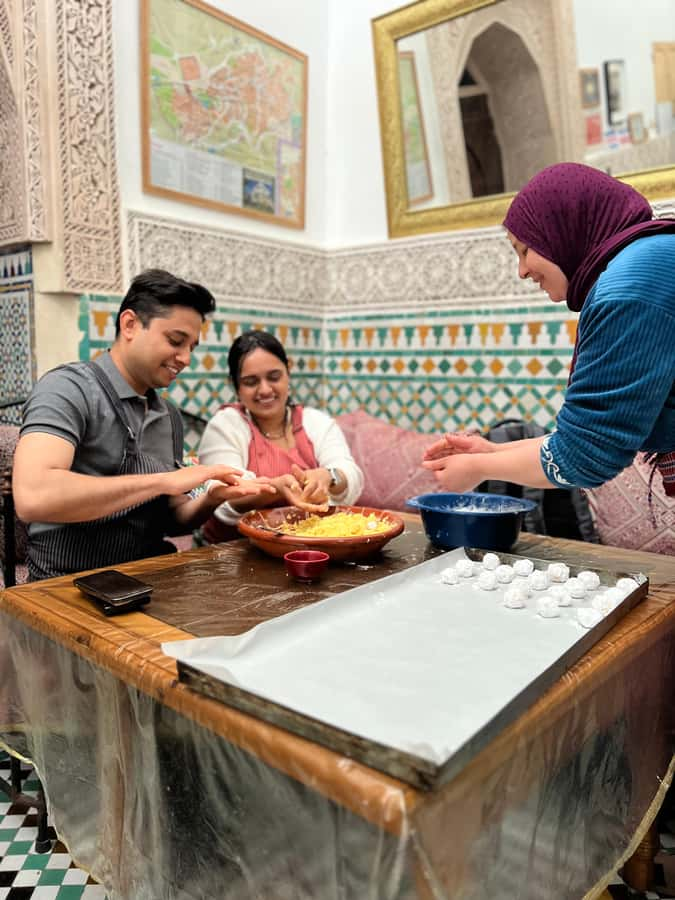
Moroccan cooking becomes much more personal when you are standing in a local home, working dough by hand, and sharing mint tea at the table. At Dar Sunrise Fes, local women guide you through at least one pastry or crepe, with choices such as msemen, baghrir, harsha, cookies, and cakes.
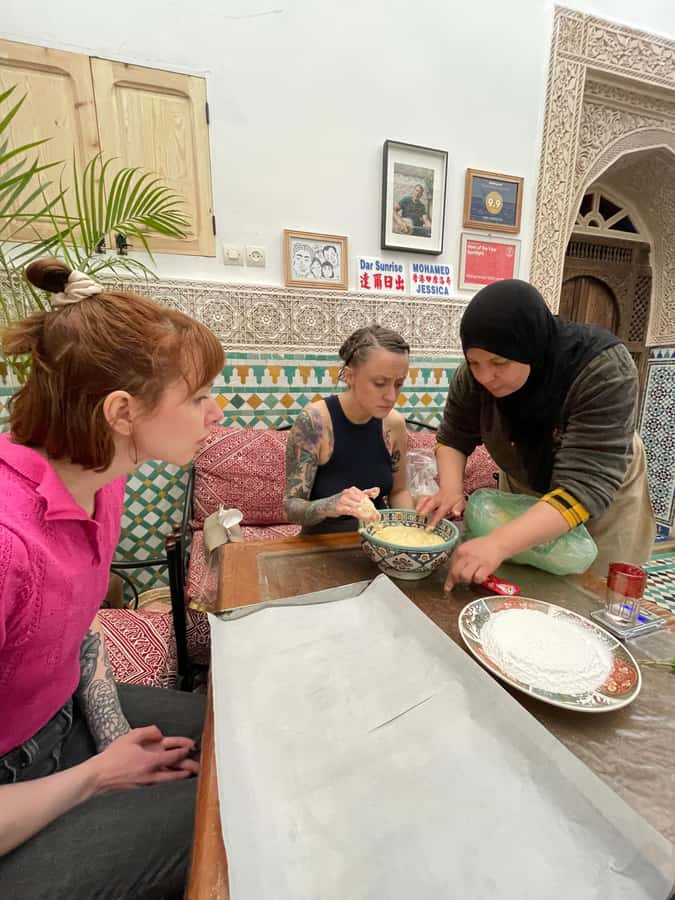
I like the small group limit of four, which gives you time to work rather than simply watch. I also like the warm, human setting: Amal and the other women welcome you into their guest house, and the class can become a friendly cultural visit as much as a cooking lesson. The main consideration is communication, since the chefs speak Arabic and a translator assists with English. Hand signals help, but detailed questions may take patience.
Key points to know before booking
- At least one recipe is guaranteed: The exact number of dishes depends on group size and the choices made that day.
- Choose from classic Moroccan treats: Options include msemen, maloui, baghrir, harsha, cookies, and cakes.
- Small group, maximum four people: You should have a more active role than in a large demonstration class.
- Mint tea is part of the visit: You will eat the finished food with tea in the guest house.
- The chefs speak Arabic: An English-speaking translator is available to help with communication.
- Find Dar Sunrise Fes inside the medina: The house is near Made in M cafe on Talaa Kebira, at alley number 10.
What the two-hour kitchen visit feels like
This is a compact Moroccan food lesson held at Dar Sunrise Fes, a guest house in the Fès medina. You do not meet at a restaurant or a large cooking school. You walk into a home setting, meet the women who lead the class, and work through the basic stages of making a traditional pastry or crepe.
The lesson begins with a choice of recipes. The available options include Moroccan cookies, Moroccan cakes, maloui or msemen, baghrir, and harsha. You are promised at least one type, while a larger group can make more varieties. That detail matters. A group of two or three may prepare several items, but the exact mix depends on the number of participants and the amount of food the cooks can manage during two hours.
I would think of this as a hands-on introduction, not a full Moroccan cooking course. You may learn one main recipe in useful detail, or several smaller preparations if the group is larger and the hosts decide to share more. A French participant specifically wished for more recipes in smaller quantities, so you should book this for a focused lesson rather than an all-you-can-make pastry workshop.
More Cooking Classes in Fez
- Fez: Souk Tour and Traditional Home Cooking Class
★ 4.9 · 186 reviews - Cooking Class – Moroccan cuisine
★ 5.0 · 124 reviews - Flavors of Fez: Market visit, and a hands-on cooking class.
★ 4.6 · 112 reviews
Kneading dough with local women
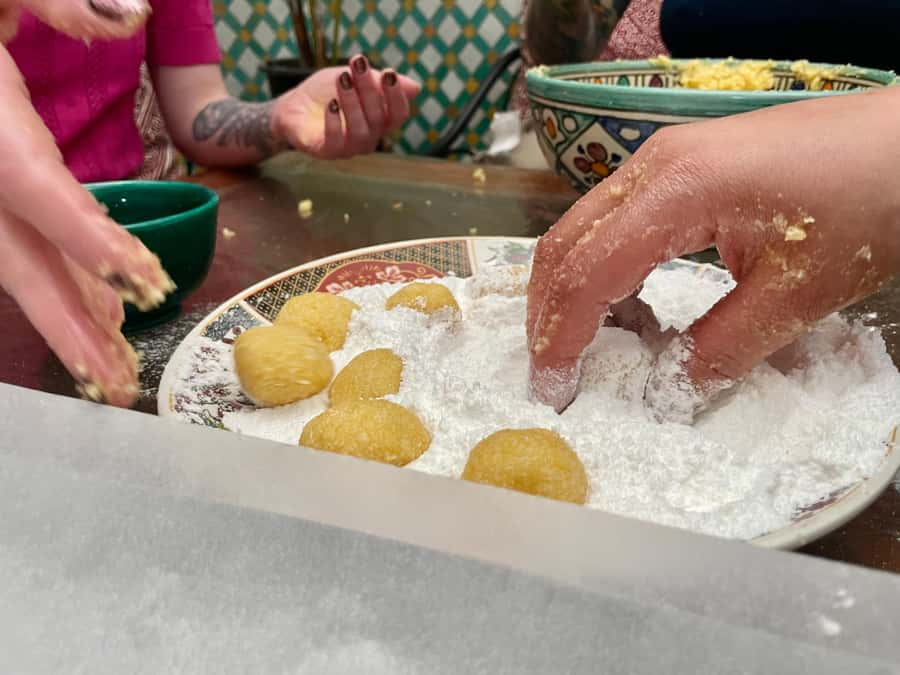
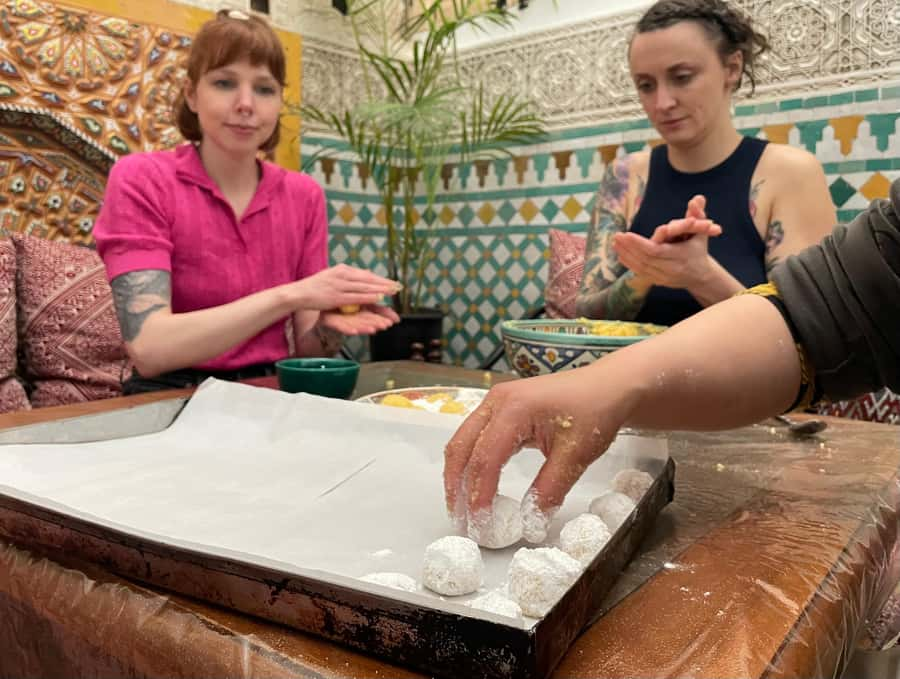
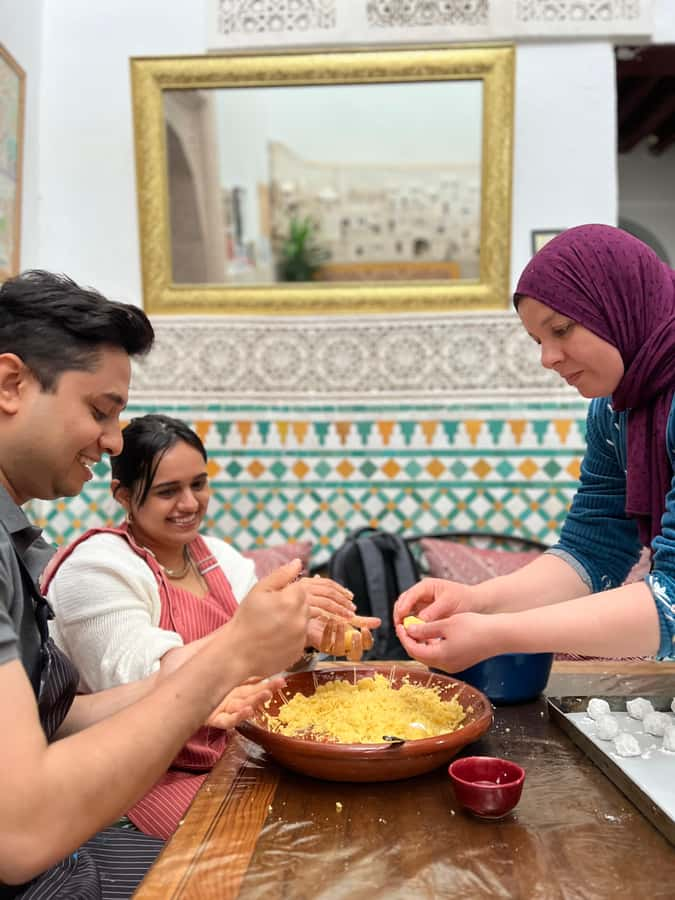
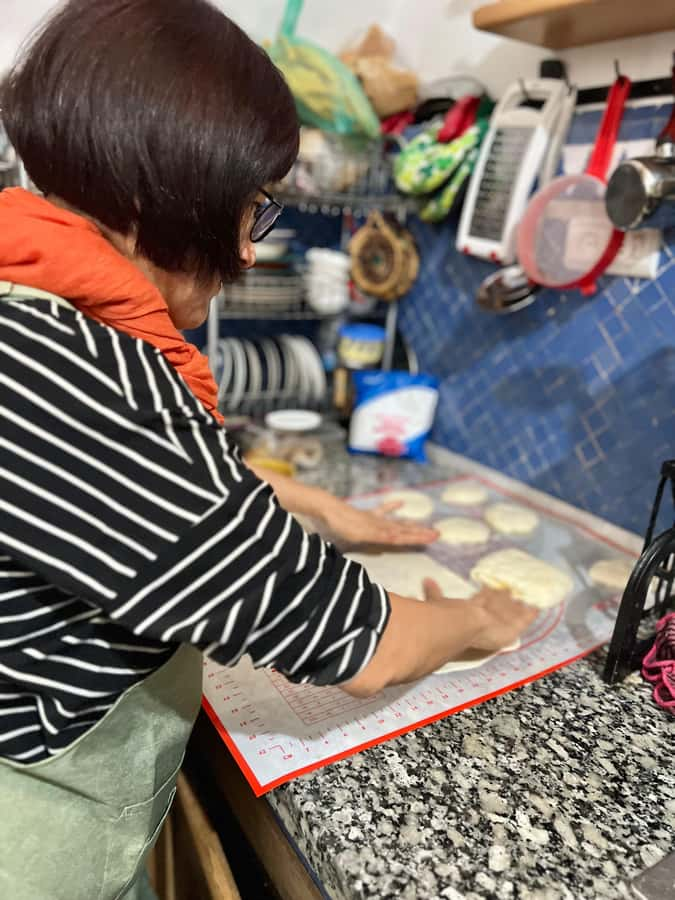
The most valuable part of the class is the work with the dough. Moroccan crepes are not just batter poured into a pan. You can expect to see how the dough is mixed, kneaded, shaped, and cooked, with the women showing the movement and texture that make the finished food work.
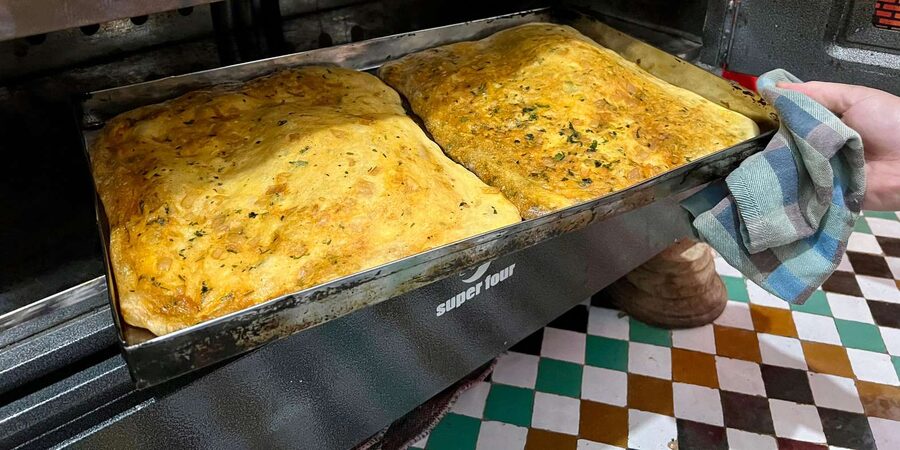
Msemen and maloui are layered Moroccan flatbreads, while baghrir has a different texture and appearance. Harsha is another traditional semolina-based treat. The class gives you a chance to compare these styles, but the specific recipe you make depends on the selection for your group.
I like this format because food becomes a way to understand ordinary home life. You are not only receiving a plate of pastries. You are handling the ingredients, watching the technique, and seeing how the finished item is served. The lesson also leaves room for conversation, stories, and small cultural exchanges that a standard meal rarely provides.
The women leading the class speak Arabic, so do not expect every cooking term to be explained in fluent English. An English-speaking translator is available, and the practical steps can usually be shown as well as described. One attendee found that gestures filled in the gaps, while another noted that the hosts were very kind despite the language barrier.
If you want to ask about ingredient quantities or substitutions, speak up early and use the translator. The recipe handouts are not listed as a formal inclusion, but participants have received recipes afterward, so it is sensible to ask before leaving.
Mint tea and the best part of the class
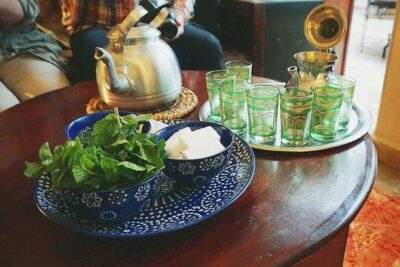
After the cooking, you sit down with the food and a glass of Moroccan mint tea. This is not a minor extra. Tea gives the visit a natural pause and lets you taste what you have made while spending time with the hosts.
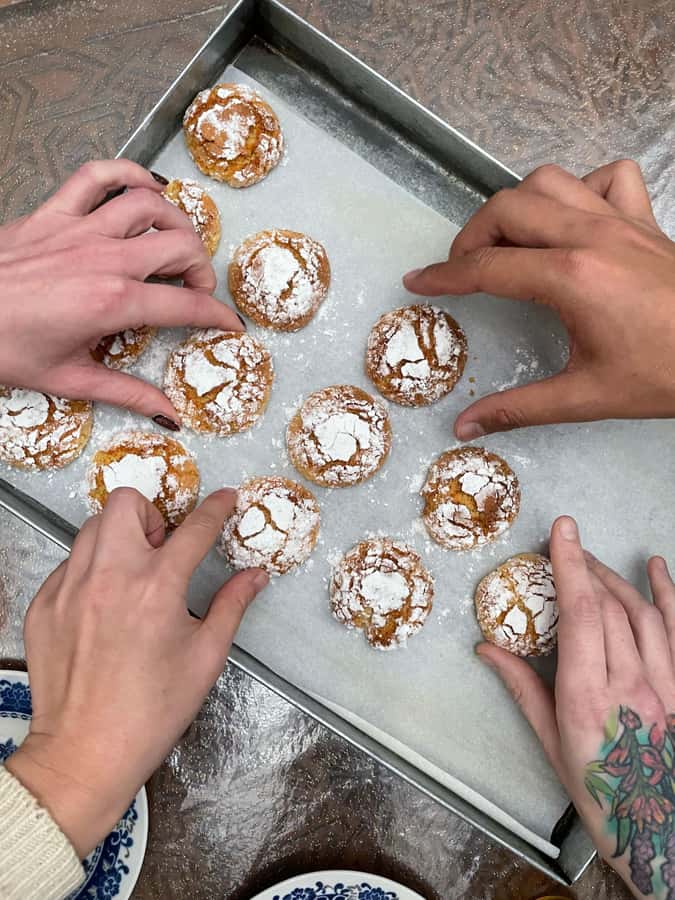
The food is homemade, and the setting is informal. You may eat the pastries during the class, and some finished biscuits may be packed for you to take home. That makes the activity especially useful early in a trip, when you are still learning the names and shapes of Moroccan foods.
The social side is one of the strongest reasons to book. A January participant arrived nearly two hours early because of cold, rain, and difficult weather. The women allowed her and her friend to wait inside and even served them couscous before the lesson began. That kind of welcome is not something you can promise at every cooking class, but it shows the hospitable tone of this small guest-house setting.
Still, keep your expectations sensible. This is a short activity, so the food portion will not replace a full meal. The listing promises pastries or crepes and mint tea, not lunch or dinner.
What you might make: five Moroccan choices
More Moroccan Pastry Tastings in Fez:
- Tangier: Sunset, Tea, Sweets, Camel Ride, and Hercules Caves
★ 4.9 · 575 reviews - Marrakech: Moroccan Pastries and Tea Class with a Local
★ 4.7 · 84 reviews - boat trip from 9 am to 3 pm fishing & swimming & barbecue & dessert
★ 4.0 · 36 reviews
Msemen and maloui
Msemen and maloui are among the most useful choices for a first Moroccan pastry lesson. They are familiar enough to enjoy immediately, but their shaping and layers give you something new to practice.
The two names can be used differently depending on the region and the family, so the class is a good place to ask how the local cooks distinguish them. You may prepare one of these rather than both, especially in a small group.
Baghrir
Baghrir is a Moroccan crepe with a distinctive surface. It gives you a different lesson from the folded, layered doughs, and it is a good choice if you want to focus on crepe making rather than cookies.
If your group has several people, ask if baghrir can be included alongside a pastry. The class allows more types when more participants attend, but there is no fixed menu for every session.
Harsha
Harsha gives you another way to see how semolina is used in Moroccan cooking. It is a practical choice for someone who wants a pastry with a different texture from standard wheat-based dough.
Because the experience lasts two hours, the instructor may limit the number of recipes. Ask which dish will receive the most hands-on work before the cooking starts.
Moroccan cookies
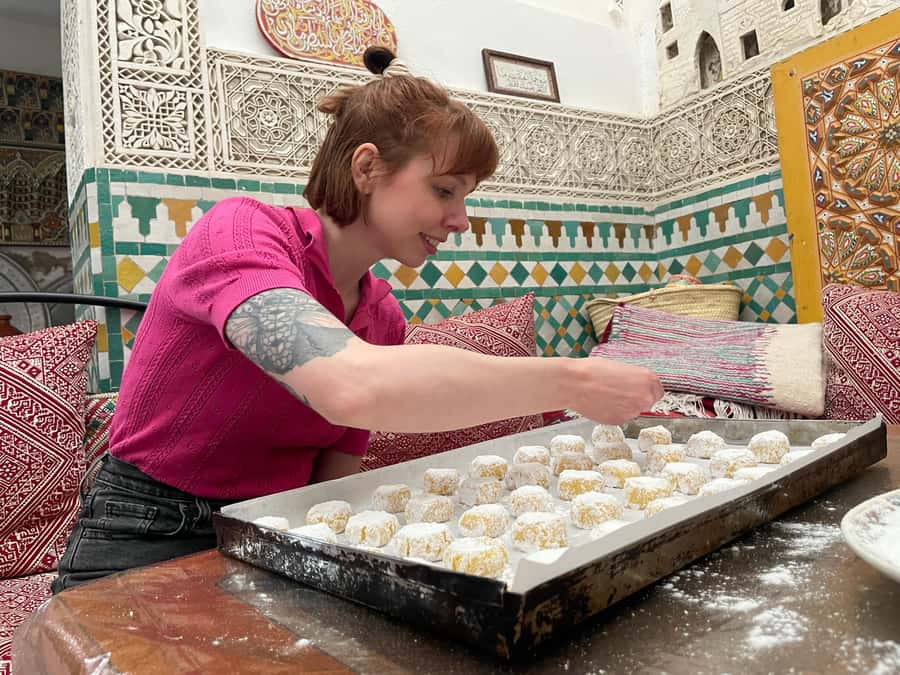
Cookies are a popular choice, and they travel well. Some participants have received biscuits to take home, along with the recipes. If you want something you can recreate after Morocco, ask the translator to help you note the measurements and baking instructions.
A small group may prepare only a few varieties. That is not a flaw, but it is worth knowing before you book. The class favors a manageable amount of food and time over a hurried parade of recipes.
Moroccan cakes
Moroccan cakes are also available, though the exact type is not specified. If cake is your priority, confirm what the group will prepare at the start. The cooks may choose a recipe based on the number of people and the time available.
Getting to Dar Sunrise Fes in the medina
The meeting point is Dar Sunrise Fes, found inside the medina near Made in M cafe on Talaa Kebira. Google Maps lists the house under the name Dar Sunrise Fes.
From Bab Boujloud, the blue gate, cross through the gate and turn into the first street on the left. You will be on Talaa Kebira. Walk downhill for about three minutes. Made in M cafe, with blue paint, should be on your right. The guest house is in the alley beside it, at number 10.
From Ain Zliten Parking, enter Talaa Kebira and walk uphill for about one minute. Made in M cafe should be on your left. The alley beside it leads to number 10.
The route deserves attention. The Fès medina has many small lanes, and closed doors can force detours. One useful tip is to use the main streets rather than trying to follow every small shortcut. Save the directions and video links before you leave your hotel, and allow extra time if you have not visited the medina before.
Pickup is not included. A pickup service may be arranged for an extra charge, but you need to contact the provider for details. Most people will meet directly at the house.
Why the small group matters
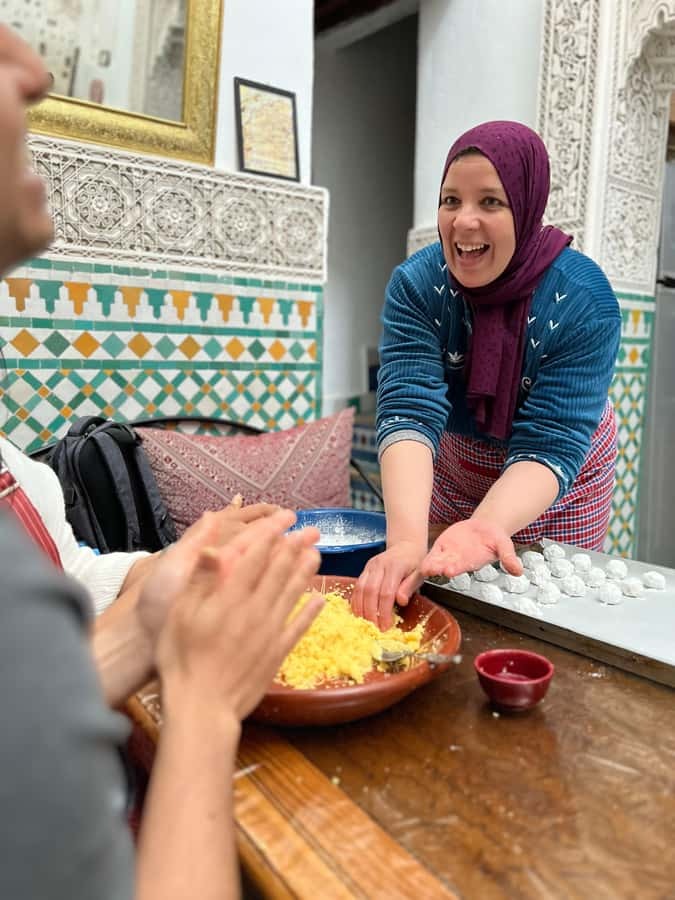
The maximum group size is four people. That is a strong feature for a practical class because you have a better chance to touch the dough, ask for a demonstration, and receive correction when shaping the food.
The tradeoff is variety. A small group does not automatically mean a longer menu. The number of recipes depends on how many people attend and what the cooks can prepare within two hours. A bigger group may allow more types, but it could also mean less individual space at the work surface.
For the best balance, I would book this with friends or family if your schedule allows. You can choose your preferred pastry together and share the final food. Solo participants can still fit comfortably into the small group, especially if the main goal is meeting local people rather than preparing a large number of dishes.
Price, timing, and practical value
At $34 per person for two hours, this is fairly priced if you value personal contact and active participation. You are paying for a small-group lesson, the ingredients, the food you make, mint tea, and time with local hosts in their guest house.
The value is less clear if you want a long professional cooking course with a printed recipe book, many dishes, or a complete meal. The class promises at least one pastry or crepe, not a full menu. I would compare it with the cost of a meal in Fès and ask what you want from the outing. For a simple meal, other options may cost less. For a cultural activity you can take home as a skill, $34 is reasonable.
The two-hour length fits neatly into a day of exploring the medina. I would avoid scheduling it too close to another fixed activity, since finding the house can take time. Morning or afternoon availability varies, so check the starting times before booking.
You can reserve now and pay later, which helps if your Fès plans are still shifting. Cancellation is free up to 24 hours ahead for a full refund. These terms make it easier to place the class into a changing Morocco itinerary.
Who will enjoy this most
I would recommend the class to you if you like food, home visits, and small cultural exchanges. It suits curious first-time visitors who want more than a restaurant meal, as well as returning visitors who want a slower afternoon in the medina.
Families may enjoy the hands-on format, though the provided details do not specify a minimum age. If you are booking for children, ask the provider about age suitability before paying.
It also works well for people who feel worn out by a packed sightseeing schedule. Kneading dough, drinking tea, and sitting in a home can give your day a calmer rhythm. The friendly tone is part of the appeal, especially if you value contact with local residents.
I would be more cautious if you need precise English instruction, have a strict dietary requirement, or want to make many recipes in one sitting. The chefs speak Arabic, and an interpreter helps, but the communication will not be as direct as in an English-only class. Ask about ingredients and dietary needs before you arrive.
Should you book the Moroccan crepes and pastries class?
Book it if you want a warm, low-key food activity with a maximum of four people, especially if you like learning by doing. The strongest points are the home setting, the chance to work with local women, the mint tea, and the possibility of taking biscuits and recipes home.
Skip it if your main goal is a large cooking menu or a formal lesson with detailed English instruction. For most people who want to make one or more Moroccan crepes or pastries and share time with welcoming hosts, the $34 price is a sensible use of two hours in Fès.
FAQ
Where does the Moroccan crepes and pastries class take place?
The class takes place at Dar Sunrise Fes, a guest house inside the Fès medina. The house is near Made in M cafe on Talaa Kebira, in the alley at number 10.
How long does the activity last?
The activity lasts two hours. Starting times depend on availability when you book.
How much does the class cost?
The price is $34 per person.
How many people can join the class?
The class is limited to four participants.
What foods can I learn to make?
The available choices include Moroccan cookies, Moroccan cakes, maloui, msemen, baghrir, and harsha. You will learn at least one pastry or crepe.
Will I learn more than one recipe?
You may learn more than one type. The number of recipes depends on the size of the group, with larger groups able to choose more types.
What language is used during the class?
The chefs speak Arabic. A translator is available to help with communication, and the activity information lists English support.
Is mint tea included?
Yes. Mint tea is served during the class, along with the homemade pastries or crepes.
Is pickup from my accommodation included?
No. Pickup is not included in the price. A pickup service may be available for an extra charge if you contact the provider.
Just added around Fez
- Walking Tour in Old Medina Fez with Official Guide★ 5.0 · 77 reviews
- Best Tour In Fez Médina With ( Private )Tour Guide★ 5.0 · 32 reviews
- Full-Day Private Tour of Fez★ 4.5 · 92 reviews
- Fez view cooking with grandmother★ 5.0 · 70 reviews
- Funky Walking Tour★ 5.0 · 22 reviews
- Fez guided Tour with a Local Guide★ 5.0 · 32 reviews
- Fez cultural and handicraft tour half day★ 5.0 · 80 reviews
- Fez cultural and handicraft tour full day★ 5.0 · 79 reviews
Cooking Classes, compared.
Half-Day Cooking Class with Local Chef Laila in Marrakech
Read our review →
Marrakesh cooking class with chef Hassan – Local dishes
Read our review →
Marrakech Tour: Tajine Cookery Class Experience
Read our review →
Atlas Mountains Cooking Class with Berber Family
Read our review →Browse the lists this tour appears in