
Reviewed · HIKING AND TREKKING TOURS
Marrakesh: 2-Day Mt. Toubkal Trek with 1-Night Stay & Meals
Mount Toubkal is not a gentle day hike. This two-day mountain push takes you from Marrakesh to Imlil, up to a 3,207-meter refuge, then to the 4,167-meter summit before returning to the valley in one very long day. The reward is a sunrise above the High Atlas, with the Marrakesh plain to the north and the Anti-Atlas and Sahara stretching south.
I like the strong local guiding, with guides such as Ayoub, Oussama, Hamza, Brahim, and Hicham repeatedly praised for pacing groups and helping tired hikers. I also like the value: at $122, you get transport, a guide, refuge accommodation, meals, and a mule for luggage from April through November. The catch is simple: this is a serious hike, and the second day can run 10 to 12 hours.
Key points to know before booking
- Sunrise starts early: You may leave the refuge around 3:00 or 4:00 a.m. to reach the summit in time for first light.
- The second day is the hard one: Summit day includes the climb, descent, and return to Imlil, with some hikers covering roughly 27 kilometers.
- The refuge is basic: Expect a shared dormitory, bunk-style beds, and simple mountain facilities rather than hotel comfort.
- Guides take safety seriously: Groups may split if someone cannot continue, with a guide accompanying the slower or descending hikers.
- Winter changes everything: Snow, strong wind, ice, and extreme cold can stop the summit attempt, even when the rest of the trek is going well.
- You can rent key equipment: Sleeping bags, gloves, lamps, poles, and snow clothing may be available locally, but confirm current rental options before departure.
From Marrakesh to Imlil, the mountain day begins
Pickup is included from your Marrakesh accommodation, though the vehicle may meet you at the nearest road accessible by car. If you are staying in the Medina, expect a short walk to a practical meeting point rather than a minibus entering the narrow lanes.
The drive takes you toward Imlil Valley, at roughly 1,740 meters. Imlil is the trailhead for this route and the last major point to check your pack, water, clothing, and footwear. Small-group departures are limited to 16 people, though some outings have been organized with several guides for mixed ability levels.
Communication is one of the useful parts of the setup. A WhatsApp group may be created before departure, helping sort out pickup details and last-minute messages. Still, keep your phone charged and carry the address of your accommodation clearly. Pickup points around the Medina can be confusing.
The included transport adds real value. A private taxi or minibus to Imlil and back would otherwise add cost and planning. Vehicle quality can vary, though, so keep your expectations practical. One departure included a breakdown on the way to the trailhead, while other pickups were praised for being early and well coordinated.
More Hiking and Trekking Tours in the Atlas Mountains
- Berber villages : Atlas Mountains Day Hike from Marrakech
★ 5.0 · 14,007 reviews - From Marrakech: Atlas Mountains Full-Day Hiking Trip w Lunch
★ 4.8 · 7,417 reviews - Marrakech: Atlas Mountains & Valleys Waterfall Hike w/ Lunch
★ 4.8 · 1,236 reviews
Aït Mizane Valley, Aremd, and Sidi Chamarouch
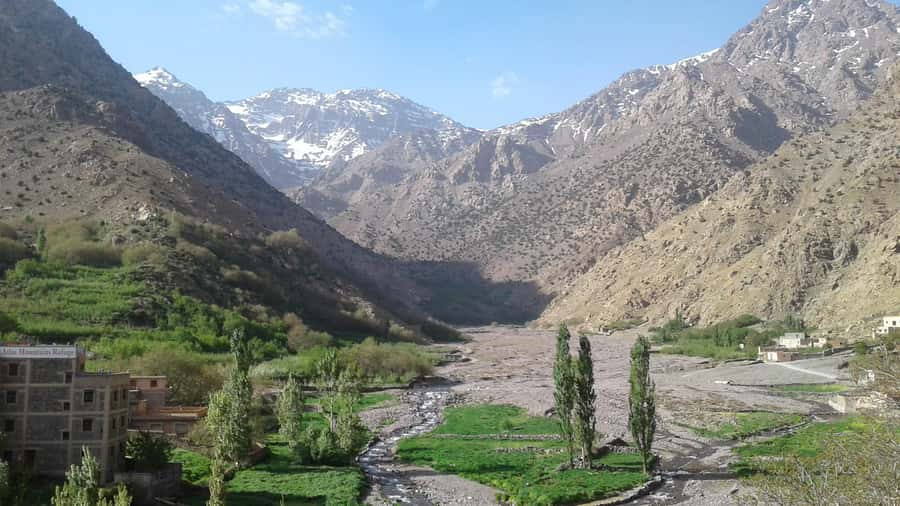
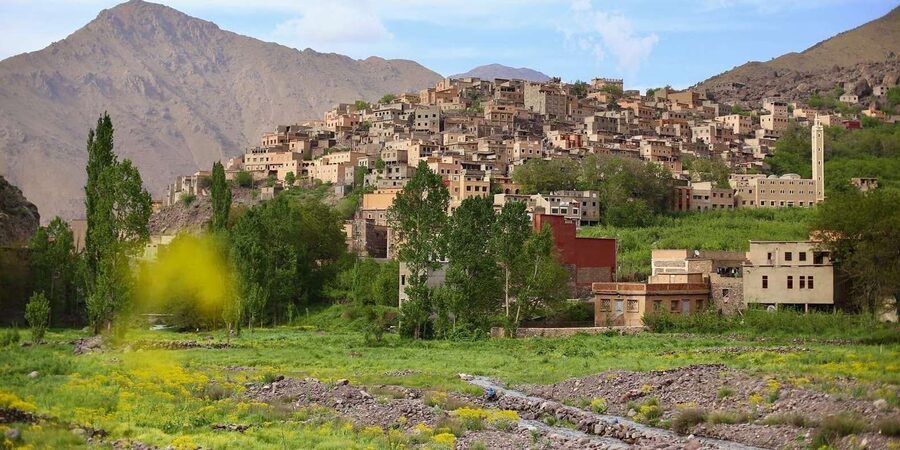
Once you meet the local mountain team, the trail follows the Aït Mizane Valley toward Aremd. This first stretch lets you settle into the pace before the route becomes steeper. You will walk through mountain settlements, across rocky paths, and past changing views of the High Atlas.
Aremd gives the route a human scale. You are not simply walking up an empty peak. You pass through a lived-in valley, with local activity, mule traffic, and places to stop for food or drinks. Some departures include fresh orange juice, snacks, and Moroccan tea along the route, so bring cash in small notes.
The next notable point is Sidi Chamarouch, a sanctuary area beside the trail and a nearby waterfall. It is a natural place for a rest and lunch. The break matters because the climb from Imlil to the refuge lasts around five to six hours, with an altitude gain of about 1,467 meters.
Do not treat the first day as an easy warm-up. The route climbs steadily, and the altitude becomes noticeable as you get higher. A guide such as Ayoub or Oussama can adjust the pace, but no guide can remove the physical work. You need comfortable hiking shoes, water, sun protection, and enough energy for a full mountain day.
Reaching the 3,207-meter Toubkal Refuge
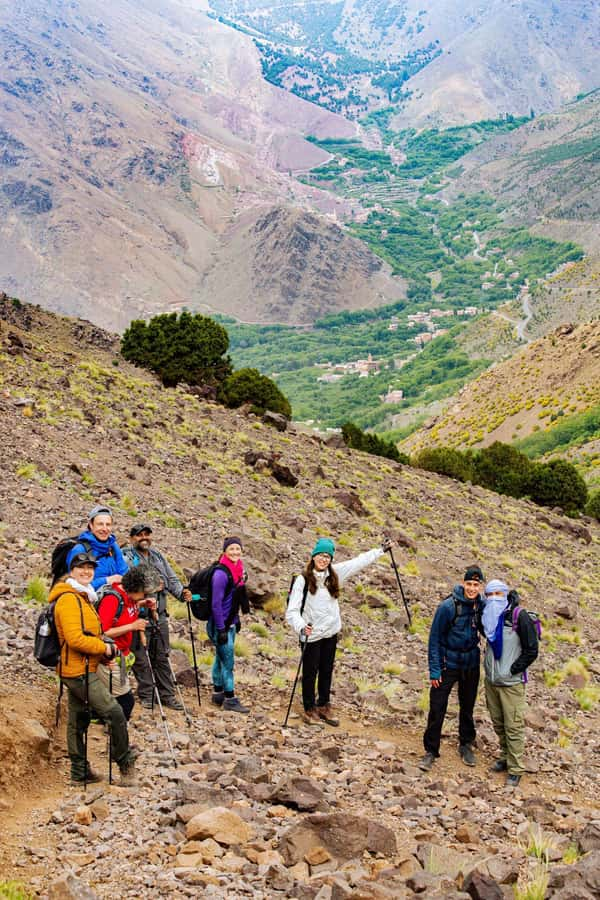
The trail grows rougher and steeper as you leave the lower valley. You eventually reach the Toubkal Refuge at about 3,207 meters, where you eat dinner and sleep before the summit attempt.
The refuge is part of the adventure, but it is not a private mountain lodge. Expect a simple shared dormitory with beds placed close together. One report described large bunk rooms where sleeping space is shoulder to shoulder. Earplugs are a smart addition to your pack, especially if you are a light sleeper.
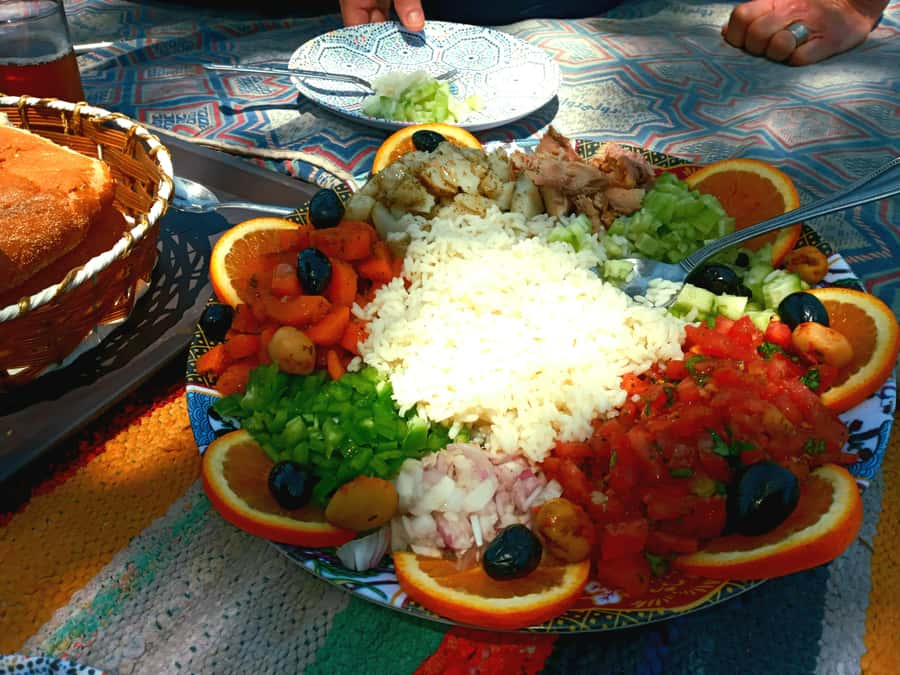
Meals are included: two lunches, one dinner, and breakfast. The food is prepared by the local cooking team and commonly includes warm Moroccan dishes, tea, and filling mountain meals. Several departures praised the cooking, while one person wanted larger portions. If you eat a lot after a long climb, carry a few compact snacks.
The refuge can feel cozy after a cold, tiring walk. Warm food, tea, and a fire help. Facilities remain basic, though, and the short overnight stay is part of the physical challenge. You may be able to rent a sleeping bag, lamp, gloves, or other equipment before or during the trek, but do not assume every item will be available in every season.
The seasonal mule service is included from April through November. This is helpful if you want to keep your load light. You still need a daypack with water, warm layers, snacks, a phone, and anything you need during the day. Carrying a heavy pack makes the altitude gain feel much worse.
The 3:00 a.m. climb to Toubkal’s summit
Summit morning begins early, often around 3:00 or 4:00 a.m. The purpose is to reach the top for sunrise and leave enough time to descend safely. You start in darkness, crossing rocky ground and streams before the route turns into a steep mountain ascent.
A headlamp is important. It may be available to rent, but bringing your own is safer and more familiar. Gloves, a warm jacket, and a hat are not optional comforts at the summit. Even in warmer months, the upper mountain can be bitterly cold, and reports from November describe water bottles freezing in strong wind.
The climb is slow and physical. You move over rocks and steep paths, with breaks arranged by the guide. Altitude can affect you even if you are fit. One strong hiker reached a point where altitude sickness stopped the summit attempt, while the guides helped with the descent rather than pushing the issue.
That is an important feature of a guided climb. The goal is not simply to get every person to the top at any cost. If someone cannot continue, the group may divide, with one guide returning safely with that person while another continues with the rest. This approach is especially useful for groups with different levels of fitness.
The guide team is often the best part of the experience. Ayoub, Oussama, Brahim, Hamza, Mustafa, Hicham, Houssine, and others are named in the supplied feedback, but your exact guide is assigned by the operator. Expect English, French, Spanish, or Arabic support, with the level of English varying by guide. The strongest guides combine encouragement with practical judgment, keeping the group together when possible and making safe changes when needed.
A completely different kind of day in the Atlas Mountains:
- From Marrakech: Atlas Mountains Day Trip with Camel Ride
★ 4.8 · 4,709 reviews - Atlas Mountains & 5 Valleys Tour from Marrakech – All inclusive –
★ 5.0 · 2,913 reviews - Agadir or Taghazout: Paradise Valley Atlas Mountains Tour
★ 4.4 · 2,905 reviews - Atlas Mountains, Berber Villages and Three Valleys all inclusive
★ 5.0 · 2,471 reviews
The summit views and the long descent
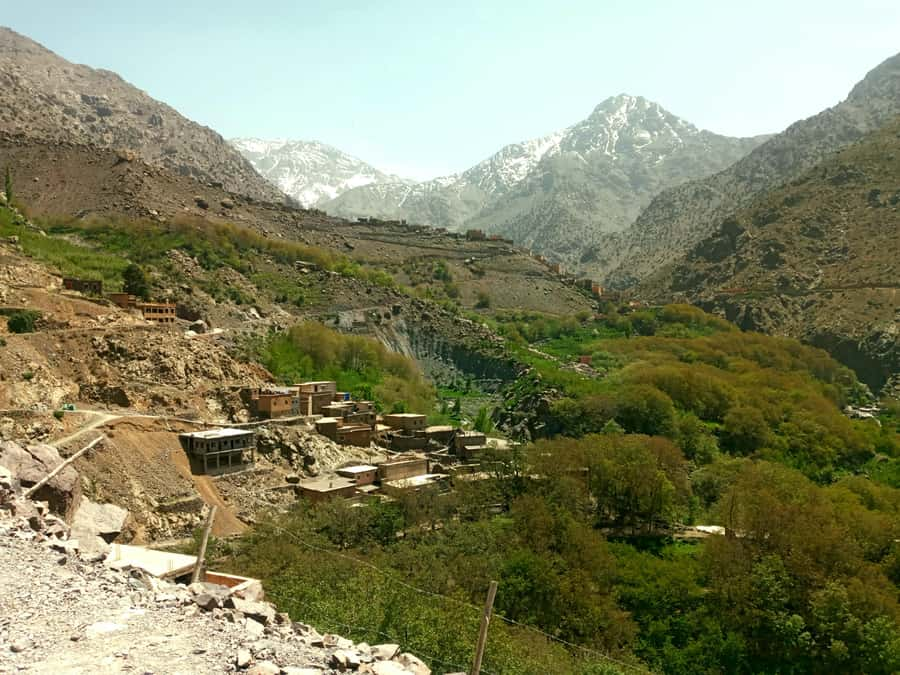
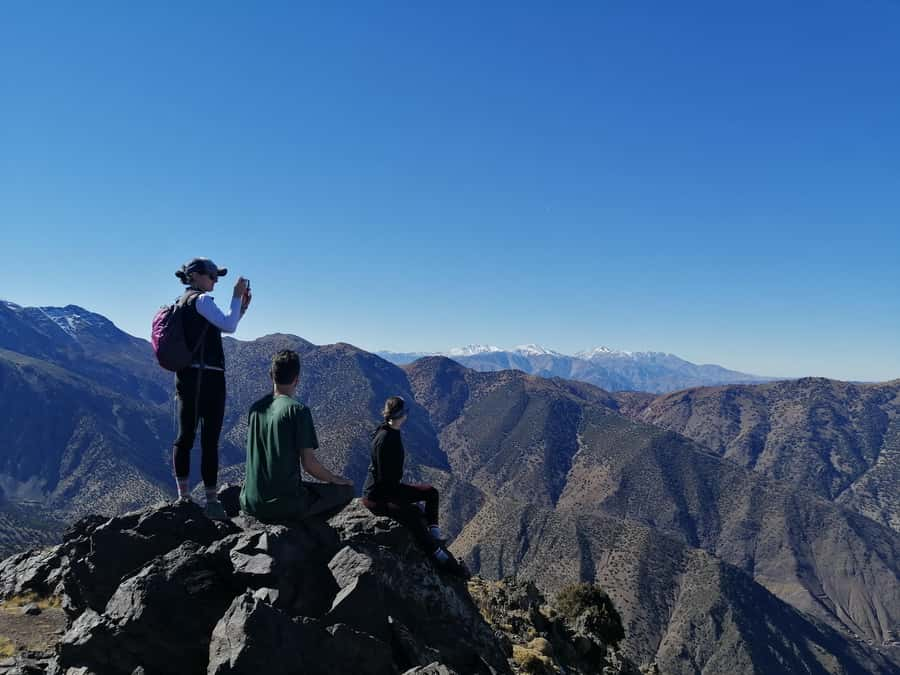
At the summit, you reach the highest point in North Africa, at approximately 4,167 meters. The top includes a plateau and broad views in several directions. Look north toward the Marrakesh plain and the High Atlas. To the south, the view reaches toward the Anti-Atlas and Sahara.
Sunrise is the emotional high point for many people. The early start feels worthwhile when light spreads across the mountain ridges. You will probably spend only a short time at the summit, since cold, wind, and the long return route make it wise to keep moving.
The descent is not a quick stroll downhill. You return toward the refuge, usually stop for food, and then continue down to Imlil. The whole second day takes around 10 to 12 hours. Some hikers describe covering roughly 27 kilometers, and many find the downhill section harder on the knees than the ascent.
Bring trekking poles if you use them, or ask about local rental equipment. Good shoes matter more than stylish clothing. The route can include loose rocks, uneven surfaces, streams, snow, and wet weather. A change of clothes is useful after a long day, especially if rain or melting snow leaves you damp.
At Imlil, you meet the vehicle for the return journey to Marrakesh. You will be tired, dusty, and pleased to sit down. The ride completes a very full two days, so do not schedule an important evening activity immediately afterward.
Weather, seasons, and equipment
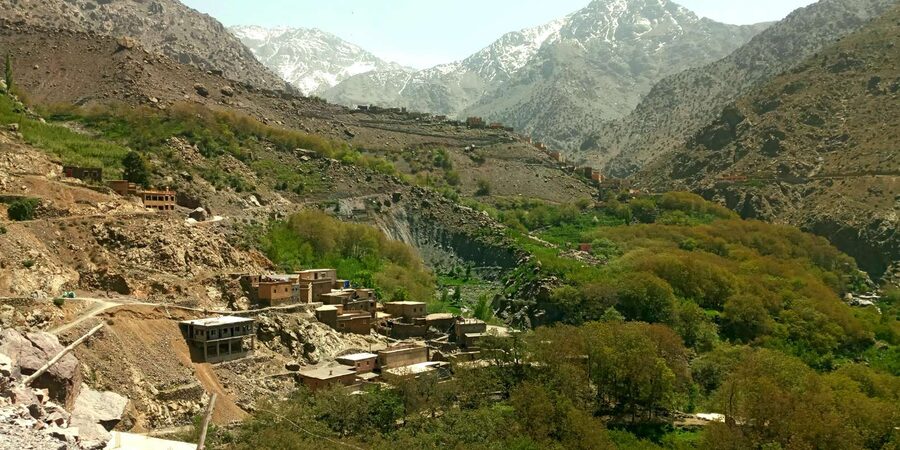
The tour operates in conditions that can change quickly. In warmer months, the lower trail can feel hot, while the summit remains cold. In winter, snow and ice can make the route much more demanding. Extreme wind or a snowstorm can prevent a summit attempt, with local authorities making safety decisions as conditions change.
That possibility should not be treated as a failure. Mountain safety comes first, and the climb still includes the valley, refuge, food, and high-altitude experience. If summiting Toubkal is the only reason you are visiting, build flexibility into your Morocco plans and understand that weather controls the mountain.
Bring:
- Hiking shoes with a firm sole
- Warm jacket and extra layers
- Gloves and a hat
- Head covering or kippah if needed
- Daypack
- Change of clothes
- Water and cash
- Charged smartphone and camera
- Travel insurance
- Basic first-aid kit
Trekking gear is not included. Sleeping bags may be rented, and the same may be true for gloves, headlamps, poles, hats, and winter clothing. One useful tip is to ask about rentals early, before leaving Imlil. Carry only what you need for the trail, since a mule can carry larger luggage from April through November.
Is $122 good value for this trek?
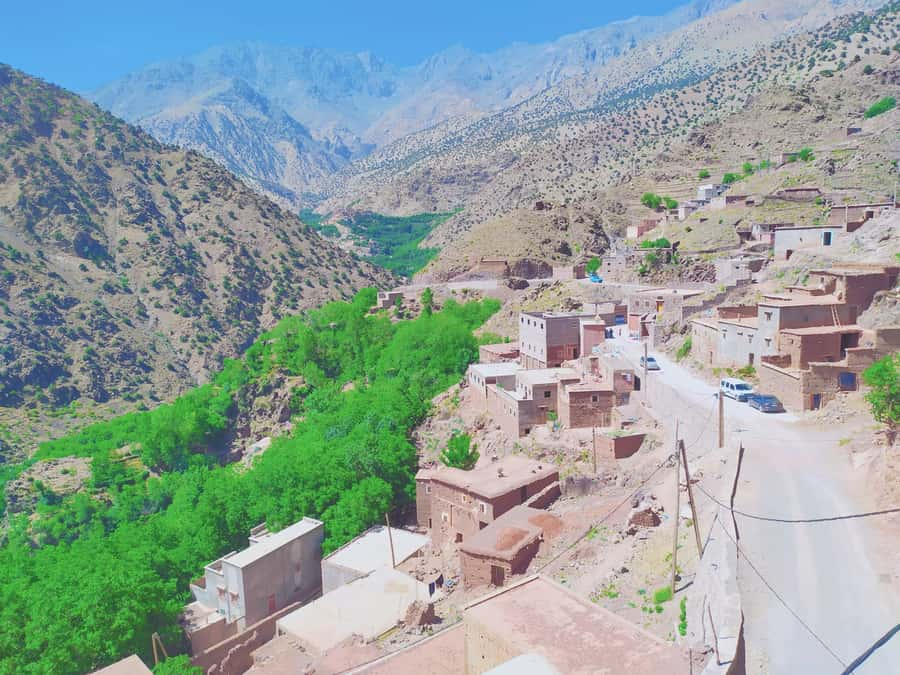
At $122 per person, the package offers a lot for a two-day mountain trip. You get Marrakesh pickup and drop-off, transport, a local guide, one night at the refuge, breakfast, two lunches, dinner, and seasonal mule support for luggage.
The value is strongest if you are starting in Marrakesh and do not already have transport or mountain arrangements. Organizing a guide, transfers, refuge bed, meals, and portage separately would take more time and could cost more. The small group limit of 16 also gives you a better chance of receiving personal help than you would on a large coach excursion.
The price does not include trekking clothing, a sleeping bag, drinks, or personal expenses. Add a little money for juice, snacks, tea, and equipment rental. Tipping is also a normal practical consideration for the guides and cooking team, though the exact amount is not specified here.
This is good value, but it is not an inexpensive substitute for fitness. You are paying for organization and local support, not an easy route. If you are unfit or have little hiking experience, the low price should not tempt you into treating Toubkal as a casual sightseeing trip.
Who should book the Mount Toubkal trek?
I would choose this trip if you want a demanding mountain experience but prefer local guides, arranged transport, and included meals. It suits people who can handle long uphill and downhill days, shared accommodation, early starts, and changing weather.
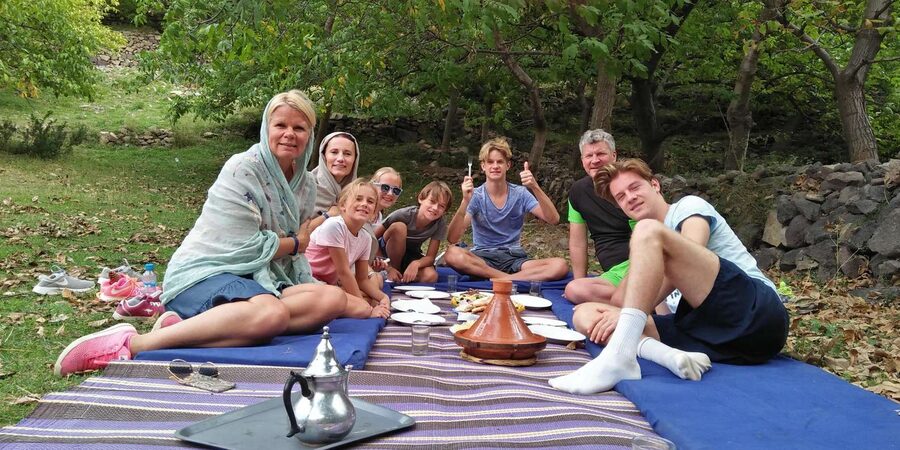
It also works well for solo visitors who like meeting an international group. The small-group format can create a friendly team atmosphere, and several departures included multiple guides so different hiking speeds could be managed.
I would think twice if you dislike dormitories, need a quiet night, or want a relaxed Moroccan excursion. The refuge is basic, the summit morning starts in darkness, and the descent may leave your legs sore for the rest of the day.
The activity is not suitable for children under 12 or people over 70. More importantly, your own fitness, hiking experience, and reaction to altitude matter more than a simple age cutoff. If you are uncertain, choose a less demanding Atlas Mountains walk instead of assuming determination will solve every problem.
FAQ
How long is the Mount Toubkal tour?
The experience lasts two days, including one night at the Toubkal Refuge.
How long do you hike each day?
The first day takes about five to six hours from Imlil to the refuge. The second day takes about 10 to 12 hours for the summit climb, descent, and return to Imlil.
What meals are included?
The package includes one breakfast, two lunches, and one dinner. Drinks are not included.
Is transportation from Marrakesh included?
Yes. Pickup and drop-off in Marrakesh and transport to and from Imlil are included. Pickup may take place at the nearest vehicle-accessible point to your accommodation.
Is a mule included?
A mule to carry luggage is included from April through November.
Can I rent a sleeping bag or hiking equipment?
A sleeping bag is available to rent, and equipment such as gloves, lamps, poles, and cold-weather clothing may also be available. Trekking gear is not included in the tour price.
Which languages are available with the guide?
Guides may speak English, French, Spanish, or Arabic. Optional audio guidance is available in English, French, and Spanish.
Should you book it?
Book this trek if reaching North Africa’s highest summit appeals to you and you are ready for a genuinely hard two-day effort. The strongest reasons to go are the sunrise climb, excellent local support, included mountain meals, and a price that covers the main practical pieces.
Skip it if you want a soft adventure or cannot accept a possible weather-related summit cancellation. Pack warm clothing, train for long climbs, expect a basic refuge, and leave Marrakesh with realistic expectations. Do that, and this can be one of the most memorable active experiences in Morocco.
More Two-Day Trips in the Atlas Mountains
- Marrakech: 2-Day Atlas Villages Trekking Tour
★ 4.5 · 76 reviews - From Marrakech: 2-Day Berber experience Atlas Mountains
★ 3.9 · 65 reviews - 2 Days Mount Toubkal ascent trek via Ait Mizane Valley
★ 4.3 · 45 reviews - From Marrakech:Trekking in Atlas mountains 2 days
★ 4.9 · 40 reviews
More Multi-Day Tours in the Atlas Mountains
- Mt Toubkal Ascent Express Trek 2 Days 1 Nights
★ 4.7 · 962 reviews - Marrakech: 2-Day Atlas Mountains Trek with Village Stay
★ 4.8 · 717 reviews - From Marrakech: 3-Day Mount Toubkal Climbing Trek
★ 4.7 · 597 reviews - From Marrakesh: 2-Day Mount Toubkal Trek
★ 4.7 · 591 reviews
Just added around the Atlas Mountains
- Private Berber Middle Atlas Day Trip From Fez★ 5.0 · 21 reviews
- Excursion from Fez to Midle Atlas★ 5.0 · 21 reviews
- Excursion From Fez to the Middle Atlas Mountains★ 5.0 · 40 reviews
- fes to Middle atlas day Trip★ 5.0 · 17 reviews
- Private Day Tour from Fez to the Middle Atlas★ 5.0 · 18 reviews
- Atlas Mountain & Berber Villages and Waterfalls Day Trip from Marrakech★ 5.0 · 54 reviews
- Agadir Desert Trip + berber villages★ 5.0 · 23 reviews
- Agadir or Taghazout: Paradise Valley Atlas Mountain Swimming Trip★ 5.0 · 27 reviews
Hiking and Trekking Tours, compared.
Berber villages: Atlas Mountains Day Hike from Marrakech
Read our review →
3 Days Desert Tour From Marrakech To Merzouga Dunes & Camel Trek
Read our review →
Ourika Valley Trip with Waterfall Hike & Lunch
Read our review →
3-Day Tour to Merzouga Erg Chebbi with Food & Camel Trek
Read our review →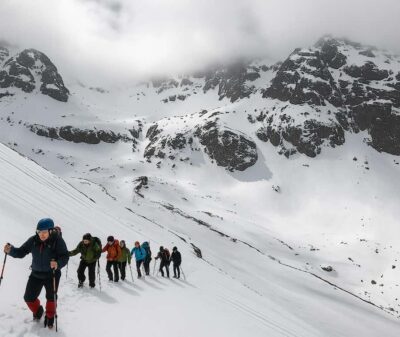
Mt Toubkal Ascent Express Trek 2 Days 1 Nights
Read our review →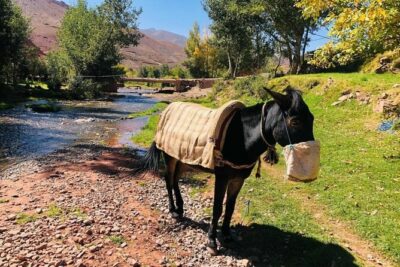
Browse the lists this tour appears in