
Reviewed · CYCLING TOURS
Dutch Bike Tour in Marrakech with Local Guide
Marrakech makes far more sense from a bicycle seat. You can move from quiet streets to the medina’s narrow lanes, then out toward modern neighborhoods, seeing how the city’s old and new sides fit together. I especially like the Dutch-speaking guidance and the route’s relaxed pace. The main thing to consider is traffic: Marrakech can be chaotic, and one recent booking found the group larger than expected.
I also like the chance to see ordinary streets and less-visited corners instead of ticking off monuments from a taxi window. Guides Saadia and Fatima have received especially warm praise for clear Dutch, friendly company, and useful stories. Just remember that this is a three-hour city ride, not a long countryside cycling trip.
Key points at a glance
- Dutch-speaking guides Saadia and Fatima: You can ask questions and hear explanations in Dutch, with English also available.
- Old and new Marrakech in one ride: The route links the medina, souks, historic gates, major sights, and modern districts.
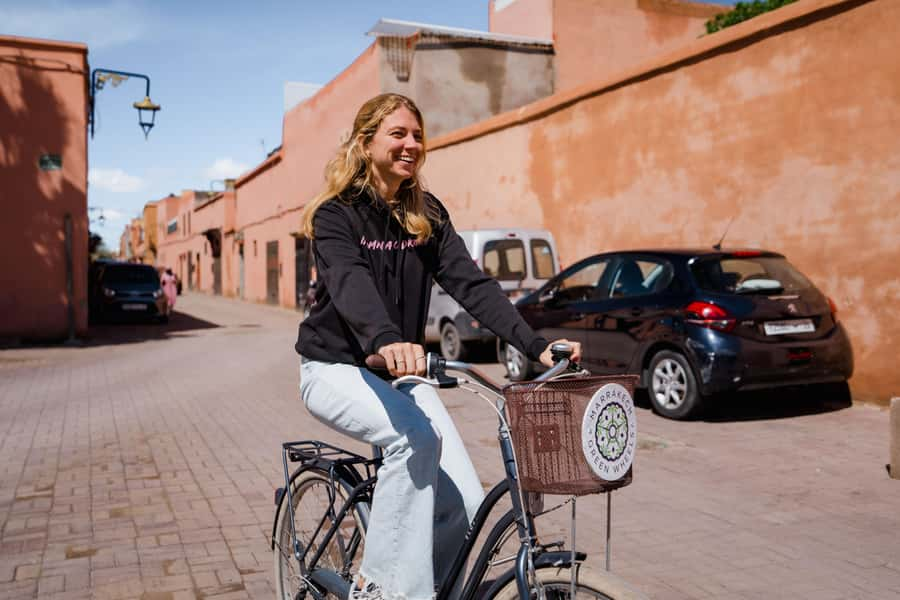
- Carefully chosen cycling route: Quiet streets and bike-friendly roads help keep the ride manageable in a city known for busy traffic.
- Useful cultural context: Expect explanations about Moroccan life, Marrakech, local customs, and Islam.
- Well-maintained bicycles: Recent bookings specifically praised the condition of the bikes.
- Three hours for $40: The price works well if you want a guided orientation without giving up most of your day.
Why a bicycle works so well in Marrakech
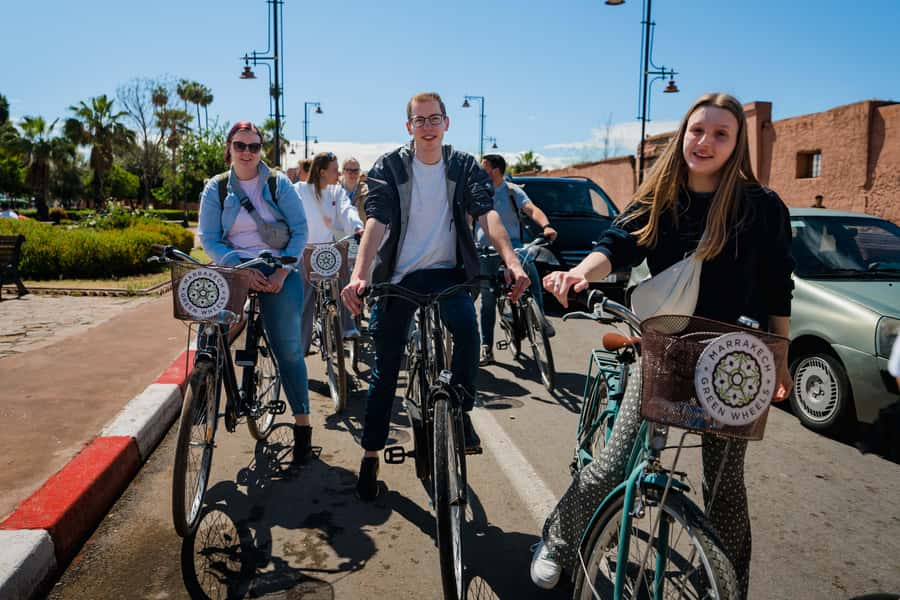
Marrakech is a city of contrasts, and a bicycle lets you connect the pieces. On foot, you can spend hours in the medina and still see very little beyond its main lanes. From a taxi, you cover ground quickly but lose the street-level feel. A bike gives you a useful middle path.
You move slowly enough to notice painted doors, market activity, neighborhood streets, and pockets of daily life. At the same time, you cover more distance than on foot. That matters here because the historic center and newer parts of the city feel quite different.
The guide keeps the pace relaxed and selects streets with cycling in mind. That does not remove all traffic or tight spaces. It does mean you are not left to make your own way through Marrakech’s most confusing roads. A guide can point out the next turn, manage the group, and help you stay calm when the city feels hectic.
The experience suits many fitness levels because it is described as light activity at a flexible pace. You should still be comfortable riding a bicycle and paying attention around traffic, pedestrians, and narrow lanes. The itinerary includes cycling through parts of the medina, so the ride may feel more technical there than on an open road.
More Bike Tours in Marrakech:
- Cycling Adventure in Marrakech
★ 5.0 · 289 reviews - Marrakech:Guided City Cycling Tour – Culture, Colors & Charm
★ 4.7 · 231 reviews - Marrakech: Guided Bike Tour with a local Guide
★ 4.6 · 79 reviews
Starting at Atlas Sport Bike Shop
The tour begins at Atlas Sport Bike Shop. This is both the meeting point and the place where you return the bicycle at the end.
The practical advantage is simple: you do not need to arrange hotel transport for the tour itself. Hotel pick-up and drop-off are not included, so allow enough time to reach the shop independently. The supplied details do not state a hotel transfer option, so confirm the meeting instructions when you book.
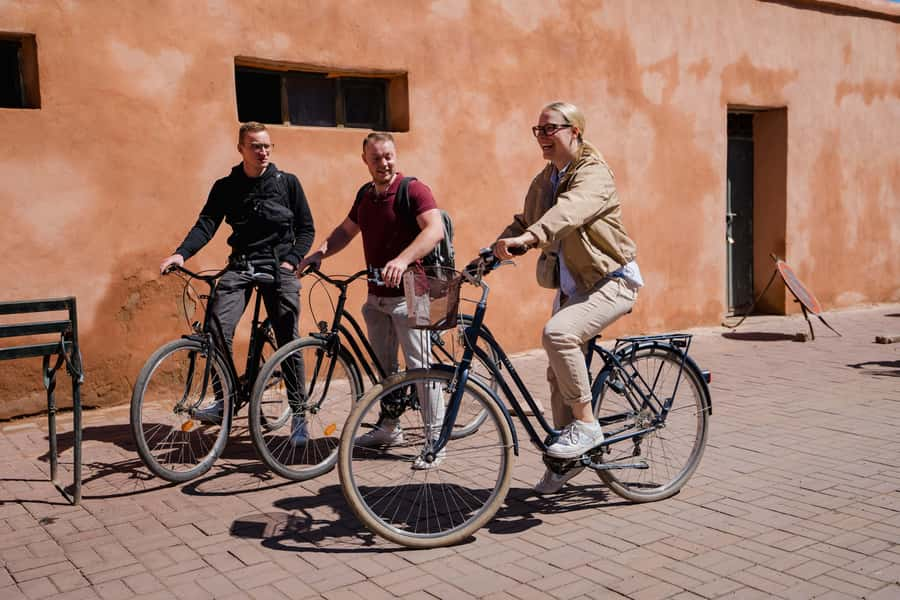
At the start, you receive a comfortable, well-maintained bike and meet your Dutch-speaking local guide. Saadia and Fatima are two guides specifically praised for their Dutch and friendly manner. The guide also speaks English, which helps if your group includes people who do not speak Dutch.
This is a good place to ask basic questions before setting off. If you have concerns about the pace, traffic, or cycling in narrow streets, raise them at the beginning rather than halfway through the ride. The small-group design is intended to allow personal attention, although one recent booking found the group too large. Group size can affect how easily you hear explanations and how often the group can stop.
Crossing from modern streets into the medina
The opening section gives you a gentle introduction to Marrakech by bike. You first ride away from the starting point, then enter the medina area for sightseeing and a short cycling segment.
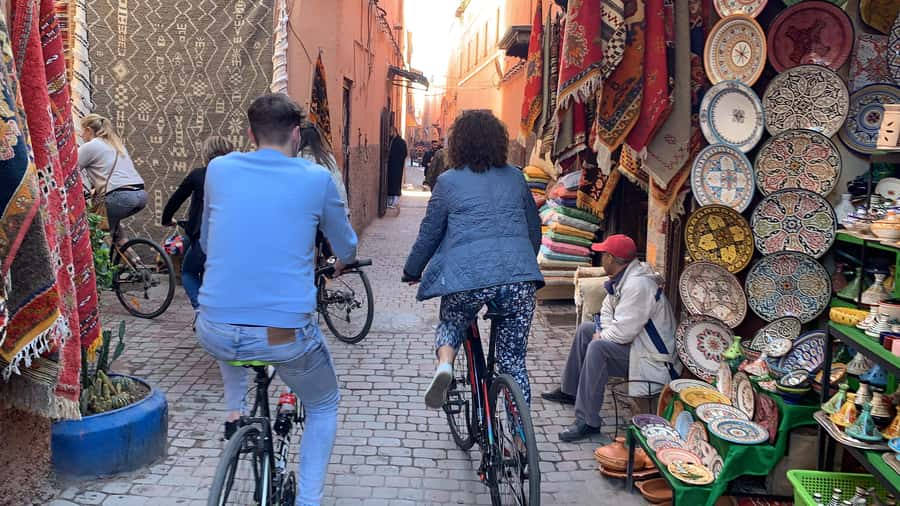
The medina is not a polished museum quarter. It is a working part of the city, with narrow passages, shops, local movement, and changing traffic patterns. A bicycle helps you reach corners that are farther apart, but you should expect to slow down when the lanes become tight.
The guide’s role matters most here. Rather than simply pointing out buildings, the guide can explain what you are seeing and how the old quarter functions. The tour also makes room for questions and photographs, so you are not forced to pedal past everything at speed.
I would treat this part as a guided orientation, not a race. You may need to stop or walk the bike briefly in especially crowded stretches. The appeal is the close view of local streets, while the tradeoff is that the medina is not always easy cycling terrain.
Seeing the medina beyond the main sights
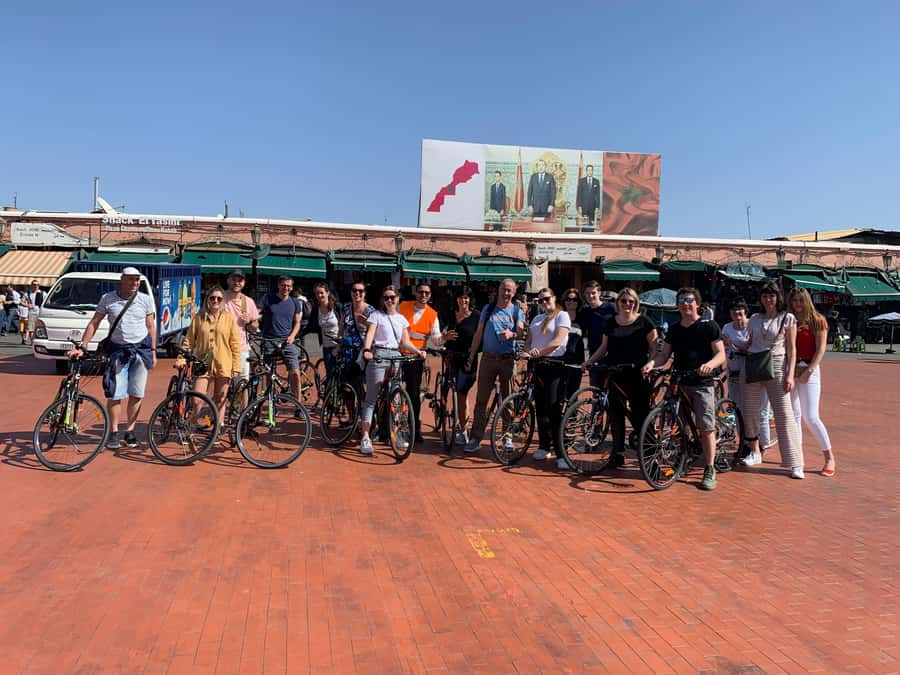
The medina occupies a large part of the tour, with sightseeing listed for several hours across the route. That does not mean you spend three hours at one monument. It means the historic center receives serious attention as you move through its streets and stop at selected places.
You can expect a mix of traditional neighborhoods, lively market areas, quieter corners, and small details that are easy to miss from a standard sightseeing vehicle. The tour is designed to take you away from the most obvious visitor routes at times, giving you a closer look at the city’s daily rhythm.
The guides add value through cultural explanation. Saadia has been praised for safely leading a group through difficult traffic and for sharing facts about Morocco, Marrakech, and Islam. Fatima has been praised for enthusiastic explanations in excellent Dutch. Those details tell you what kind of guiding to expect: not just directions, but a running explanation of what makes each area meaningful.
Photography is built into the experience. The guide can help identify good stopping points and take pictures for you, which is useful when you are riding as a couple or small group. Keep your camera ready, but do not expect every stop to be long. The ride still needs to keep moving.
A few more Marrakech days worth comparing
- Marrakech: Quad Bike Tour to Palm Oasis and Jbilat Desert
★ 4.8 · 11,831 reviews - Marrakesh: Majorelle Garden Entry Tickets
★ 4.5 · 9,651 reviews - Marrakech Quad Bike Experience: Desert and Palmeraie
★ 4.5 · 9,509 reviews - Marrakech: Balloon Flight, Berber Breakfast & Certificate
★ 4.8 · 8,164 reviews
Place des Ferblantiers and the southern medina
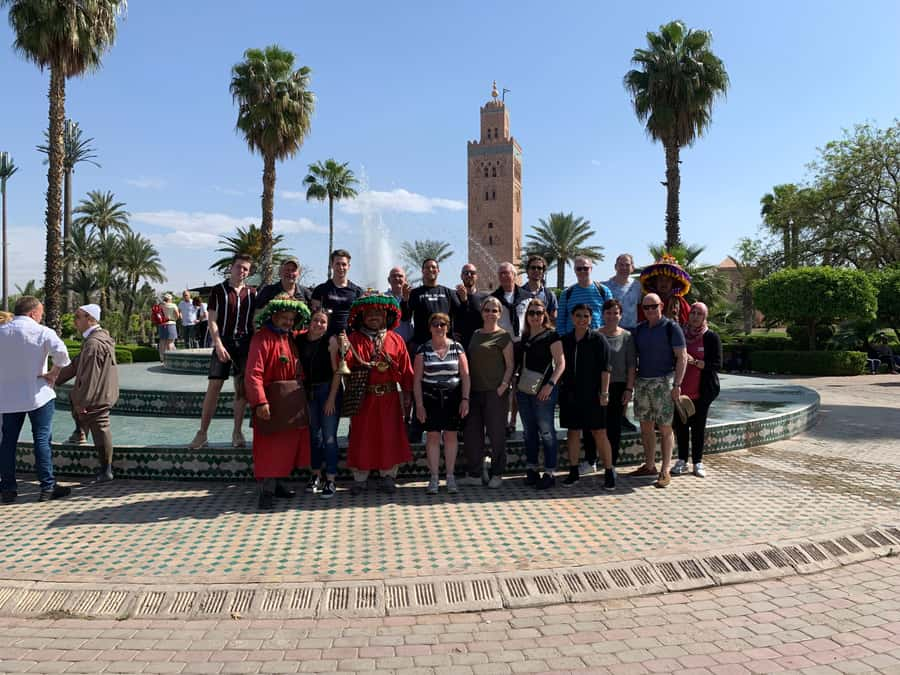
Place des Ferblantiers is one of the named stops. The itinerary gives it a short photo and sightseeing stop, reached by bicycle and guided along the way.
This square is a useful point for understanding the southern side of the medina. It connects the street experience with the city’s craft traditions and historic quarters. The stop is brief, so I would see it as a chance to take in the setting and hear context from the guide rather than as a full market visit.
A short stop can be a benefit on a bike tour. You get a clear landmark without losing too much time to one location. The downside is that anyone hoping for extended shopping or detailed browsing will need to return to the area later on their own.
This is also a point where the group format matters. In a smaller group, you can gather around the guide and ask questions easily. If the group is larger, stay close and listen carefully when the guide begins speaking.
Jemaa el Fnaa, Koutoubia Mosque, and Bab Agnaou
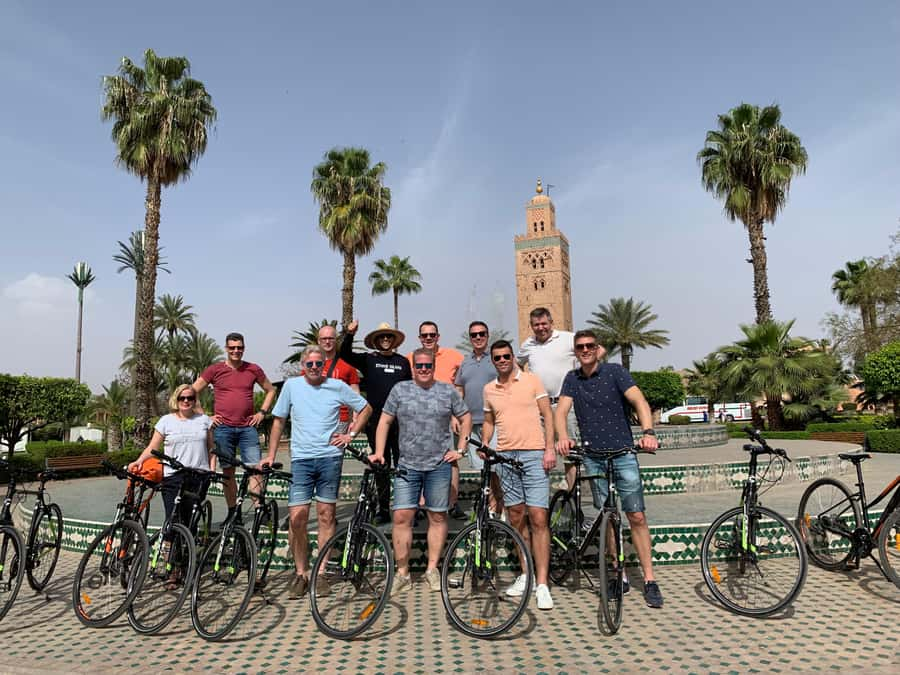
The ride continues to three of Marrakech’s best-known sights: Jemaa el Fnaa, Koutoubia Mosque, and Bab Agnaou.
Jemaa el Fnaa gives you a strong sense of the city’s public life. The tour includes a photo stop and sightseeing by bicycle. You will not be spending the whole day there, but the stop lets you connect the activity of the square with the streets you have just ridden through.
Koutoubia Mosque is another key orientation point. Its minaret is one of the clearest visual markers in Marrakech, and seeing it during a guided city ride helps you understand where the medina sits in relation to the wider city. The listed stop is short, so expect an outside view and explanation rather than a long interior visit.
Bab Agnaou brings the tour to one of the city’s important historic gates. It is a fitting place to notice how Marrakech’s walls, entrances, and royal quarters relate to the southern medina. Again, the stop is brief, so the value comes from the guide’s explanation and the chance to see the structure in context.
These stops are not isolated photo targets. They form a useful sequence: central public space, major religious landmark, and historic gateway. By the time you reach them, you have already seen enough local streets to understand more than you would from a quick taxi visit.
What the Dutch-speaking guide adds
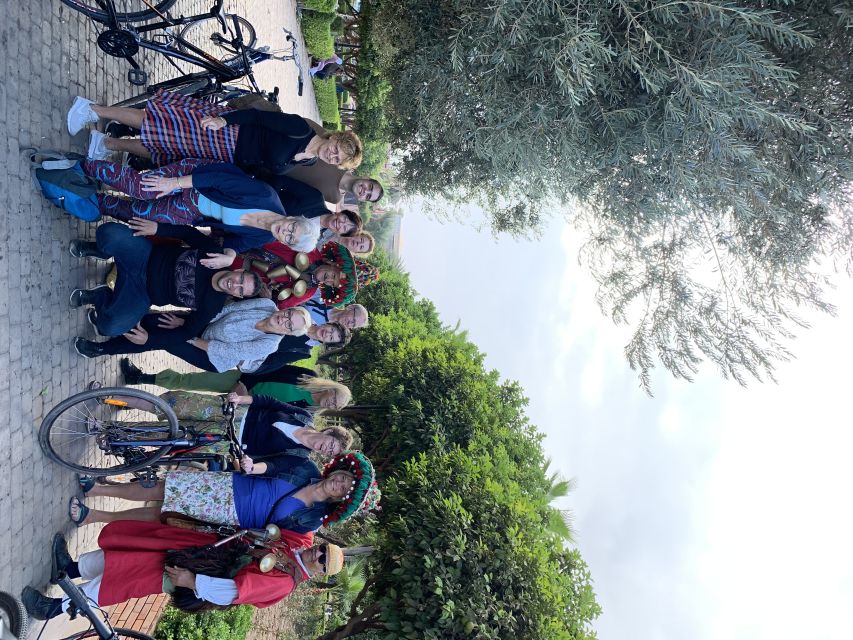
For Dutch-speaking visitors from the Netherlands and Belgium, the language is a major reason to choose this tour. City sightseeing involves quick explanations, street names, cultural details, and plenty of chances to ask follow-up questions. Hearing all of that in Dutch makes the experience easier to follow.
Saadia and Fatima are the names to look out for in the guiding team. Saadia has been praised for guiding safely through Marrakech traffic, sharing interesting facts, and taking good photographs. Fatima has been praised for speaking Dutch perfectly, explaining sights with energy, and creating a pleasant atmosphere.
The guide also speaks English, so the activity can work for mixed-language groups. The most useful questions to ask concern local customs, the role of the medina, the meaning of landmarks, and how everyday life differs between the old and new parts of the city.
I would not choose this tour only for language if you want a private, highly customized route. The experience is small-group oriented, but the actual group can vary. If privacy matters most, ask about a private option before booking.
Safety, comfort, and the traffic question
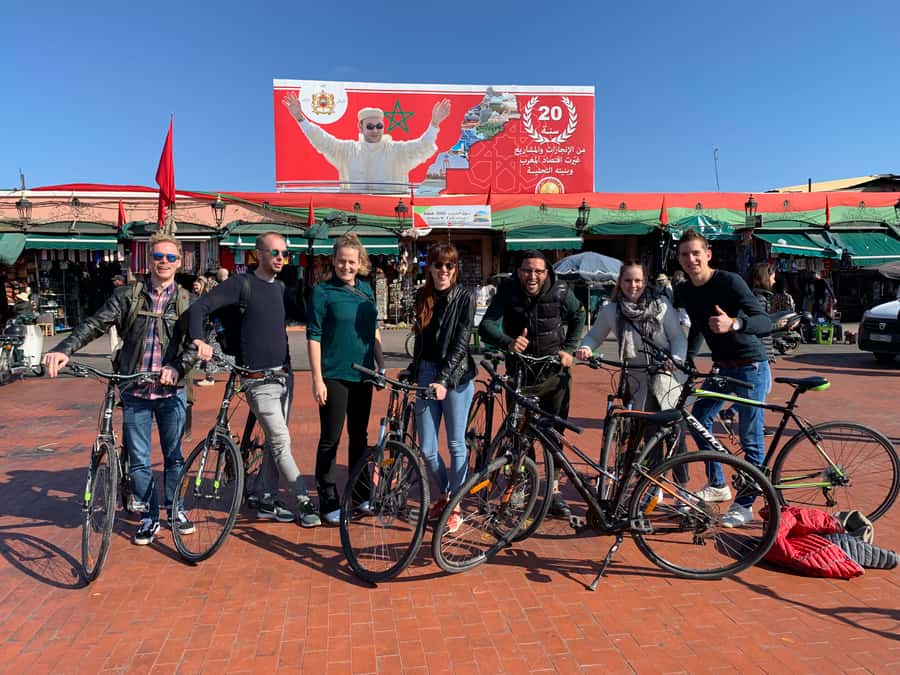
The route is selected with safety and comfort in mind, and the bicycles are described as well maintained. That is important in Marrakech, where road conditions, traffic, pedestrians, and narrow lanes can change quickly.
A guide can make the difference between an enjoyable ride and a stressful one. One especially practical detail from the experience is that Saadia was accompanied at the back of the group by her son, who watched the traffic behind the riders. This is not something you should assume will happen on every departure, but it shows the kind of group management that can be valuable in busy streets.
You should remain alert and follow the guide’s instructions. The pace is relaxed, but relaxed does not mean traffic-free. Families and casual cyclists can consider this tour if everyone is comfortable on a bike. Very young children, nervous riders, or anyone who dislikes city cycling may prefer a walking tour.
Wear practical clothes and shoes, and keep valuables secure. Food, drinks, insurance, and personal expenses are not included. The supplied details do not state helmet arrangements, so ask the provider if a helmet is important to you.
Is $40 a fair price for three hours?
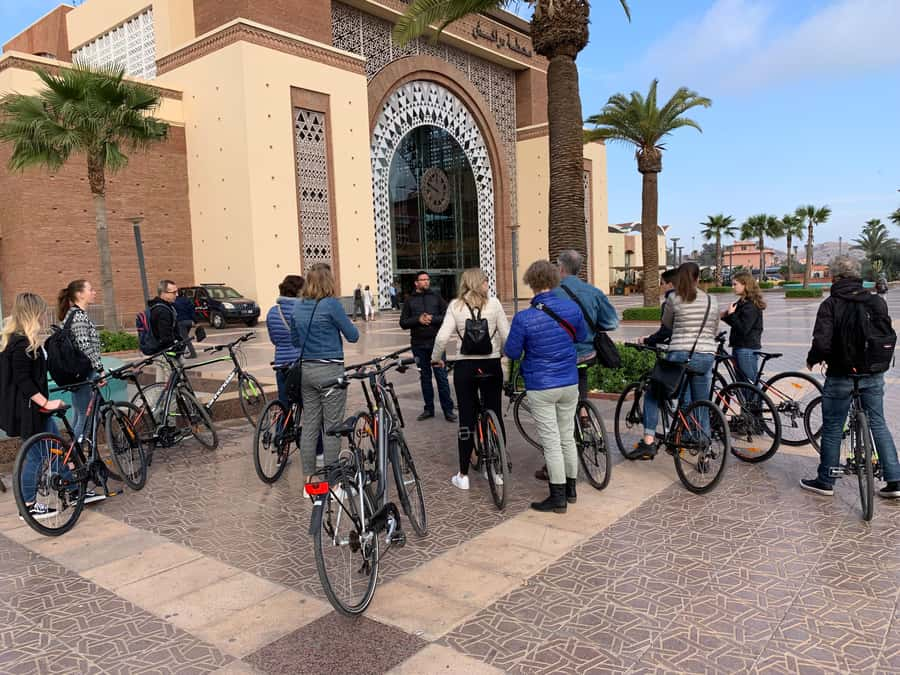
At $40 per person, I consider this good value if you want three things in one package: a bicycle, a local guide, and a useful city introduction. You are not paying only for transport. You are paying for route planning, language support, traffic guidance, cultural explanation, and the chance to cover more ground than you could comfortably walk.
The value is strongest for first-time visitors who want to understand Marrakech before exploring alone. In three hours, you see the medina and newer areas, several major landmarks, and less obvious local streets. That can save time later because you begin to recognize the city’s layout.
The price is less compelling if you only want to visit Jemaa el Fnaa, Koutoubia Mosque, and Bab Agnaou. You can see those sights independently. The tour earns its cost through the connections between them and the extra local context.
The activity has a 4.7 rating from 269 bookings, which fits the strongest parts of the offering: the guides, bicycle condition, Dutch explanations, and relaxed route. Still, the note about a group being too large is worth keeping in mind. Ask about expected group size if personal attention is central to your decision.
Who should book this Marrakech bike tour?
I would choose this tour if you:
- Want to hear city explanations in Dutch
- Prefer light activity to sitting in a vehicle
- Want both the medina and modern Marrakech
- Like local stories about culture, history, and daily life
- Are comfortable cycling in an active city
- Want a three-hour introduction rather than a full-day commitment
It also works well for couples, friends, solo visitors, and families with confident cyclists. The flexible pace makes it approachable, and the guide can help you make sense of places that might otherwise blur together.
I would hesitate if you dislike traffic, need a completely private experience, or want long visits inside individual monuments. The tour is also not designed around food tastings, shopping time, or hotel transport. Those are separate plans.
Cancellation is free up to 24 hours before the activity, and you can reserve while paying later. That gives you some flexibility, though you should still check the available start times before making plans around it.
FAQ
How long does the Dutch bike tour in Marrakech last?
The tour lasts three hours.
How much does the tour cost?
The listed price is $40 per person.
Where does the tour start?
It starts and ends at Atlas Sport Bike Shop.
Which languages are available?
The live guide speaks Dutch and English. The activity is specifically designed for Dutch-speaking visitors, with guides such as Saadia and Fatima.
What sights are included?
The route includes the medina, Place des Ferblantiers, Jemaa el Fnaa, Koutoubia Mosque, and Bab Agnaou. It also includes streets and neighborhoods in newer parts of Marrakech.
Is a bicycle provided?
Yes. A comfortable, well-maintained bicycle is included.
Are hotel pick-up and drop-off included?
No. Hotel pick-up and drop-off are not included.
Can I cancel for a refund?
Yes. You can cancel up to 24 hours in advance for a full refund.
Should you book it?
I would book this tour if you want a friendly, active introduction to Marrakech and Dutch-language guidance matters to you. The combination of old medina streets, modern neighborhoods, major landmarks, and local explanations gives you a fuller picture than a short walk around Jemaa el Fnaa.
The strongest reasons to go are the guides, the carefully planned route, and the excellent bicycle condition. Go in with realistic expectations about city traffic, short landmark stops, and the possibility that the group may be larger than ideal. For $40 and three hours, it is a practical way to get your bearings while seeing Marrakech at street level.
Just added around Marrakech
- Quad in the Palmeraie of Marrakech★ 5.0 · 41 reviews
- Marrakech Desert Camel Ride★ 5.0 · 17 reviews
- Sunset Camel Ride in the Palm Grove Of Marrakech★ 5.0 · 34 reviews
- Private Airport Transfer from or to Marrakech Menara Airport.★ 4.5 · 63 reviews
- Marrakech The History and Culture Day Trip★ 4.5 · 45 reviews
- Marrakech: Tailor-Made City Tour With Your Own Private Guide★ 4.9 · 236 reviews
- Marrakech palm grove: Sunset camel ride★ 4.8 · 194 reviews
- Sparkling Marrakech through the eyes of your local Guide★ 4.7 · 247 reviews
Cycling Tours, compared.
Guided City Cycling Tour – Culture, Colors & Charm
Read our review →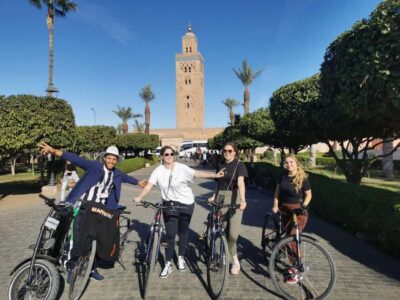
Cycling Tour in Palm Groove with Local Breakfast
Read our review →
Toubkal National Park Mountain Bike Trip w/Lunch
Read our review →
Browse the lists this tour appears in