
Reviewed · HISTORICAL TOURS
Discovery of Moroccan Culinary Heritage, History and Secrets
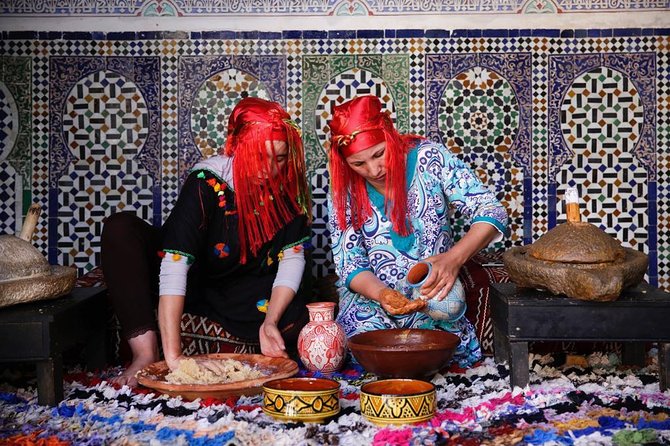
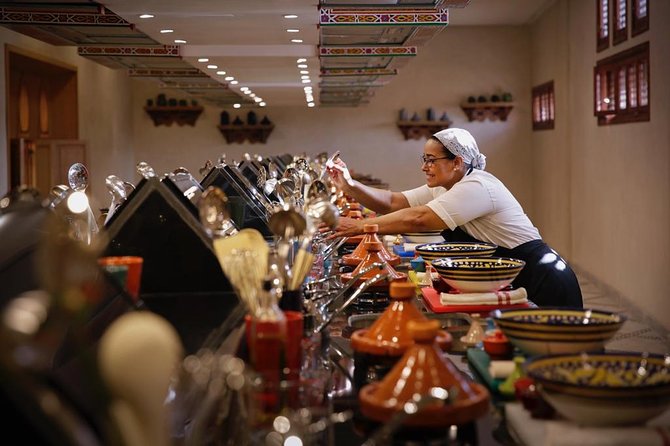
The best part of this experience is that you do more than eat Moroccan food. You handle the spices, shape the bread, visit the neighborhood bread oven, and cook under the direction of a Dada, a traditional Moroccan cook. The class takes place inside a beautifully restored riad that also houses the Moroccan Culinary Arts Museum.
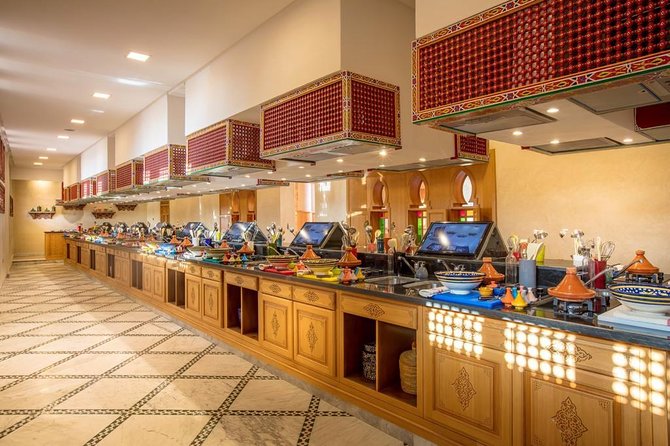
I like the purpose-built kitchen, with 34 individual stations, and the easy link between museum displays and the food on your plate. I also like the visit to the local herbalist, since it helps explain where Moroccan cooks get their spices instead of treating them as anonymous ingredients. The main point to check is the timing and language: the experience is listed at about two hours, though parts of the description call it a half-day, and one booking was conducted in French despite being reserved in English.
Key points at a glance
- Cook in a dedicated riad kitchen: Each of the 34 stations is set up for teaching, not just watching a chef work.
- Learn from a Dada: The traditional cook explains spice quantities, bread making, cooking methods, and Moroccan kitchen customs.
- Visit the food sources nearby: The route includes a bread oven and a district herbalist where spices are obtained.
- Eat what you prepare: Your cooked dishes are served on the terrace, with Moroccan tea and optional Moroccan wine.
- Add a museum visit: The restored riad presents Moroccan foods, utensils, serving customs, and cooking methods through displays and videos.
- Plan around the language detail: French or English interpretation is offered, but confirm your requested language before arrival.
A cooking class inside a Marrakech riad
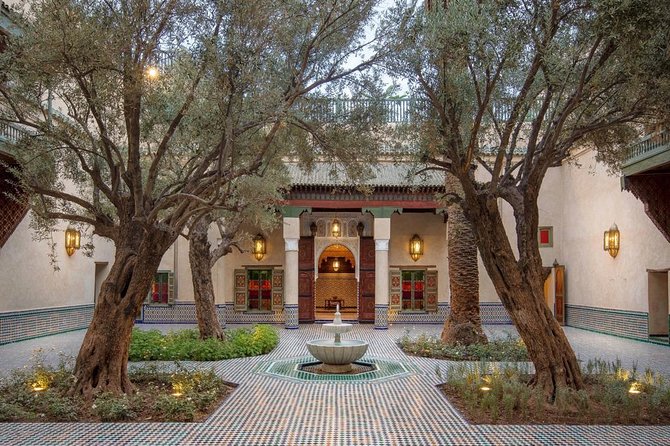
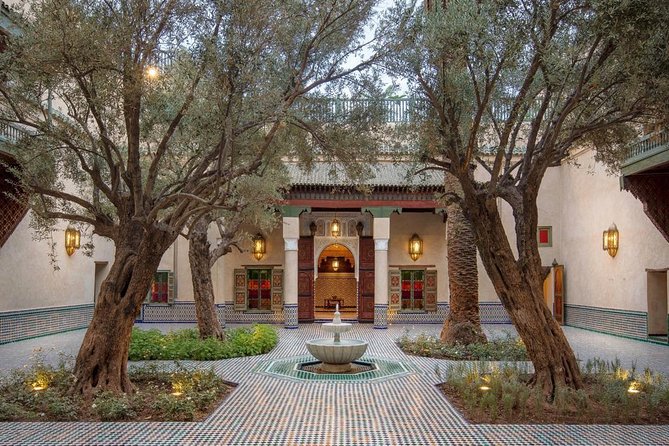
This experience begins at the Moroccan Culinary Arts Museum on Rue Riad Zitoun el Jdid, a short distance from the Bahia Palace area of Marrakech. The building is one of the main attractions. It is a restored traditional riad with courtyards, tiled surfaces, a Moroccan sitting room, and a terrace where the finished meal is served.
I would allow a few minutes to find the entrance. The meeting point is specific, and the same location is used at the end. You do not need to arrange a separate ride between the museum and the kitchen.
The reception sets the tone. You are introduced to the class, the Dada, and the interpreter if one is needed. The available language support is listed as French or English. Since one participant found that an English booking was conducted in French, I would confirm the language directly when booking, especially if clear spoken instruction is important to you.
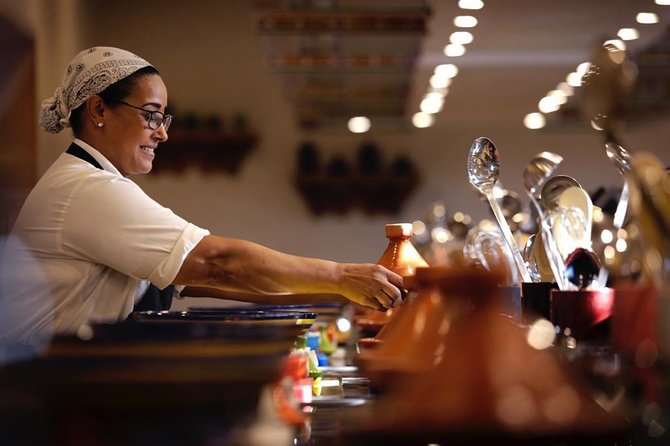
The kitchen has 34 stations, which is an unusual advantage for a museum-based class. You are not simply standing behind a chef trying to see over other people. The setup is designed for teaching, with room for practical help from staff. The maximum group size is also 34, so the class can be fairly large, but the individual stations give you something useful to do.
More Food Tours in Morocco:
- Marrakech: Street Food Tour with a Local Guide
★ 4.9 · 3,119 reviews - Marrakech: Street Food Tour by Night
★ 4.8 · 2,838 reviews - Authentic Moroccan Food Tour in Marrakech with Dinner
★ 5.0 · 1,423 reviews
Bread, spices, and the neighborhood food network
The first lesson focuses on Moroccan bread. Bread is not just a side dish in Morocco. It is part of the daily table, and learning how it is made gives you a better sense of how meals are eaten and shared.
You also visit a bread oven and a local herbalist. This is one of the more useful parts of the experience because it connects the cooking lesson to the surrounding neighborhood. You see the places linked to the food, rather than learning every ingredient from a printed recipe card.
The herbalist visit gives context to cumin, saffron, ginger, paprika, cinnamon, and other seasonings used in Moroccan kitchens. The important lesson is not simply memorizing spice names. It is learning that Moroccan cooking depends on careful amounts and combinations. The Dada explains how to dose the spices, and that small detail can make the difference between a dish that tastes balanced and one that is heavy with seasoning.
The neighborhood stop may be brief, but it helps explain the food in a way a standard restaurant meal cannot. You begin to understand why Moroccan cooking often tastes layered rather than hot or aggressively spiced.
What you actually cook at the 34 stations
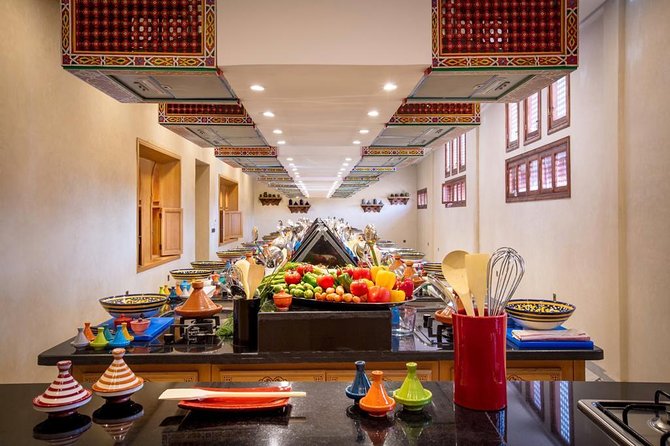
The exact menu can vary, but the class is designed around familiar Moroccan dishes such as tajine, couscous, salads, and dessert. One described class prepared two salads, a tajine, and a dessert. Another included chicken tajine and traditional Moroccan salads.
That range gives you a good introduction. Moroccan salads are often cooked or seasoned vegetable dishes rather than the raw lettuce salad many visitors expect. They can show you how preserved flavors, herbs, olive oil, and spices are used in small portions alongside a main course.
Tajine is the centerpiece for many people. You learn how the ingredients are arranged and cooked slowly in the distinctive earthenware vessel. The lesson also helps clarify a common point of confusion: tajine is both the name of the dish and the cooking pot, while tangia is a different Marrakech specialty. A good class should make that distinction clear, and this experience is designed to do so.
Couscous is also listed among the dishes associated with the course. The description does not promise that every class prepares every dish, so you should not book expecting a fixed menu of tajine, couscous, bread, salads, and dessert all in one short session. Ask about the day’s menu if a particular dish matters to you.
The best feature here is the hands-on format. You do not simply watch a demonstration and then receive a plate. You take part in preparation, get verbal and practical help, and then eat the food you made. That makes the class useful after you return home, provided you pay attention to the proportions and cooking steps.
The Moroccan Culinary Arts Museum
The museum adds a second layer to the visit. It occupies the same restored building and presents Moroccan cooking through food displays, utensils, dining furniture, serving pieces, images, information panels, and videos.
You can see how food was prepared and served, and how Moroccan hospitality is expressed around the table. The museum has been described as covering several floors, with a terrace at the top. The displays are modern and carefully arranged, though some sections may feel more introductory than scholarly.
I would think of the museum as a helpful companion to the class, not a replacement for a major history museum. It gives you the essentials: ingredients, cooking methods, dining customs, and the role of bread, tea, and shared dishes. If you already know Moroccan cuisine well, you may move through it quickly. If this is your first visit to Morocco, it gives you useful background before you start cooking.
The building itself may be the strongest reason to include the museum. The riad setting, courtyard, and restored rooms provide a quieter contrast to the nearby Bahia Palace. The museum is also a sensible choice if you want cultural context without committing to a long guided tour.
Some options include tasting without the cooking class. That shorter visit can include samples of Moroccan salads and other foods. For the full experience described here, make sure you are booking the cooking course rather than only museum admission or a tasting ticket.
More Historical Tours in Morocco:
- Marrakech Historical and Cultural Tour – Half Day City Tour
★ 4.5 · 1,180 reviews - Fez: Guided Walking Tour of the Historic Medina
★ 5.0 · 359 reviews - Historical Marrakech Walking Tour
★ 5.0 · 198 reviews - Full-day Historical Meknes Volubilis and Moulay Idriss Tour
★ 4.5 · 196 reviews
Moroccan tea and the meal on the terrace
After the cooking, you sit down to eat the food prepared during the class. This is an important part of the experience. You get to judge the results while the instructions are still fresh, and you can compare the finished dishes with what you have seen in the museum.
Moroccan tea is included in the program. The tea ceremony is more than a quick drink at the end. It is a small lesson in hospitality and presentation, and it gives the class a proper finish.
The meal takes place on the terrace, when conditions allow. The setting should appeal to you if you want a calm place to sit after working in the kitchen. Bottled water, lunch, and coffee or tea are listed as included, but one participant reported being charged separately for bottled water and not being offered tea or coffee. I would confirm the inclusions at reception rather than assume every item will appear automatically.
Moroccan wine is offered as an optional discovery with the meal. Alcohol is not included in the price. If you choose wine, expect to pay extra, and do not count it as part of the advertised lunch package.
Does the $69.79 price offer good value?
At $69.79 per person, this is more expensive than simply visiting the museum. Older admission prices were reported in Moroccan dirhams, with a separate, lower-cost tasting option. The cooking experience costs more because it combines instruction, food, museum access, a neighborhood visit, and a prepared lunch.
I think the price is reasonable if you want an active cultural experience rather than a meal alone. A restaurant can give you a better-known version of a tajine, but it will not teach you how to make it, explain the spice balance, or show you the local bread oven.
The value is less convincing if your main interest is only seeing the museum. The displays are useful, but some parts may feel brief, and you can explore the building more cheaply through a museum-only ticket if that option is available for your date.
The class is also a good use of time for families. A 12-year-old took part successfully in one class, and the kitchen format gives younger participants a clear task. Children should be comfortable following instructions and working around food preparation areas.
Timing, group size, and practical details
The experience is described as approximately two hours, while other wording presents it as a half-day cooking activity. That is a meaningful difference. The cooking, museum visit, neighborhood stops, tea ceremony, and lunch can easily feel longer than a simple two-hour museum appointment.
I would confirm the start time, expected finish time, and exact menu before booking. This matters if you have a palace visit, food tour, or evening reservation planned afterward.
The maximum group size is 34. That is not an intimate private lesson, but the 34-station kitchen helps keep the activity practical. You should still expect a social class rather than one-on-one instruction.
The meeting point and end point are the same: the Moroccan Culinary Arts Museum at Rue Riad Zitoun el Jdid, Marrakesh 40000. The site is near public transportation, and service animals are allowed.
Free cancellation is available when you cancel at least 24 hours before the start time. Within 24 hours, the amount paid is not refunded, and changes are not accepted. Confirmation is normally sent at booking, though reservations made within one day of the activity are subject to availability.
Who should book this Marrakech cooking experience?
I would recommend it if you want to understand Moroccan food through your hands, not just your appetite. It suits first-time visitors, home cooks, families with older children, and anyone who wants a cultural activity near the Bahia Palace.
It is especially useful for you if you are curious about the difference between tajine and tangia, want to learn how Moroccan bread is made, or hope to recreate salads and spice blends at home.
You may want a different activity if you prefer a small private class, a fixed menu, or detailed recipe instruction in English. The language should be confirmed, and the advertised timing is not perfectly consistent. You should also choose the museum-only or tasting option if cooking is not your priority.
Should you book it?
Book this experience if you value hands-on cooking, local food customs, and a beautiful riad setting more than a polished restaurant meal. The bread oven, herbalist visit, Dada-led instruction, tea ceremony, and terrace lunch give the class real substance.
Before paying, confirm three things: your language, the class duration, and the day’s menu. If those details suit your plans, the $69.79 price buys a useful introduction to Moroccan cuisine and a meal you helped create, not just another stop on a sightseeing route.
FAQ
Where does the cooking experience begin?
It begins at the Moroccan Culinary Arts Museum on Rue Riad Zitoun el Jdid, Marrakesh 40000, Morocco.
Where does the experience end?
The activity ends back at the Moroccan Culinary Arts Museum, the same place where it begins.
How long does the experience last?
The tour is listed as approximately two hours, though the description also refers to it as a half-day cooking experience. Confirm the expected duration when booking.
How much does the experience cost?
The listed price is $69.79 per person.
What food and drinks are included?
Bottled water, lunch, coffee or tea are listed as included. The program also includes a Moroccan tea ceremony.
Is Moroccan wine included?
No. Moroccan wine is optional, and alcoholic beverages are not included in the price.
What dishes might I learn to prepare?
The class focuses on Moroccan dishes such as tajine, couscous, salads, bread, and dessert. The exact menu can vary.
Is the class offered in English?
French or English interpretation is offered. Confirm your preferred language before arrival, since the language used in a class may not always match the booking request.
What is the cancellation policy?
You can cancel at least 24 hours before the start time for a full refund. Cancellations or changes made within 24 hours are not accepted for a refund.
Just added around Morocco
- 4 Day desert trip from Fes to Marrakech and 2 night in merzouga★ 4.5 · 19 reviews
- Walking Tour in Old Medina Fez with Official Guide★ 5.0 · 77 reviews
- Private Excursion to Volubilis Meknes and Moulay Idriss from Fez★ 5.0 · 30 reviews
- 2 Days Sahara Group Tour Fez to Marrakech via Merzouga★ 5.0 · 49 reviews
- Full-Day Tour from Fez to Vollubulis, Moulay Idriss Zerhoun, Mèknes★ 5.0 · 32 reviews
- Best Tour In Fez Médina With ( Private )Tour Guide★ 5.0 · 32 reviews
- happy day trip of Volubilis and Meknes from Fez★ 5.0 · 19 reviews
- Private Meknes Volubilis -Mouly Idriss day trip from Fez★ 5.0 · 49 reviews
Historical Tours, compared.
Marrakech Historical and Cultural Tour – Half Day City Tour
Read our review →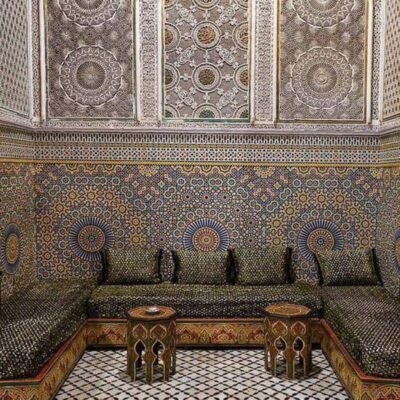
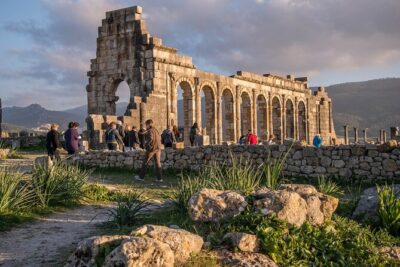
Full-day Historical Meknes Volubilis and Moulay Idriss Tour
Read our review →
Casablanca Cultural Tour: Medina, Views & Local Delights
Read our review →
Casablanca to Fez: Scenic & Historical Day Trip with Lunch
Read our review →
Half Day Guided Tour in Marrakech History & Culture
Read our review →
Discover the secrets of the Medina of Fez: guided cultural tour (private)
Read our review →Browse the lists this tour appears in