
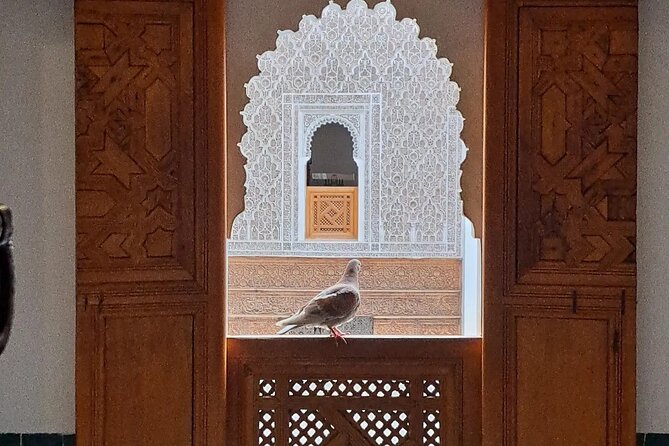
Reviewed · HISTORICAL TOURS
Half Day Guided Tour in Marrakech History & Culture
Marrakech reveals itself best on foot, and this tour puts you right in the middle of its old city: from the 12th-century Koutoubia minaret to the crowded lanes of the souks. You get the main sights, local craft traditions, and a guide to help make sense of the Medina’s maze.
I like two things here. First, the route mixes grand buildings with working markets, so you see both the polished monuments and everyday craft in leather, metal, wood, fabric, and ceramics. Second, guides such as Ibrahim and Mo adjust their explanations to your interests and offer practical shopping advice.
The main consideration is time. Three hours is enough for a useful first look, but the tour covers several major places, and entrance lines or extended shopping stops could make the pace brisk. Bahia Palace and Ben Youssef Madrasa also require separate admission fees.
Key points at a glance
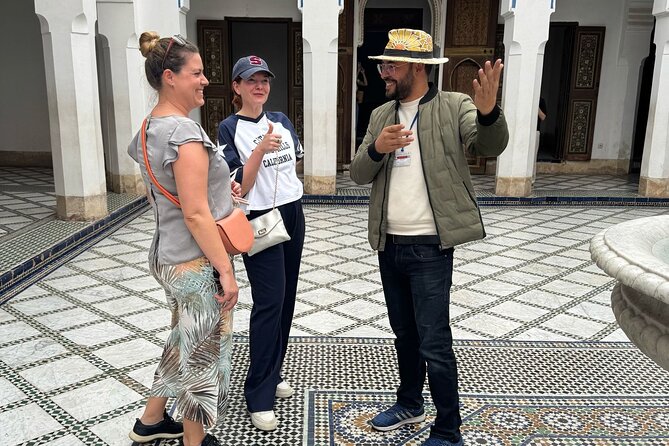
- Koutoubia Mosque begins the story: See Marrakech’s famous minaret and its surrounding gardens without paying an entrance fee.
- Bahia Palace adds royal splendor: Allow extra money for admission and expect carved wood, mosaics, courtyards, and gardens.
- The souks are part of the lesson: Learn how spice, fabric, jewelry, dyeing, leather, and carpet markets work.
- Jemaa el-Fnaa brings the city together: See the square’s food stalls, juice stands, performers, musicians, and sellers.
- Ben Youssef Madrasa rewards architecture fans: Its courtyard, student rooms, tilework, and carved wood make it a strong final stop.
- The group can reach 20 people: A certified local guide leads the walk, with mobile booking and free cancellation up to 24 hours before departure.
A useful first walk through Marrakech’s Medina
This is a good orientation tour if Marrakech is new to you. In roughly three hours, you move from a landmark that is easy to recognize to palaces, public squares, narrow market lanes, and a former religious school.
That variety matters. A tour focused only on monuments can leave you with beautiful photographs but little sense of how the old city works. A walk focused only on shopping can feel like a sales circuit. This route tries to connect the two, explaining the crafts and trading customs as you pass through the markets.
The meeting point is at Argana, near Jemaa el-Fnaa, at number 18, Znikat Rahba. The tour returns to the same place. Since the Medina has narrow lanes and a complicated layout, arriving at the stated meeting point with some extra time is sensible, especially if this is your first day in Marrakech.
The price is $23.23 per person, which is fair for a guided half-day walk that includes a certified local guide. You should budget a little more for Bahia Palace and Ben Youssef Madrasa. The listed cost for each is under 10 euros for Bahia and under 5 euros for the madrasa, while Koutoubia Mosque and Jemaa el-Fnaa do not require an admission ticket for this visit.
More Historical Tours in Marrakech
- Marrakech Historical and Cultural Tour – Half Day City Tour
★ 4.5 · 1,180 reviews - Historical Marrakech Walking Tour
★ 5.0 · 198 reviews - Marrakech: Historical Discovery Tour
★ 4.1 · 87 reviews
Koutoubia Mosque and the city’s most familiar landmark
The tour starts at Koutoubia Mosque, whose minaret dominates the Marrakech skyline. The building dates to the 12th century and has Andalusian architectural details, making it an ideal place to begin a history walk.
Your guide explains the mosque’s role as a marker for people approaching the city and discusses its influence on local architecture. This is more useful than simply hearing a date and taking a photograph. Koutoubia gives you a fixed point in a city that can otherwise feel like a swirl of lanes and changing sights.
The surrounding gardens provide a quieter setting and good views of the minaret. The stop lasts about 30 minutes, and there is no admission charge. The mosque itself is an active place of worship, so the focus here is on the exterior, the minaret, the gardens, and the story of the monument.
I like this opening because it gives you a visual reference for the rest of the walk. When you later turn through the Medina, the minaret helps you understand where you are in relation to the old city.
Bahia Palace, courtyards, and carved ceilings
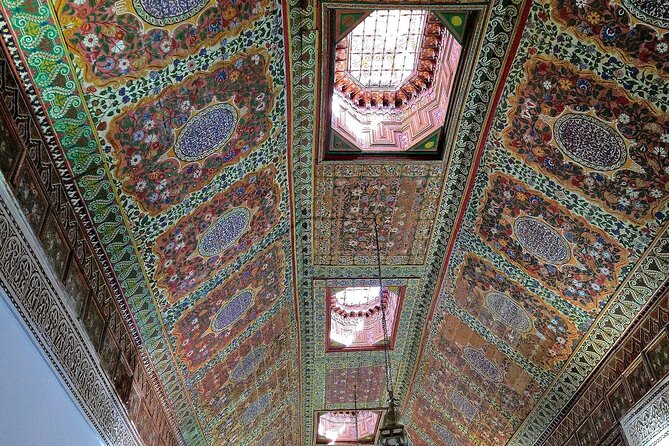
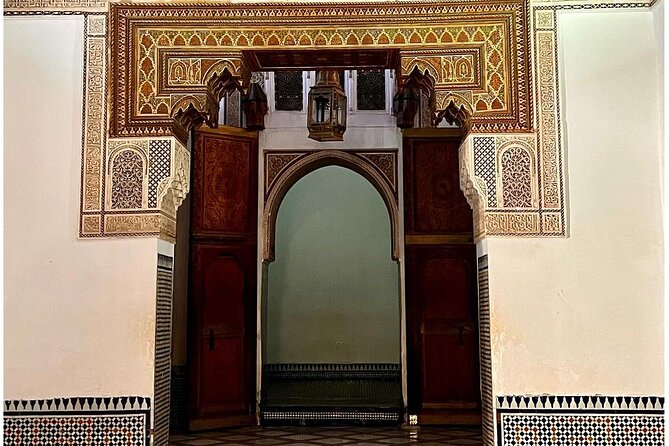
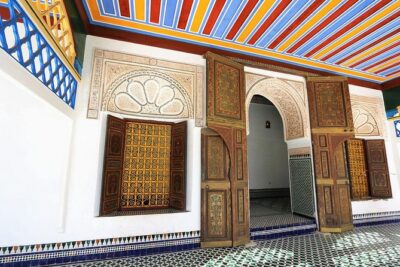
Bahia Palace is the tour’s main look at royal architecture. You enter through a grand doorway and move through gardens, interior courtyards, decorated rooms, carved wooden ceilings, mosaics, and sculpted details.
The palace is best understood slowly. The courtyards create a sequence of open and enclosed spaces, while the decoration shows how much care went into surfaces that might be passed in only a few seconds by a hurried visitor. A guide can point out construction details and explain the palace’s place in Marrakech’s royal past.
The scheduled stop is about one hour, making it one of the longer parts of the tour. Admission is not included, with the cost listed as less than 10 euros. That extra charge is reasonable if you enjoy architecture, but it is worth knowing before you book because the advertised tour price does not cover every major sight.
Bahia Palace can also affect the pace of the day. If you spend time looking closely at the mosaics and ceilings, you may have less time for shopping or wandering later. I would treat the palace as an important part of the route, not simply a quick photo stop.
Jemaa el-Fnaa, Marrakech’s public stage
From the palace, the walk reaches Jemaa el-Fnaa, the central square of Marrakech. This is where the city’s public life gathers, with spice sellers, musicians, street performers, fresh juice stands, restaurants, colorful shops, and snake charmers.
The guide explains how the square developed and why it remains central to life in the Medina. Jemaa el-Fnaa is also recognized as a UNESCO World Heritage Site. Its appeal is not one single building. It is the changing mix of people, sounds, food, commerce, and performance.
The planned visit lasts about 30 minutes. That is enough for an introduction and a chance to get your bearings, but not enough to experience every corner of the square at different times of day. If you want to return later for food or people-watching, the tour ends back at the nearby meeting point.
I would pay attention to the guide’s advice here. The square can feel confusing at first, and practical tips about where to look, how the stalls work, and how to approach shopping are useful for the rest of your stay.
A completely different kind of day in Marrakech:
- Marrakech: Quad Bike Tour to Palm Oasis and Jbilat Desert
★ 4.8 · 11,831 reviews - Marrakesh: Majorelle Garden Entry Tickets
★ 4.5 · 9,651 reviews - Marrakech Quad Bike Experience: Desert and Palmeraie
★ 4.5 · 9,509 reviews - Marrakech: Balloon Flight, Berber Breakfast & Certificate
★ 4.8 · 8,164 reviews
The souks, where craft becomes part of the tour
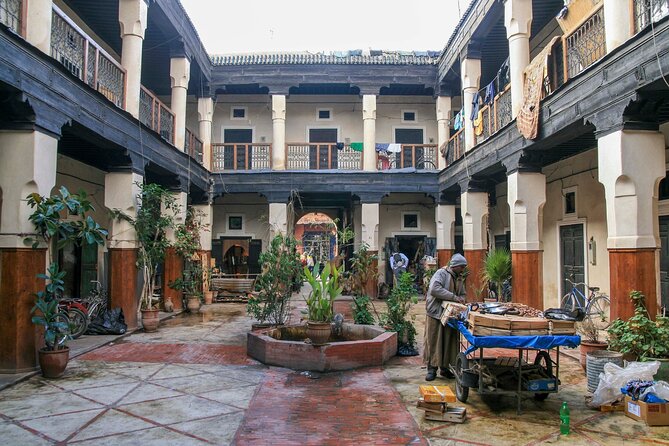
The souks are not one single market. They are a network of lanes and specialized areas, including spice, fabric, jewelry, leather, metal, wood, and ceramic sellers.
Your guide explains how these markets have traditionally been organized and how the objects connect to local craft. You might see artisans working with leather, metal, wood, or ceramics, rather than simply seeing finished goods in a shop window. That difference gives the market visit more meaning.
The lanes can be tight and busy, and the selection changes from one passage to the next. This is where a local guide is especially useful. You can ask what an item is used for, how it is made, and whether a price seems reasonable before you start bargaining.
Bargaining is presented as part of the shopping tradition, not an obligation to buy. The practical advice from guides such as Ibrahim and Mo is one of the strongest reasons to take this walk early in your stay. You can use what you learn later when you return to the souks on your own.
The tour may also include stops connected with carpets, lanterns, leather, and spices. If shopping is your main interest, make that clear to your guide at the start. The experience is designed to adapt to different interests, and the guides have been praised for answering questions individually rather than giving only a fixed speech.
The Dyers’ Souk and a riot of fabric color
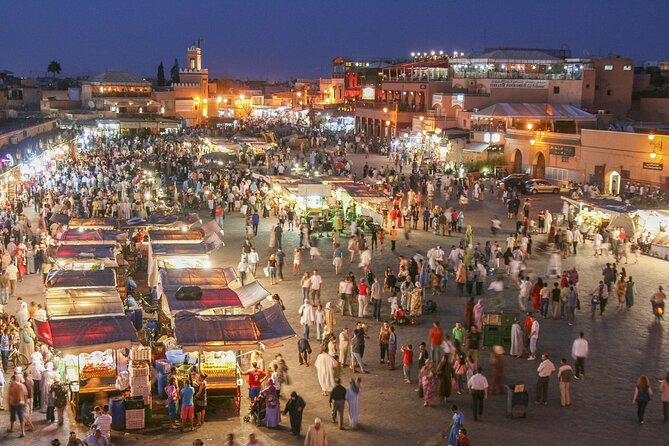
The Souk of Dyers focuses on one of the Medina’s older trades. Here, artisans dye fabrics in vats of natural colors and hang the finished material to dry.
The attraction is visual, but the process is the real point. You can watch how pigments are applied and how the fabrics are handled as they move through the work. Cloth hanging in many shades gives the area a strong sense of place, while the guide explains how dyeing has supported Marrakech’s craft economy over the centuries.
This stop may be more appealing to you if you like seeing how objects are made. It is less about buying a souvenir and more about understanding the labor behind one. As with the other souks, the working setting can be narrow and active, so stay close to the guide and keep your attention on the route.
The Carpet Souk and the art of asking questions
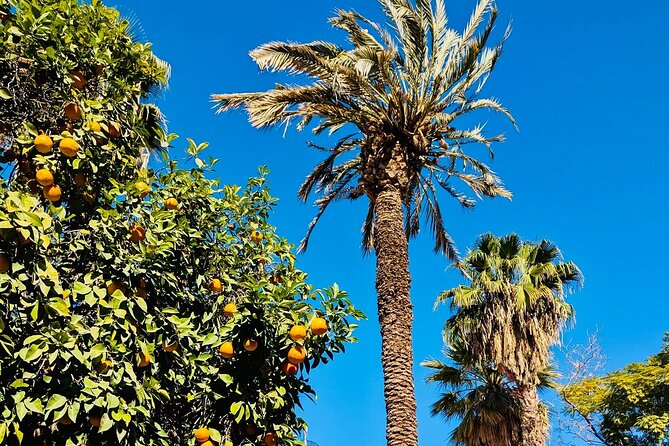
The Marrakech Carpet Souk offers Berber and Arabic rugs in many patterns, colors, and sizes. The guide explains weaving methods and points out symbols used in the designs.
Carpet shopping can be confusing if you do not know what you are seeing. A rug may reflect a regional style, a weaving method, or a design tradition that is not obvious at first glance. The guide’s explanations give you a better basis for comparing pieces.
You may be invited to watch merchants unroll rugs. You can ask about the materials, construction, origin, and price, then decide if you want to bargain. You are not required to purchase anything, but you should expect the possibility of a sales conversation in a market built around commerce.
I would not book this tour solely to buy a carpet. Prices and quality require time, and a three-hour walk cannot replace careful research. But if you want a first introduction to Moroccan rugs and the customs around buying them, this is a useful setting.
Ben Youssef Madrasa and the quietest stop
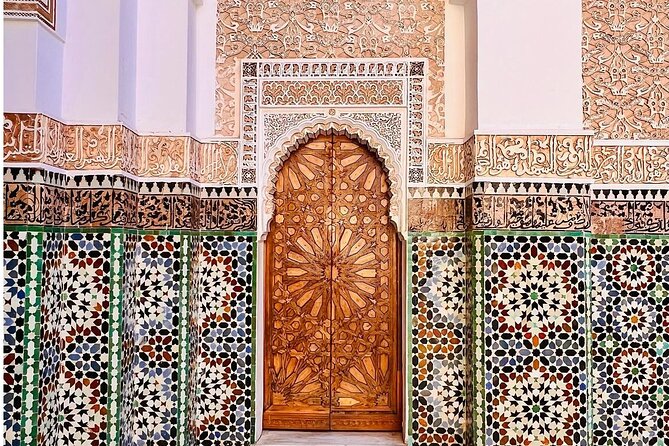
Ben Youssef Madrasa provides a calm contrast to the market lanes. This former Quranic school was founded in the 14th century and once welcomed students from across North Africa.
The visit includes the inner courtyard, larger open spaces, and small student cells. The architecture features curved forms, delicate mosaics, and finely worked wood. The building connects decoration with education, showing that this was not only a beautiful structure but also a place where students lived and studied.
The planned stop lasts about one hour, and admission costs less than 5 euros. Like Bahia Palace, it is not included in the tour price.
For many people, this will be the most memorable architectural stop. The courtyard gives you room to pause and take in the details after the close quarters of the souks. If you enjoy Islamic architecture or historic schools, you will likely want to use the full hour here.
The main drawback is the total schedule. Koutoubia, Bahia Palace, Jemaa el-Fnaa, the souks, and Ben Youssef Madrasa make a full route. If you stop often for photographs, shopping, or questions, the walk may feel faster than the advertised three-hour format suggests.
What the guides add to the experience
The tour is led by a certified local guide, and the guide’s personality will shape much of the day. Ibrahim has been described as attentive to individual questions and able to offer practical advice about shopping. Mo is noted for detailed explanations of Moroccan culture and history, along with help choosing places to shop. The provider is Mohcine.
The strongest feature is not simply the number of sights. It is the chance to ask questions while you are standing in the place being discussed. You can ask about a palace ceiling inside Bahia, a weaving pattern in the Carpet Souk, or the role of a market lane while you are there.
The group can include up to 20 people. That is small enough for a normal walking tour, though not as personal as a private visit. If you want long conversations at every stop, a smaller group would offer more room. For a reasonably priced introduction, the maximum size is still manageable.
Who should book this Marrakech walk
I would recommend it to a first-time visitor who wants an organized introduction to the Medina without committing to a full-day excursion. It suits people who enjoy history, architecture, local crafts, and practical shopping advice in equal measure.
It also works well near the beginning of a Marrakech stay. The route gives you enough orientation to return to Jemaa el-Fnaa or the souks later on your own. The guides’ advice about shopping can be especially useful before you begin serious bargaining.
You may want a different format if your priority is a slow, detailed palace visit, a dedicated food tour, or a long carpet-buying session. This experience covers a lot of ground, so its value comes from range rather than extended time at one site.
Most people can take part, and the tour is near public transportation. Service animals are allowed. Confirmation arrives at booking, a mobile ticket is provided, and you can cancel for a full refund up to 24 hours before the start time. Changes or cancellations inside that window are not refunded.
Should you book it?
Book this tour if you want the major Medina sights, a look at working craft markets, and a guide who can explain both history and shopping customs for about $23.23, plus monument admission.
I especially like it for a first day in Marrakech. You get Koutoubia’s landmark view, Bahia Palace’s decoration, Jemaa el-Fnaa’s public energy, the souks’ handmade goods, and Ben Youssef Madrasa’s quiet architecture in one compact walk.
Skip it if you prefer to set your own pace or already know the Medina well. For everyone else, the route offers solid value, useful orientation, and enough local context to make later wandering more rewarding.
FAQ
How long does the Marrakech history and culture tour last?
The tour lasts approximately three hours.
Where does the tour start?
It starts at Argana, J2H6+CPV Jamâa el-Fnna, number 18, Znikat Rahba, Marrakech 40000, Morocco.
Where does the tour end?
The activity ends back at the same meeting point.
Are entrance fees included?
No. Entrance to Bahia Palace costs less than 10 euros, and entrance to Ben Youssef Madrasa costs less than 5 euros. Koutoubia Mosque and Jemaa el-Fnaa are listed with no admission charge for this tour.
How much does the tour cost?
The listed price is $23.23 per person.
How many people can join the tour?
The maximum group size is 20 people.
Is a mobile ticket available?
Yes. The experience includes a mobile ticket, and confirmation is provided at the time of booking.
Can I cancel for a full refund?
Yes. You can cancel at least 24 hours before the local start time for a full refund. Cancellations or changes made less than 24 hours before the start time are not refunded or accepted.
More Half-Day Trips in Marrakech
- Marrakech: Half-Day Desert Quad Tour with Camel Ride
★ 4.5 · 2,398 reviews - Marrakech: Half-Day Camel Ride in Palm Grove
★ 4.6 · 1,257 reviews - Marrakech: Private Guided Half-Day City Tour
★ 5.0 · 1,249 reviews - Half-Day Cooking Class with Local Chef Laila in Marrakech
★ 5.0 · 952 reviews
Just added around Marrakech
- Quad in the Palmeraie of Marrakech★ 5.0 · 41 reviews
- Marrakech Desert Camel Ride★ 5.0 · 17 reviews
- Sunset Camel Ride in the Palm Grove Of Marrakech★ 5.0 · 34 reviews
- Private Airport Transfer from or to Marrakech Menara Airport.★ 4.5 · 63 reviews
- Marrakech The History and Culture Day Trip★ 4.5 · 45 reviews
- Marrakech: Tailor-Made City Tour With Your Own Private Guide★ 4.9 · 236 reviews
- Marrakech palm grove: Sunset camel ride★ 4.8 · 194 reviews
- Sparkling Marrakech through the eyes of your local Guide★ 4.7 · 247 reviews
Historical Tours, compared.
Marrakech Historical and Cultural Tour – Half Day City Tour
Read our review →
Full-day Historical Meknes Volubilis and Moulay Idriss Tour
Read our review →
Casablanca Cultural Tour: Medina, Views & Local Delights
Read our review →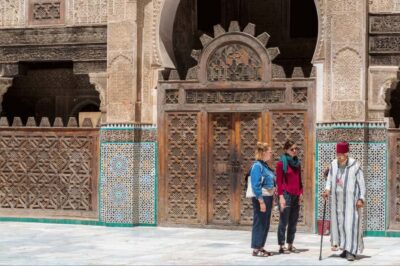
Casablanca to Fez: Scenic & Historical Day Trip with Lunch
Read our review →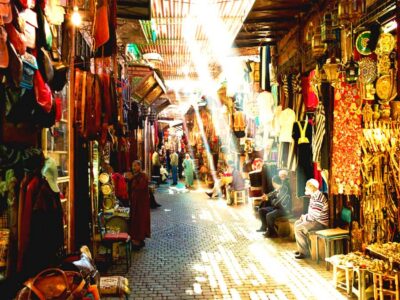
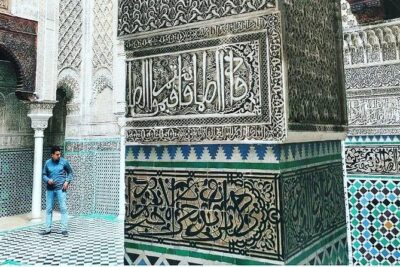
Discover the secrets of the Medina of Fez: guided cultural tour (private)
Read our review →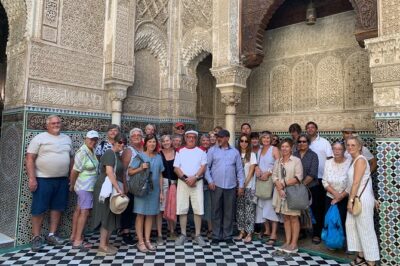
History and culture with Fes Medina private tour guide
Read our review →Browse the lists this tour appears in