
Reviewed · IMPERIAL CITIES TOURS
10D 9N Private Morocco Tour From Casablanca By Imperial Cities And South Desert
The best thing about this 10-day private Morocco tour is its sweep. You move from Casablanca’s Atlantic edge to blue Chefchaouen, imperial Fez and Meknes, cedar forests, the Sahara, mud-brick kasbahs, and red Marrakech without having to arrange each transfer yourself. The camel ride into Erg Chebbi and the night in a Berber-style camp are the trip’s big storybook moment.
I like the private format, which lets your driver adjust stops, hotels, and even the number of days. I also like the human side of the trip: guides such as Said, Khalil, Omar, and Hssaine are repeatedly praised for safe driving, patience, local insight, and helping families feel at ease. The main drawback is the pace. You cover a lot of Morocco, so several days involve long drives and quick visits.
Key points to know before booking
- Nine hotel or riad nights are included, with a traditional desert camp replacing one regular night.
- Chefchaouen, Fez, the Sahara, Ait Ben Haddou, and Marrakech give you a broad first look at Morocco.
- Your party travels privately, rather than sharing a vehicle with strangers.
- The Sahara night includes a camel ride, sunset, dinner, music, and a private tent with toilet and shower.
- Lunches, monument admissions, drinks, tips, and some dinners cost extra, so budget beyond the listed price.
- You can request changes, including different accommodation levels, extra activities, more days, or a different arrival and departure city.
What $1,221.24 per person actually buys
At $1,221.24 per person, this is not simply a sightseeing transfer service. The price covers private transport, fuel, airport or hotel transfers, a driver-guide, nine nights of lodging, daily breakfast, three dinners, bottled water in the vehicle, local guides in Fez and Marrakech, the camel ride, and the desert camp.
That package can be good value if you want a single arrangement covering most of Morocco. Long-distance transport alone would take time and planning, and the route includes several areas where a local driver is especially useful, such as the Atlas passes and the desert roads.
Still, keep your spending plan realistic. Lunches are not included, drinks are extra, entrance fees are extra, and tips for the driver, local guides, hotel staff, and restaurant staff are not included. The tour description also refers to three included dinners, while the desert night is clearly one of them. Ask for the exact dinner schedule before you pay.
Accommodation can be adjusted, with three- and four-star options mentioned. That flexibility is useful, but it also means you should confirm the exact riads, hotels, room setup, and meal plan in writing. The listed price is best understood as a starting point for a private, customizable trip rather than a final figure for every possible upgrade.
More Multi-Day Tours in Casablanca
- 10 Day Desert Tour From Casablanca via the Imperial Cities
★ 5.0 · 254 reviews - 7 Days Luxury Desert Tour From Casablanca to Marrakech via fez -Camel trekking
★ 5.0 · 146 reviews - 8 Days Morocco Private Tour; Imperial Cities and the Desert
★ 5.0 · 87 reviews
Days 1 and 2: Casablanca, Rabat, and the road to blue Chefchaouen
Your first day is intentionally light. After arriving at Mohammed V Airport or Casablanca’s port, you are driven to a hotel in the city center. The listed arrival transfer takes about 30 minutes, depending on your arrival point.
Casablanca is Morocco’s economic capital, but this tour gives it limited time. The main sight is the Hassan II Mosque, a remarkable coastal building and one of the largest religious structures in the world. It is open to non-Muslim visitors, though admission is not included. Plan for this as a guided visit rather than a casual photo stop.
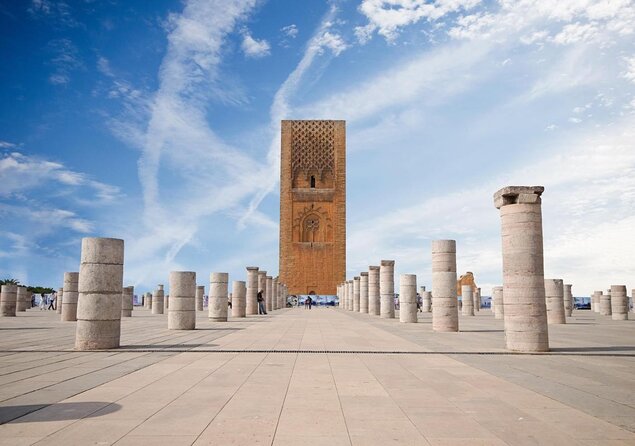
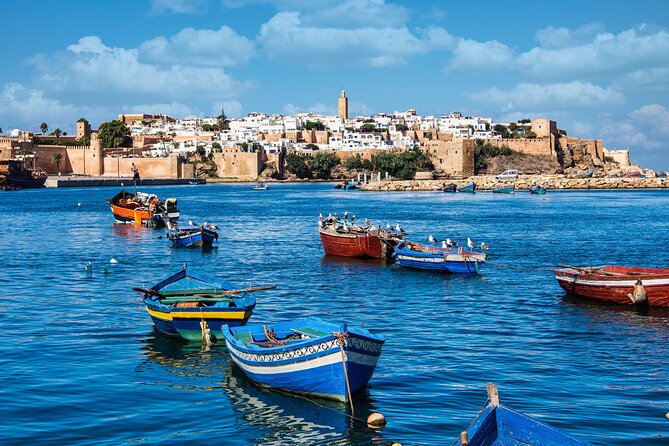
You then continue to Rabat, the administrative capital. The route includes the Kasbah of the Oudayas, Hassan Tower, and the Mausoleum of Mohammed V. These stops provide a useful introduction to Morocco’s royal and religious traditions before the trip turns north toward the Rif Mountains.
The afternoon drive to Chefchaouen is one of the first long road sections. You pass through or near Ouazzan and reach the blue-painted mountain town later in the day. The schedule gives only a short listed stop for the Chefchaouen excursion, but the overnight stay means you can still enjoy the town after arrival.
This is a day when a private vehicle matters. You are not forced to return to Casablanca or wait for a large group, and the company says the route can be adjusted. Even so, you should expect a full day with several hours on the road.
Day 3: Chefchaouen, Volubilis, and Meknes
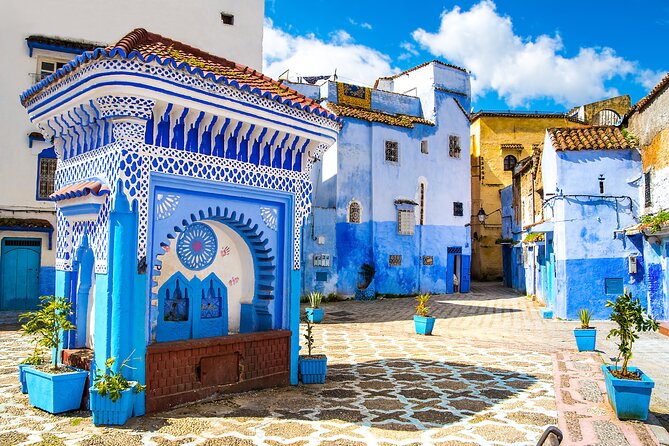
Chefchaouen rewards an early start. Its old medina has steep, narrow lanes, blue doors, whitewashed walls, and a mountain backdrop. You visit Plaza Utta el-Hammam, the restored kasbah, the souks, and the spring at Ras El Maa.
The town’s Spanish and Moorish influences give it a feel unlike the southern cities. The appeal is less about checking off major monuments and more about walking slowly, taking photographs, sitting in the square, and noticing daily life around the lanes. The blue paint is not confined to one street, so allow yourself time to wander.
From Chefchaouen, the tour crosses the Rif Mountains to Volubilis, an ancient Roman town and UNESCO World Heritage Site. The mosaics, basilica, temple, and triumphal arch are the main sights. Admission is not included, and the exposed site can feel demanding in hot weather, so a hat and water are sensible.
After lunch, you visit Moulay Idriss, a holy town important to Moroccan pilgrims, then continue to Meknes. Here you see Bab Mansour, the granary, the Sahrij basin, the old medina, and Place el-Hedim. Meknes can feel calmer than Marrakech, which makes its monumental gates and old markets easier to appreciate.
You finish the day in Fez, staying in a traditional riad in the medina. This is another long day, and the combination of three historic places means you should not expect a detailed visit at every stop. The payoff is variety: Roman ruins, a pilgrimage town, and an imperial city in a single stretch.
Day 4: A full day in Fez with a local guide
Fez is one of the tour’s strongest cultural stops. The city visit begins outside the old medina with the Royal Palace Gate, the Jewish Quarter, or Mellah, and a ceramics cooperative. The cooperative visit can be interesting if you want to see Moroccan craft production, though shoppers should remember that browsing may lead to sales pressure.
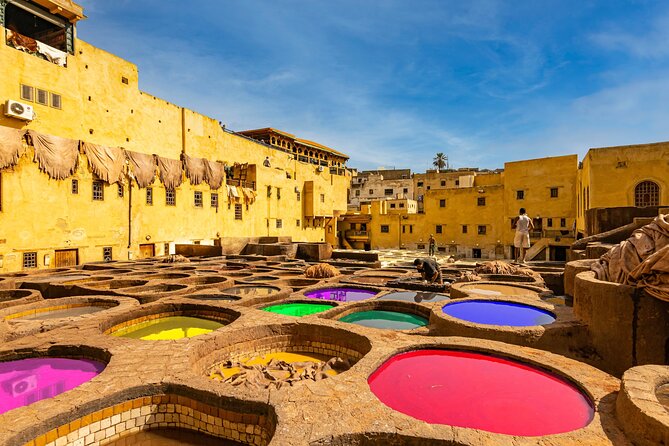
Inside Fez el-Bali, a local guide takes you through major sites including Bou Inania Medersa, the Blue Gate, the Karaouiyine Mosque, the Chouara Tanneries, Seffarine Square, Attarine Medersa, and the Nejjarine Fountain. Some entrances are not included, so ask your guide which sites require payment.
The tanneries are among the city’s most memorable sights. You may be offered mint to hold near your nose because of the strong smell from the dyeing vats. The medina’s lanes are crowded and easy to lose your bearings in, so having a local guide is a real advantage here.
Later, you visit the Merenid Tombs for a broad view over the city. The tour gives Fez a full day, unlike some other stops, and that is appropriate. You have time for architecture, crafts, markets, and the city’s layered religious and commercial life without trying to squeeze everything into an afternoon.
More Imperial Cities Tours in Casablanca:
- 8D Morocco Luxury Private Tour From Casablanca By Imperial Cities
★ 5.0 · 39 reviews - 7-Day Imperial Cities – Private Group
★ 5.0 · 19 reviews - From Marrakech: Imperial Cities of Morocco 3-Day Tour
★ 4.8 · 806 reviews - Rabat Imperial City Day Trip from Casablanca
★ 4.5 · 353 reviews
Day 5: Cedar forests, the Ziz Valley, and the Sahara camp
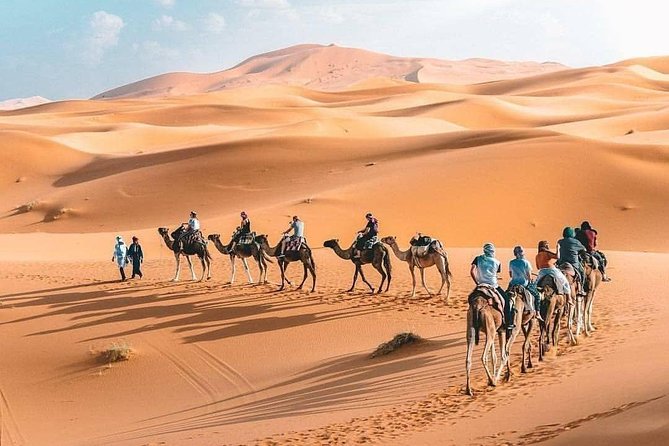
This is one of the longest and most scenic driving days. You leave Fez for the Middle Atlas and stop in Ifrane, a tidy mountain town often compared with a Swiss resort. You then pass through cedar forest, with a chance to see Barbary macaques and take photographs.
The monkey stop is popular, but treat the animals with care and follow local guidance about feeding. Ifrane and the forest also provide a sharp change from the stone lanes of Fez.
After lunch in Midelt, the road continues over the Talghomt Pass toward the Ziz Valley. A panoramic stop looks over palm groves and the oasis below. This is a good place to pause and appreciate how quickly Morocco’s scenery changes.
By the time you reach Merzouga, camels are waiting near the Erg Chebbi dunes. You ride across the sand with a guide, stop to watch sunset from a high dune, and continue to a desert camp. Dinner, Berber music around a fire, and a starry sky follow.
The camp is described as a luxury nomad Berber tent with a private toilet and shower. That makes the night more comfortable than a basic desert camp, but temperatures can still change sharply after dark. Pack a warm layer, even if the afternoon feels hot.
Day 6: Merzouga, nomad life, and the desert’s other side
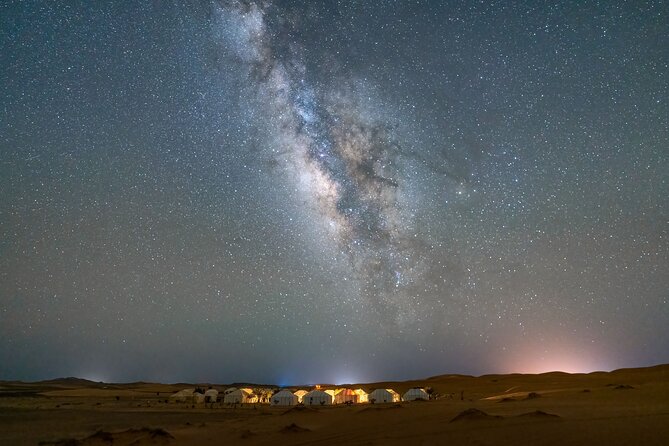
Set an alarm for sunrise. The dunes are quiet at that hour, and the low light gives the sand a softer color. After breakfast, you spend the day exploring by vehicle rather than returning immediately to the main road.
The excursion includes Lake Merzouga, a place associated with exotic birds, and a visit to nomadic families living in the desert with their animals. You share tea and see how people maintain a traditional way of life in a demanding setting. Approach this respectfully. It is a meeting with real people, not a staged museum display.
The route also follows the track once used for the Paris-Dakar Rally and reaches the Mifis mines, once exploited by France. At Khamlia village, you hear music from Black Berber residents whose roots extend to Mali and Niger. This gives the desert day more substance than a camel ride alone.
You should still understand that the day is dependent on road conditions, timing, and the local plan. The description gives the main stops but not exact visit lengths. Ask your driver what can be shortened if you prefer more time with the nomad families or at Khamlia.
Day 7: Rissani, fossils, Todra Gorge, and Dades Valley
You leave the Sahara for Rissani, once an important stop on trans-Saharan caravan routes. Its large souk operates on Tuesdays, Thursdays, and Sundays, so your experience depends on the day of the week. If your timing matches, this is a strong chance to see regional trade beyond the main tourist cities.
Next comes Erfoud, known for fossils, crystals, and stones. The marble workshop is open to visitors. This can be a worthwhile craft stop, but it is also a shopping opportunity, so decide in advance what you want to buy and what you are only viewing.
The road continues through villages and palm-filled valleys to Todra Gorge. The cliffs rise dramatically on both sides of the narrow passage, making this a memorable natural stop and a popular place for climbers. You have lunch in the town before continuing to Dades Valley.
Dades brings a different kind of scenery, with mud villages, kasbahs, and the rock formation called Monkey’s Fingers. Your overnight hotel overlooks the valley. After several road-heavy days, the valley stop gives you a chance to slow down, though the day itself remains full.
Day 8: Rose country, Skoura, Ait Ben Haddou, and Marrakech
The route passes through El Kelaa M’Gouna, known as Rose Town. In spring, rose petals are gathered and processed into rosewater or sent to perfume industries. The annual rose festival takes place in May, but the town is part of the route outside festival season too.
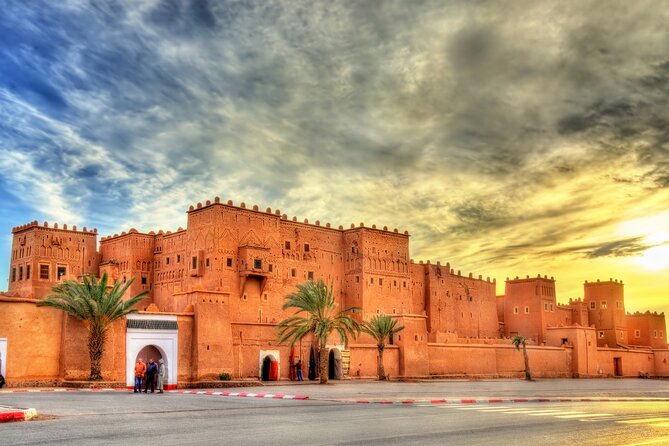
Near Skoura, palm groves surround old kasbahs. Kasbah Amridil is the main listed visit, and admission is not included. This is the kind of stop where a guide can help explain how a fortified home worked, rather than leaving you to admire only the exterior walls.
You then continue through Ouarzazate, often called Hollywood of Africa because of its film studios, before reaching Ait Ben Haddou. This UNESCO World Heritage site is Morocco’s most famous kasbah setting and has appeared in many films. You have time to explore and eat lunch in the village.
The final drive crosses the High Atlas through a pass at about 2,260 meters. Mountain views and Berber villages line the route before you reach Marrakech in the evening. This is another demanding day, but it delivers one of the clearest changes in scenery on the whole trip.
Day 9: Marrakech’s palaces, tombs, souks, and main square
Marrakech receives a proper city tour on your final full day. A local guide takes you to Bahia Palace, the Saadian Tombs, Ben Youssef Koranic School, and the traditional souk.
Bahia Palace is a lesson in courtyards, tilework, carved plaster, and cedar ceilings. The Saadian Tombs are more compact, while Ben Youssef offers a look at religious education and decorative Moroccan design. The souk is large and busy, so keep your group together and agree on a meeting place with your guide.
After lunch near the main square, you visit Koutoubia Tower and Jardin Majorelle. The itinerary lists admission fees for some Marrakech sights as extra, so check the day’s costs before entering.
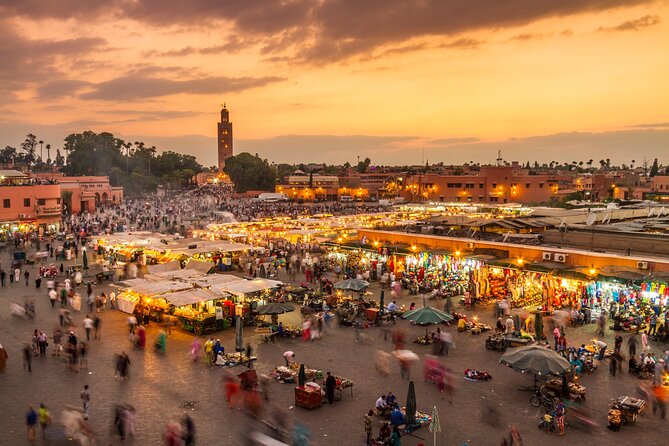
Jemaa el-Fnaa is best seen at more than one time of day. It changes from a market area into an evening gathering place, and the atmosphere can be intense. Keep valuables secure, stay alert around unsolicited services, and use your private guide for practical advice.
Day 10: Departure from Marrakech or Casablanca
The final day is a transfer day. After breakfast, the company drives you to the airport in Marrakech or Casablanca, depending on your flight and agreed route. The activity description allows different arrival and departure points, which is useful for an open-jaw trip.
The schedule lists Jardin Majorelle on this day, but the departure transfer may leave little time for a full visit. Confirm whether the garden belongs on Day 9 or Day 10, especially if your flight is in the morning.
The private guide makes the difference
The strongest practical reason to choose this trip is the driver-guide relationship. Past guests have singled out Said, Khalil, Omar, Hssaine, and Ibrahim for being punctual, careful on the roads, patient with children, and willing to add reasonable stops.
That does not mean you can assume a particular guide will be assigned. Ask about guide availability when booking if this matters to you. The private setup also gives you a better chance to stop for photographs, adjust meal timing, or spend longer at a place that catches your interest.
The vehicle carries fresh bottled water, and airport pickup and drop-off are included. The tour begins at 9:00 a.m., but arrival-day arrangements can vary by flight or port schedule.
Who should book this Morocco tour?
I would choose this trip if you want a broad first visit to Morocco and prefer having transport, lodging, and major sightseeing arranged together. It suits couples, families, and small private groups who value flexibility and do not want to manage long intercity journeys themselves.
I would hesitate if you prefer slow travel. The route includes several full driving days, and you will not have extended free time in every city. A shorter itinerary focused on Marrakech, Fez, and the desert would be easier on your body.
The free cancellation policy allows cancellation at least 24 hours before the start time for a full refund. Poor weather may lead to a new date or full refund. This tour requires good weather, and changes within 24 hours are not accepted.
FAQ
Is this a private tour?
Yes. Only your own party participates, and private transport is included.
How long does the tour last?
The experience lasts approximately 10 days and includes nine nights of accommodation.
Where does the tour start and finish?
It starts in Casablanca, with pickup from Mohammed V Airport, the port, or a hotel. Departure can be arranged from Marrakech or Casablanca, depending on your flight and agreed plan.
Are meals included?
Daily breakfast is included, listed as 10 breakfasts. Three dinners are included, including dinner at the desert camp. Lunches, drinks, and some dinners are not included.
Is the camel ride included?
Yes. A camel ride across the Erg Chebbi dunes is included, along with one night in a desert camp.
Are attraction entrance fees included?
No. Entrance fees for monuments are not included. This applies to several stops, including the Hassan II Mosque, Volubilis, Meknes monuments, Fez sights, Kasbah Amridil, and some Marrakech attractions.
Can the itinerary be changed?
Yes. The tour is described as customizable. You can request more or fewer days, different three- or four-star accommodation, extra activities, excursions, or different arrival and departure locations.
Should you book it?
Book this tour if you want Morocco’s greatest hits in one private journey, with a real desert night and a driver who can help connect the many pieces. The value is strongest for families or small groups who would otherwise need to arrange cars, hotels, guides, and desert transport separately.
Before booking, confirm your exact hotels, guide assignment, included dinners, entrance-fee budget, and the amount of driving you are comfortable with. If you accept the busy pace, this route gives you an unusually wide look at Morocco, from Atlantic cities and imperial medinas to cedar forests, Sahara dunes, and mountain kasbahs.
Just added around Casablanca
- Exclusive tour of Casablanca with access to the Hassan II Mosque★ 5.0 · 205 reviews
- Your Private Casablanca Transfer★ 5.0 · 52 reviews
- Casablanca Airport Transfer from hotel in Casablanca★ 5.0 · 18 reviews
- 14 Days From Casablanca- Morocco Grand Tour★ 5.0 · 24 reviews
- Casablanca City Tour: Hassan II Mosque, Medina & Hidden Gems★ 4.5 · 38 reviews
- Marrakeck City tour from Casablanca all the day around trip★ 5.0 · 35 reviews
- Religious Casablanca: Private Spiritual Tour Including Hassan II Mosque Visit★ 5.0 · 33 reviews
- Casablanca Night Tour with Andalusian Dinner Show★ 4.5 · 25 reviews
Imperial Cities Tours, compared.
3-Days Trip from Marrakech to Chefchaouen via Imperial Cities
Read our review →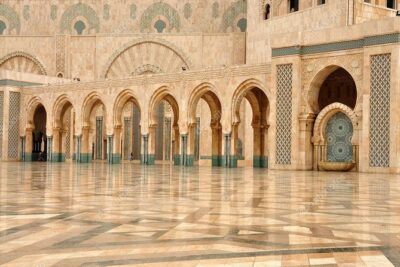
10-days Private tour in Morocco: Sahara Desert + Imperial Cities
Read our review →Browse the lists this tour appears in