
Reviewed · IMPERIAL CITIES TOURS
10-days Private tour in Morocco: Sahara Desert + Imperial Cities
Morocco’s biggest reward is its sharp change of scenery, and this 10-day private route gives you plenty of it: Atlantic city streets, blue-painted Chefchaouen, Roman ruins, Atlas passes, Sahara dunes, and Marrakech’s night market. You move at your own group’s pace, with private transport and city guides for the main medinas.
I like the balance of guided sightseeing and free time, especially in Fez and Marrakech. I also like that the desert stay is more than a quick camel photo: you visit Rissani and Khamlia, see the dunes at sunset, and spend the night in a luxury tent. The drawback is the pace. Several days involve long drives, and admission fees for major sights are not included.
Key points at a glance
- Private travel from Casablanca to Marrakech: Your group has its own air-conditioned vehicle and can adjust the starting and ending point.
- A full Sahara stay: Merzouga includes a camel ride, sunset on the dunes, desert activities, and an overnight camp.
- Strong city coverage: Rabat, Chefchaouen, Meknes, Fez, and Marrakech all receive time on the route.
- Nine breakfasts and three dinners included: You still choose many lunches and dinners yourself, which keeps the food plan flexible.
- Four-star hotels, riads, and a luxury tent: The lodging mix changes with the region and gives the trip variety.
- Good fit for private groups: You can set the pace more easily than on a large coach tour, though the driving days remain substantial.
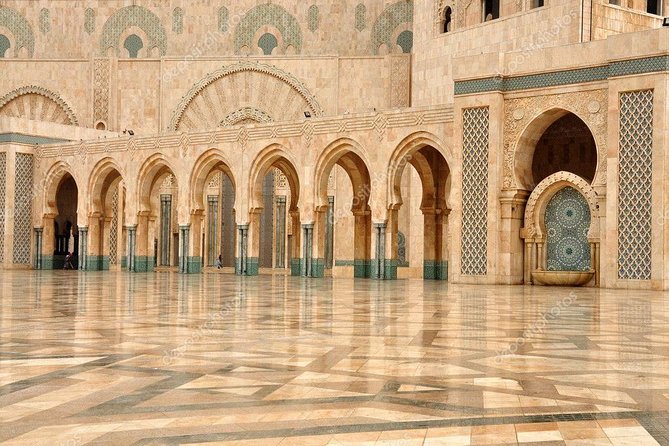
Casablanca begins with Morocco’s grandest modern mosque
The tour opens at Casablanca airport, where your guide meets you and takes you into the city. The first major sight is Hassan II Mosque, a striking building beside the Atlantic and one of the few mosques in Morocco open to non-Muslim visitors.
Plan on about an hour here. A guided visit helps explain Muslim customs, religious practice, and the design choices behind the building. The admission fee is not included, so budget separately for this and the other paid monuments later in the trip.
You may also have time for Rick’s Café, a restaurant and piano bar designed to recall the setting from the film Casablanca. It is a themed stop rather than an old film location, but its courtyard setting, arches, balconies, and old-style details make it a pleasant extra for movie fans.
The route then continues to Rabat. This first day is not overloaded with sightseeing, but airport arrival, the mosque, and the transfer to the capital still make it a useful orientation day.
More Imperial Cities Tours in the Sahara Desert:
- 8-Day Morocco Adventure: Imperial Cities & Sahara Desert Trek
★ 5.0 · 37 reviews - Private 11 Day Tour From Casablanca Imperial Cities Sahara Desert
★ 5.0 · 18 reviews - From Marrakech: Imperial Cities of Morocco 3-Day Tour
★ 4.8 · 806 reviews
Rabat combines royal monuments with a blue-and-white kasbah
Rabat feels more open and measured than Morocco’s larger tourist centers. Your guide introduces the city walls, broad avenues, green spaces, and the remains of its historic quarters.
The Hassan Tower is a short stop, but its unfinished scale gives you a sense of the ambitious mosque complex planned here. Nearby, the Mausoleum of Mohammed V is more polished and ceremonial. The building honors the sultan associated with Morocco’s independence, and the mounted guard at the entrance adds to the formal setting.
Kasbah des Oudaias provides a welcome change. Its white-and-blue homes, orange trees, flowers, and old defensive walls create a compact area that is easy to explore on foot. I would use this time to slow down and notice the details rather than rushing from one monument to the next.
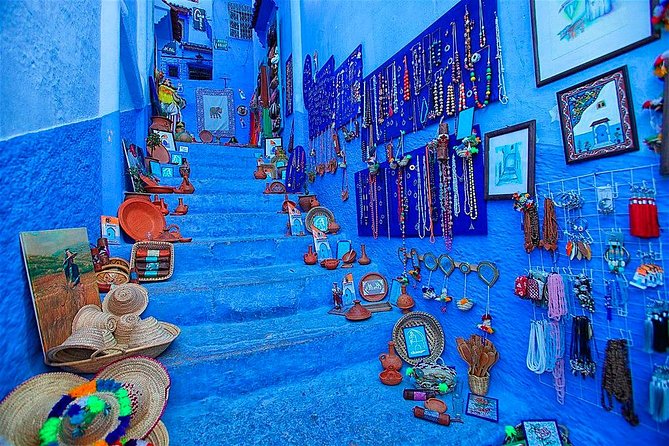
After Rabat, you head north to Chefchaouen. Six hours is a generous block for the blue city, though the drive and walking time are part of that period. The medina is orderly by Moroccan standards, with lanes leading toward Hammam Square and the main mosque.
Chefchaouen is also known for handicrafts and goat’s cheese. The blue paint is the city’s signature, but the real pleasure is wandering without a strict checklist. Since this is a private tour, you can ask for more time in the lanes or move on when the crowds and shopkeepers become tiring.
Roman Volubilis and imperial Meknes add historical range
The next day links two very different sites before reaching Fez. Volubilis preserves Roman ruins that once served as an important administrative center in North Africa outside Egypt. Allow about two hours, and expect a separate admission charge.
The site is especially worthwhile because it breaks up the long transfer and gives you a view of Morocco that is neither medieval nor modern. You can see the remains in an open setting rather than inside a city, with columns, foundations, and surviving details that make the Roman period easier to picture.
Meknes follows, with about two hours for the imperial city. Sultan Moulay Ismail wanted Meknes to rival the great cities of North Africa, earning it the nickname Versailles of the Maghreb. A local guide explains the city’s stories and major sights.
By late afternoon, you reach Fez for a short panoramic look. This is a sensible preview, but it is not enough for the city itself. The next day is the important one.
Fez rewards a full morning inside its old medina
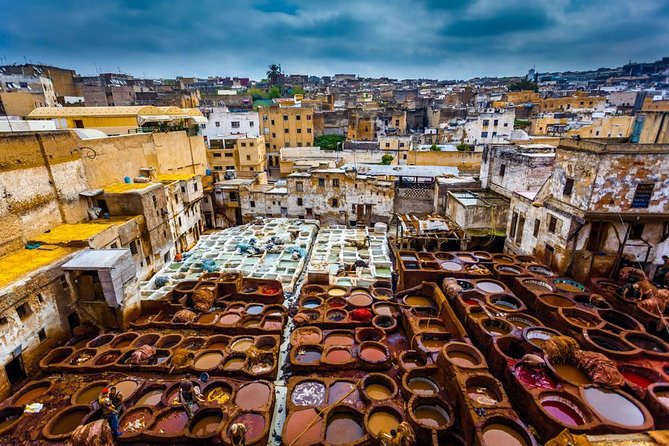
Fez’s medina is the trip’s most demanding walking stop and one of its best. A dedicated city guide leads you through lanes, religious schools, palaces, the Jewish quarter, and other historic sites. The medina has more than 9,000 streets, so going in without a guide would make it easy to miss important details or lose time.
The city reached its high point in the 13th century and became a center of learning. Its old university is among the world’s oldest, and the medina still feels like a working part of the city rather than a preserved museum.
Wear comfortable shoes and expect uneven streets, close quarters, and a morning that can run into the afternoon. The guided time gives you structure, but you should still ask for pauses when a courtyard, shop, or architectural detail catches your eye.
Admission charges for museums and monuments are not included. That keeps the base price from covering sights you may not enter, but it means you should carry extra funds for the places you choose.
For dinner, Clock Café is suggested as an option. Its menu includes Moroccan specialties and unusual dishes such as a camel hamburger, and its cultural program may include storytelling, film nights, and Arabic calligraphy workshops. It is a useful choice if you want more than a standard hotel meal, but dinner is not included here.
A few more the Sahara Desert days worth comparing
- From Marrakech: 3-Day Merzouga and Sahara Desert Tour
★ 4.9 · 15,308 reviews - From Marrakech: Merzouga 3-Day Desert Safari with Food
★ 4.7 · 12,232 reviews - 3 Days Desert Tour From Marrakech To Merzouga Dunes & Camel Trek
★ 5.0 · 10,125 reviews - 3-Day Marrakech to Merzouga Desert Tour: Camel Rides & Overnights
★ 5.0 · 8,734 reviews
The Atlas route leads from cedar forests to the Sahara
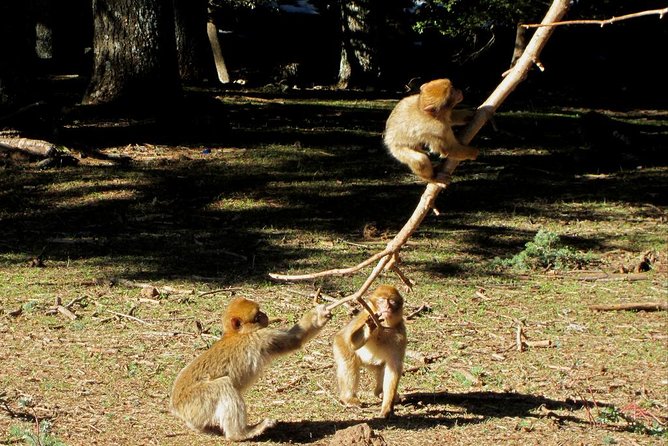
Day five is a scenic transfer day, and you should judge it by the variety of the route rather than by the number of formal attractions. You pass through the cedar forests near Azrou and Ifran, with a chance to see monkeys and other local animals.
Midelt sits between the Middle and High Atlas and makes a brief pause for mountain views. Then the Ziz Valley brings fertile farmland, palms, and dates into the picture. You can try dates from the region, which are noted for their size and flavor.
Near Erfoud, fossil workshops explain how the Sahara was once covered by an ancient sea. You may be able to work with original fossils and keep the piece you make. This is an optional activity, so confirm any extra cost before taking part.
The drive ends in Merzouga, where Moroccan tea welcomes you at a hotel overlooking the dunes. This first desert night is not yet the camp night, which gives you a little breathing room before the longer desert program.
Merzouga gives the tour its most memorable two-day stretch
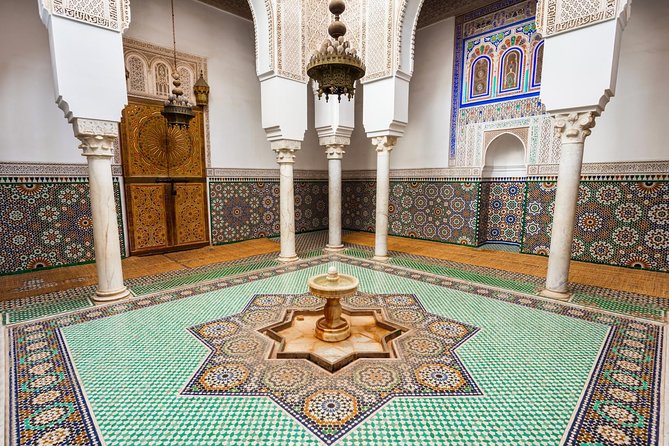
The desert portion has more variety than a simple camel ride. Activities may include desert sports, Moroccan cooking workshops, and contact with nomadic communities. The exact mix can vary, so ask your guide early in the day what is planned and what carries an extra fee.
Rissani offers a useful look at the region’s trading past. Its souk and market include a donkey market and goods associated with old caravan routes, including spices, fabrics, weapons, and other trade items. This is a more local and less polished stop than the major imperial cities, which is part of its appeal.
Khamlia introduces Gnawa culture, music, and daily life in a village connected to people brought from Sudan in the past. The visit gives the desert a human dimension beyond sand and scenery. You are not just crossing an empty space; you are seeing communities with their own music and traditions.
Later, you return to the Merzouga dunes for a camel ride of about an hour. The ride takes you toward desert oases and the dunes, with time to watch the sun drop from a high point. Camel riding can be less comfortable than it looks, especially when mounting and dismounting, so wear practical clothing and take the pace slowly.
The night is spent under the stars in a luxury desert camp. This is the trip’s signature moment, but keep expectations realistic. A luxury tent is still a camp, and the desert can become cold after sunset. Bring a warm layer even if the daytime heat is strong.
Todra Gorge and the Dades Valley change the mood again
After the desert night, the route turns toward the Todra Gorge and the High Atlas. The gorge has tall rock walls, reaching roughly 600 meters in places, with a narrow passage that can be only about 10 meters wide.
Allow around two hours here. The scale of the cliffs makes this one of the best stops for a short walk and photographs, though the visit is not a full hiking program. The road trip continues to Boumalne Dades, where the green Dades Valley offers a calm finish to the day.
This is one of the tour’s strongest transitions. You go from open sand to steep stone and then to cultivated valley land within a short period. It also shows why private transport matters, since public connections between these rural stops would be far less direct.
The Thousand Kasbahs route ends at Ait Benhaddou
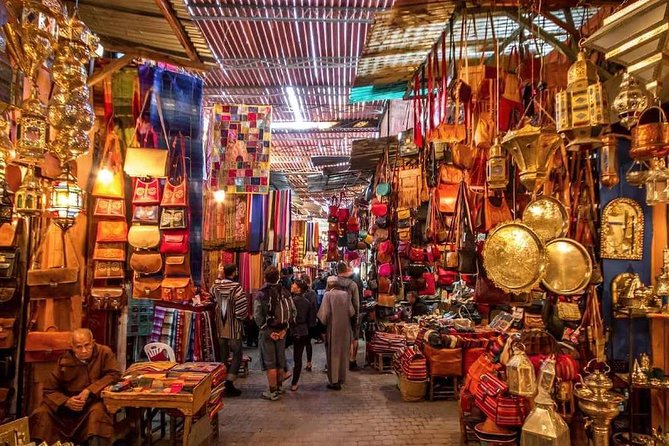
The road through the Valley of Roses and Skoura follows the route often called the Thousand Kasbahs. You pass traditional villages and old fortified buildings before reaching Ouarzazate.
Ouarzazate includes the Kasbah Taourirt and other historic structures. The stop lasts about two hours, so check with your guide which sights are open and which admission fees apply.
Ait Benhaddou is the major attraction of the day. This fortified settlement is a UNESCO World Heritage site and remains inhabited. Its position on the old trade route between the Sahara and Marrakech explains its defensive form, while its use as a film location gives it extra familiarity for viewers of Gladiator and Game of Thrones.
Give yourself time to look beyond the famous views. The alleys, earthen walls, and hilltop position are the point, not simply the movie connection. Afterward, the drive continues to Marrakech.
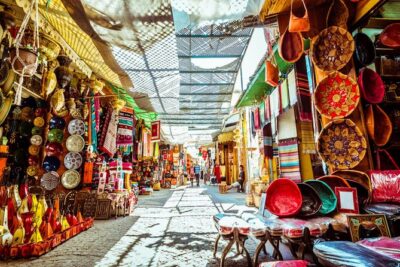
The day ends at Jamaa el Fna, where food stalls, music, and street performances fill the square. You can choose your own dinner, with options ranging from tagine and couscous to sandwiches and tea. Prices are described as Moroccan prices, but you should still agree on prices before ordering where appropriate.
Marrakech needs a full day, not just an evening
Marrakech receives a dedicated guide for the main sightseeing day. That is important because the city can feel scattered and intense, especially after the quieter desert and mountain stops.
Ben Youssef Medersa is a former Islamic school with finely decorated interiors. Bahia Palace offers courtyards, gardens, and rooms decorated by artisans from Fez. Both charge admission, as do several other sights on this day.
Koutoubia Mosque is the city’s best-known monument. You can admire it from outside, but the tour data does not promise interior access, and the admission information is listed separately.
Majorelle Garden provides a slower break from the medina. It was designed by Jacques Majorelle and later became associated with Yves Saint-Laurent and Pierre Bergé. Allow two hours if you want to enjoy the plants and paths without rushing.
The Yves Saint Laurent Museum is a shorter visit, with permanent and temporary displays. Its building combines modern design with Moroccan touches, making it worthwhile even if fashion is not your main interest.
The day contains many paid stops. If you want to enter everything, the extra admission costs will add up. If your budget is tight, choose the medersa, Bahia Palace, and either the garden or museum rather than trying to do every attraction.
What the $2,954.46 price includes
At $2,954.46 per person, this is not a budget tour. Its value comes from the amount of private service packed into ten days.
You receive an air-conditioned vehicle, private transportation, nine breakfasts, three dinners, four-star hotels or riads, a luxury desert camp, and the camel ride. You also avoid arranging several difficult transfers across the Atlas and Sahara on your own.
The price does not include flights, museum and monument admission, or most lunches and dinners. That is both a limitation and a benefit. You pay extra for the sights you actually enter, while keeping room to choose your own meals and restaurants.
For a private group that wants a ready-made route, the price can make sense. Solo travelers or couples comparing it with public transport and independent hotels may find it expensive. The strongest value is convenience, local guiding, and access to remote stops, not low cost.
Who should book this Morocco route?
I would choose this tour if you want Morocco’s major regions in one trip and prefer not to manage long transfers yourself. It suits families, friends, and private groups that value control over the pace.
It is also a good match if you want both famous sights and less polished stops such as Rissani and Khamlia. The schedule gives you imperial cities, Roman ruins, mountain scenery, desert culture, and food experiences without making you choose only one region.
I would hesitate if you dislike long drives, early starts, uneven medina streets, or changing hotels. The route covers a lot of ground. It is rewarding because of that range, but it is not a slow, single-city holiday.
The guide makes a real difference. When Hassan leads and Achmed handles the driving, their names are associated with a friendly, well-organized touring team. Confirm your assigned guide and driver before departure if that personal connection matters to you.
Should you book it?
Book this tour if your priority is seeing Morocco’s big sights in one private trip, with the Sahara and imperial cities both included. The balance of guided visits, flexible meals, private transport, and a full desert overnight gives you more depth than a quick city package.
Skip it if you want long stays in each place or need a low-cost trip. The driving is real, admission fees are extra, and ten days pass quickly. For most private groups seeking a broad first look at Morocco, though, the route offers a strong mix of culture, scenery, food, and memorable nights under desert stars.
FAQ
How long is the tour?
The tour lasts approximately 10 days, beginning in Casablanca and ending with airport transfer from Marrakech.
Is this a private tour?
Yes. Only your group participates, and the tour uses private transportation.
Is airport pickup included?
Pickup is offered, and the itinerary begins with meeting your guide at Casablanca airport. The starting and ending points can be adjusted.
Which cities does the tour visit?
The route includes Casablanca, Rabat, Chefchaouen, Meknes, Fez, Merzouga, Ouarzazate, and Marrakech.
Does the tour include a Sahara Desert overnight stay?
Yes. The package includes a night in a luxury tent at a desert camp, as well as a hotel night overlooking the dunes in Merzouga.
Is a camel ride included?
Yes. A camel ride of about one hour in the Merzouga desert is included.
Are hotels and breakfasts included?
Yes. Accommodation is in four-star hotels or riads, with nine breakfasts included.
How many dinners are included?
Three dinners are included. Many other meals are left for you to purchase independently.
Are museum and monument entrance fees included?
No. Entrance fees for museums and monuments are not included in the tour price.
Can the tour be canceled for a full refund?
Yes, if you cancel at least 24 hours before the experience start time. Poor weather or failure to meet the minimum number of participants may lead to a different date or a full refund.
Just added around the Sahara Desert
- 4 Day desert trip from Fes to Marrakech and 2 night in merzouga★ 4.5 · 19 reviews
- 2 Days Sahara Group Tour Fez to Marrakech via Merzouga★ 5.0 · 49 reviews
- Private Fez to Marrakech Via Merzouga desert tour 3days★ 5.0 · 25 reviews
- shared group Fez To Fez via Merzouga Desert Tour 2 Days/ 1 Night★ 5.0 · 29 reviews
- Shared Group Fez To Marrakech via Merzouga Desert Tour 2 Days★ 5.0 · 18 reviews
- Fez to Marrakech via Merzouga Desert – 3 Day Desert Tour★ 5.0 · 120 reviews
- Fes to Fes 2 days via Merzouga desert tour★ 5.0 · 24 reviews
- 3 Days Desert Tour from Fes to Marrakech via Merzouga★ 5.0 · 24 reviews
Imperial Cities Tours, compared.
3-Days Trip from Marrakech to Chefchaouen via Imperial Cities
Read our review →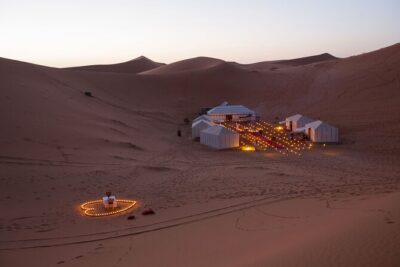
10 Day Desert Tour From Casablanca via the Imperial Cities
Read our review →Browse the lists this tour appears in