
Reviewed · NATIONAL PARKS
Marrakesh: Toubkal National Park Mountain Bike Trip w/Lunch
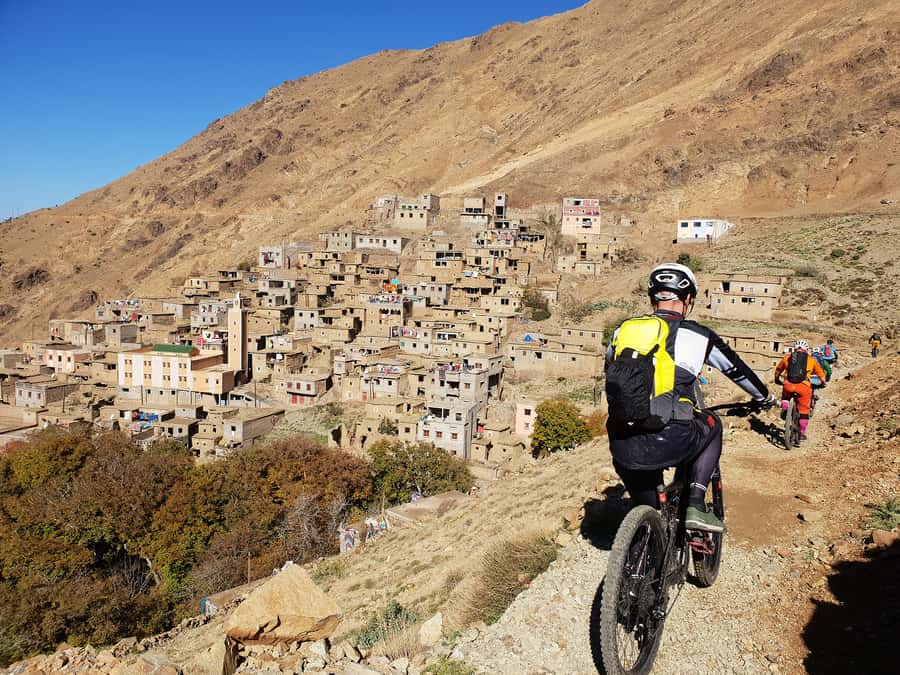
The best part of this day is the ride itself: you leave Marrakesh behind, climb into the High Atlas, then roll down rough tracks through Berber villages and the Imnane Valley. The mountain scenery is the star, with green fields, steep ridges, riverbeds, and long descents on gravel and single-track.
I like the small-group format, limited to 10 people, and the chance to see rural Morocco under your own pedal power. I also like that the guide sets up the bike, gives you a practice session, and lets you choose your pace. The main drawback is that the route is genuinely demanding, and transport can run late or include extra stops before and after the ride.
Key points to know before booking
- The route is physically serious: Expect roughly 30 to 36 kilometers and about 750 to 1,200 meters of climbing, with steep sections and rough trails.
- The biggest reward comes after the climb: The descent through Tachedirt, Tamguist, and Amssakrou is the most exciting part of the day.
- Imlil is the starting point: A short transfer from Marrakesh takes you to the village below Toubkal Mountain, Morocco’s highest peak.
- Lunch timing can be late: One account reports lunch after the ride, so bring water and a snack even though a picnic lunch is included.
- The guide matters: Kamal is praised for patience, while Jamal is noted for kindness and a pleasant private outing.
- Winter changes the route: Snow and ice can prevent access to the high pass, so bring warm layers and rain gear in colder months.
From Marrakesh to Imlil at the foot of Toubkal
The day begins with hotel pickup in Marrakesh. If your accommodation sits inside the medina or on a street too narrow for the vehicle, you may be asked to meet at Jemaa el-Fna, the city’s main square.
The transfer takes you toward Imlil, the mountain village used as the gateway to Toubkal National Park. Toubkal rises to 4,167 meters, though this outing does not take you to the summit. Your ride begins in the surrounding valleys and mountain passes, where the views open quickly as you leave the city behind.
The transport deserves a little patience. Pickup times may shift, and shared vehicles can carry people booked for different activities. One reported morning began with a scheduled 8:30 pickup but did not reach the riding area until around 12:45 after several stops. Those stops included a pottery shop and an argan oil cooperative.
That is not necessarily a bad way to see more of the region, but it can reduce your riding time. If cycling is your main reason for booking, confirm the pickup time and ask whether any extra stops are planned.
More National Parks in the Atlas Mountains:
- From Fez: Middle Atlas Day Trip with Ifrane National Park
★ 4.6 · 795 reviews - From Agadir: Souss-Massa National Park Tour with Lunch
★ 4.5 · 205 reviews - Agadir: Sous Massa National Park Desert Safari Tour & Lunch
★ 4.5 · 75 reviews
Bike fitting, practice, and the first climb
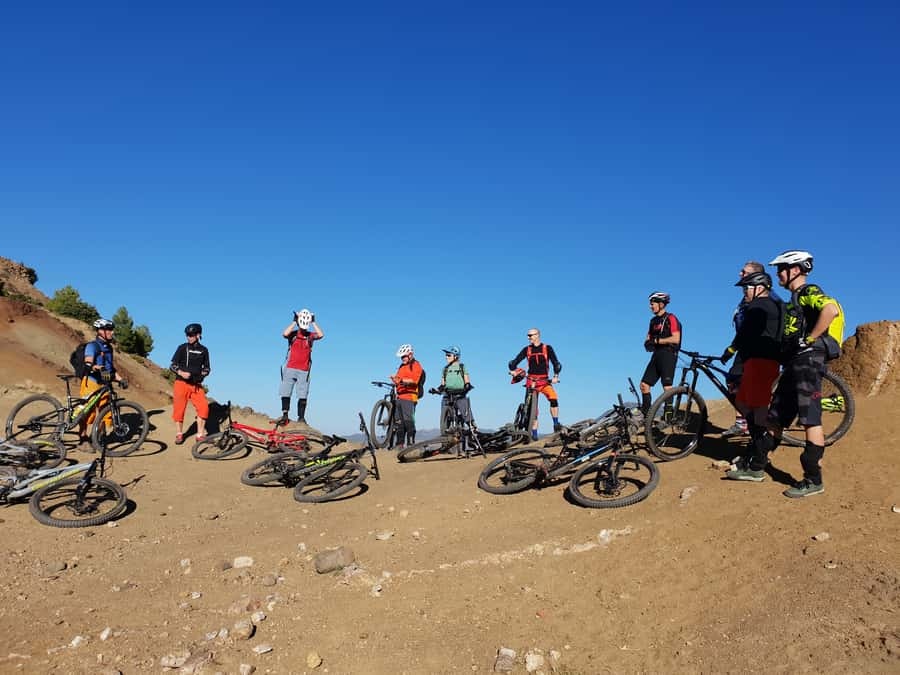
At Imlil, you meet the local cycling guide and receive a mountain bike and helmet. The guide explains how the bike works, checks your equipment, and gives you time to practice before the route begins.
That short orientation matters. You will be riding on gravel, uneven single-track, and donkey paths rather than smooth roads. You need to feel comfortable with braking, steering, and shifting before the trail gets rough.
The ride starts with a climb. It is described as manageable rather than brutal, but the route still puts pressure on the pedals. This opening section helps you test both the bike and your legs.
Your guide stays nearby and helps you use the bike properly on changing surfaces. The pace is not fixed, which is useful if your group has mixed ability. You can ride steadily, stop when needed, and take the descents at a speed that feels safe.
That flexibility does not make the route easy. A strong cycling base will help, particularly if you are not used to climbing on a mountain bike. A previous cyclist measured about 30 kilometers and 900 to 1,000 meters of ascent, while another recorded 36 kilometers and 1,200 meters of climbing. The exact distance and elevation may vary with conditions and the chosen route.
The high pass, mint tea, and the main descent
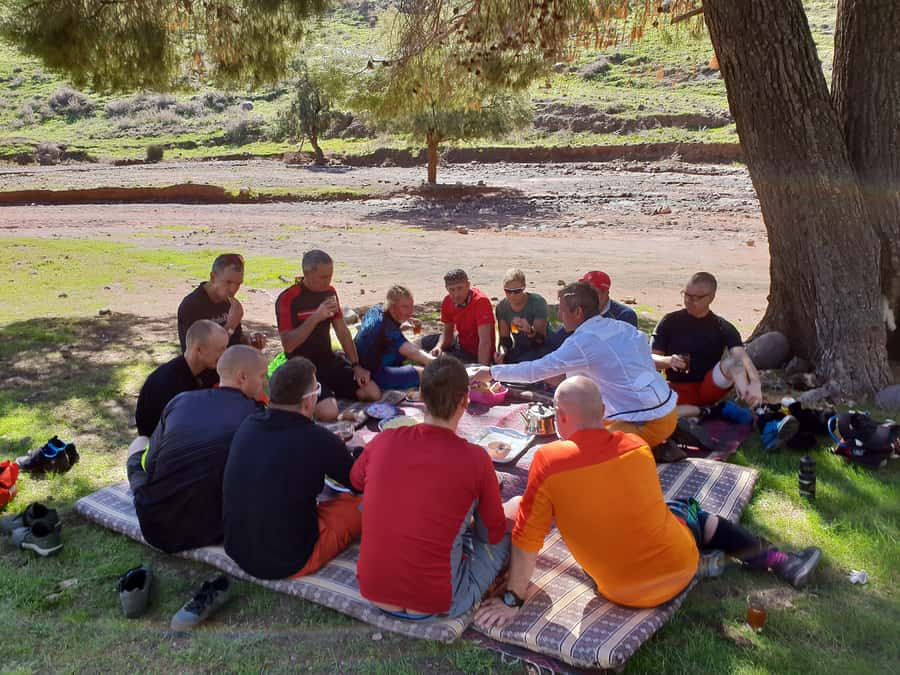
The route reaches a pass at about 2,300 meters. The listed coordinates place this point above the surrounding villages, giving you a clear sense of how far you have climbed from Imlil.
The usual pause includes mint tea and biscuits. This is a welcome break before the long descent, and it also gives you time to take photographs. Bring a camera or phone, but secure it well. Rough trails are not kind to loose belongings.
Snow and ice can affect this section in winter. One December outing could not reach the peak or cross to the other side because of frozen conditions. That is an important seasonal warning. The tour is still worthwhile when the route changes, but you should not treat the high pass as guaranteed in cold weather.
Once conditions allow, the descent is the day’s great payoff. You ride toward villages such as Tachedirt, Tamguist, and Amssakrou, following rough tracks with mountain views in every direction. The surface can include fast gravel, single-track, and donkey trails, so this is not a simple downhill cruise.
You will need to keep your attention on the trail. The guide points out plants, mountain features, and Berber villages, but you also need to watch for loose stones, ruts, and changes in grade. Your guide’s safety role is especially valuable here.
Berber villages and the Imnane Valley
The ride gives you a closer look at the settled side of the High Atlas. Instead of viewing the mountains from a coach window, you pass through villages and agricultural areas at bicycle speed.
The Imnane Valley is known for views across green fields of vegetables and cereals. The contrast with the dry, rocky slopes makes the valley especially striking. Seasonal conditions will affect how green the fields look, but the route is designed to show this farming area as well as the surrounding peaks.
The guide also explains aspects of Berber history and present-day life. This adds meaning to the villages you pass, since you are not simply cycling through scenery without context.
The riding can be technical in places. You may find narrow tracks, uneven gravel, and sections where walking the bike is the sensible choice. That is normal for a mountain route, not a sign that you have failed. The guide can help you decide when to ride and when to take a short break.
I would not choose this outing as a first-ever cycling experience. You do not need to be a racer, but you should be comfortable on a bicycle and ready for sustained climbing. An e-bike can make the ascent easier, and one cyclist specifically noted that it helped with the physical effort.
More Bike Tours in the Atlas Mountains:
- Marrakech: Day E-Bike Tour & Atlas Mountains
★ 4.7 · 29 reviews - Cycling Adventure in Marrakech
★ 5.0 · 289 reviews - Dutch Bike Tour in Marrakech with Local Guide
★ 4.7 · 269 reviews - Marrakech:Guided City Cycling Tour – Culture, Colors & Charm
★ 4.7 · 231 reviews
Lunch beside the river at about 1,600 meters
After following the valley down for a couple of hours, the route reaches the riverbed. The planned picnic lunch is beside the river at an altitude of roughly 1,600 meters.
This is a good setting for a long rest. You have already completed the main effort, and the cool mountain air makes a slow meal appealing. The lunch is included, but soft drinks are not, so carry money or bring your own drink.
The timing is worth watching. The itinerary describes lunch after the descent, and one account reports that the meal came only after the cycling was finished. That cyclist had little time to eat because the group was ready to return. Pack a snack and enough water for the ride, especially if you tend to eat at regular times.
Another outing ended with a meal on a rooftop facing the Atlas rather than beside the river. This suggests that the exact lunch setting can change with the group and route. The included meal is useful, but do not book this as a food-focused excursion.
The meal also marks a change in pace. The riding portion may finish before the scheduled seven hours, but you still have the return transfer ahead.
The final ride to Asni and the return to Marrakesh
After lunch, the route includes a shorter final section ending at Asni. You meet the driver there and transfer back to Marrakesh.
Asni is the practical endpoint rather than another major sightseeing stop. By this stage, the main mountain experience is complete, and the vehicle gives your legs a break.
Return transport can take longer than expected when several groups share the same vehicle. One reported return included multiple circuits around the medina while people were dropped off. Other activities, such as camel riding, may also create roadside stops when several bookings are combined.
For that reason, avoid booking an evening dinner, show, or train with a tight start time. The advertised duration is seven hours, but shared transport and changing pickup arrangements can stretch the day.
What the 68 dollar price really includes
At $68 per person, the tour offers solid value if you want transport, equipment, a guide, and a full day outside Marrakesh without arranging each part yourself.
The price includes hotel pickup and drop-off, a mountain bike, helmet, official guide, and picnic lunch. It also covers the transfer to Imlil and the return from Asni. For a small group of up to 10 people, that is a fair package.
You are mainly paying for access and organization. A guide who knows the tracks can make the route safer and more enjoyable, especially on the rough descent. The included bike also saves you from finding and transporting your own equipment.
The value drops if your main goal is a precise, tightly timed cycling itinerary. Shared transfers may include other activities, and the ride can start later than planned. If you have only one free day in Marrakesh or need to be back at a fixed hour, ask for a clear schedule before booking.
A private outing may offer better control. Jamal guided a particularly pleasant trip for a group of two, but the standard booking is a small-group experience, not necessarily private.
When the guides make the difference
The guide handles more than navigation. You receive a safety briefing, a bike introduction, help with technique, and explanations of local plants and Berber life.
Kamal is specifically praised for being patient, which matters when riders have different confidence levels. Jamal is noted for his friendly manner on a smaller outing. Guide quality can shape the day because the route includes both physical effort and technical riding.
Languages offered are Arabic, English, and French. If you need detailed cycling advice, ask questions during the briefing and be direct about your experience. Tell the guide if you are not comfortable with a steep descent or need a slower pace.
The guide’s safety support is useful, but you remain responsible for choosing a sensible speed. A helmet is included, and you should use it throughout the ride.
What to bring for a comfortable ride
The supplied advice is short, but the route calls for practical preparation.
Bring sunscreen. The mountain air may feel cool, but you can still get strong sun exposure during a long ride. Pack personal medication and carry water, since soft drinks are not included.
A snack is a smart addition. Lunch may come after the main cycling, and the climb to the pass can take time. Something small and easy to carry can prevent a late meal from becoming a problem.
During winter, bring warm clothing and rain gear. Snow and ice may alter the route, especially near the 2,300-meter pass. Conditions can be colder in the mountains than in Marrakesh, so city clothing may not be enough.
Wear clothing suitable for active cycling and rough ground. The provided information does not specify shoe requirements, so ask the operator if you have concerns about footwear or bike fit.
Who should book this mountain bike day
I would recommend this tour to you if you already ride a bicycle and want a physically active way to see the High Atlas. It suits people who enjoy climbing, rough tracks, long descents, and changing mountain conditions.
It is also a good choice if you want a guide and transport rather than the work of arranging a bike, route, driver, and lunch yourself. The small group keeps the outing more personal than a large coach tour.
You should think twice if you want an easy sightseeing day. The climb can be steep, the total distance can reach 36 kilometers, and elevation gain may approach 1,200 meters. You should also reconsider if you need a strict timetable or dislike shared transport delays.
The route is adaptable, and an e-bike may reduce the effort, but it does not turn the outing into a casual ride. You still need to manage uneven trails and descents.
Should you book the Toubkal National Park bike trip?
Book it if the idea of riding through Berber villages, climbing to a high Atlas pass, and descending toward the Imnane Valley sounds better than another day in the city. The scenery, guide support, and included transport make $68 a reasonable price for an active mountain day.
Go in with realistic expectations. Bring food for the morning, expect possible delays, and accept that winter weather may change the route. If you have cycling experience and a flexible schedule, this is one of the more memorable ways to reach the mountains from Marrakesh. If you want an effortless outing, choose a gentler valley tour instead.
FAQ
How long is the Toubkal National Park mountain bike trip?
The advertised duration is seven hours. The total day can run longer if pickup, shared transport, or return stops are delayed.
How far do you ride?
The ride may cover about 30 to 36 kilometers. Elevation gain has been reported at roughly 750 to 1,200 meters, depending on the route and conditions.
Is lunch included?
Yes. A picnic lunch is included. Soft drinks are not included, and lunch may take place after the main riding, so bring water and a snack.
Where does the cycling start?
The cycling begins in Imlil, at the foot of Toubkal Mountain. Transport from Marrakesh is included.
What languages does the guide speak?
Guides are available in Arabic, English, and French.
Is the tour suitable for beginners?
The route is challenging and includes climbing, gravel, single-track, and donkey trails. It is better suited to people with cycling experience. An e-bike can make the climbing easier.
What happens if I book in winter?
Warm clothing and rain gear are recommended. Snow and ice may prevent the group from reaching the high pass or crossing to the other side, so the route can change with conditions.
Just added around the Atlas Mountains
- Private Berber Middle Atlas Day Trip From Fez★ 5.0 · 21 reviews
- Excursion from Fez to Midle Atlas★ 5.0 · 21 reviews
- Excursion From Fez to the Middle Atlas Mountains★ 5.0 · 40 reviews
- fes to Middle atlas day Trip★ 5.0 · 17 reviews
- Private Day Tour from Fez to the Middle Atlas★ 5.0 · 18 reviews
- Atlas Mountain & Berber Villages and Waterfalls Day Trip from Marrakech★ 5.0 · 54 reviews
- Agadir Desert Trip + berber villages★ 5.0 · 23 reviews
- Agadir or Taghazout: Paradise Valley Atlas Mountain Swimming Trip★ 5.0 · 27 reviews
National Parks, compared.
Middle Atlas Day Trip with Ifrane National Park
Read our review →
Browse the lists this tour appears in