
Reviewed · MULTI-DAY TOURS IN MARRAKECH
Moroccan Desert 3-Day Luxury Tour from Marrakech
The great payoff here is Erg Chebbi at sunset, reached by camel after two days of mountain roads, kasbahs, gorges, and desert villages. You sleep in a traditional bivouac camp, eat dinner under the open sky, and have a chance to watch the stars before returning to Marrakech.
I like the small groups, capped at 15, and the way guides such as Moha, Khalid, Ibrahim, and Youssef add local stories to the long drives. I also like the first night in a comfortable riad near the desert route, which breaks up the journey nicely. The catch is simple: this is a lot of time in a vehicle, especially on the third day, when the drive back can take nine or ten hours.
Key points to know before booking
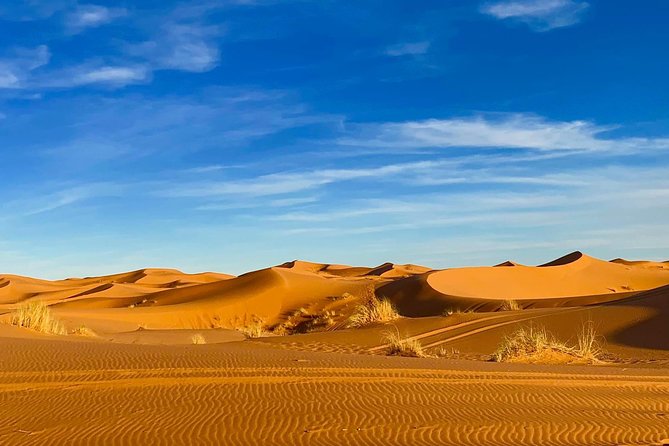
- A one-hour camel ride leads to a night in the Erg Chebbi dunes, with dinner, breakfast, music, and a traditional tent camp.
- Aït Benhaddou, Ouarzazate, Todra Gorge, and the High Atlas give you far more than a quick desert transfer.
- Small groups make the trip feel personal, and the maximum group size is 15 people.
- Day three is a long return drive, with stops along the way but limited time for extended sightseeing.
- Lunches and drinks are extra, while two dinners, two breakfasts, transport, a scarf, and a driver-guide are included.
- Pack a small overnight bag, since your essential belongings are carried with you on the camel.
The real shape of this three-day Sahara trip
This is not a relaxed resort excursion. It is a fast-moving overland trip from Marrakech to the far eastern dunes and back, covering a large part of southern Morocco in only three days.
That explains both the tour’s appeal and its main weakness. You get mountains, fortified villages, old kasbahs, film locations, a dramatic gorge, and the Sahara in one compact package. You also spend long stretches on the road.
At $450 per person, the cost includes an air-conditioned vehicle, a driver-guide, two nights of lodging, two dinners, two breakfasts, the camel transfer, and the camp stay. Lunches and beverages are not included. For a private trip, the price would feel different, but a small shared group keeps the cost reasonable while still giving you a more personal experience than a large coach excursion.
The experience is especially suited to you if the Sahara is a major goal and your time in Morocco is limited. If you dislike winding mountain roads, early starts, or long driving days, you should consider a longer desert tour instead.
More Multi-Day Tours in Marrakech
- From Marrakech: 3-Day Desert with luxury camp, camel & meals
★ 4.6 · 922 reviews - From Marrakech: 2-Day Desert Excursion
★ 4.5 · 900 reviews - From Marrakech: Imperial Cities of Morocco 3-Day Tour
★ 4.8 · 806 reviews
Day one: crossing the High Atlas to Aït Benhaddou
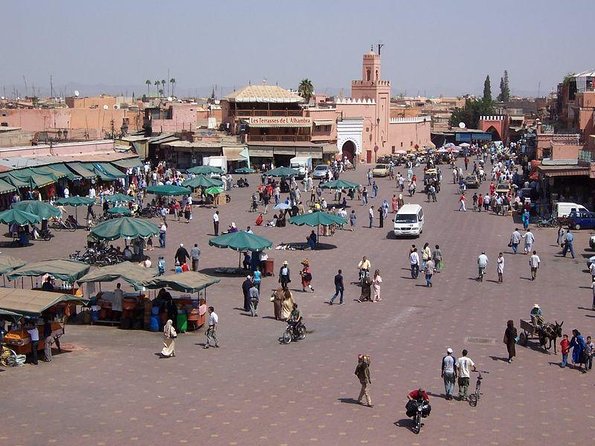
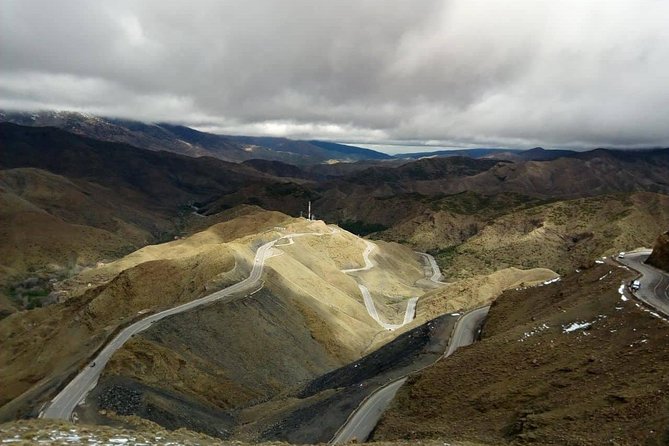
The trip begins at 8:00 a.m. near Hôtel Restaurant Café de France at Jemaa el-Fnaa. From central Marrakech, the road climbs toward the High Atlas, with views changing quickly from the city to mountain villages and high passes.
The mountain crossing is one of the most rewarding parts of the first day. You will see rugged slopes, villages, and changing colors as the road heads south. Several people who have taken this route appreciated the regular stops for photographs, refreshments, and clean restrooms. That matters on a long day in the vehicle.
Road conditions and weather can affect the schedule. Snow or closures at the Tichka Pass have caused major delays in the past, and a mountain crossing cannot be treated like a fixed timetable. If the weather turns bad, a planned stop such as Aït Benhaddou may be shortened or missed for safety.
Aït Benhaddou is the day’s headline sight. This fortified ksar, built from earthen materials, rises in a cluster of towers and walls that look especially striking against the dry hills. It has been used as a setting for films and television productions, but its real value is architectural and cultural. You can see how a fortified settlement was organized and how tightly packed homes protected residents from the heat and outside threats.
The route may also include Ouarzazate and Atlas Studios, one of Africa’s largest film studios. The studio is worth your attention if you enjoy cinema and production sets, but it may receive less time if the group prefers the historic sites or if the mountain crossing runs late. Do not assume every stop will receive equal time.
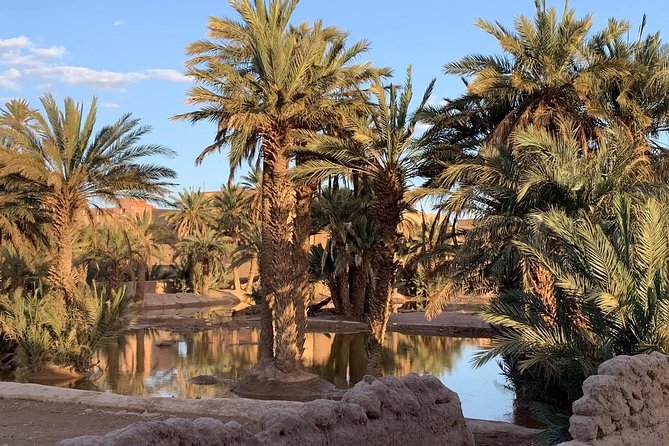
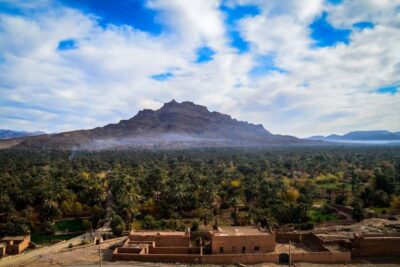
The day’s route is sometimes described with a stop in the Valley of the Roses. This area is known for its rose-growing villages and dry valley scenery. It helps show that the desert route is not simply one long stretch of sand. Much of the approach is semi-arid country, with villages, river valleys, cliffs, and cultivated patches.
Your first night is in a riad or kasbah-style accommodation along the route. The exact property can vary, but the accommodation is described as clean, spacious, and comfortable, often with a good view. Dinner is included, and a lamb tagine has been a particular highlight for some people on this trip.
Day two: Todra Gorge and the Erg Chebbi dunes
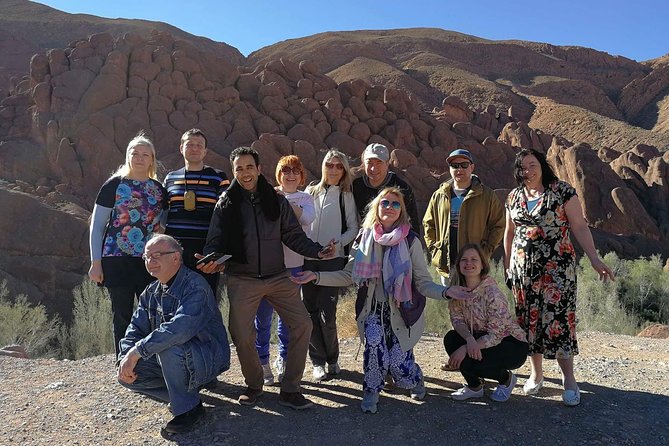
Day two brings you through the Todra Gorge before the final approach to the Sahara. The gorge is one of southern Morocco’s most memorable natural sights, with steep rock walls closing around the road and walking areas.
You should expect a stop rather than a full hiking day. The time is enough to stretch your legs, take photographs, and appreciate the scale of the cliffs. That break is welcome after the first day and before the long transfer to the dunes.
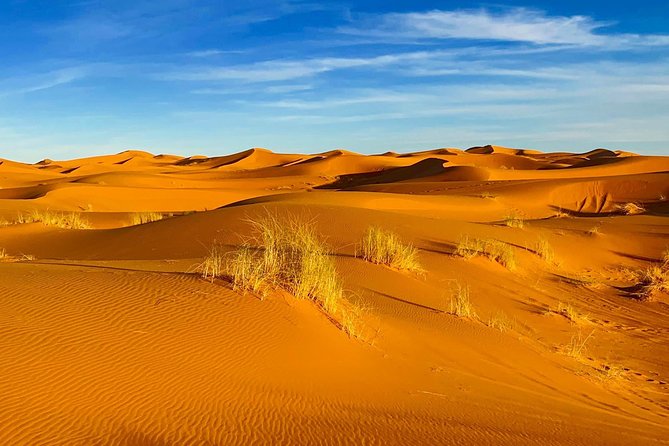
From Todra, the route continues toward Merzouga and Erg Chebbi. This is when the trip begins to feel like a desert expedition rather than a cultural road tour. The flat, dry country gradually gives way to large orange-gold dunes, and the change is impressive even from the vehicle.
At the desert edge, you receive a scarf for the camel ride. There may also be a stop where you can put on traditional Berber clothing for photographs. You might enjoy this lighthearted part of the experience, but it can feel staged if you prefer a quieter and less commercial encounter. It is reasonable to treat it as optional fun rather than a central cultural activity.
Riding a camel into the evening camp
The camel trek to camp lasts about one hour according to the advertised schedule, though some past trips have had rides closer to 90 minutes each way. Timing can vary with the season, the group, and the camp arrangement.
Mounting and dismounting are the trickiest parts. The camel rises in stages, so hold on and follow the guide’s instructions. Once the camel is walking, the pace is steady, but the rolling motion can be tiring. You should bring comfortable clothes and expect some soreness if you are not used to riding.
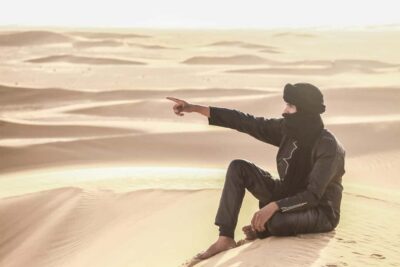
The approach to camp is the emotional center of the trip. You cross open sand with the dunes changing color as the sun drops. The experience is less about speed than silence, distance, and the odd sensation of reaching your accommodation by camel instead of road.
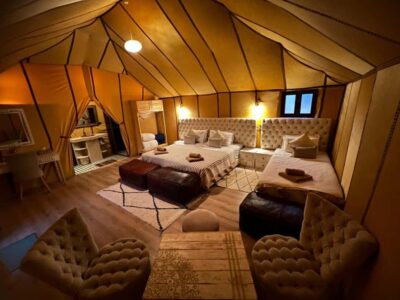
At the bivouac, your tent is in a traditional Berber style, with a more comfortable setup than basic wilderness camping. Dinner is included, and the evening may include music, singing, dancing, and a campfire. Some camps also offer sandboarding, so ask the camp team what is available when you arrive.
The sky is the other major attraction. Away from Marrakech and the road, the desert gives you a much better chance to see stars. A useful tip is to wait until the moon is lower if you want darker skies. The early morning can be very cold, even after a warm evening, so pack a fleece, warm socks, and gloves.
Your small overnight bag should contain what you need for the camp. The operator advises against taking a large suitcase on the camel. Larger luggage can travel in the vehicle and be stored securely at a hotel near the desert.
A completely different kind of day in Marrakech:
- Marrakech: Quad Bike Tour to Palm Oasis and Jbilat Desert
★ 4.8 · 11,831 reviews - Marrakesh: Majorelle Garden Entry Tickets
★ 4.5 · 9,651 reviews - Marrakech Quad Bike Experience: Desert and Palmeraie
★ 4.5 · 9,509 reviews - Marrakech: Balloon Flight, Berber Breakfast & Certificate
★ 4.8 · 8,164 reviews
The people can shape the whole experience
The driver-guide matters greatly on a trip with this much road time. Names associated with particularly well-liked departures include Moha, Khalid, Ibrahim, Youssef, Hassan, Amar, and Mohamed, though you should not assume a particular person will be assigned to your date.
Moha is often praised for explaining Moroccan history, village life, and Berber culture while also watching carefully over passengers on mountain roads. Khalid is noted for local stories and flexibility, including help with requests such as buying fossils or meeting nomadic families when possible. Ibrahim and Youssef are both described as safe, friendly drivers who make the long road days easier.
Some departures use separate driver and guide roles. One group had Mohamed as guide and Hassan as driver, while another described Youssef as both a careful driver and a source of information about local culture. On the final return, a guide such as Amar may offer more discussion of language, politics, and regional life.
You can ask questions, request photo stops, and talk about local customs. The best guides make the road itself part of the experience rather than treating it as dead time. Still, the quality of conversation can depend on the person assigned and the language match. The tour may operate with a multilingual guide, and one person had difficulty following the explanations in English. If clear English commentary is important to you, confirm language arrangements before paying.
Day three: the long road back to Marrakech
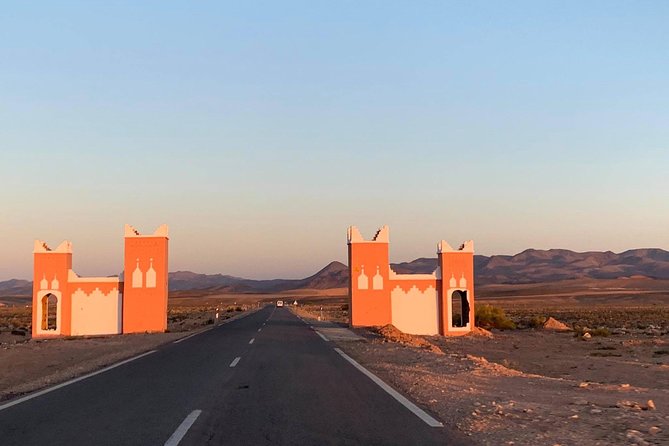
The return begins after breakfast and heads back across the Atlas toward Jemaa el-Fnaa. The advertised drive is nine to ten hours with stops. That is a full day, not a short transfer tacked onto the end of the trip.
The upside is that you see the route from a new angle. There are chances to stop for food, photographs, and refreshments, and the changing scenery helps break up the ride. The downside is that the desert portion can feel brief, especially if you arrive late on day two or leave early on day three.
This is the strongest argument for booking a four-day or longer desert journey if your schedule allows. An extra night gives you more room for the dunes and reduces the sense that you have hurried across Morocco simply to reach Erg Chebbi.
The tour ends back at the original meeting point near Jemaa el-Fnaa. Flexible drop-off arrangements have been possible on some departures, but the stated end point is the starting meeting point, so confirm any different arrangement before the morning of departure.
What $450 buys you, and what it does not
The price makes sense if you value convenience. You are not arranging separate transport from Marrakech, desert lodging, a camel transfer, meals, or a driver for a complicated route. You also avoid the work of comparing several overnight stops and finding your way through the mountain roads.
The inclusions are solid:
- Air-conditioned transport
- Driver-guide
- Two nights of accommodation
- Two dinners
- Two breakfasts
- Camel ride to the desert camp
- Scarf for the desert
- Small-group operation with up to 15 people
You pay separately for lunches and beverages. Bring enough Moroccan dirhams for roadside meals and restroom stops, since small coins are useful during the driving days. If you want a more private vehicle, more time at each sight, or an extra desert night, the value calculation changes and a longer or private tour may suit you better.
The high satisfaction rate and 4.9 rating suggest that the package usually delivers what it promises, but you should not mistake strong service for a short journey. The route is physically demanding because of the driving, not because the walking is extreme.
Who should book this desert tour
I would recommend it to you if you have only a few days beyond Marrakech and want a broad taste of southern Morocco. It works well for couples, solo visitors, and small groups who enjoy meeting fellow passengers and sharing a compact adventure.
It is also a good option if you want a comfortable camp rather than basic sleeping arrangements. The riad on the first night and the tent on the second provide a useful balance between road travel and overnight comfort.
You should think twice if you want slow travel. The tour does not give you much free time in Marrakech, Aït Benhaddou, Todra Gorge, or Erg Chebbi. You should also be comfortable with mountain roads, early mornings, camel riding, and a very long final drive.
Children must be accompanied by an adult. Most people can take part, and a vegetarian meal can be arranged if requested when booking. Free cancellation is available up to 24 hours before the start time. Inside the final 24 hours, cancellations and changes are not accepted.
Should you book it?
Book this tour if riding a camel into the Sahara, sleeping in a desert tent, and seeing Aït Benhaddou are priorities for you. The combination of small groups, comfortable overnight stops, included dinners and breakfasts, and capable local guides gives the $450 price a fair value.
Do not book it expecting a leisurely desert holiday. You will spend much of the three days on the road, and day three is particularly long. If you can add a night, do so. If you cannot, this remains one of the most efficient ways to connect Marrakech with Erg Chebbi while still seeing a useful slice of Morocco along the way.
FAQ
Where does the tour start?
The tour starts at Hôtel Restaurant Café de France near Jemaa el-Fnaa in Marrakech. The stated start time is 8:00 a.m.
Where does the tour end?
The activity ends back at the original meeting point near Jemaa el-Fnaa.
How long is the drive back to Marrakech?
The return drive on day three takes about nine to ten hours, including stops.
Is the camel ride included?
Yes. The tour includes a camel trek to the desert camp at Erg Chebbi. The scheduled camel ride lasts about one hour, though some departures have had rides closer to 90 minutes each way.
Are meals included?
Two dinners and two breakfasts are included. Lunches and beverages are not included.
What should I pack for the bivouac night?
Bring a small bag or backpack with the belongings you need for the overnight stay, since it will be carried on the camel. Larger luggage can travel in the vehicle and be stored near the desert. Warm clothing and gloves are useful because desert mornings can be very cold.
More Three-Day Trips in Marrakech
- Basic Desert 3 Days 2 Nights from to Marrakesh
★ 5.0 · 299 reviews - From Marrakech: 3-Day Marzouga Desert Tour with Camel Ride
★ 4.5 · 129 reviews - Marrakech: 3-day Exclusive Desert Luxury Tour; Quad & Camels
★ 4.8 · 61 reviews - 3 Days – 2 Nights Desert Tour From Marrakech with Camel Ride
★ 4.1 · 19 reviews
Just added around Marrakech
- Quad in the Palmeraie of Marrakech★ 5.0 · 41 reviews
- Marrakech Desert Camel Ride★ 5.0 · 17 reviews
- Sunset Camel Ride in the Palm Grove Of Marrakech★ 5.0 · 34 reviews
- Private Airport Transfer from or to Marrakech Menara Airport.★ 4.5 · 63 reviews
- Marrakech The History and Culture Day Trip★ 4.5 · 45 reviews
- Marrakech: Tailor-Made City Tour With Your Own Private Guide★ 4.9 · 236 reviews
- Marrakech palm grove: Sunset camel ride★ 4.8 · 194 reviews
- Sparkling Marrakech through the eyes of your local Guide★ 4.7 · 247 reviews
Multi-Day Tours in Marrakech, compared.
3-Days Morocco Desert Tour from Marrakech to Marzouga
Read our review →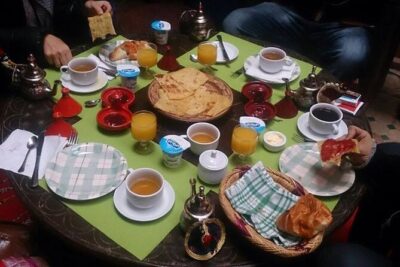
Basic Desert 3 Days 2 Nights from to Marrakesh
Read our review →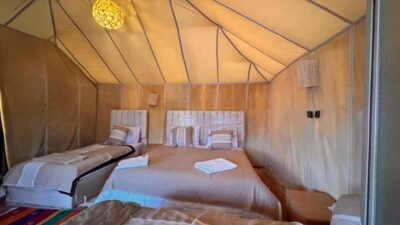
3-day Exclusive Desert Luxury Tour; Quad & Camels
Read our review →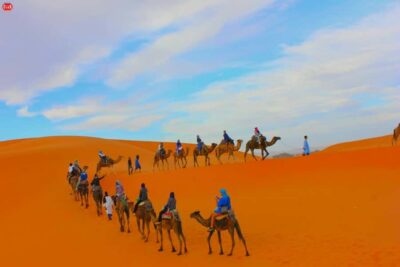
Browse the lists this tour appears in