
Reviewed · FOOD TOURS
Marrakesh: Guided Street Food Tasting by Locals
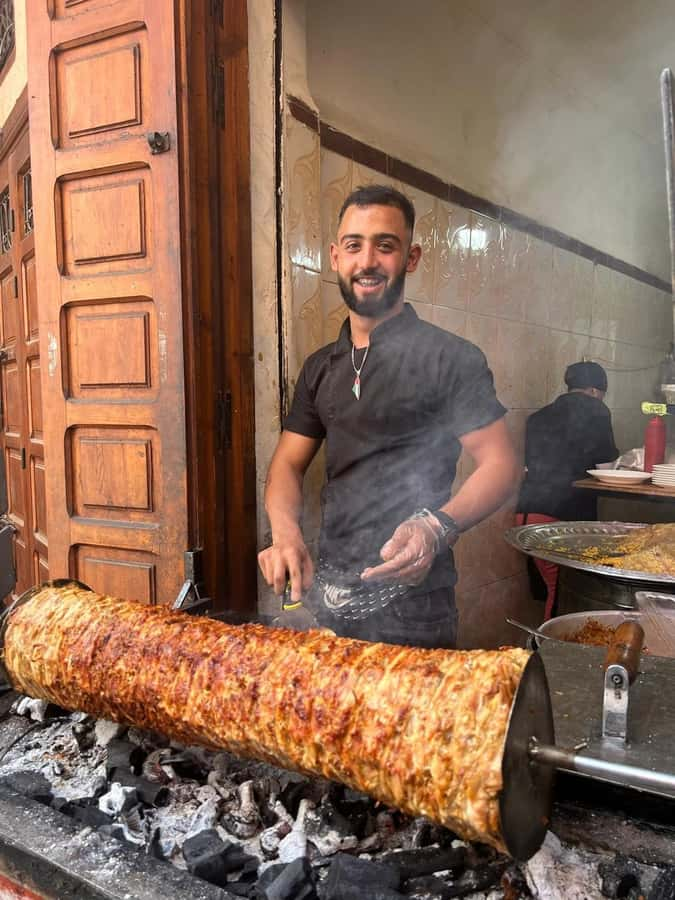
Marrakech’s food scene makes the most sense after dark, when Jemaa el-Fnaa fills with smoke, spice, shoppers, and food stalls. This three-hour walk takes you from Café de France through the square, Souk Semmarine, and the Medina, stopping for everything from olives and pastries to tagine, tangia, and slow-roasted lamb.
I like the way the tour uses small local eateries and market stalls rather than keeping you at one polished restaurant. I also like the practical touch of a recipe to take home, plus the chance to see how locals shop, bargain, and prepare food.
The main consideration is the pace and the amount of food. You will walk through narrow, uneven streets and may eat at least ten or eleven times, so this is not a light snack tour. People with mobility impairments may find the Medina difficult.
Five things to know before you book
- Expect a full meal, not a few samples: The stops build from olives, fruit, and pastries to tagine, tangia, kofte, bread, salads, and rooftop tea.
- Start at Café de France: The meeting point is in front of Hôtel Restaurant Café de France in Jemaa el-Fnaa.
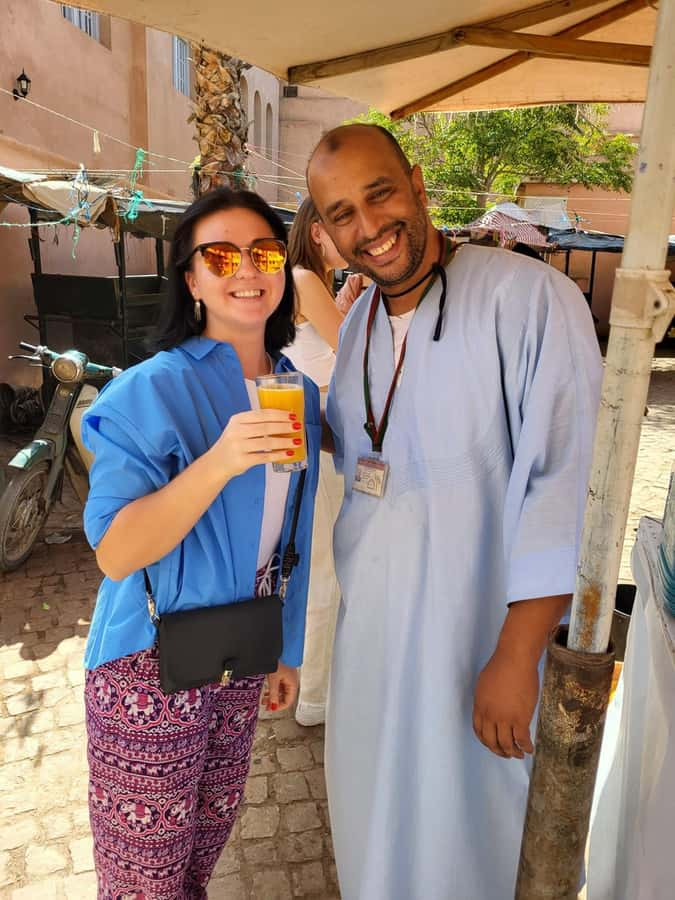
- Guides make the difference: Guides such as Mo, Mohamed, and Ali are known for explaining both the food and Marrakech’s culture.
- The route reaches beyond the main square: You will visit Souk Semmarine, the food market, the Mellah area, and quieter Medina lanes.
- Choose shared or private: A shared group keeps the price at $47 per person, while a private tour gives you more control over the evening.
- Book it early in your stay: The route helps you learn what to eat and where to return later in your trip.
Starting at Jemaa el-Fnaa after dark
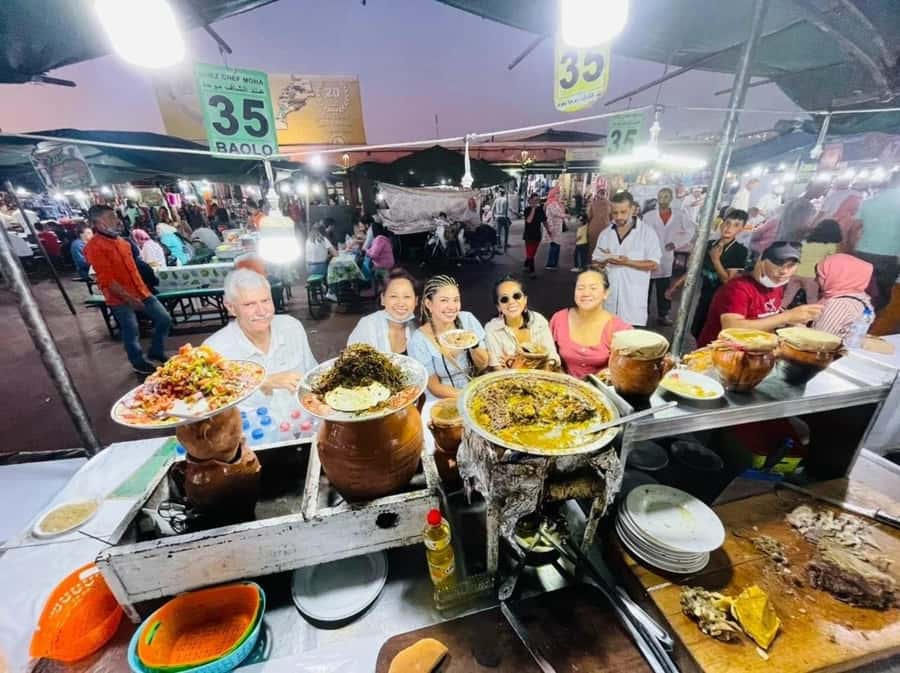
You meet your guide in front of Café de France, an easy landmark on the edge of Jemaa el-Fnaa. The square is the natural starting point for an evening food walk because it shifts character as daylight fades. Food stalls open, cooks work over hot fires, and the air fills with spice and smoke.
Your guide leads you through the square rather than leaving you to guess which stall is worth your time. That matters here. Jemaa el-Fnaa can be exciting, but it can also feel noisy and confusing on a first visit. A local guide gives the evening some shape and helps you pay attention to details you might otherwise miss.
The first portion is part sightseeing, part orientation. You get a look at the square, hear about Marrakech’s food traditions, and begin sampling. The guide also introduces the words for the dishes, which makes later menus and food stalls easier to understand.
This is a good reason to schedule the tour near the start of your stay. You can return to dishes you liked, recognize the souk areas, and feel less lost when you explore the Medina on your own.
More Food Tours in Marrakech
- Marrakech: Street Food Tour with a Local Guide
★ 4.9 · 3,119 reviews - Marrakech: Street Food Tour by Night
★ 4.8 · 2,838 reviews - Authentic Moroccan Food Tour in Marrakech with Dinner
★ 5.0 · 1,423 reviews
The food market and the art of shopping
From Jemaa el-Fnaa, the route heads toward the Mellah and the main food market. Stalls display fruit, vegetables, meat, and poultry, giving you a look at the ingredients behind the cooked food you will taste later.
The market is useful context. Moroccan cooking is not just a list of famous dishes. It depends on spice blends, seasonal produce, fresh herbs, bread, preserved foods, and slow cooking. Seeing the raw ingredients helps explain why a simple-looking plate of salads or a bowl of tagine can carry so much flavor.
You may also see artisans preparing pastries and locals shopping for the evening meal. Your guide explains the role of bargaining and points out how the market works for residents, not only for people passing through with cameras.
I like this part because it slows the tour down before the meal gets serious. You are not simply moving from one tasting to another. You are learning how food fits into everyday life in Marrakech.
Still, remember that this is an active market. Displays can be crowded, the streets can be narrow, and you need to stay close to your guide. The tour is not a good fit if you need wide, level paths or frequent stops to rest.
Souk Semmarine and the first tastings
Souk Semmarine brings you into one of the best-known shopping lanes in the Medina. The route combines food with the sights, sounds, and smells of the souk, so expect more than a straight restaurant crawl.
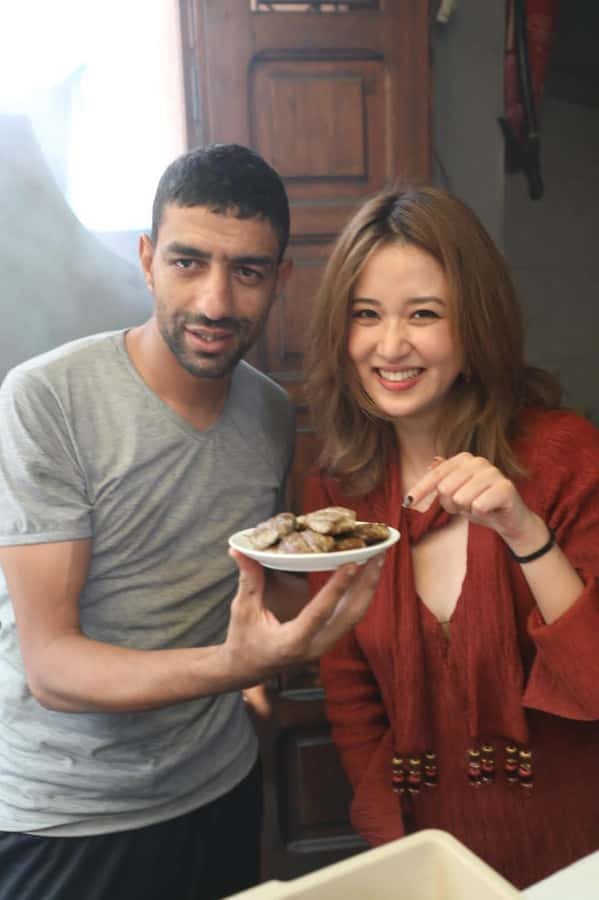
Early tastings can include sweet pastries, dates, olives, and other small local specialties. Dates are especially useful as an introduction to Moroccan flavor because they show the sweet side of the cuisine without turning the tour into a dessert-only outing. Marinated olives bring a salty, sharp contrast.
You may also try an almond-based drink, described as a popular local refreshment. It gives the meal a pause before the richer dishes arrive. The guide explains what you are eating and may share the local name for each item, making it easier to spot the same foods later.
A recipe to take home is a thoughtful extra. It turns the tour into something more useful than a pleasant night out, especially if you want to recreate one of the dishes after returning home.
The souks can be distracting, in a good way. You may stop to watch a craftsperson at work, examine spice displays, or listen to the bargaining around you. That makes the walk feel connected to Marrakech rather than staged in a single dining room.
Tagine, bread, salads, and Moroccan spice
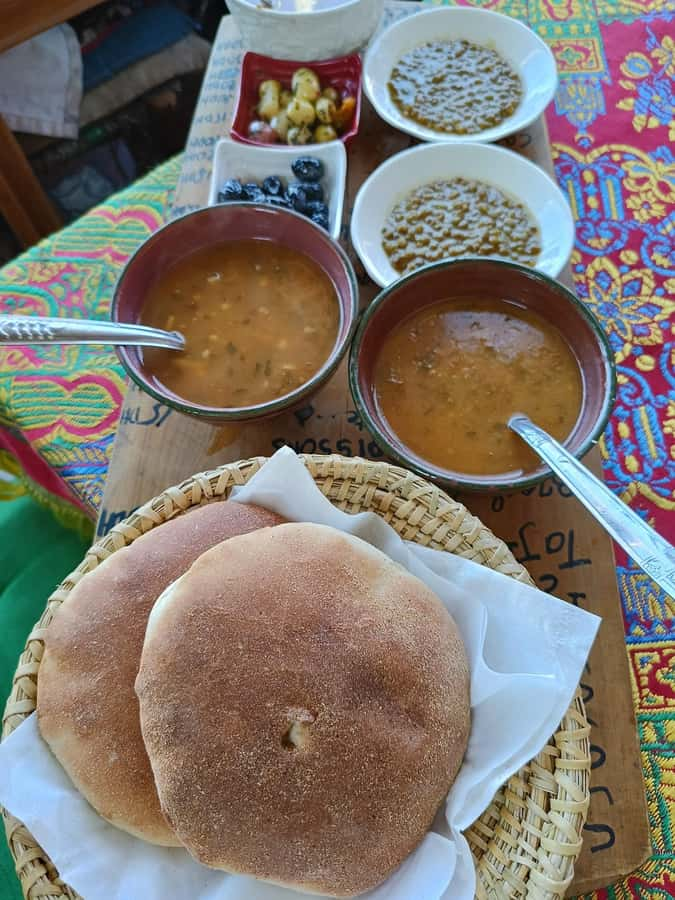
The main meal develops gradually. Rather than handing you one large plate at the beginning, the guide takes you through several traditional foods and explains how they relate to one another.
Tagine is one of the key stops. You learn that tagine refers to both the cooking vessel and the dish prepared inside it, with variations in ingredients and seasoning. The experience includes charcoal-baked tagine, and one of the final stops may serve tagine from a rooftop café while you look down toward the square.
Fresh bread helps anchor the meal. It is practical, filling, and part of the way many Moroccan dishes are eaten. Traditional salads add a different texture and bring seasonal vegetables, cumin, saffron, and fresh herbs into the meal.
This is where the guide’s personality matters. Mo, Mohamed, and Ali are all named as guides associated with the experience, and their approach is described as warm, funny, and eager to explain Marrakech. The best part of a food tour is often the conversation between dishes, and this route gives the guide plenty to discuss.
You should also expect regional and family-style food traditions to come up. Marrakech sits at a crossroads of Moroccan influences, and the guide explains how different dishes are prepared at home and what they mean in Moroccan culture. That background gives the meal more meaning than simply checking off famous foods.
A completely different kind of day in Marrakech:
- Marrakech: Quad Bike Tour to Palm Oasis and Jbilat Desert
★ 4.8 · 11,831 reviews - Marrakesh: Majorelle Garden Entry Tickets
★ 4.5 · 9,651 reviews - Marrakech Quad Bike Experience: Desert and Palmeraie
★ 4.5 · 9,509 reviews - Marrakech: Balloon Flight, Berber Breakfast & Certificate
★ 4.8 · 8,164 reviews
Méchoui, tangia, and kofte in the Medina
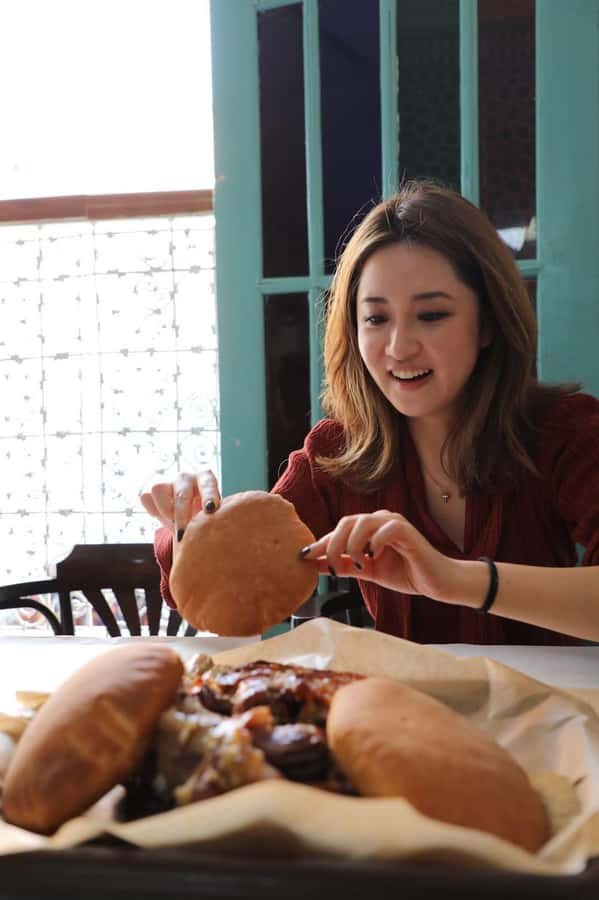
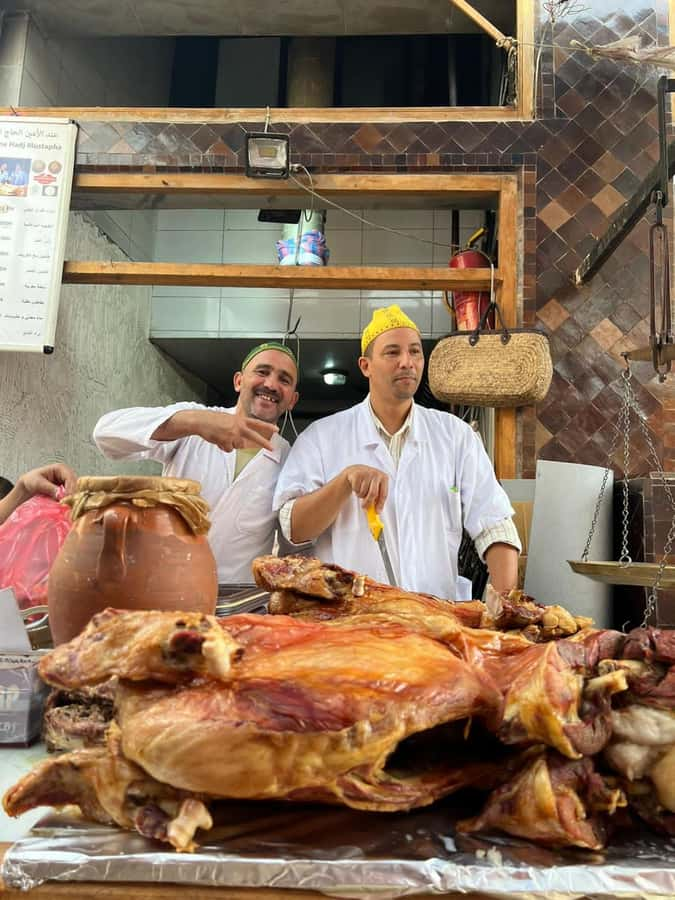
One of the more unusual stops is a méchoui maker slow-roasting a whole lamb in a traditional underground oven. This is a strong moment for anyone interested in old cooking methods. You are seeing food prepared with time and heat rather than the quick service of a modern takeaway counter.
The route also visits a hidden local eatery for tangia and kofte with freshly baked bread. Tangia is closely associated with Marrakech, and it gives you a taste of a dish that may not be as familiar as tagine. Kofte brings seasoned minced meat into the lineup.
The word hidden can be overused in travel writing, but here the point is simple: these are places you might not notice while walking alone through the Medina. The guide knows where to stop and how to connect the food with the streets around it.
Some food choices may be adventurous. The tour includes unusual offerings for people willing to try them, so you can ask your guide what each item is before tasting. You do not need to pretend that every dish will suit you. The value comes from having a safe, informed chance to try foods you may otherwise pass by.
Because the tour includes so many tastings, portion sizes may vary. Some stops provide small samples, while others build toward a proper dinner. The overall amount is substantial, so a large lunch is a mistake.
A rooftop finish with mint tea
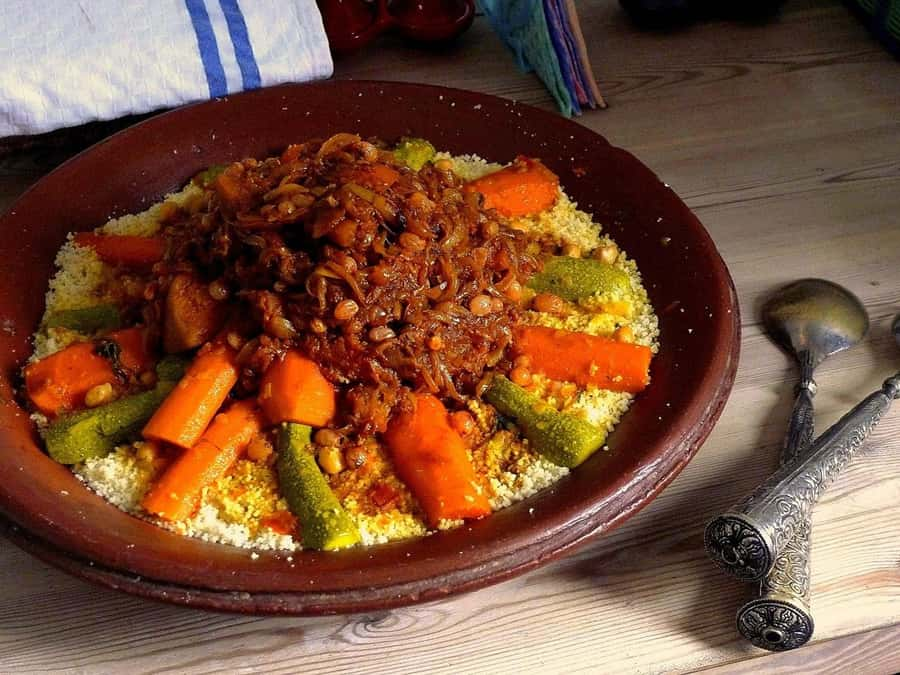
The evening ends at a cozy rooftop café with mint tea and views over a courtyard decorated with rugs, mosaic lamps, and fountains. Some versions of the route finish with tagine at a rooftop restaurant overlooking the lively square, so the exact final meal may depend on the evening’s arrangement.
Mint tea is not just a drink added at the end. It gives you time to sit, talk, and let the meal settle after several hours on foot. The courtyard setting also provides a contrast to the tight lanes and market noise.
The views are pleasant rather than panoramic in the grand sightseeing sense. The appeal is seeing the square and nearby rooftops from a calmer perch. After the movement of the Medina, that pause feels well timed.
This final stop also makes the tour more filling than many food walks. If you are looking for a quick introduction before dinner, this may be too much. If you want one evening to function as both dinner and cultural orientation, the format works well.
What $47 buys you
At $47 per person, the price is reasonable if you treat the experience as a guided dinner, market walk, and introduction to Moroccan cooking. Food and drinks are included, along with a live guide in English, French, or Arabic.
You are paying for more than the cost of the individual bites. You also receive help navigating the Medina, access to food stalls and eateries you might miss, explanations of ingredients and cooking methods, and a route through several different parts of the old city.
The value is strongest for first-time visitors. You get a map in your head, a list of foods to try again, and practical confidence for future meals. One person even returned to some of the places visited during the rest of the trip, which is exactly the kind of result a good introductory food walk should produce.
A private tour may offer a more personal pace, while the shared option suits people who like meeting others and keeping the cost down. A group can include different ages and appetites, so expect some waiting and some compromise if you choose the shared format.
Hotel pickup and drop-off are not included. You must reach Café de France yourself and return from there after the tour. Since the route begins and ends at the same landmark, this is fairly simple if you are staying near the Medina, but plan your evening around that location.
Who will enjoy this food walk
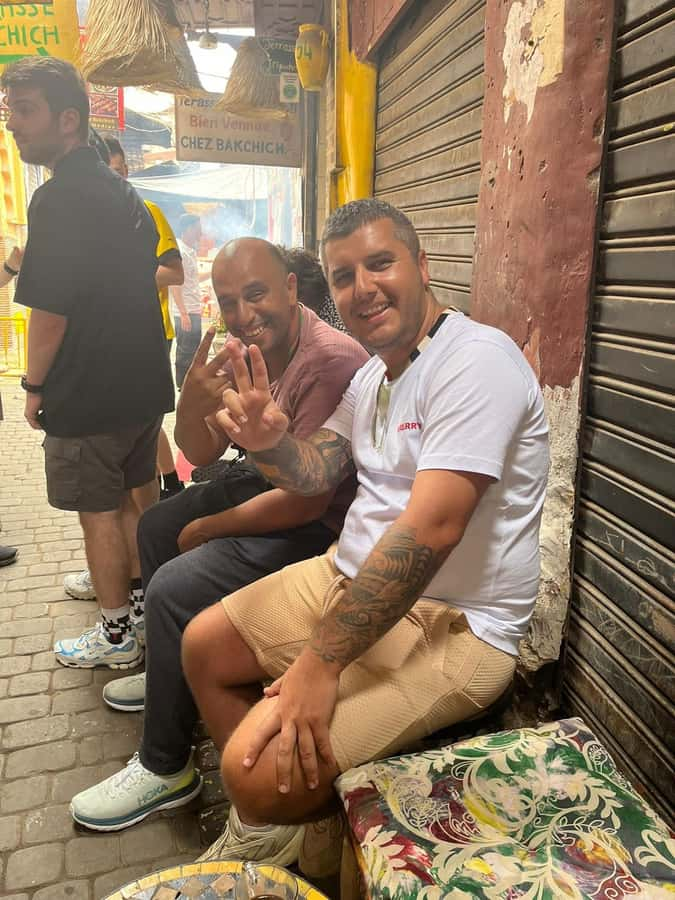
I would recommend this tour to you if you want food with context. It suits first-time visitors, curious eaters, and anyone who finds the Medina more enjoyable with a guide beside them.
It is also a good choice if you prefer many small tastings instead of one formal Moroccan meal. The route covers sweet and savory foods, drinks, meat, vegetables, bread, pastries, olives, dates, and tea, so you get a broad introduction in one evening.
You should be comfortable walking for three hours through narrow Medina lanes. The activity is specifically not suitable for people with mobility impairments, and the route includes markets and souks where the ground and crowds may make movement harder.
This may not suit you if you have strict dietary needs that require detailed advance planning, since the supplied information does not specify vegetarian, vegan, halal, allergy, or substitution arrangements. Ask before booking if those details affect your choice.
You should also come hungry. The food builds to a full dinner, and several people found the portions so generous that they could not finish everything. Skip or reduce lunch rather than trying to squeeze this tour between two full meals.
Timing, language, and cancellation
The tour lasts three hours, with starting times shown during booking. An evening departure is central to the experience because Jemaa el-Fnaa and the souks change after dark.
Guides speak English, French, or Arabic. The tour is available as a shared group or private experience. You can cancel up to 24 hours ahead for a full refund, and the reserve-now, pay-later option lets you hold a place without paying at once.
Wear comfortable shoes and keep your hands free for walking and tasting. Bring an appetite, stay near the guide in the alleys, and allow the full three hours rather than planning another fixed activity immediately afterward.
Should you book the Marrakech street food tour?
Book it if you want a substantial evening of food and orientation rather than a quick sampling session. The strongest reasons are the range of dishes, the access to small local stops, and guides such as Mo, Mohamed, and Ali who explain both what you are eating and where it fits in Marrakech life.
The tour is especially useful early in your stay. You can return to favorite stalls, order with more confidence, and understand the Medina’s layout a little better.
Skip it if you dislike crowded markets, cannot walk comfortably on uneven streets, or want a quiet restaurant dinner with no moving between stops. For everyone else, $47 is fair value for a three-hour meal, guided walk, and practical introduction to Moroccan food.
FAQ
Where does the tour begin?
Meet your guide in front of Café de France at Hôtel Restaurant Café de France, beside Jemaa el-Fnaa.
How long does the experience last?
The guided food walk lasts three hours.
What food is included?
Food can include pastries, tagine, dates, marinated olives, tangia, kofte, traditional salads, fresh bread, and other local specialties. Drinks include an almond-based drink and mint tea.
Is mint tea included?
Yes. The experience ends with mint tea at a rooftop café.
Are hotel transfers included?
No. Hotel pickup and drop-off are not included. You are responsible for reaching the meeting point and returning afterward.
What languages are available?
The live tour guide can speak English, French, or Arabic.
Can I cancel the booking?
You can cancel up to 24 hours in advance for a full refund. The reserve-now, pay-later option is also available.
Just added around Marrakech
- Quad in the Palmeraie of Marrakech★ 5.0 · 41 reviews
- Marrakech Desert Camel Ride★ 5.0 · 17 reviews
- Sunset Camel Ride in the Palm Grove Of Marrakech★ 5.0 · 34 reviews
- Private Airport Transfer from or to Marrakech Menara Airport.★ 4.5 · 63 reviews
- Marrakech The History and Culture Day Trip★ 4.5 · 45 reviews
- Marrakech: Tailor-Made City Tour With Your Own Private Guide★ 4.9 · 236 reviews
- Marrakech palm grove: Sunset camel ride★ 4.8 · 194 reviews
- Sparkling Marrakech through the eyes of your local Guide★ 4.7 · 247 reviews
Food Tours, compared.
Authentic Moroccan Food Tour in Marrakech with Dinner
Read our review →
Evening Marrakech: Gastronomic and Market Tour Inside the Medina
Read our review →
Marrakech Night Street Food Tour / Taste The Real Marrakech
Read our review →

Authentic Food Tour in Agadir – Eat Like A Local
Read our review →
Browse the lists this tour appears in