
Reviewed · MEDINA AND SOUK TOURS
Marrakech Private Medina Tour: Bahia Palace & Ben Youssef
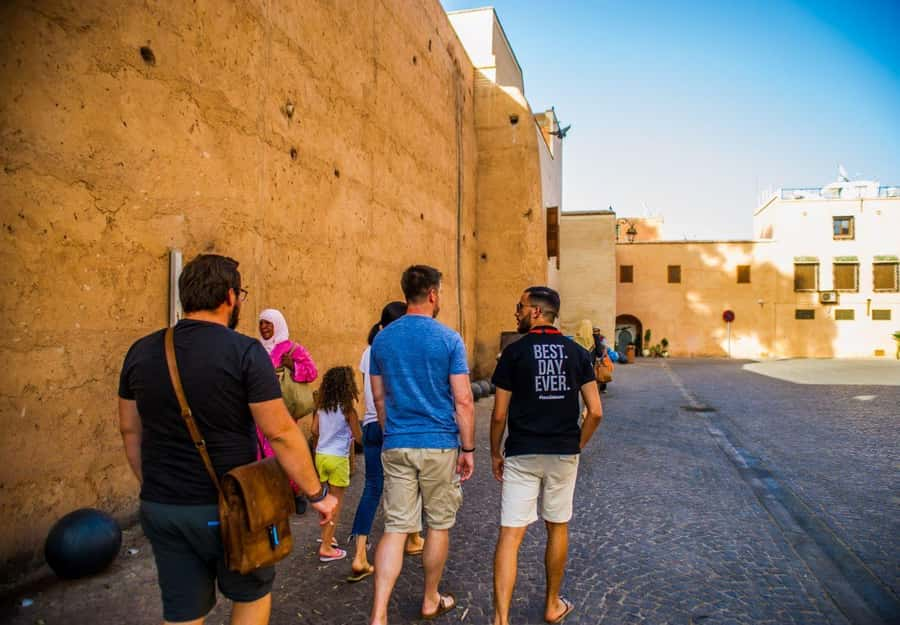
Marrakech’s medina makes more sense when you see how people live in it, not just how its monuments look. This private walk links Bahia Palace and Medersa Ben Youssef with a communal bakery and a hammam furnace where tanjia cooks in leftover heat. It gives you grand architecture and ordinary neighborhood life in the same four hours.
I like the private format, since your guide can adjust the pace, answer questions, and help you find your way through the souks. I also like the bread stop, a small but telling glimpse of family life that many sightseeing routes skip. The main drawback is the meeting point: Café France can be hard to identify, and fake guides operate around Jemaa el-Fna, so you need to find the official Urban Adventures sign or badge.
Key points at a glance
- Warm bread from a farran: See how local families bring dough to a communal oven, then taste bread fresh from the heat.
- Tanjia at a hammam furnace: Learn how this Marrakshi dish cooks slowly in clay pots using residual furnace heat.
- Two major historic sites included: Bahia Palace and Medersa Ben Youssef entrance fees are covered.
- Private four-hour route: You walk with an English-speaking licensed local guide rather than a large group.
- Useful first-day orientation: The route through the souks ends at Jemaa el-Fna, helping you get your bearings.
- Child-friendly and flexible: Children under six may join free, and cancellation is allowed up to 24 hours before departure.
A smart first walk through Marrakech’s medina
At $176 per person, this is not a budget walking tour. The price makes more sense if you value a private guide, two included admissions, and a route that joins famous sights with local food traditions. A larger shared tour may cost less, but it will usually give you less control over stops, questions, and walking speed.
The four-hour length is well judged for a first look at the old city. You get enough time for the major sights without turning the day into a long march through narrow lanes. I would book it early in a Marrakech visit, because the route helps you recognize the medina’s main patterns before you return on your own.
The tour has an English-speaking guide and a private group setup. Past departures have included guides named Sarah and Mustafa, but your assigned guide may be different. The strongest qualities to look for are clear local knowledge, patience with questions, and the ability to guide you through the souks without turning the walk into a shopping exercise.
More Medina and Souk Tours in Marrakech
- Marrakech: Bahia Palace, Saadian Tombs, Souk and Medina Tour
★ 4.7 · 4,974 reviews - Marrakech: Ben Youssef, Secret Garden, & Souks Walking Tour
★ 4.6 · 2,802 reviews - Marrakech: Colorful Medina Souks Guided Walking Tour
★ 4.7 · 2,470 reviews
Meeting at Café France without getting lost
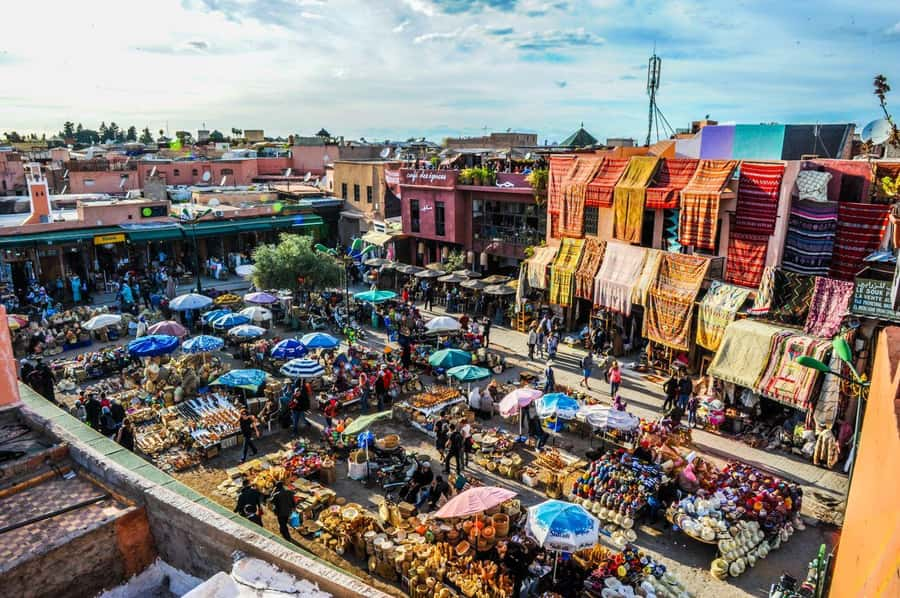
The tour starts in front of Café France on Jemaa el-Fna, also written as Djemaa el-Fnaa. As you enter the square through the main entrance, look for the three-story café on the right side. Your official guide should carry an Urban Adventures sign or badge.
This detail matters. Jemaa el-Fna is full of people offering unofficial tours, and the meeting instructions warn directly about fake guides. Do not leave with the first person who approaches you. Stay by the café and confirm the sign or badge before starting.
The short briefing gives you a chance to meet your guide and ask practical questions before entering the souks. The square itself is part of the experience, not just a pickup point. UNESCO recognizes Jemaa el-Fna for its intangible cultural heritage, including the public storytelling, music, and food traditions associated with the space.
Through the spice lanes and artisan workshops
From the square, you enter the souks on foot. The route passes spice lanes and artisan workshops, giving you a quick introduction to the medina’s working side. This is where a local guide adds real value. The lanes can feel confusing, especially on a first visit, and a good guide keeps the walk moving while explaining what you are seeing.
You should expect a sensory route rather than a quiet museum visit. The streets are narrow, and the medina is an active commercial district. People work, shop, carry goods, and move through the same lanes you are exploring. Keep close to your guide and pay attention to the route, since it is easy to lose your bearings if you stop for photographs.
One useful feature is the limited focus on souvenir shops. The stated route centers on the palace, bakery, furnace, and school rather than repeated sales stops. That leaves more time for the places that explain Marrakech as a living city.
Bahia Palace and its courtyards
Bahia Palace is the first major monument. Your guide leads you through courtyards, riads, mosaics, and reception halls, with entry included in the tour price. The palace is less about a single grand view than about a sequence of rooms and open spaces, each showing a different combination of tilework, carved surfaces, and controlled light.
The courtyards help you understand how traditional palace design organized daily life. The riad arrangement turns inward, protecting private spaces from the noise of the medina. Reception rooms show the more formal side of the complex, where decoration and layout communicated status.
I would give this stop your full attention rather than rushing from one photo point to another. Ask about the building’s former residents, the purpose of each space, and how the palace fits into Moroccan history. The guide’s explanation is what turns a pretty room into a place with meaning.
The palace can be visually busy, especially when several groups arrive at once. A private tour does not guarantee empty rooms, but it does let you pause, ask questions, or move on when a space becomes crowded. The included ticket also removes one small payment and queue from the morning.
More Mosques and Madrasas in Marrakech
- Marrakech: Bahia Palace, Saadian Tombs, & Koutoubia Mosque
★ 4.5 · 2,529 reviews - Marrakech: Bahia Palace, Madrasa Ben Youssef and Medina Tour
★ 4.7 · 1,347 reviews - Marrakech: Madrassa Ben Youssef, Secret Garden & Medina Tour
★ 4.8 · 1,303 reviews - Marrakech: Palace, Museum, Madrasa & Medina Highlights Tour
★ 4.7 · 706 reviews
Bread at the communal farran
The communal bakery is the most distinctive stop on the route. In a neighborhood farran, families bring prepared dough to be baked rather than using a private oven at home. You see a simple service that connects food, work, and community life.
The bread tasting is included, so you can try it warm from the oven. This is not a full meal, and additional food and drinks are not included, but it is enough to make the process memorable. The value lies in the access and explanation, not in the size of the snack.
I like this stop because it gives you something to notice later during the rest of your trip. Bread is a daily part of Moroccan life, and the communal oven shows how a basic household task can be shared across a neighborhood. It also breaks up the palace visits with a stop that feels practical rather than ceremonial.
Food-focused stops can vary with the day’s activity, so keep your expectations sensible. The tour promises a visit and bread tasting, not a cooking class or a broad food tour. If you want a larger meal, plan that separately after the walk.
Tanjia beside the hammam furnace
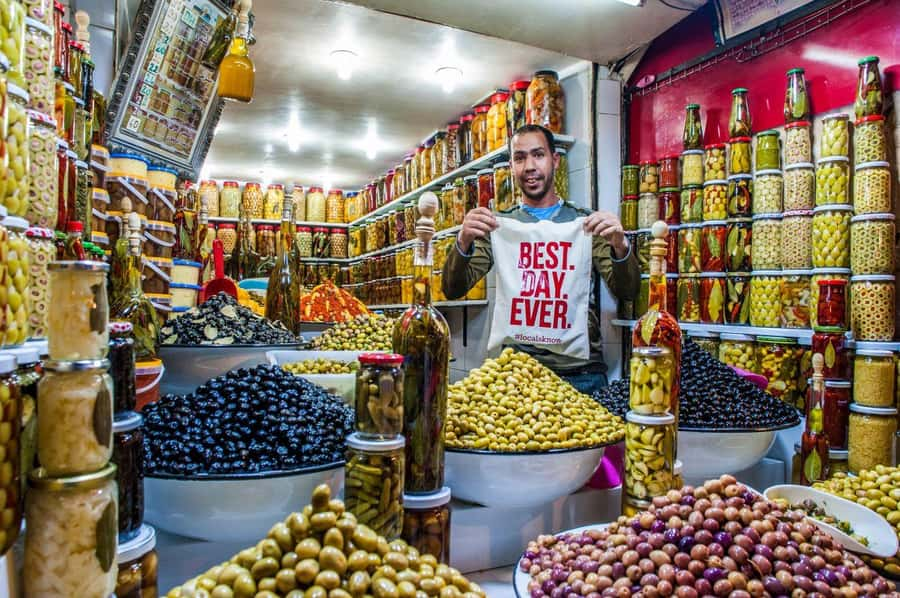
A few minutes from the bakery, the route stops at a neighborhood hammam furnace. Here you learn about tanjia, a Marrakshi dish prepared in a clay pot and cooked slowly with residual heat from the furnace.
The method is the interesting part. Tanjia uses the heat left over after the hammam has been heated, turning an existing source of warmth into a slow cooking space. It is a fine example of local resourcefulness, and it connects the food to the neighborhood bathhouse rather than treating cuisine as something found only in a restaurant.
This is a brief educational stop, not a meal. Tanjia preparation is explained, but additional food and drinks are not included. If you are especially interested in Moroccan cooking, ask your guide about the dish, the clay pot, and how the furnace is used. The private format gives you room to ask without holding up a large group.
The stop may be less visually polished than Bahia Palace. That is part of its value. You are seeing a working piece of neighborhood life, not a restored attraction arranged for display.
Medersa Ben Youssef and Saadian decoration
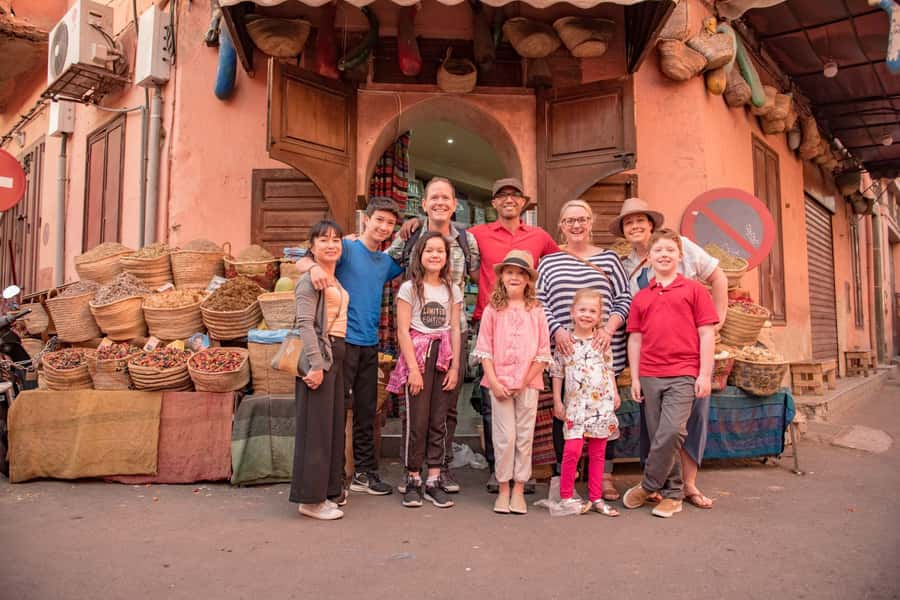
The final major stop is Medersa Ben Youssef, one of Marrakech’s most striking historic schools. Entrance is included, and the guided visit focuses on its Saadian-era stucco, zellige tilework, and carved cedar.
The medersa once housed and taught as many as 800 students. That number helps you read the building correctly. This was not simply a decorative religious monument. It was also a residential and educational complex, with student life organized around shared spaces and small study rooms.
Look closely at the contrast between the surfaces. Stucco gives the walls a soft, carved texture. Zellige provides precise geometric color. Cedar adds warmth above eye level. The effect is detailed without relying on one enormous object or painting.
Ben Youssef is a strong finish because it gathers together the design ideas you have seen elsewhere in the medina. Your guide can connect the decoration to Moroccan craft traditions and explain how the school functioned. The rooms may feel compact, and the number of visitors can affect how long you spend in each area, but the building rewards slow looking.
Ending at Jemaa el-Fna with a better sense of direction
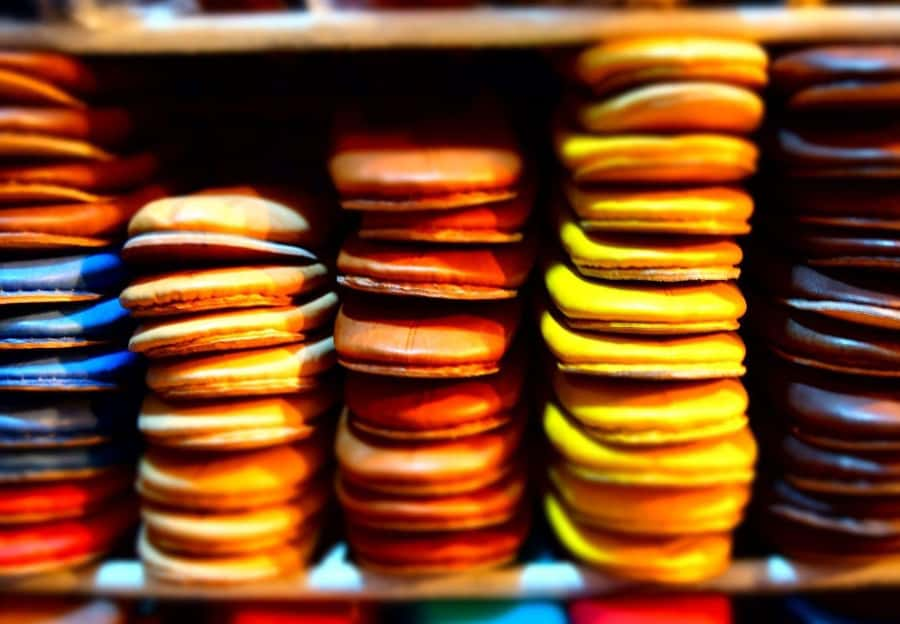
The walk finishes back at Jemaa el-Fna. Your guide can offer tips for further exploring or directions to your accommodation, which is useful after several hours in the medina’s twisting lanes.
This ending also gives the tour a practical shape. You begin at the city’s best-known public square, learn how the surrounding old city works, and return with a clearer sense of where you are. Several past tour experiences were especially useful for first-time visits because the route made the old city easier to navigate afterward.
The square can be intense, particularly for first-time visitors. The guide’s final advice may help you decide where to continue, but you should still keep your belongings secure and agree on any meeting point clearly if you separate from your party.
Pace, comfort, and who should book
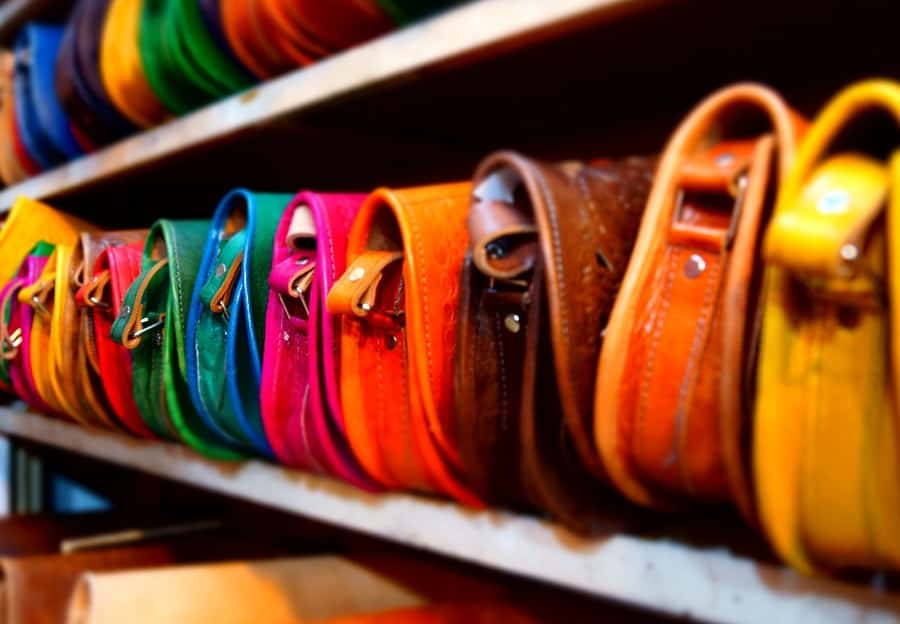
This is a walking tour through a busy old city, so comfortable shoes and water are sensible. The route is child-friendly, and children under six may join free of charge. A guide can also adjust the pace for water stops and short rests, as one past departure did, but you should mention your needs at the start.
Solo visitors, couples, families, and small private groups all fit the format. Solo visitors get the biggest benefit from having someone handle the medina’s complicated turns. Families gain a guide who can explain the sights in plain language and keep the food stops interesting for younger children.
The tour also suits anyone who wants culture without spending four hours inside monuments. The bakery and hammam furnace show the everyday systems behind the city’s public face. If your priority is shopping, nightlife, or a long food crawl, this route will feel too focused on history and architecture.
The experience is carbon neutral and operated by a B Corp-certified company committed to using travel for social good. That does not change the walking route, but it is a useful consideration if the company’s operating standards matter to you.
Is $176 per person a fair price?
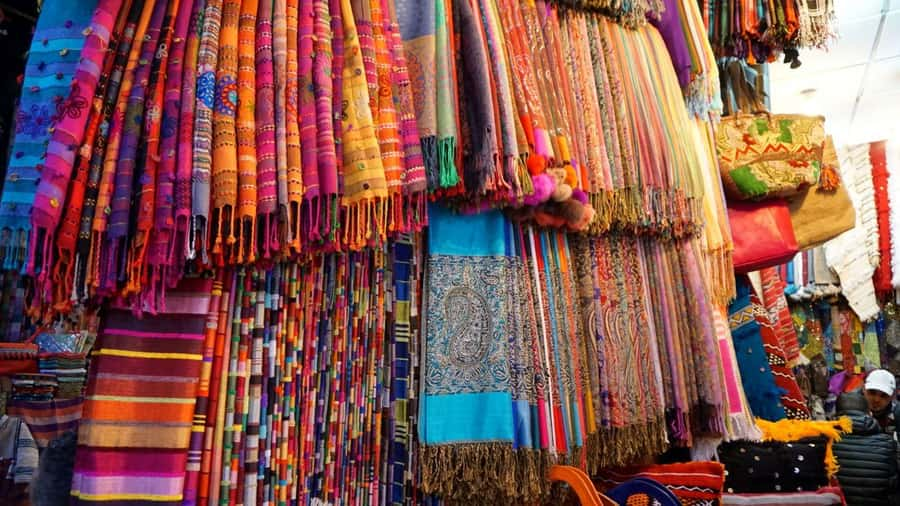
The price is fair for a private four-hour experience if you are traveling with people who will use the guide well. You are paying for a licensed local guide, private attention, route planning, bread tasting, the tanjia explanation, and admission to both Bahia Palace and Medersa Ben Youssef.
For one person, the cost is harder to justify than for a couple or small group, since private tours often make more financial sense when the fee is shared. Still, a solo visitor may value the confidence and orientation enough to accept the higher price.
The 4.8 rating from 48 bookings supports the idea that guide quality is the main strength. The most praised qualities have been friendly service, strong explanations, photo help, comfort for solo women, and a pace that can include rest stops. One practical warning also appears clearly: the meeting instructions can be confusing, so allow time to locate the official guide.
Cancellation is free up to 24 hours before departure, and you can reserve now and pay later. That flexibility helps if your Marrakech schedule is still changing.
Should you book this medina tour?
Book it if you want a well-rounded first look at Marrakech that combines major monuments with ordinary food traditions. The private guide, included admissions, limited shopping focus, and useful route through the souks give it more purpose than a basic landmark walk.
Think twice if you want a low-cost group tour, a full meal, or a relaxed photography session with no fixed route. The four hours are active, the medina can be confusing, and the meeting point demands care.
For most first-time visitors who want help getting oriented, I would book this near the beginning of a Marrakech stay. Meet only the guide holding the official Urban Adventures sign or badge, then let the route show you both the decorated palaces and the working neighborhoods that make the medina worth exploring.
FAQ
How long is the Marrakech private medina tour?
The tour lasts four hours.
Where does the tour meet?
Meet your guide in front of Café France at Jemaa el-Fna in Marrakech. The café is a three-story building on the right as you enter the square through the main entrance.
How will I identify the official guide?
The official guide will be holding an Urban Adventures sign or badge. The meeting information warns that unofficial guides may approach people around Jemaa el-Fna.
Which languages are available?
The tour is conducted in English by a live local guide.
Are Bahia Palace and Medersa Ben Youssef entrance fees included?
Yes. Entrance to both Bahia Palace and Medersa Ben Youssef is included.
Is food included?
The visit to the communal bakery and the bread tasting are included. Additional food and drinks are not included.
Can children join the tour?
Yes. The tour is child-friendly, and children under six may join free of charge.
More Palaces and Gardens in Marrakech
- Marrakesh: Majorelle Garden Entry Tickets
★ 4.5 · 9,651 reviews - Marrakech: Majorelle Garden, YSL, and Berber Museum Entry
★ 4.6 · 5,168 reviews - Marrakech: Saadian Tombs & Bahia Palace, Medina Guided Tour
★ 4.6 · 1,989 reviews - Private Transfer – Marrakech Menara airport (RAK)
★ 5.0 · 995 reviews
Just added around Marrakech
- Quad in the Palmeraie of Marrakech★ 5.0 · 41 reviews
- Marrakech Desert Camel Ride★ 5.0 · 17 reviews
- Sunset Camel Ride in the Palm Grove Of Marrakech★ 5.0 · 34 reviews
- Private Airport Transfer from or to Marrakech Menara Airport.★ 4.5 · 63 reviews
- Marrakech The History and Culture Day Trip★ 4.5 · 45 reviews
- Marrakech: Tailor-Made City Tour With Your Own Private Guide★ 4.9 · 236 reviews
- Marrakech palm grove: Sunset camel ride★ 4.8 · 194 reviews
- Sparkling Marrakech through the eyes of your local Guide★ 4.7 · 247 reviews
Medina and Souk Tours, compared.
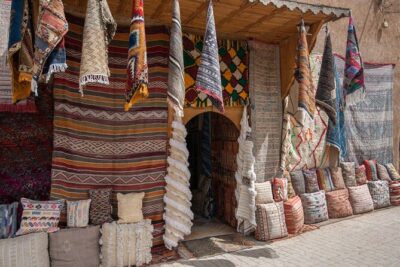
Bahia Palace, Saadian Tombs, Souk and Medina Tour
Read our review →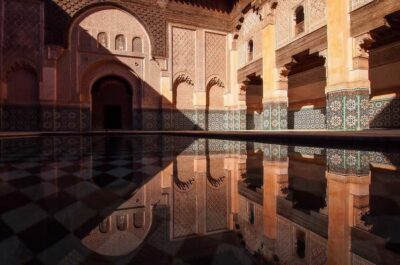
Ben Youssef, Secret Garden, & Souks Walking Tour
Read our review →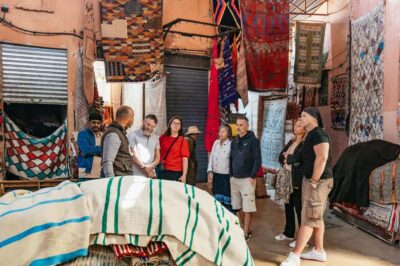
Museum, Al Attarine Madrasa & Tannery and Medina Tour
Read our review →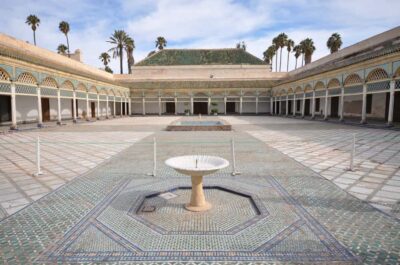
Bahia Palace, Madrasa Ben Youssef and Medina Tour
Read our review →
Explore Fes: Unforgettable Guided Walking Tour of the Medina
Read our review →Browse the lists this tour appears in