
Reviewed · FOOD TOURS
Marrakech: Private Food Tour – 10 Tastings with Locals
Marrakech reveals itself through food, and this private walk gets you past the postcard sights and into the places where locals eat. Over four hours, you’ll try 10 Moroccan tastings, including dates, savory dishes, sweets, and vegetable tanjia, with two non-alcoholic drinks along the way.
I like the mix of food and city sights, especially the stops at Mellah market and El Badii Palace. I also like the private format: guides such as Mohammed and Ouidad can adjust the pace and explain what you are eating. The main drawback is that the tour involves a lot of walking and is not suitable for wheelchair users or people with mobility impairments.
Key points at a glance
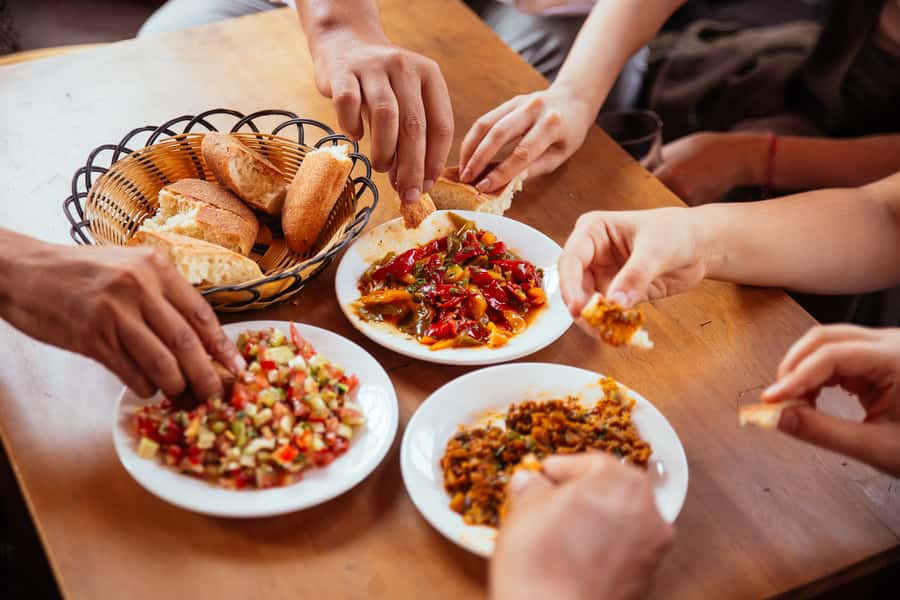
- Ten tastings in four hours: Expect a broad sample of savory food, sweets, dates, and local drinks rather than one long meal.
- Vegetable tanjia included: This classic Marrakech dish gives the food walk a strong local focus, with a vegetarian version available.
- Food and history together: The route links tastings with El Badii Palace, Mellah fruit and vegetable market, Koutoubia Mosque, and other city sights.
- Private English-speaking guide: Your guide can answer questions, explain customs, and adapt the food choices for vegetarians.
- Local-style stops: The route can take you to modest places you might not choose on your own, including spots around the souks.
- Four hours on foot: Meet at Mellah Square, wear comfortable shoes, and plan your own way back since hotel transport is not included.
Why this food walk works in Marrakech
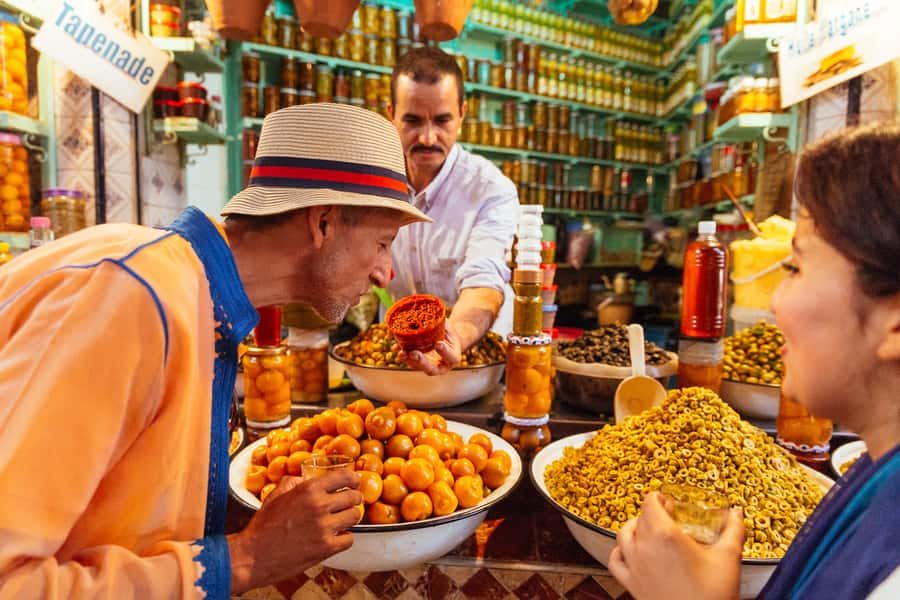
Marrakech can be hard to read at first. The medina is a maze of narrow lanes, food stalls, shops, courtyards, and small restaurants. A private food guide gives you a reason to enter places that may look too local or too informal when you are on your own.
The food is only half the point. You also get a guided walk through parts of the old city, with stops at important landmarks and explanations of Moroccan customs. That makes this a useful first or second-day activity, when you want to understand the city before exploring it alone.
The tour costs $93 per person. That is not cheap for a four-hour walk, but the price includes a private guide, 10 food tastings, and two non-alcoholic drinks. For someone who would otherwise pay for several small meals, a separate sightseeing tour, and the confidence to try unfamiliar places, the value is reasonable.
I would not book it only as a way to save money on lunch. I would book it for the access and guidance. The private format matters here because you can ask questions freely, slow down for explanations, or tell your guide early if you need vegetarian food.
More Food Tours in Marrakech
- Marrakech: Street Food Tour with a Local Guide
★ 4.9 · 3,119 reviews - Marrakech: Street Food Tour by Night
★ 4.8 · 2,838 reviews - Authentic Moroccan Food Tour in Marrakech with Dinner
★ 5.0 · 1,423 reviews
Starting at Mellah Square
Your meeting point is Mellah Square, in front of Le Tanjia Restaurant. This puts you near the old Jewish quarter and close to several of the historic sights included on the route.
You will need to arrange your own way to the meeting point. Hotel pickup and drop-off are not included, so leave extra time if you are staying outside the medina or in a modern part of Marrakech.
The guide may contact you through WhatsApp if the meeting point changes slightly. That happened with Mohammed, who kept in touch and made sure the meeting worked smoothly. It is a small practical detail, but useful in a city where squares and restaurant names can sound similar.
The tour is private, so you will not be matched with a large group. That gives you more room to ask about ingredients, manners, local life, and the landmarks along the way. It also means the quality of the outing depends quite a bit on the person assigned to you.
Guides named in past outings include Mohammed and Ouidad. Mohammed was praised for his humor, courtesy, and clear explanations. Ouidad was especially good at moving through the souks while sharing cultural information in excellent English. You cannot choose which guide you receive from the details provided, but these examples show the type of personal guide the tour aims to provide.
Walking through the Mellah market
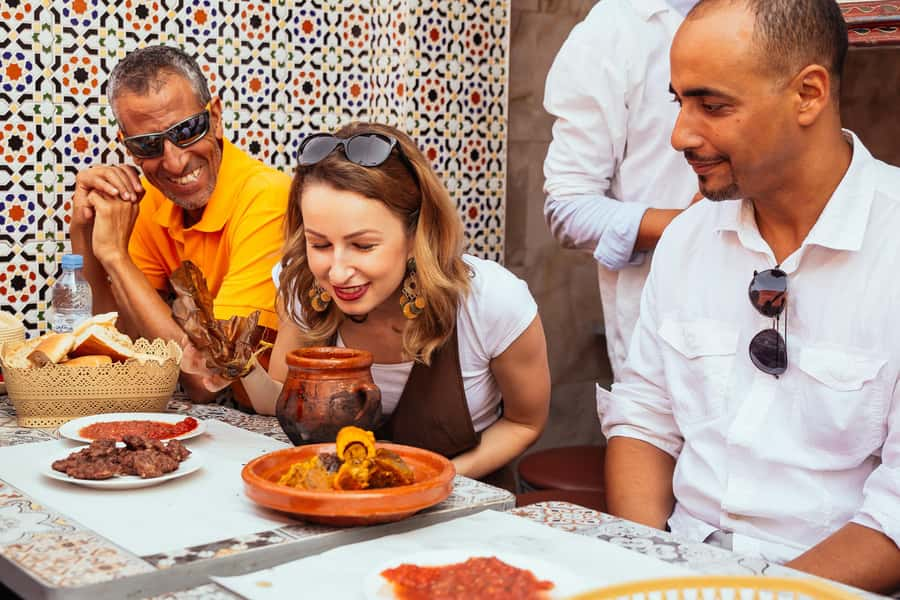
The Mellah fruit and vegetable market is one of the more useful stops because it connects the prepared food on your plate with the ingredients sold in the city. You can see the everyday side of Marrakech here, rather than only its monuments and shopping lanes.
A guide makes the market easier to understand. You can ask what a particular ingredient is used for, how Moroccan meals are built, and which foods are common at home rather than made mainly for visitors.
The route then moves through local food spots and souk lanes. This is where the private format earns its keep. You are not simply told where to eat. You can be led to places that may feel too plain or unfamiliar to choose by yourself.
One useful tip is to arrive hungry, but not starved. Ten tastings plus two drinks add up to a full food session. The portions may vary, and the tour covers sweet and savory food, so a light meal beforehand is the sensible choice if you are not sure how much you can eat.
Comfortable shoes are essential. The activity is four hours long, and the walking is part of the experience. It is not suitable for wheelchair users or people with mobility impairments, so check this carefully before booking.
Dates, drinks, and the first tastes
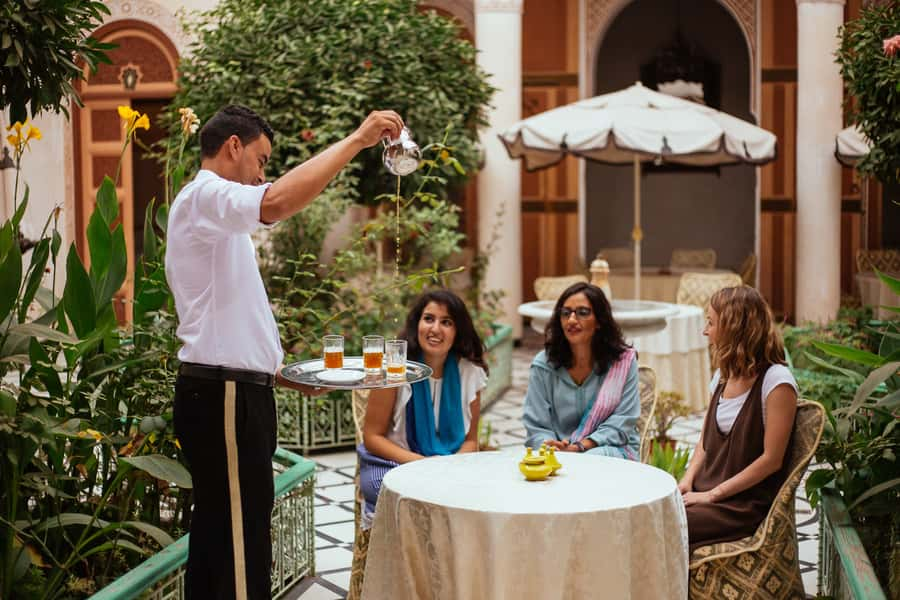
Dates are among the clearest introductions to Moroccan eating habits. They may appear simple, but tasting them as part of a guided food walk gives you a chance to compare the sweetness of the fruit with the savory food that follows.
The tour includes two non-alcoholic drinks. The exact choices are not specified, so you should ask your guide about them at the start if you have allergies, dietary limits, or strong preferences.
The 10 tastings are selected by the local guide and cover a range of Moroccan flavors. The stated mix includes savory dishes, sweets, dates, and drinks. That variety is more useful than a tour built around one large plate because you get a clearer sense of how different foods fit into daily life and celebrations.
You should also tell the guide about vegetarian needs at the beginning. Vegetarian alternatives are available, and the menu can be adapted. Do not wait until the final stop, since the guide will need to shape the tastings from the start.
A completely different kind of day in Marrakech:
- Marrakech: Quad Bike Tour to Palm Oasis and Jbilat Desert
★ 4.8 · 11,831 reviews - Marrakesh: Majorelle Garden Entry Tickets
★ 4.5 · 9,651 reviews - Marrakech Quad Bike Experience: Desert and Palmeraie
★ 4.5 · 9,509 reviews - Marrakech: Balloon Flight, Berber Breakfast & Certificate
★ 4.8 · 8,164 reviews
The vegetable tanjia finale
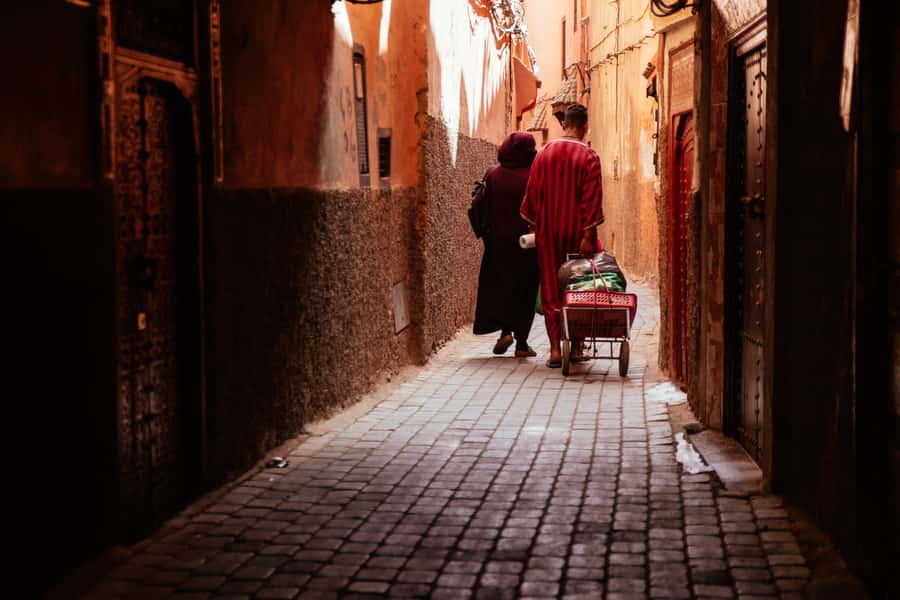
Tanjia is one of the key food moments on this walk. It is closely linked with Marrakech, and the experience specifically highlights a classic mix of dates and vegetable tanjia.
The vegetable version is important for two reasons. First, it gives vegetarians a proper local dish rather than a plate of side dishes. Second, it shows how the tour handles Moroccan food as something more than a checklist of famous bites.
A past outing with Ouidad treated the tanjia as the high point of the day. That makes sense: after several smaller tastes, a traditional dish gives the walk a satisfying finish.
The exact preparation and serving details are not provided, so I would avoid expecting a cooking lesson or a fixed restaurant setting. Think of it as a chance to taste tanjia in a local context, with your guide explaining why the dish matters.
Because this is one of the more substantial foods on the route, you may want to pace yourself earlier. The tour is designed to leave you satisfied, not merely curious.
El Badii Palace and the Mellah sights
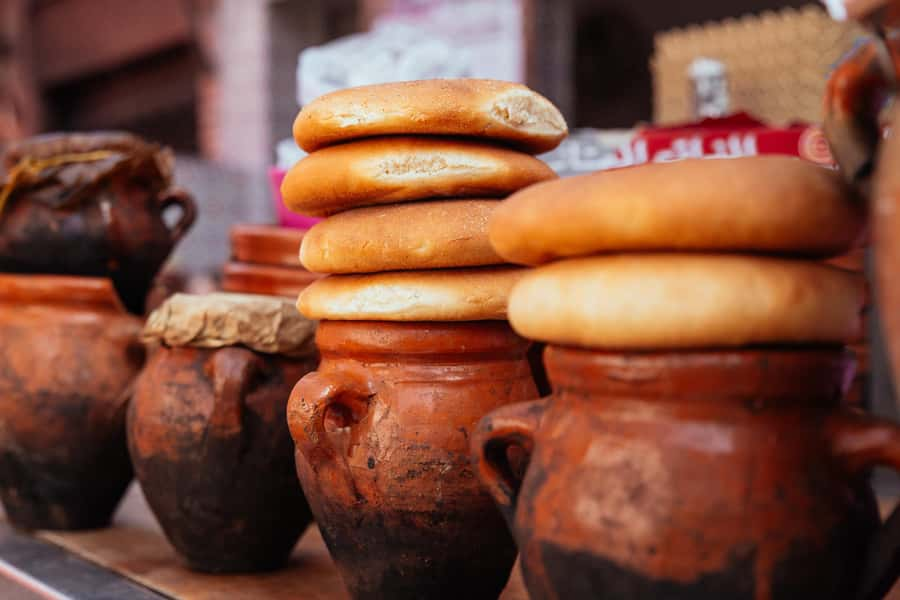
El Badii Palace adds a strong historical pause to the food route. It gives you a chance to step away from eating and consider Marrakech as a royal city, not just a place of markets and restaurants.
The stop is part of the guided route, but the supplied details do not say how long you spend inside or whether a separate entry ticket is included. Ask your guide what the visit covers on the day. The value here is the context and orientation, rather than assuming you will receive a full palace tour.
The nearby Mellah area also helps connect the city’s architecture, markets, and food traditions. You may notice that the tour moves between ordinary daily scenes and major landmarks. That change of scale is one of its strengths.
I like this pattern because four hours of tasting alone can feel heavy. The sightseeing breaks your appetite into manageable stages and gives you plenty to talk about with the guide.
Koutoubia Mosque and the city between bites
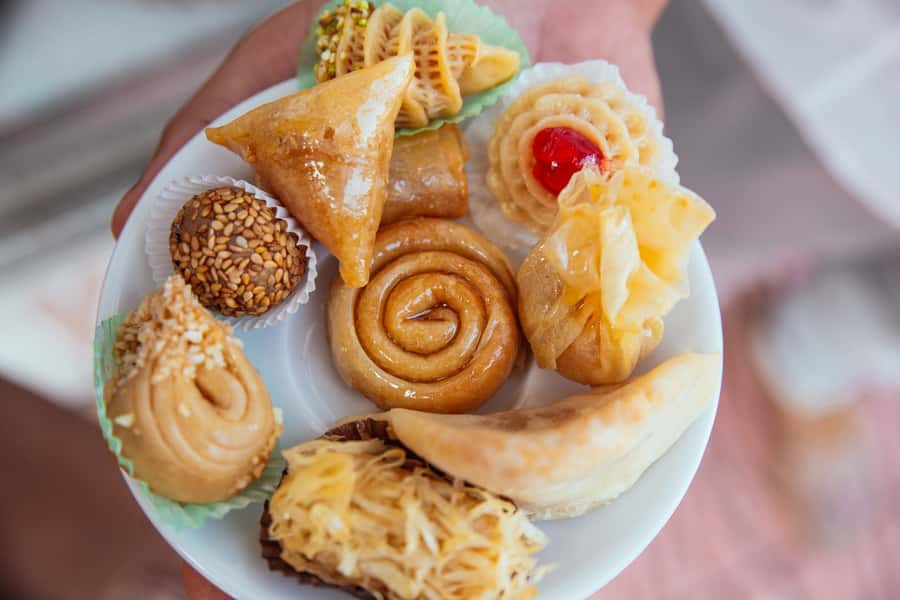
Koutoubia Mosque is another major sight included along the way. It helps you place the food stops within Marrakech’s wider layout, especially if this is one of your first walks in the city.
The information provided does not promise entry into the mosque, and you should not assume that you will go inside. The stop is best understood as a chance to see an important landmark and learn about its history and cultural role from the guide.
This is also where the tour becomes more than a meal with commentary. The guide can explain how food, markets, religion, neighborhoods, and daily routines connect. You get a better sense of the city by walking between these places than by visiting each one in isolation.
Ouidad was particularly good at adding cultural information while leading people through the souks. Mohammed was praised for interesting facts, humor, and respectful explanations. Those details matter because a food tour can quickly become shallow if the guide only names each dish and moves on.
A stop at a Berber pharmacy
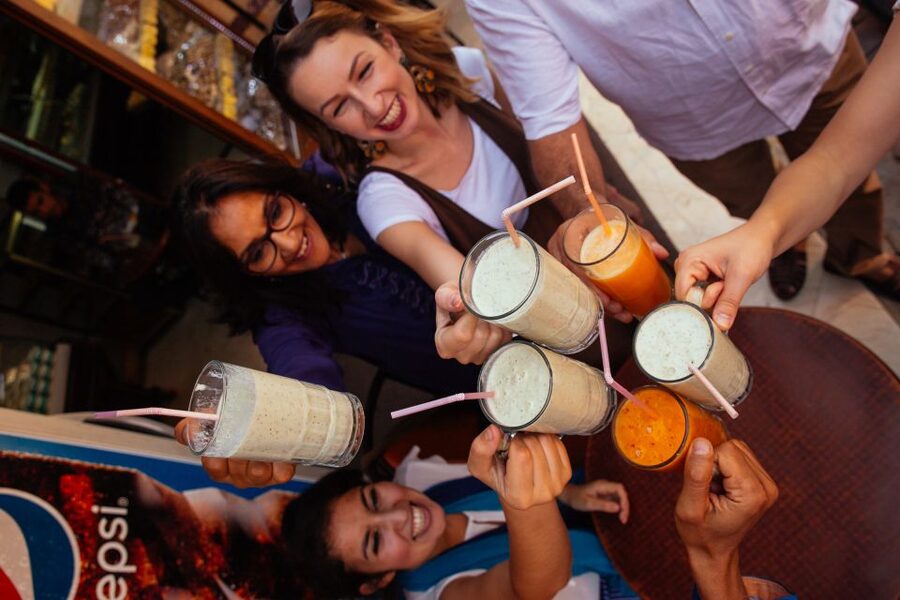
A Berber pharmacy may also be part of the route. This stop appeared as a memorable part of one outing, alongside the souks and tanjia.
The supplied details do not define exactly what is demonstrated or sold there, so I would treat it as a possible cultural stop rather than a guaranteed feature with a fixed presentation. If you visit, ask questions and keep your own shopping plans in mind.
For some people, this will be an interesting look at traditional products and local customs. For others, it may feel less central than the food and historic sights. The private format helps because you can tell your guide what interests you and avoid spending too long on a stop that is not your priority.
How much food do you really get?
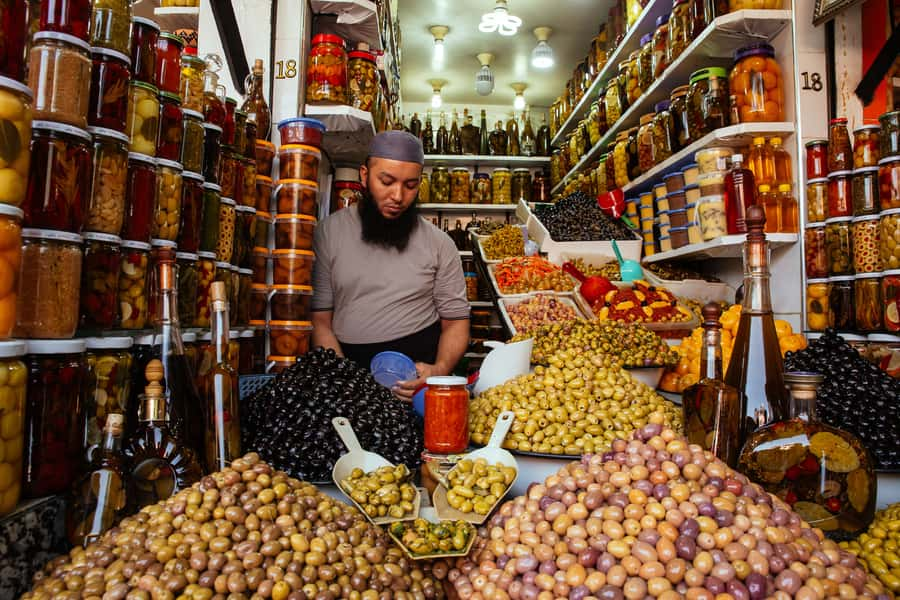
The tour includes 10 food tastings and two non-alcoholic drinks. That sounds like a full meal, and the experience is intended to satisfy a hungry person.
Still, tasting menus are not always equal to 10 full portions. The available details do not give portion sizes, so do not book this expecting a ten-course restaurant dinner. The advantage is range: you sample many local foods without committing to one unfamiliar dish.
The guide selects typical items from the local cuisine. That means the route can introduce you to foods you might miss if you stick to hotel restaurants or large tourist dining rooms.
I would ask at the start about ingredients, spice levels, allergies, and the vegetarian substitutions. The guide can adapt the menu for vegetarians, but the information does not confirm options for every allergy or dietary restriction.
Is $93 a fair price?
At $93 per person, this is a mid-to-high priced food walk. The cost makes more sense for a private group than it would for a large shared tour because you are paying for personal attention as well as food.
The package includes the guide, 10 tastings, and two non-alcoholic drinks. It does not include transport, so add the cost and time of getting to Mellah Square and returning afterward.
I see the best value in three areas:
- You can try local food in places you might not feel comfortable entering alone.
- You get a private English-speaking guide for four hours.
- The food route doubles as a first look at several important Marrakech sights.
If you already know the medina well and are happy choosing restaurants on your own, $93 may feel high. If you want help with both eating and orientation, the price is easier to justify.
Free cancellation is available up to 24 hours before the start time, and you can reserve now and pay later. Those terms are useful if your Marrakech schedule is still changing.
Who should book this experience?
I would recommend it to first-time visitors who want a friendly introduction to Marrakech food and the old city. It is also a good fit for couples, families with older children, and small private groups who prefer asking questions without a crowd listening.
Food-focused visitors will get the most from it, especially those who want both sweet and savory samples. Vegetarians can book too, provided they tell the guide at the beginning so the menu can be adjusted.
The tour is less suitable if you dislike walking, have limited mobility, or want a formal cooking class. It is also not the best choice if you need a precise menu in advance, since the food selection is guided locally and the exact tastings are not listed.
You should also expect a flexible route rather than a rigid march from one fixed stop to the next. One guide adjusted the program because the group had already seen some places. That kind of flexibility is useful, but it means the precise order and balance of stops may vary.
Should you book it?
Book this food walk if you want Marrakech explained through its markets, dishes, and landmarks, not just photographed from the outside. The strongest reasons are the private guide, the broad set of tastings, the vegetable tanjia, and the chance to try local places with someone who knows the area.
Skip it if $93 feels too high for a four-hour walk, if you need wheelchair access, or if you prefer to choose every dish and restaurant yourself.
For most first visits, I would schedule it early in your stay. You will learn the shape of the medina, discover foods to seek out later, and gain enough local context to make the rest of your time in Marrakech easier and more rewarding.
FAQ
How long does the Marrakech food tour last?
The tour lasts four hours.
How many food tastings are included?
You receive 10 food tastings, covering savory items, sweets, dates, and other local foods.
Are drinks included?
Yes. Two non-alcoholic drinks are included.
Is a vegetarian menu available?
Yes. Vegetarian alternatives are available. Tell your guide at the beginning so the menu can be adapted.
Where does the tour meet?
Your host meets you at Mellah Square, in front of Le Tanjia Restaurant.
Is hotel pickup included?
No. Hotel pickup and drop-off are not included.
What language is the tour offered in?
The live tour guide speaks English.
Is this a private tour?
Yes. The activity is arranged for a private group.
Can I cancel the booking?
You can cancel up to 24 hours in advance for a full refund. You can also reserve now and pay later.
Just added around Marrakech
- Quad in the Palmeraie of Marrakech★ 5.0 · 41 reviews
- Marrakech Desert Camel Ride★ 5.0 · 17 reviews
- Sunset Camel Ride in the Palm Grove Of Marrakech★ 5.0 · 34 reviews
- Private Airport Transfer from or to Marrakech Menara Airport.★ 4.5 · 63 reviews
- Marrakech The History and Culture Day Trip★ 4.5 · 45 reviews
- Marrakech: Tailor-Made City Tour With Your Own Private Guide★ 4.9 · 236 reviews
- Marrakech palm grove: Sunset camel ride★ 4.8 · 194 reviews
- Sparkling Marrakech through the eyes of your local Guide★ 4.7 · 247 reviews
Food Tours, compared.
Authentic Moroccan Food Tour in Marrakech with Dinner
Read our review →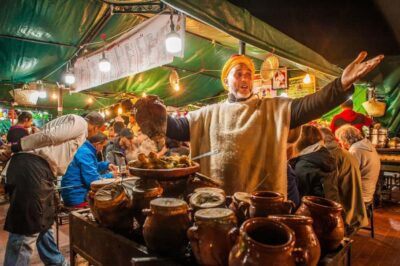
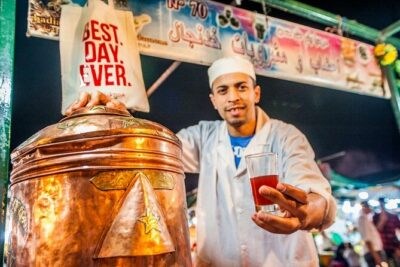
Evening Marrakech: Gastronomic and Market Tour Inside the Medina
Read our review →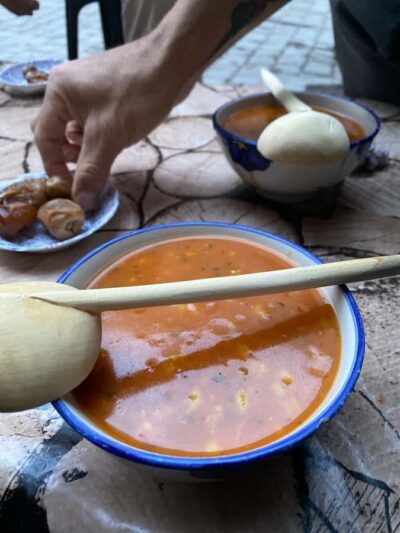
Marrakech Night Street Food Tour / Taste The Real Marrakech
Read our review →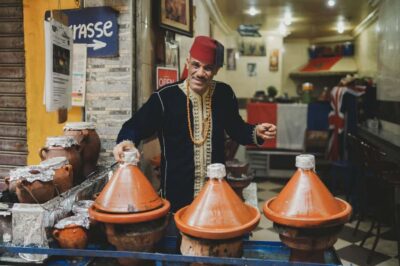

Authentic Food Tour in Agadir – Eat Like A Local
Read our review →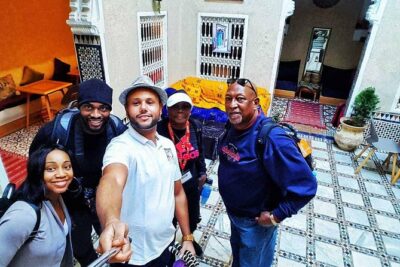
Browse the lists this tour appears in