
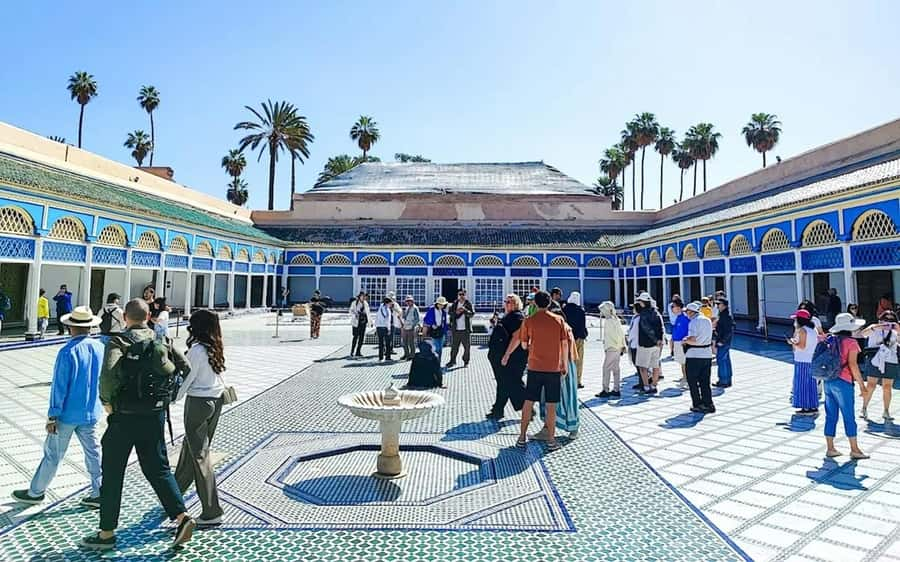
Reviewed · MEDINA AND SOUK TOURS
Marrakech: Bahia Palace, Saadian Tombs & Medina Walking Tour
Marrakech reveals itself best on foot, and this tour takes you from the grand minaret of Koutoubia Mosque into the narrow lanes of the Kasbah, Mellah, and Medina. The main draw is the mix of royal monuments, daily street life, and traditional crafts within a single three-hour walk.
I like the local guiding and the choice between a private outing and a small group. Guides such as Abdul, Abdel, Momo, Ismael, and Mo have been praised for clear explanations, friendly manners, and sensible pacing. I also like the chance to see both major sights and ordinary corners of the old city.
The main catch is simple: entry tickets are not included, and the mosque is an exterior stop only. You should also be ready for heat, uneven streets, crowds, and plenty of walking. One past itinerary did not include every planned monument, so it is wise to confirm the exact stops when you book.
Key points to know before you book
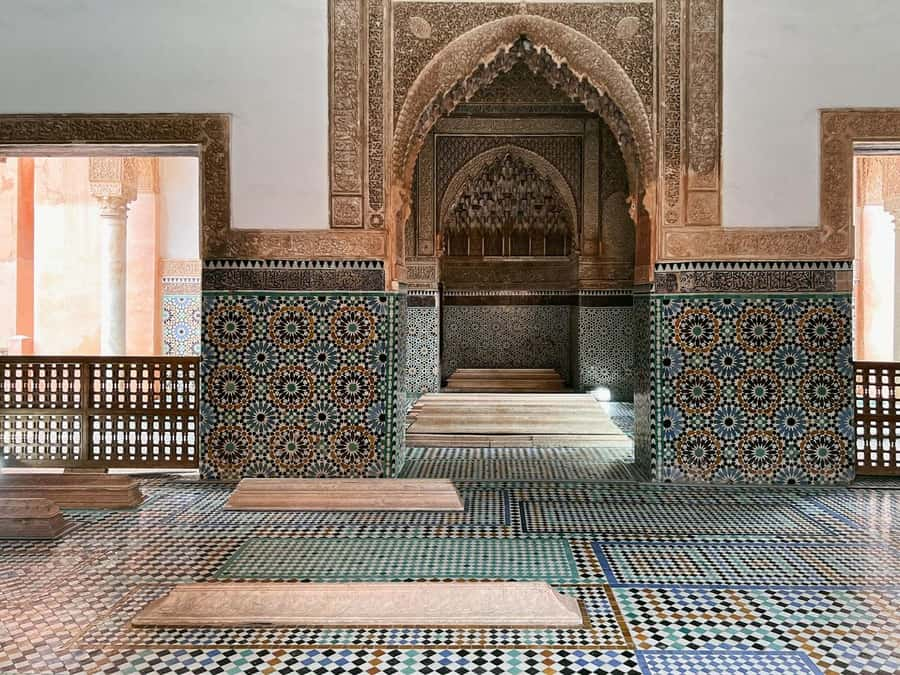
- Saadian Tombs and Bahia Palace: These are the tour’s main interior visits, with tilework, marble, carved wood, courtyards, and royal decoration.
- Koutoubia is exterior only: You can admire the mosque and minaret, but entry is reserved for Muslims during prayer times.
- A guide makes the Medina easier: The old city’s lanes, souks, workshops, and courtyards make more sense with local context.
- Bring cash for monument tickets: Bahia Palace and the Saadian Tombs are paid separately on site.
- Heat planning matters: A late-June morning tour was made more comfortable with shade breaks, water stops, and rest pauses.
- Allow for a demanding walk: This is not suited to people with mobility impairments.
Why this three-hour walk works well in Marrakech
Marrakech’s old center can feel confusing at first. The streets twist, lanes narrow without warning, and the souks blend into residential quarters and monument districts. A guide gives you a route and, just as important, a sense of what you are looking at.
This is not only a monument checklist. You move through the Kasbah, the former Jewish quarter, market streets, craft workshops, and quieter corners of the Medina. That variety helps you see Marrakech as a living city rather than a collection of photo stops.
The price, listed at $16 per person, is appealing for a three-hour guided walk. It is especially good value if you want an introduction to the old city without paying for a long private sightseeing day. Keep in mind that the low headline price does not cover entry to the Bahia Palace or Saadian Tombs, so you need extra cash on the day.
The exact meeting point can change with the option you choose. Check your booking details carefully, since walking tours in the old city often use different starting points for private and shared groups.
More Medina and Souk Tours in Marrakech
- Marrakech: Bahia Palace, Saadian Tombs, Souk and Medina Tour
★ 4.7 · 4,974 reviews - Marrakech: Ben Youssef, Secret Garden, & Souks Walking Tour
★ 4.6 · 2,802 reviews - Marrakech: Colorful Medina Souks Guided Walking Tour
★ 4.7 · 2,470 reviews
Koutoubia Mosque and the shape of Marrakech
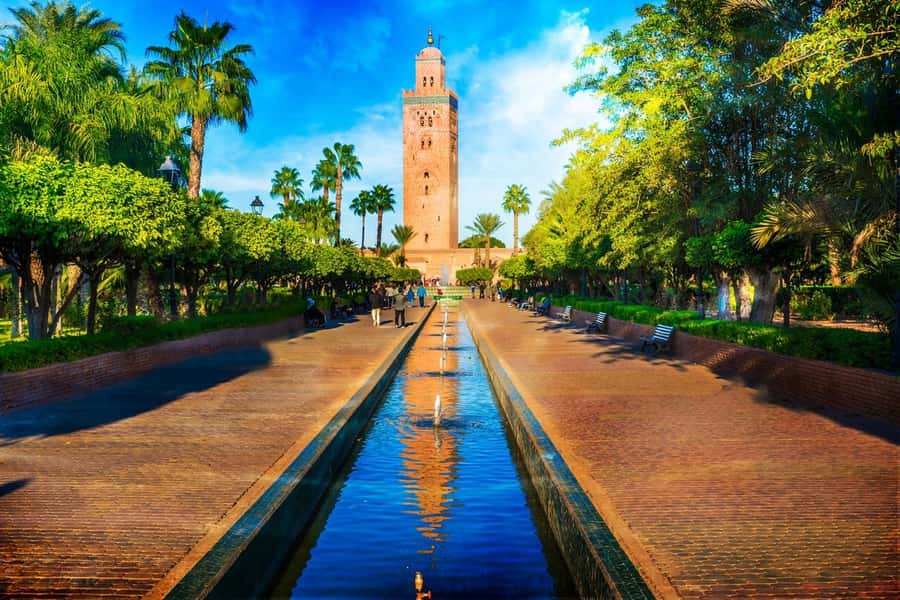
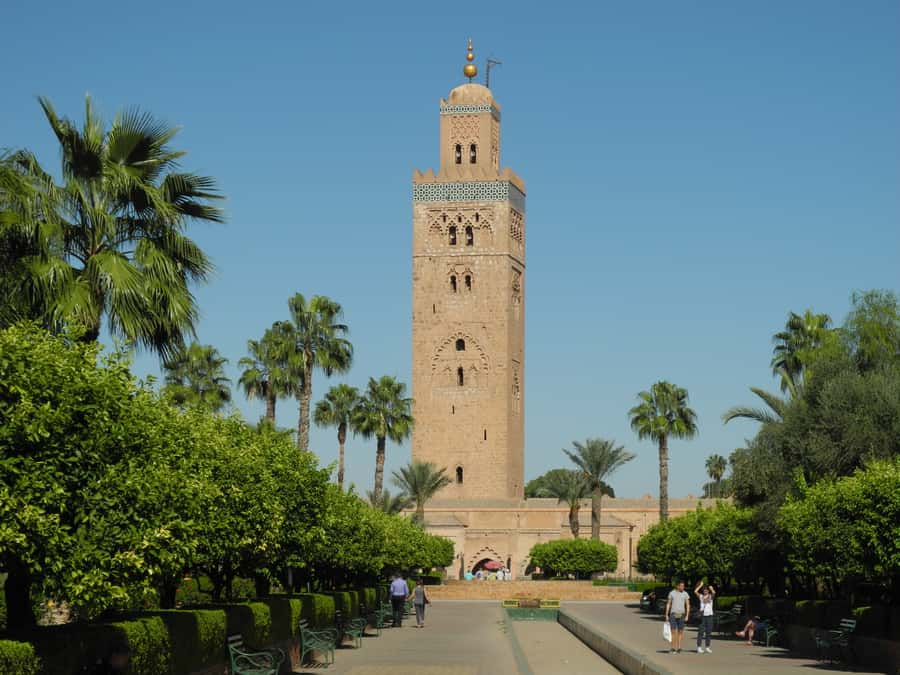
The walk begins with an exterior look at Koutoubia Mosque, the city’s most recognizable religious building. Its tall minaret is a landmark across Marrakech, and the Almohad design gives the mosque a strong, restrained appearance.
You will not go inside. Entry is restricted during prayer times and reserved for Muslims, so this stop is about the exterior, the architecture, and the mosque’s place in the city.
That limitation is worth knowing before you book. If you expect an interior mosque visit, this tour will not provide it. Still, Koutoubia works well as a starting point because it helps you get oriented before entering the older quarters.
Your guide can explain the mosque’s role in Marrakech and point out details that are easy to miss when you are only passing by. From here, the route heads toward the Kasbah, where the atmosphere becomes more intimate and the streets narrower.
Walking through the Kasbah to Bab Agnaou
The Kasbah was once a fortified royal quarter. Today, walking through it gives you a look at an older residential part of Marrakech, where everyday life continues among historic walls and narrow lanes.
The route includes an exterior stop at Bab Agnaou, a 12th-century gate with carved stone decoration and royal symbolism. It is one of the city’s most impressive gateways, but it is easy to rush past if you do not know what you are seeing.
Take time to look at the surface details. The gate is not simply an entrance. Its decoration was meant to announce authority and mark the importance of the royal district beyond it.
This portion of the walk also sets the tone for the rest of the tour. You are not moving only between famous buildings. You are walking through streets where the old city remains part of daily life.
The Saadian Tombs and their fine detail
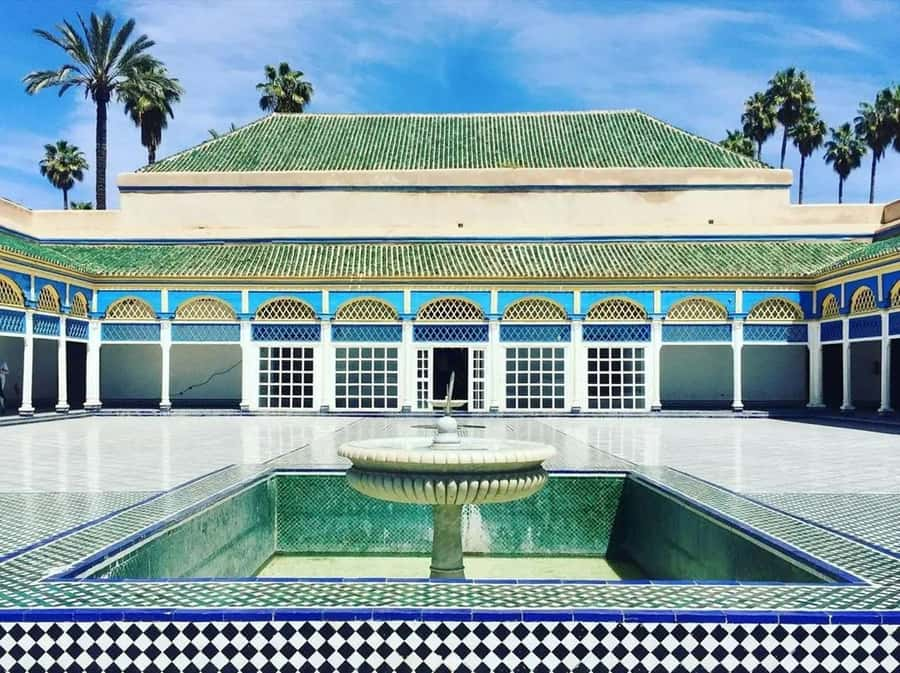
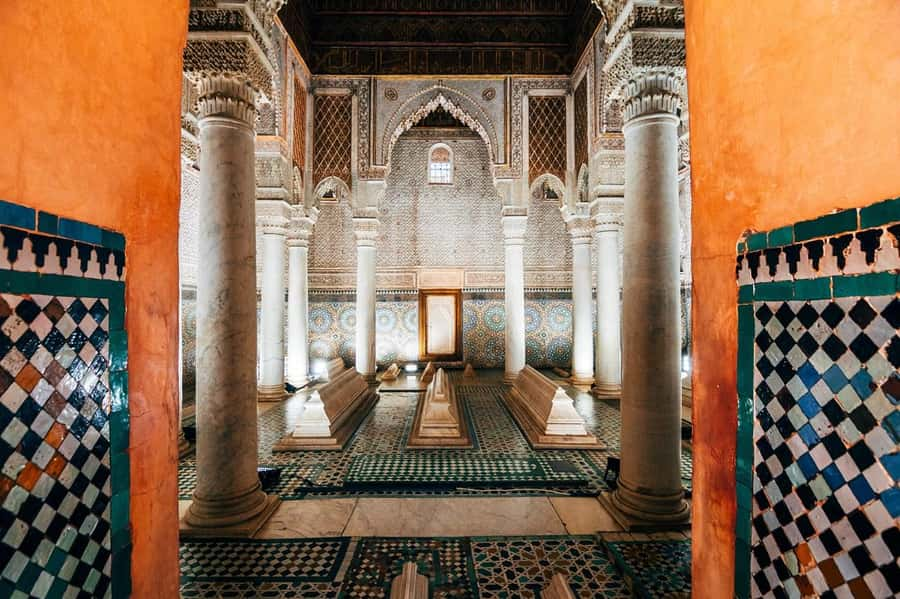
The Saadian Tombs are among the most rewarding stops on the route. The burial complex belonged to the Saadian dynasty and remained hidden for centuries before being rediscovered in 1917.
Inside, the decoration is the main event. Look for zellij tilework, marble columns, and carefully finished ceilings. The workmanship is delicate, and the compact site can feel quite different from the open courtyards of Bahia Palace.
Your guide accompanies you inside, explains the setting, and then gives you time for photographs and independent looking. That balance matters here. A short explanation helps you understand the site, but you also need a quiet moment to take in the patterns and materials.
The monument can be busy at peak times. Skip-the-ticket-line access may save time at the entrance, but it does not guarantee an empty interior. You may still face a queue inside, especially around the most popular viewing areas.
Tickets are extra and must be paid in cash on site. Bring enough dirhams or other accepted cash for the entrance fees, since the tour price covers the guide and water, not admission.
More Walking Tours in Marrakech
- Marrakech: Medina by Night Walking Tour with Moroccan Tea
★ 4.6 · 586 reviews - Marrakech: Medina Souks Guided Walking Tour
★ 4.5 · 381 reviews - Medina of Marrakech Walking Tour
★ 4.0 · 300 reviews - Marrakech: Authentic Moroccan Food Walking Tour & Dinner
★ 4.8 · 261 reviews
The Mellah and Marrakech’s Jewish past
The walk continues into the Mellah, Marrakech’s former Jewish quarter. This is one of the more useful parts of the itinerary because it adds a social and cultural layer to the city’s story.
The street layout and architecture help show how different communities shaped Marrakech. Instead of seeing the old city as one uniform area, you begin to notice changes in buildings, lanes, and neighborhood character.
The Mellah is also a good place to slow down. The tour is not just about grand decoration. It gives you a chance to see how the historic center is divided into districts, each with its own past and daily rhythm.
Do not expect a long, separate museum visit here. The value comes from walking through the area and listening to your guide’s explanation as the streets themselves become part of the lesson.
Bahia Palace, courtyards, and cedarwood ceilings
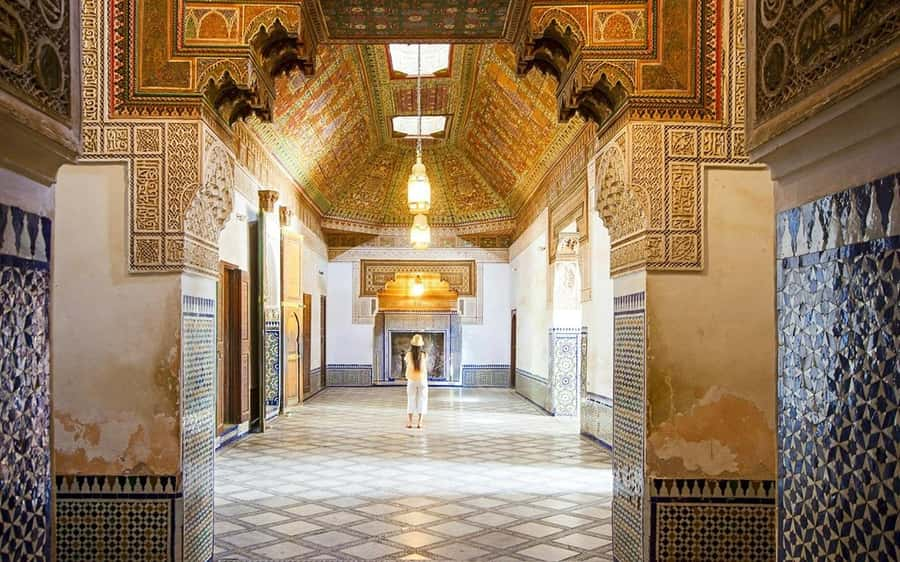
Bahia Palace is the tour’s major interior highlight. Built in the 19th century, it was designed to show off the finest decorative work of its period.
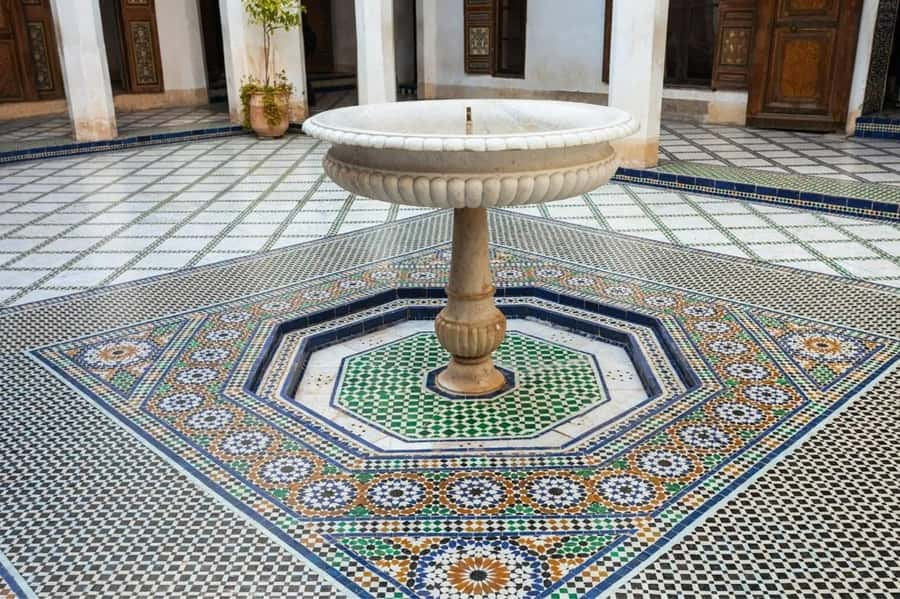
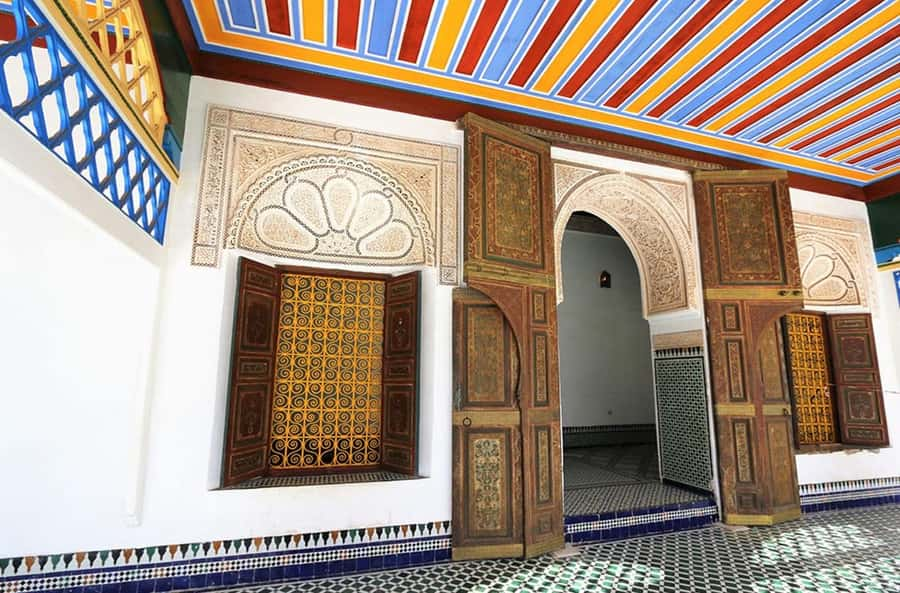
The palace is organized around courtyards and rooms with colorful tile, carved cedarwood ceilings, and detailed surfaces. The design rewards patience. Rather than looking for one single grand hall, you will notice how the decoration continues from one space to the next.
The courtyards provide a welcome change after the tight streets of the Medina. They also make the palace easier to appreciate as a place designed for comfort, ceremony, and display.
Some parts of the palace may be under renovation. This can limit what you see on the day, and the monument may be crowded. Still, the visit gives you a strong introduction to Moroccan decorative arts without requiring a separate palace tour.
Your guide stays with you inside, then allows free time for photos and closer inspection. That arrangement is useful because you get the historical setting first and can then focus on details that catch your eye.
As with the Saadian Tombs, admission is not included. Pay at the site in cash, and remember that the advertised skip-the-line benefit can help with the ticket queue while internal crowding remains possible.
Souks, workshops, and the Medina’s working streets
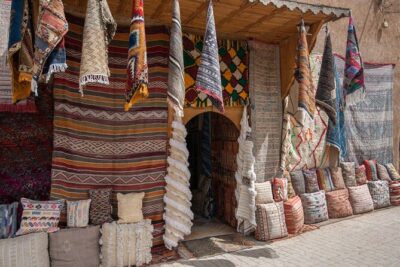
After the palace, the route enters the souks. These markets are not one single bazaar but a web of lanes filled with spices, textiles, lanterns, leather goods, pottery, metalwork, and woodcraft.
The best part of having a guide here is knowing what you are looking at. You may pass an artisan workshop without noticing the work taking place inside. A local guide can point out traditional techniques and explain how different crafts fit into the market.
You will also have chances to browse. Keep your expectations practical. This is a commercial area, not a museum, and shopkeepers may invite you to look or buy. If you are not shopping, a polite no and continued walking is usually enough.
The Medina itself is a UNESCO World Heritage Site. Its value lies in the combination of architecture, trade, craft, and ordinary life. You might turn from a lane lined with goods into a quieter courtyard or residential street within moments.
This is where a walking tour earns its keep. A map can show you the route, but it cannot explain every change in atmosphere or help you understand why a particular lane matters.
Guides who shape the experience
The quality of this tour depends heavily on the guide. The named guides connected with the experience include Abdel, Abdul, Momo, Ismael, and Mo.
Abdul has been especially effective at keeping a comfortable pace in difficult heat. On a late-June morning when temperatures rose above 100 degrees, he planned shade stops, breaks, water opportunities, and access to free bathrooms. That is the sort of practical care that can determine whether a walking tour feels manageable or exhausting.
Mo has been praised for his enthusiasm for the palace, monuments, and Marrakech in general. Ismael is described as friendly and well informed, with useful suggestions for other city visits. Abdel is noted for professionalism, warmth, and a pleasant manner.
Your guide may not be one of these people, but the pattern is encouraging. The most important qualities to look for are clear communication, local familiarity, and sensible pacing. English and French are the available tour languages.
A private group gives you more control over the pace and questions. A shared group can cost less and still provide a good introduction, but the rhythm may be less flexible. If you care about spending extra time at the tombs or palace, the private option is the safer choice.
Heat, walking, and what to bring
Three hours on foot can feel much longer in Marrakech’s heat. Wear comfortable shoes, bring a sun hat, and carry water even though water is included. The guide may provide or arrange additional water stops, but you should not depend on finding relief only when the group pauses.
Cash is important for monument tickets and useful in the souks. Food and drinks beyond the included water are your responsibility, so bring enough for the day.
The route includes narrow lanes, uneven surfaces, and crowded areas. It is not suitable for people with mobility impairments. Even for fit walkers, the experience will be easier if you avoid treating it as a race.
The best approach is to leave room in your schedule afterward. The advertised duration is three hours, but heat, crowds, and time spent looking inside monuments can affect the pace.
What the $16 price really covers
At $16 per person, this is an inexpensive way to get a guided introduction to Marrakech’s historic center. You are paying mainly for the local guide, route planning, interpretation, and water.
You are not paying for a full private sightseeing day, transport, meals, or monument admission. That distinction matters. Add the entrance fees for the Bahia Palace and Saadian Tombs when working out your real budget.
The value is strongest if you are new to Marrakech and want the main historic districts explained in one outing. It can also work well near the start of a city stay, since you will see places you may want to revisit later at your own pace.
The tour is less suitable if you dislike walking, prefer long visits at each monument, or want guaranteed access to every stop listed in a broad program. One past outing missed the Quranic school, and another comment noted that the area around the mosque was not explored as fully as expected. Confirm the day’s exact route if a particular site is essential to you.
Should you book this Marrakech walking tour?
Book it if you want a low-cost introduction to the old city with a local guide, especially if the Kasbah, Saadian Tombs, Bahia Palace, Mellah, and souks are all on your list.
I would choose the private option if you want a relaxed pace, detailed questions, or more control over photo stops. The shared option makes sense if price matters most and you are comfortable moving with a group.
Bring cash, good shoes, water, and realistic expectations about the mosque and monument queues. If you can handle the heat and three hours of walking, this tour gives you a useful first look at Marrakech’s buildings, crafts, and daily life.
FAQ
How long does the tour last?
The walking tour lasts three hours.
What languages are available?
The live guide is available in English or French.
Is the tour private or shared?
You can book a private group or a shared small-group experience, depending on the option selected.
Are Bahia Palace and Saadian Tombs tickets included?
No. Entrance tickets for Bahia Palace and the Saadian Tombs are paid separately in cash on site.
Can I enter Koutoubia Mosque?
No. The Koutoubia Mosque visit is exterior only. Entry is reserved for Muslims during prayer times.
Does the tour include water?
Yes. Water is included. Food and other drinks are not included.
Can I skip the ticket line?
Skip-the-ticket-line access is available for selected monuments. Internal queues may still be present when the sites are crowded.
What should I bring?
Bring comfortable shoes, a sun hat, water, and cash.
Is the tour suitable for people with mobility impairments?
No. The experience is not suitable for people with mobility impairments.
More Palaces and Gardens in Marrakech
- Marrakesh: Majorelle Garden Entry Tickets
★ 4.5 · 9,651 reviews - Marrakech: Majorelle Garden, YSL, and Berber Museum Entry
★ 4.6 · 5,168 reviews - Marrakech: Bahia Palace, Saadian Tombs, & Koutoubia Mosque
★ 4.5 · 2,529 reviews - Marrakech: Saadian Tombs & Bahia Palace, Medina Guided Tour
★ 4.6 · 1,989 reviews
Just added around Marrakech
- Quad in the Palmeraie of Marrakech★ 5.0 · 41 reviews
- Marrakech Desert Camel Ride★ 5.0 · 17 reviews
- Sunset Camel Ride in the Palm Grove Of Marrakech★ 5.0 · 34 reviews
- Private Airport Transfer from or to Marrakech Menara Airport.★ 4.5 · 63 reviews
- Marrakech The History and Culture Day Trip★ 4.5 · 45 reviews
- Marrakech: Tailor-Made City Tour With Your Own Private Guide★ 4.9 · 236 reviews
- Marrakech palm grove: Sunset camel ride★ 4.8 · 194 reviews
- Sparkling Marrakech through the eyes of your local Guide★ 4.7 · 247 reviews
Medina and Souk Tours, compared.
Bahia Palace, Saadian Tombs, Souk and Medina Tour
Read our review →
Ben Youssef, Secret Garden, & Souks Walking Tour
Read our review →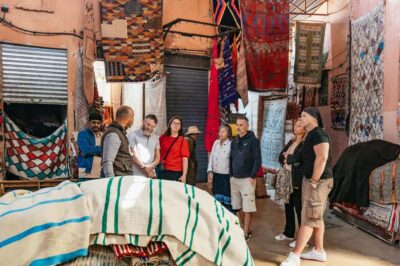
Museum, Al Attarine Madrasa & Tannery and Medina Tour
Read our review →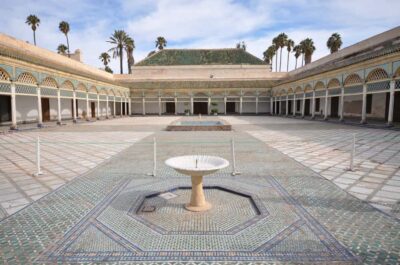
Bahia Palace, Madrasa Ben Youssef and Medina Tour
Read our review →
Explore Fes: Unforgettable Guided Walking Tour of the Medina
Read our review →Browse the lists this tour appears in