
Reviewed · MEDINA AND SOUK TOURS
Marrakech: Babouch Making Workshop in the Medina
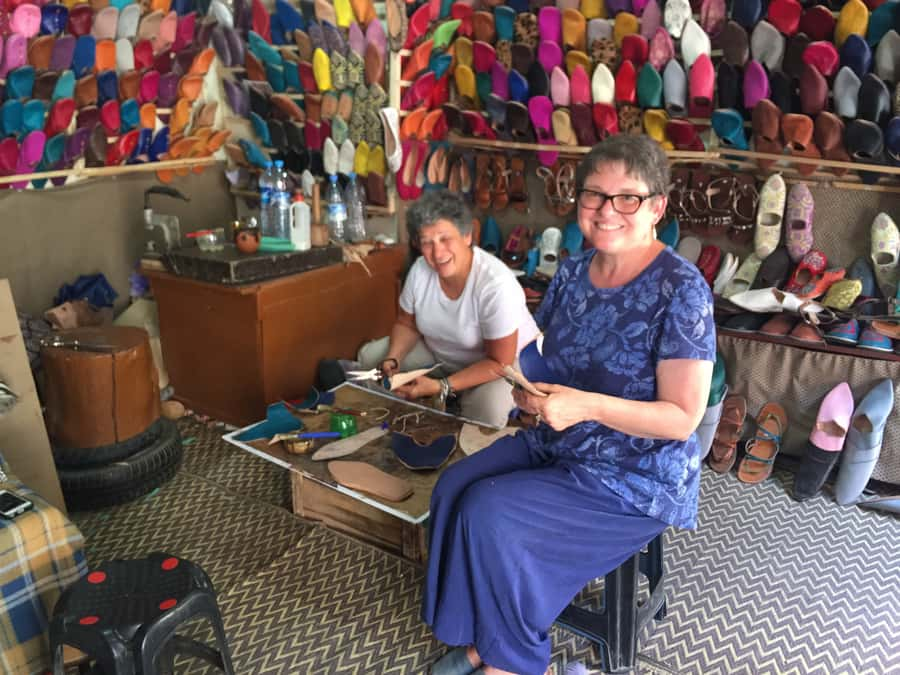
Making a pair of Moroccan babouch slippers gives you something a normal souk purchase cannot: a look at the work behind the finished product. In Youssef’s medina workshop, you choose leather, cut patterns, shape the pieces, and help create a pair fitted to your feet.
I like the calm, hands-on pace and the chance to talk with a craftsman whose family has worked with leather for five generations. I also like that you leave with a useful souvenir, not just a demonstration. The main drawback is the meeting point, which has caused confusion, so confirm the exact location with the guide before you set out.
Key points
- Choose your leather and color: You help select the materials for your own babouch.
- Work with a local craftsman: Youssef explains how leather is prepared and shaped into Moroccan footwear.
- Make a fitted souvenir: Your slippers can be adjusted to your size, including for smaller feet.
- Take a quiet break in the medina: Mint tea, water, and homemade Moroccan pastries are included.
- Get help finding the workshop: An English, French, or Arabic-speaking guide leads you through the souks.
- Plan for roughly four hours: The practical session lasts about 3.5 hours, with the full activity listed as four hours.
Why making babouch beats simply buying them
Marrakech’s souks are full of leather slippers. You can buy a pair quickly, bargain over the price, and move on. This workshop asks you to slow down and see why the slippers cost what they do.
You begin with raw materials and simple patterns. From there, the work involves measuring, cutting, gluing, shaping, hammering, stitching, and finishing. The process is hands-on, but you are not left to struggle alone. Youssef and the workshop team guide each step, while your accompanying guide helps with translation and keeps the session moving.
I like this balance. You get enough practical work to feel involved, but you do not need prior leatherworking experience. The finished pair is still made with the help of a professional, so the result is far more wearable than something produced entirely by a first-time craft student.
The workshop also gives you a better sense of the medina beyond its shop fronts. You are not only looking at leather goods for sale. You are seeing how a traditional item takes shape in a working studio.
More Medina and Souk Tours in Marrakech
- Marrakech: Bahia Palace, Saadian Tombs, Souk and Medina Tour
★ 4.7 · 4,974 reviews - Marrakech: Ben Youssef, Secret Garden, & Souks Walking Tour
★ 4.6 · 2,802 reviews - Marrakech: Colorful Medina Souks Guided Walking Tour
★ 4.7 · 2,470 reviews
Meeting your guide at Jamaa el Fna
The stated meeting point is in front of the post office at Jamaa el Fna Square. From there, your guide takes you through the souks to the workshop. This escort matters because the studio is not simply sitting beside the main square, and the lanes become harder to follow as you move farther into the medina.
The directions deserve care. The meeting information has sometimes referred to Rue Bani Marine while also saying to meet by the Post Maroc building. That wording has led to mix-ups. In one case, people waited beneath the street sign while the guide was actually at the entrance near the post office.
My practical advice is simple: look for the guide at the post office entrance, and use the contact number or messaging service if you do not see anyone. Guides named in the feedback include Yasmine, Khaoula, Ouiam, and others. They have been praised for clear English, friendly help, and guiding people safely through the souk.
This walk is part of the experience. You move away from the loudest shopping lanes and toward a more workaday part of the medina. It can also be a useful first introduction to Marrakech’s maze, since you learn the route with someone who knows where the workshop is.
Inside Youssef’s leather workshop
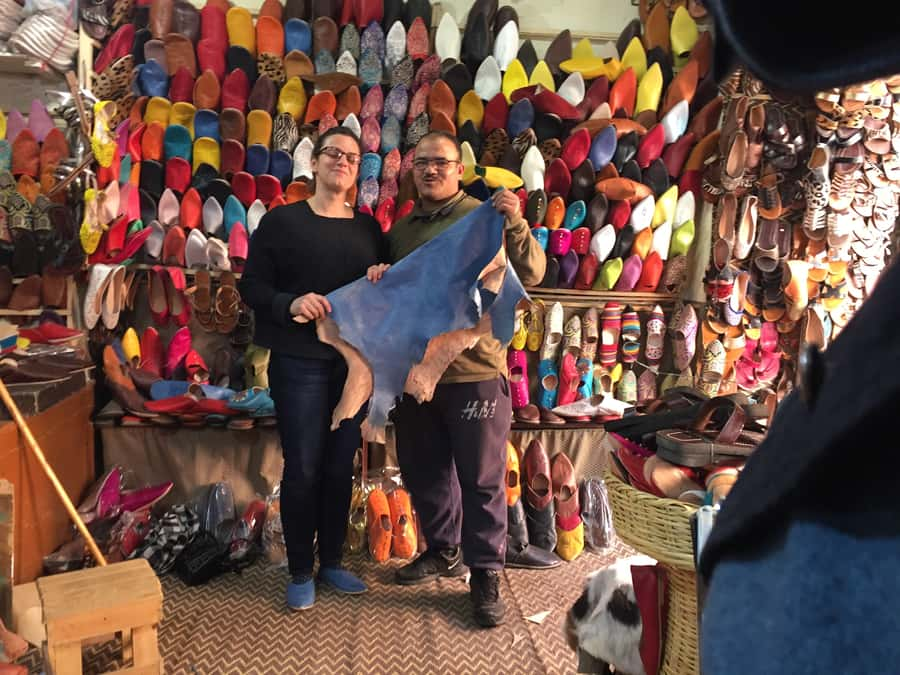
Youssef is the craftsman at the center of this experience. He explains the world of leather and how it is prepared for Moroccan products. You learn about different types of leather before choosing what you want to use for your slippers.
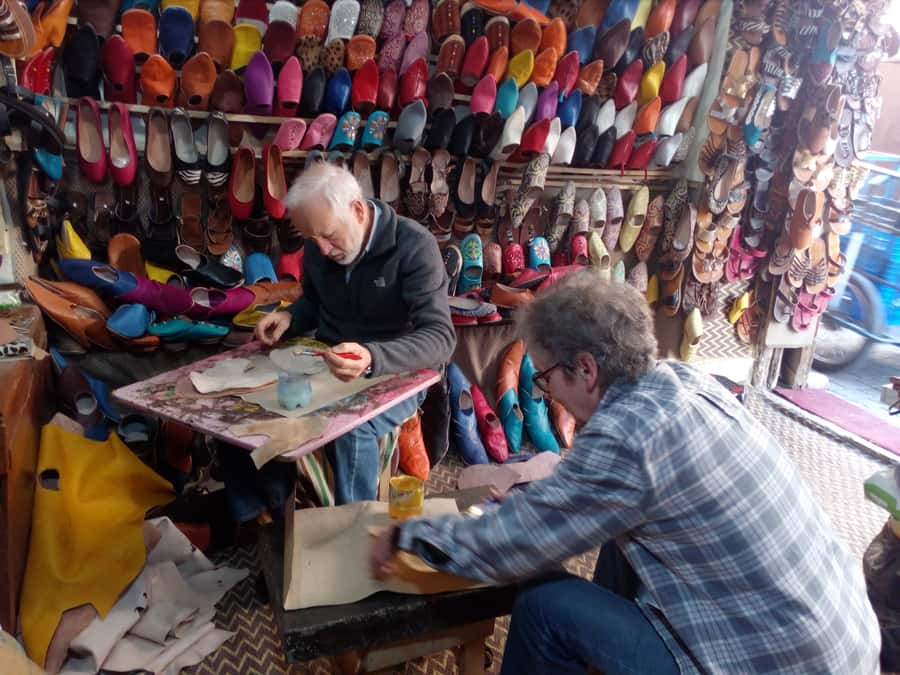
The workshop has the feel of a working craft space rather than a staged museum display. Tools and materials are provided, and the guide stays on hand to translate when needed. Youssef speaks French and has been described as able to communicate well in English too. Arabic is also available through the activity’s guide service.
The family connection adds a personal touch. You may hear about five generations of leather work, giving the class a direct link to local craft traditions. That does not turn the session into a formal history lesson. Instead, the past comes up naturally while you handle the materials and ask questions.
The setting is also a welcome pause from the sensory overload of the square and souks. You still hear the medina around you, but the work requires concentration. Cutting a clean shape or helping with a seam gives you something quiet to focus on.
Choosing leather, color, and slipper style
The practical session begins with choices. You select the leather and color for your babouch, and the workshop team helps you decide what will work. The available selection is not specified in advance, so do not assume every color or design will always be in stock.
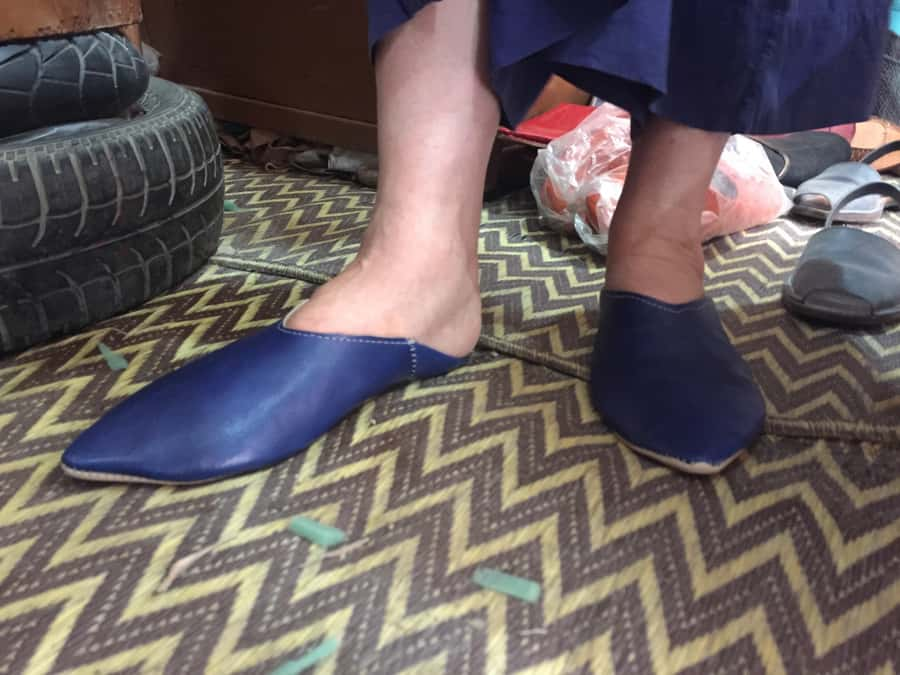
Your foot size is taken into account. Several people have had slippers adjusted to fit, including a pair made for particularly small feet. That is important because babouch can look simple, but comfort depends on careful shaping and sizing.
You then work with templates and prepare the leather pieces. This stage shows how much precision sits behind the clean lines of a finished slipper. A small cutting error can affect the shape, so the craftsman demonstrates the right method and checks the work as you go.
You are not expected to produce every part without help. The workshop is designed as a shared process. You take part in the easier sections, while the artisans handle the tasks that require speed and experience.
A completely different kind of day in Marrakech:
- Marrakech: Quad Bike Tour to Palm Oasis and Jbilat Desert
★ 4.8 · 11,831 reviews - Marrakesh: Majorelle Garden Entry Tickets
★ 4.5 · 9,651 reviews - Marrakech Quad Bike Experience: Desert and Palmeraie
★ 4.5 · 9,509 reviews - Marrakech: Balloon Flight, Berber Breakfast & Certificate
★ 4.8 · 8,164 reviews
Cutting, gluing, hammering, and stitching
The core of the session is a sequence of practical jobs. You may draw around a pattern, cut the leather, glue pieces together, and use a hammer as the shape develops. The guide translates instructions and helps you understand what comes next.
Stitching is one of the most memorable parts because it reveals the difference between a beginner and a working artisan. The craftsman can stitch quickly and neatly, while you get a close look at the hand movements that make the slipper hold together.
This is where the workshop earns its price. You are not simply watching Youssef make a pair. You are handling the materials and gaining a realistic sense of the labor involved. The finished babouch becomes a reminder of the time, tools, and skill behind an item that can look very simple on a market shelf.
The pace is relaxed. You should expect guidance and corrections, not pressure to work quickly. That makes the activity suitable for families and first-time craft students. An 11-year-old took part successfully with a parent, and the session was described as calm and easy to follow.
Mint tea, pastries, and a slower hour
A tea break is included, along with water and homemade Moroccan pastries. Mint tea and local sweets may sound like a small detail, but they fit the rhythm of the workshop well. You can rest your hands, talk with the guide and artisans, and watch the medina activity around you.
The food is a refreshment, not a meal. If you book this near lunchtime, plan to eat separately. The activity description promises homemade snacks, tea, and water, but it does not specify a full lunch.
I like the pause because it keeps the workshop from feeling like a rushed craft lesson. It also creates room for conversation. Past participants have used the time to ask about leather, Moroccan life, language, and local customs. One participant even received some informal French practice from Youssef.
What you take home at the end
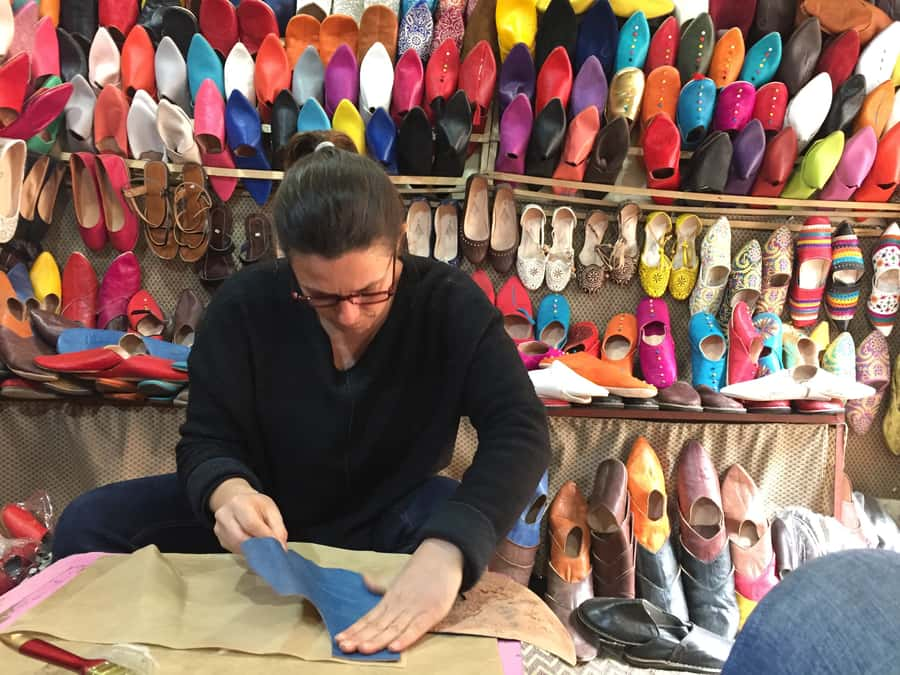
Each participant receives a pair of babouch to take home. The slippers are made during the session with help from the artisans, and the size can be adjusted to your feet. You also choose the color and style within the available materials.
That makes the souvenir more personal than a pair selected from a shop shelf. You remember the cutting, the stitching, the tea break, and the workshop itself every time you wear them.
Youssef’s workshop may also offer other leather goods. One participant arranged a custom belt design and collected it a few days later at a reasonable price. This is not listed as a guaranteed part of the activity, so treat it as an optional conversation rather than an included feature.
Photographs from the workshop are emailed afterward. They give you a record of the process, especially useful if you are too busy working to take your own pictures.
Is $81 a fair price?
At $81 per person, this costs more than buying ordinary babouch in the souk. The difference is that you are paying for several hours of instruction, the materials, a completed pair, a guide, refreshments, and photographs.
For a private group, the price makes more sense. You are not being moved through a large class with a fixed demonstration. The guide and artisan can help with your size, explain the work, and answer questions as you go. Families, couples, and friends who want a shared activity will get more from this than someone seeking the cheapest slippers in Marrakech.
The value also depends on how you use the four hours. If you want to shop nonstop, this will feel slow and expensive. If you want a craft experience that connects you with a local maker and leaves you with a practical souvenir, the cost is easier to justify.
The duration is listed as four hours, while the hands-on workshop itself is described as about 3.5 hours. The remaining time covers meeting the guide, walking through the medina, and the transition into or out of the session.
Who will enjoy this workshop most?
This is a good choice for you if you enjoy making things, asking questions, and seeing how ordinary objects are produced. It also suits anyone who wants a quieter break from the crowded shopping lanes.
Families can work well here, especially with older children who can follow cutting and assembly instructions. Couples can make matching or contrasting slippers. Solo visitors may receive especially close attention if the group is small or private.
The session is wheelchair accessible, according to the activity information. Still, the meeting point and route through the medina should be confirmed in advance, since the souks can be difficult to navigate and the workshop is reached through those lanes.
You should skip it if you dislike guided craft activities or expect to receive a perfectly finished pair without doing any work. You will participate, and some steps may be repetitive. The reward is the process as much as the slippers.
Timing, language, and booking advice
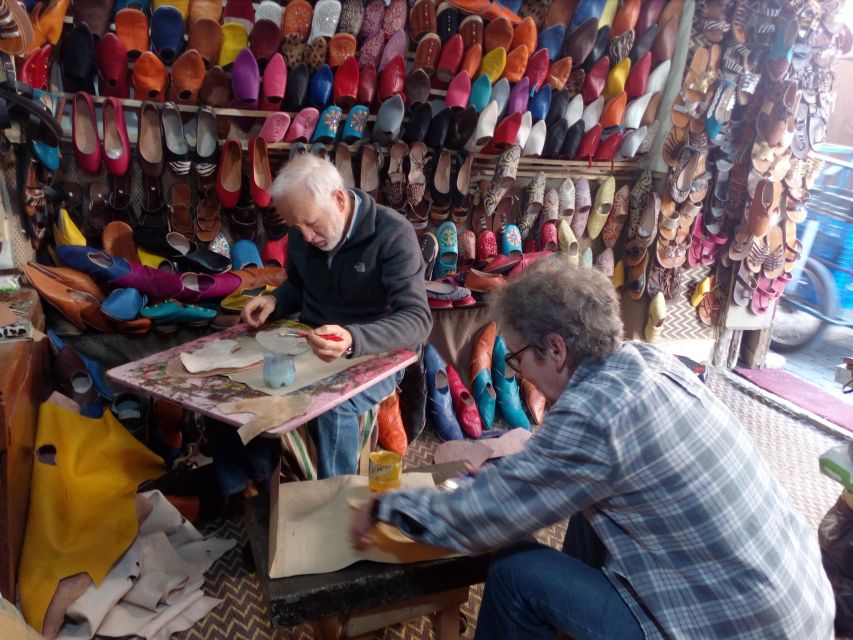
The activity is available at different starting times, so check the schedule that suits your day. A morning booking can be a smart choice. It gives you a calm introduction to the souks before you spend the rest of the day shopping or sightseeing.
The instructor and guide can work in English, French, and Arabic. Translation is part of the support, so you do not need to speak French or Arabic to follow the process. Still, tell the guide if you have questions about fit, design, or the leather you are selecting.
Cancellation is free up to 24 hours before the activity for a full refund. You can also reserve now and pay later, which helps if your Marrakech plans are still shifting.
Because meeting-point instructions have been the weakest part of the experience, make this your one booking task. Save the contact details, arrive at the Post Maroc building by Jamaa el Fna, and confirm whether the guide is waiting at the entrance rather than beneath a nearby street sign.
Should you book the babouch workshop?
Book it if you want more than a quick purchase and like the idea of spending part of a day with a local leather craftsman. The strongest parts are the private format, the patient instruction, the chance to choose your materials, and the fitted pair you take home.
I would especially recommend it for a first visit to Marrakech. The guide helps you reach a less familiar part of the medina, and the workshop gives you a reason to slow down and pay attention to the craft around you.
I would hesitate only if $81 feels too high for a souvenir or if your schedule leaves no room for a four-hour activity. For everyone else, this is a thoughtful way to connect shopping in Marrakech with the people and work behind the goods.
FAQ
How long does the babouch workshop last?
The full activity lasts four hours, with the practical workshop described as about 3.5 hours.
What is included in the price?
The activity includes the babouch-making workshop, a pair of babouch for each participant, homemade snacks, water, a tea break, and photographs sent by email.
Where do I meet the guide?
The meeting point is in front of the post office at Jamaa el Fna Square, near the Post Maroc building.
Is the meeting point easy to find?
The meeting instructions can be confusing. Confirm that you should meet at the entrance in front of the post office, not simply beneath a nearby Rue Bani Marine street sign.
Who teaches the workshop?
The workshop is led by Youssef, a local leather craftsman who works in his medina studio. A guide assists with translation and general support.
What languages are available?
The activity is available in English, French, and Arabic.
Do I make the entire pair of slippers myself?
You take part in the process by selecting leather, preparing patterns, cutting, gluing, and helping with construction. The craftsman guides you and handles tasks that require more experience.
Can the slippers be fitted to my feet?
Yes. The slippers can be adjusted to your size, including smaller feet.
Can I cancel the activity?
You can cancel up to 24 hours in advance for a full refund. Reserve now and pay later is also available.
Just added around Marrakech
- Quad in the Palmeraie of Marrakech★ 5.0 · 41 reviews
- Marrakech Desert Camel Ride★ 5.0 · 17 reviews
- Sunset Camel Ride in the Palm Grove Of Marrakech★ 5.0 · 34 reviews
- Private Airport Transfer from or to Marrakech Menara Airport.★ 4.5 · 63 reviews
- Marrakech The History and Culture Day Trip★ 4.5 · 45 reviews
- Marrakech: Tailor-Made City Tour With Your Own Private Guide★ 4.9 · 236 reviews
- Marrakech palm grove: Sunset camel ride★ 4.8 · 194 reviews
- Sparkling Marrakech through the eyes of your local Guide★ 4.7 · 247 reviews
Medina and Souk Tours, compared.
Bahia Palace, Saadian Tombs, Souk and Medina Tour
Read our review →
Ben Youssef, Secret Garden, & Souks Walking Tour
Read our review →
Museum, Al Attarine Madrasa & Tannery and Medina Tour
Read our review →
Bahia Palace, Madrasa Ben Youssef and Medina Tour
Read our review →
Explore Fes: Unforgettable Guided Walking Tour of the Medina
Read our review →Browse the lists this tour appears in