

Reviewed · ZOOS
Agadir Crocoparc: Ticket and Transfer
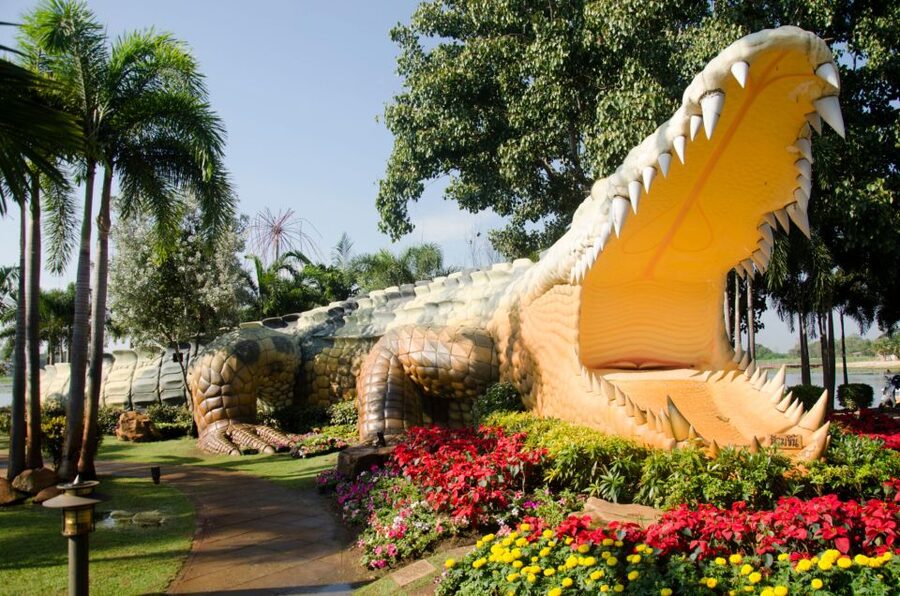
Agadir Crocoparc begins with a giant crocodile-head entrance, then opens into a carefully designed park filled with more than 300 Nile crocodiles. You can watch them sun themselves, swim, rest, and show the force of their jaws during feeding, all from a safe distance. I like the mix of wildlife and plants here, and I like that your hotel transfer and entrance ticket are handled together.
The two-hour visit is long enough to see the main paths without rushing, though the park may tempt you to stay longer. That is the main point to consider: the planned transfer gives you limited free time, while the gardens, restaurants, and possible shows can make a longer visit appealing.
Key points to know
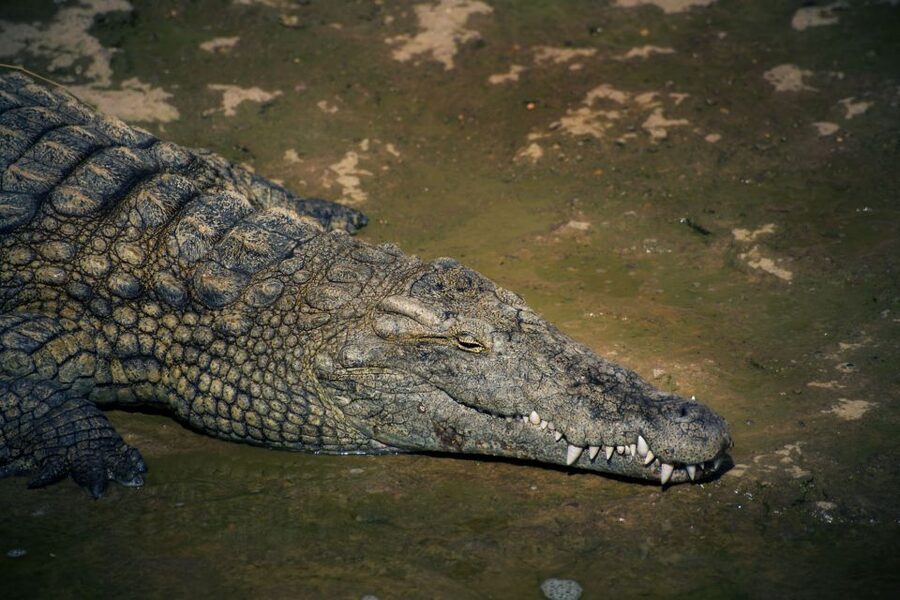
- More than 300 Nile crocodiles: See the reptiles at different stages of their daily routine, from sunbathing to swimming and feeding.
- A striking entrance: You walk through a giant crocodile head before reaching the gardens and animal areas.
- Four very different garden settings: Look for the blue garden, aquatic garden, tropical area, and old ficus trees with hanging aerial roots.
- Comfortable Agadir transfers included: Pick-up and drop-off at your accommodation are part of the package.
- Two hours of free time: The visit is simple and self-directed, with no fixed guided route listed.
- Good value for an easy half-day outing: At $45 per person, the price covers transport, admission, and a low-stress visit outside central Agadir.
Reaching Crocoparc from Agadir
This experience is built around convenience. You are collected from your hotel or accommodation in Agadir, taken to Crocoparc, given about two hours to explore, and returned afterward. That removes the need to arrange separate transport and entrance tickets.
For a first visit to Agadir, this can make sense. Crocoparc is in the Souss-Massa region, and a prearranged transfer gives you a clear plan for getting there and back. You do not need to negotiate a taxi, work out the admission process on arrival, or worry about finding a return ride after walking around the park.
The transfer is also useful if you are traveling with children or simply want a break from arranging every small part of the day. The exact transfer schedule and pick-up time should be checked when you book, since the experience description gives the service but not a detailed timetable.
The transport is a means to an end rather than the main attraction. The important value is that your ride, entry, and park time are bundled together. If you already have a car and prefer to set your own schedule, the package may be less useful. If you want an easy outing from Agadir, the arrangement is practical.
More Wildlife Parks in Agadir:
- Agadir: Crocoparc Skip-the-Line Entry Ticket
★ 4.8 · 1,268 reviews - Agadir: Crocoparc Entry Ticket with Transfers, Guide, & Tea
★ 4.8 · 596 reviews - Skip the Line Ticket to Crocoparc with Optional Transfert
★ 5.0 · 240 reviews
Entering through the giant crocodile head
The entrance sets the tone at once. You pass through a huge crocodile-head structure, an imaginative touch that makes the arrival feel more like an attraction than a standard zoo gate.
From there, the park uses paths and walkways to connect the animal areas with its planted gardens. The design is meant to feel like a forest, with trees, palms, bamboo, water features, and shaded-looking corners. The layout gives you more to do than simply walk from one crocodile enclosure to the next.
You should expect a self-guided visit. No personal guide is named or included in the information provided, so you have the freedom to set your own pace. That works well for families and photographers who want to pause, but anyone hoping for a detailed naturalist talk should not assume one is part of the transfer package.
Watching 300 Nile crocodiles safely

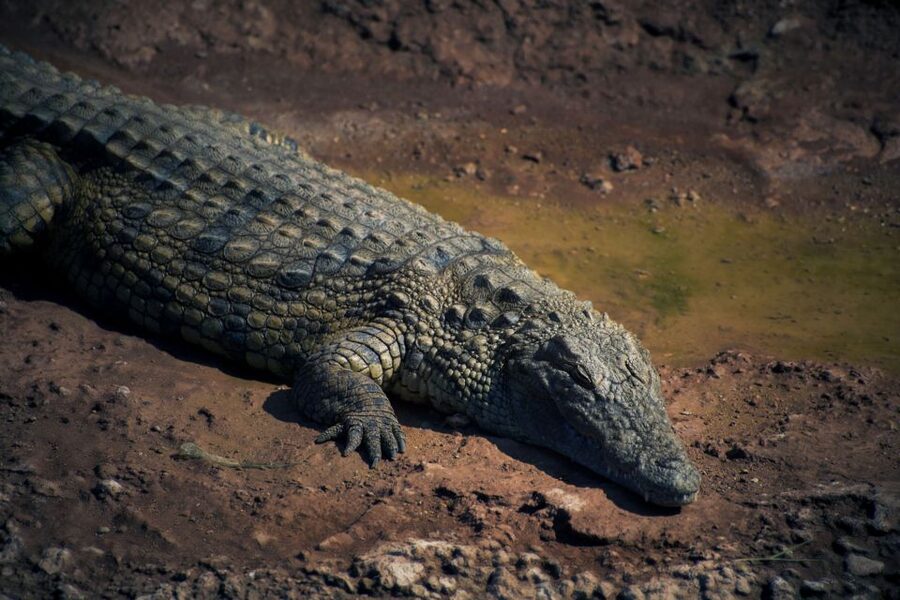
The crocodiles are the main reason to come. Crocoparc contains more than 300 Nile crocodiles, also known as Crocodylus niloticus. That number gives the park a strong sense of scale, since you can see many animals rather than a single crocodile resting in one small enclosure.
The viewing areas let you observe the reptiles going about their daily routines without being close to them. You may see crocodiles lying still in the sun, moving through the water, or resting with only part of the body visible. Their stillness is part of the experience. Crocodiles can look almost motionless for long periods, then shift suddenly or open their jaws in a reminder of their power.
Feeding is one of the more dramatic moments mentioned for the park. The crocodiles can demonstrate the strength of their jaws during meals, though you should not assume that a feeding display takes place during every two-hour visit. The timing of any feeding activity is not specified.
The safety setup matters. You are able to observe these large reptiles in full safety, with the paths and viewing areas keeping a clear boundary between you and the animals. This makes the visit suitable for people who want a close look without the unease of being near an uncontrolled wild animal.
The park has received especially strong praise for the crocodile viewing and for how easy the animals are to see. That is important in practical terms. A wildlife attraction can be disappointing if animals stay hidden, but the open viewing areas here are designed to give you a good chance of spotting them.
Still, this is not a safari. The animals live in managed surroundings, and the visit is built around observation from established paths. I would choose it for a focused crocodile and garden experience, not for a broad range of animal species.
The blue garden and rare succulents
Crocoparc is more than a reptile park. The blue garden gives the grounds a different character, with blue-toned succulent plants and unusual specimens such as Aloe suzannae, an endangered plant species.
This area is worth slowing down for. The plants offer a contrast to the heavy, prehistoric look of the crocodiles, and the hard masonry furniture provides places to pause among the plantings. The garden also includes ficus trees said to be about 50 years old, with dramatic aerial roots dropping from the branches.
Those roots are one of the more memorable plant details in the park. They give the ficus trees an unusual shape and help create the forest-like feel described throughout the site. If you tend to rush from animal enclosure to animal enclosure, this is a good place to stop and look closely.
The blue garden will appeal most to you if you enjoy botany, garden design, or photography. If plants are not your priority, you can move through it quickly and spend more time with the crocodiles. The useful point is that the garden is part of the main experience, not an unrelated add-on.
A few more Agadir days worth comparing
- Marrakech: Spa Massage and Steam Hammam with Pickup
★ 4.6 · 2,873 reviews - Agadir/Taghazout : Quad Bike Safari Desert
★ 4.8 · 1,496 reviews - From Marrakech: Full-Day Trip to Agadir
★ 4.7 · 1,314 reviews - Agadir/Taghazout: Quad Bike and Sandboarding Tour
★ 4.7 · 1,286 reviews
Water lilies in the aquatic garden

The aquatic garden changes the pace again. Its main features include water lilies, including the large Victoria species, Victoria cruziana, and a group of Nile papyrus.
Water features make the park feel less like a series of animal exhibits and more like a connected garden. They also help explain the setting of the crocodiles, which are naturally associated with rivers, wetlands, and warm water environments. The plants do not turn the visit into a biology lesson, but they give the animal displays a more complete setting.
The Victoria water lily is a particular point of interest because of its size and unusual appearance. Plant collections like this can be easy to miss if you concentrate only on the animals, so I would keep the aquatic garden on your mental route.
You may find that this section is especially pleasant during a slower walk. The tour gives you approximately two hours, and the aquatic garden is one reason that time can pass quickly.
Giant bamboo, palms, and the tropical area
The tropical section brings together giant bamboo, palms, bromeliads, and two notable Belombra trunks, identified as Phytolacca dioica. Bromeliads add unusual flowers and forms, while the bamboo and palms help create the feeling of a warmer, denser garden.
This is where the park’s design does much of its work. The crocodiles are the headline attraction, but the plant areas make the visit more varied. You get a sequence of different settings instead of a single repeated view.
I would allow time for the tropical area even if you came mainly for the reptiles. It is a useful change after watching crocodiles resting in the sun, and it gives you details to notice between animal sightings. The combination also makes the park more suitable for mixed-interest groups, where one person wants wildlife and another prefers gardens.
The information provided does not specify the exact walking distance or the level of shade on every path. Wear sensible footwear and be prepared to walk for much of your two-hour visit, though the park is described as easy to navigate.
Is two hours enough?
For a focused visit, two hours should give you time to see the crocodiles and walk through the main gardens. You can follow the paths, stop at the viewing areas, and spend a few minutes with the blue, aquatic, and tropical sections.
The main question is how closely you look. If you simply want to say you saw the crocodiles, you may finish early. If you pause for plant details, watch the animals, take photos, and explore each garden, the time can feel quite short.
There are restaurants at the park, and shows may also be available. The details, timing, and cost of those extras are not provided, so treat them as possible additions rather than guaranteed parts of this transfer package.
One useful feature is that you are not tied to a group walking tour inside the park. Your time is free, so you can set your own order. Start with the crocodiles if you want to make sure you see the main attraction, then work through the gardens. Or begin with the gardens if you prefer a quieter first walk.
What the $45 price includes
The price is $45 per person. That includes hotel pick-up and drop-off, a comfortable return transfer, entrance fees, and about two hours of free time in Crocoparc.
I see this as a convenience-focused price rather than a bargain admission ticket. If you compare it only with the cost of entering a park, it may seem high. If you value a prearranged ride from Agadir and do not want to organize transport separately, the package becomes easier to justify.
The strongest value comes from combining three things:
- Transport from your accommodation
- Entry to the crocodile park
- Free time to explore without a fixed internal tour
You should also consider how many people are in your group. For one person or a couple without a car, having the return ride arranged can save time and hassle. For a larger family, the total price adds up quickly, so compare it with the cost of arranging your own transport and paying admission separately.
The booking terms are flexible. You can reserve now and pay later, and cancellation is allowed up to 24 hours before the experience for a full refund. That is useful when your Agadir plans may shift.
Who will enjoy Crocoparc most?
I would recommend this outing to families, first-time crocodile watchers, plant lovers, and anyone looking for a simple break from Agadir’s city and beach routine. The park combines animals and gardens, so it is not dependent on one short viewing moment.
It also suits you if you prefer a self-guided visit. You can move at your own pace, choose how long to watch the crocodiles, and decide whether the gardens deserve a careful look or a quick walk-through.
The experience may be less suitable if you want a full-day wildlife excursion, a formal guided lesson, or a wide range of animal species. This is a dedicated crocodile park with botanical gardens, not a general zoo or open-country safari.
The available service languages are Arabic, English, and French. That helps with arranging the transfer and basic communication, though a detailed guided commentary inside the park is not listed.
Practical advice before you book
Confirm the hotel pick-up details and the time allowed at the park before setting off. The standard visit provides about two hours, but the attraction may offer enough to keep you occupied for longer.
Bring a phone or camera if you enjoy photographing animals and unusual plants. The crocodiles can be still for long periods, so patience will help you get more from the viewing areas.
Plan your route instead of wandering past the gardens without looking. Make time for the blue garden and its rare aloe, the aquatic garden with water lilies and papyrus, and the tropical area with bamboo, palms, bromeliads, and Belombra trees.
If you are visiting with children, the giant entrance and visible crocodiles provide an immediate hook. Keep the safety boundaries in mind and use the established paths. The attraction is designed for safe observation, but these are still powerful reptiles.
Should you book Agadir Crocoparc?
Book it if you want a well-organized outing from Agadir with transport already arranged, and if the idea of seeing more than 300 Nile crocodiles appeals to you. The gardens add real value, especially if you enjoy rare plants, mature ficus trees, water lilies, or tropical planting.
The $45 price makes the most sense when you value comfort and simplicity. You receive the ride, admission, and free time in one package, with no need to sort out the return journey.
I would skip it only if you have little interest in crocodiles, already have reliable transport, or want a much longer wildlife day. For everyone else, Crocoparc offers an unusual mix of reptiles and gardens, and the two-hour visit is an easy addition to an Agadir stay.
FAQ
Where is Agadir Crocoparc located?
Agadir Crocoparc is in the Souss-Massa region of Morocco.
How much does the experience cost?
The price is $45 per person.
Are hotel transfers included?
Yes. Hotel pick-up and drop-off from your accommodation in Agadir are included.
Is the return transfer included?
Yes. The package includes a comfortable return transfer.
How long do I have inside Crocoparc?
You receive approximately two hours of free time to explore the park.
How many crocodiles are at Crocoparc?
The park contains more than 300 Nile crocodiles.
What else can I see besides crocodiles?
You can explore several gardens with rare succulents, ficus trees, water lilies, Nile papyrus, giant bamboo, palms, bromeliads, and Belombra trees.
Is the visit guided?
The experience provides free time to explore the park. A personal guide inside Crocoparc is not listed.
Which languages are available?
The available languages are Arabic, English, and French.
Can I cancel for a full refund?
Yes. You can cancel up to 24 hours in advance for a full refund.
Just added around Agadir
- From Marrakech Full-Day Tour to Agadir★ 5.0 · 218 reviews
- Jeep 4×4 Safari Desert Dunes & Atlantic Ocean with Berber Lunch★ 4.5 · 45 reviews
- Agadir Jeep Safari Desert Day Trip including Lunch & camel ride★ 5.0 · 24 reviews
- Sandboarding guided experience from Agadir&Taghazout★ 5.0 · 39 reviews
- 8 Day Outstanding Surf & Yoga Holiday in Tamraght, Agadir★ 5.0 · 18 reviews
- boat trip from 9 am to 3 pm fishing & swimming & barbecue & dessert★ 4.0 · 36 reviews
- Buggy cfmoto 1000 in Agadir★ 4.5 · 40 reviews
- Taroudant half day excursion from Agadir★ 5.0 · 26 reviews
Zoos, compared.

Crocoparc Entry Ticket with Transfers, Guide, & Tea
Read our review →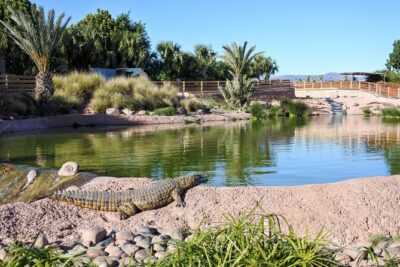
Skip the Line Ticket to Crocoparc with Optional Transfert
Read our review →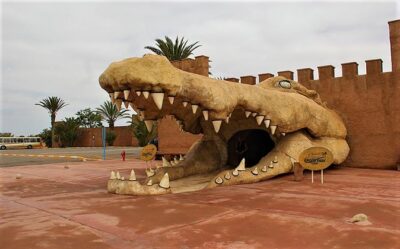
Effortless Agadir Crocoparc Ticket and Transfer Service
Read our review →
Agadir or Taghazout: Goat on Trees and Crocoparc with Pickup
Read our review →

Browse the lists this tour appears in