
Reviewed · FOOD TOURS
Authentic Moroccan Food Tour in Marrakech with Dinner
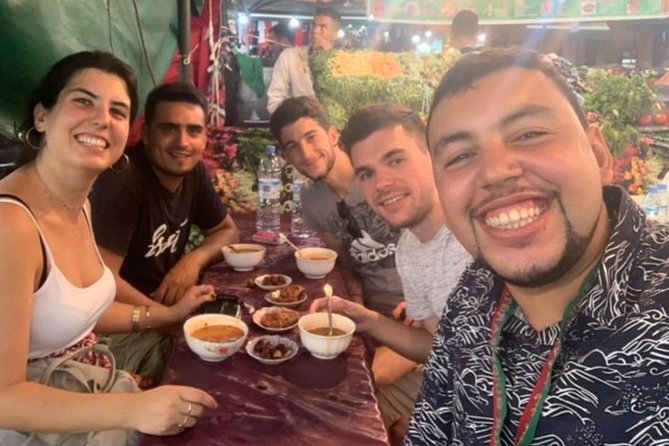
Marrakech’s medina is easiest to understand with your appetite switched on. This evening tour leads you through the lanes around Jemaa el-Fna for pastries, olives, harira, msemen, snails, and other foods that are easy to miss when you are exploring alone. You finish with a three-course Moroccan dinner on a rooftop restaurant, often with views over the square.
I like two things right away: the food comes with useful cultural context, and you taste much more than one sit-down meal can offer. Guides such as Mehdi, Hamza, Ali, and Mohamed have been praised for making the maze manageable and explaining what is on the plate. The main consideration is that the exact stops can change, and the herbalist shop included on some evenings may feel like an unnecessary sales stop.
Key points to know before booking
- Around 10 tasting stops: Expect small portions of pastries, soup, olives, pancakes, fruit, street food, and other Moroccan specialties.
- Two possible food routes: Your guide may follow one of two itineraries, depending on the guide, season, and pace of the evening.
- Dinner is part of the experience: The tastings lead to a sit-down three-course Moroccan meal, usually at a rooftop restaurant near the meeting area.
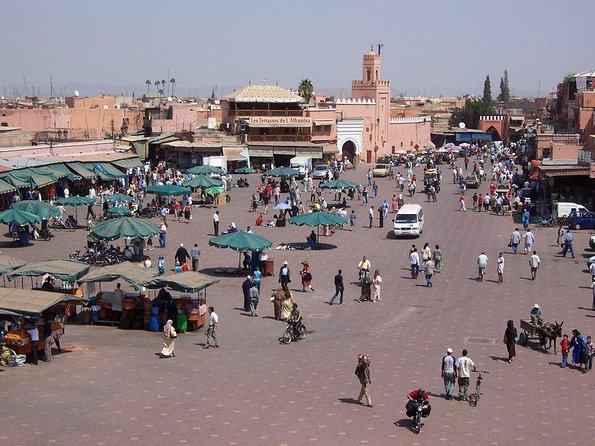
- A real medina orientation: The route starts at Poste du Maroc and winds through the old medina around Jemaa el-Fna.
- Small group, with a limit of 15: A smaller group makes narrow lanes and food stalls easier, though group size and crowding can affect the feel.
- Come very hungry: The combination of street samples and dinner is generous, and several people have needed to take dessert away.
Why this Marrakech food tour works
A food tour is a useful first evening in Marrakech because the medina can be confusing, especially after dark. The meeting point at Poste du Maroc, on Rue Beni Marine, gives you a clear place to begin. From there, the guide takes over the route, leading you through the old city instead of leaving you to guess which stall or alley is worth your time.
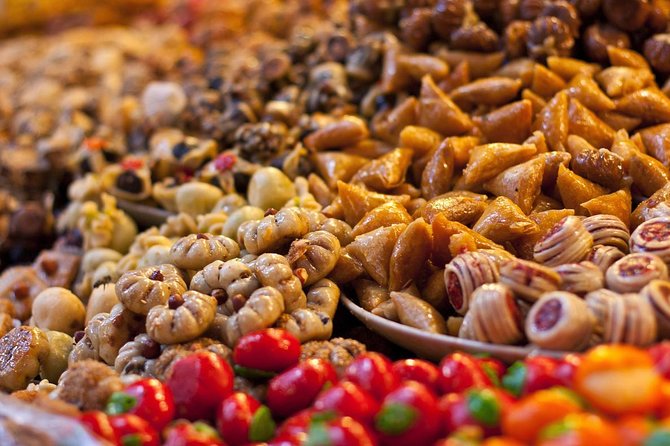
The appeal is not just quantity. You get to compare foods served in different settings: sweets from a pastry stop, soup and snacks from local food spots, tea prepared in the Moroccan style, and a proper meal at the end. That sequence gives you a better sense of how Moroccan food fits into daily life and celebrations.
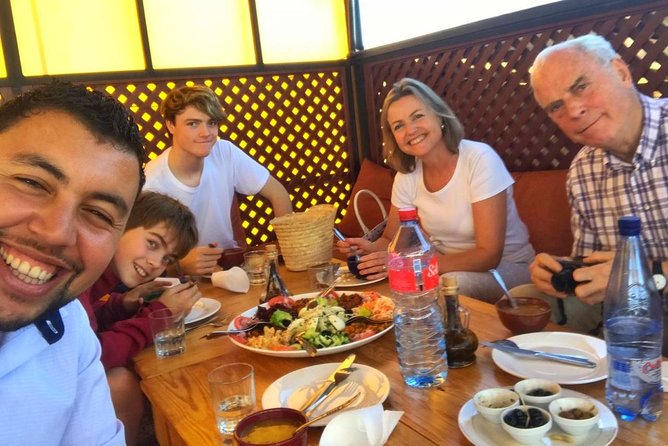
I also like the social setup. A maximum of 15 people is not truly private, but it is manageable for a walking tour. Solo visitors can meet people over shared plates, while couples and families have a guide to handle the route and ordering.
At $54.45 per person, the value depends on how much you eat and how much help you want in the medina. You are paying for a guide, many tastings, mint tea, and dinner, not merely a restaurant meal. If you already know Marrakech well and prefer choosing every dish yourself, the price may feel high. If you want a broad first taste without spending an evening guessing where to eat, it is a fair package.
More Food Tours in Marrakech
- Marrakech: Street Food Tour with a Local Guide
★ 4.9 · 3,119 reviews - Marrakech: Street Food Tour by Night
★ 4.8 · 2,838 reviews - Marrakech: Jemma El Fnaa Food Tour with Dinner
★ 4.7 · 394 reviews
Starting at Poste du Maroc
The tour begins at Poste du Maroc, close to the heart of the old medina. Allow time to reach the meeting point and keep the confirmation details handy. The activity ends back at the same meeting point, which is useful if you want to arrange a taxi or return to nearby accommodation afterward.
The first half hour is part of the orientation. Your guide sets the rhythm and begins the food-focused walk into the medina. Since the route may vary, you should think of the published foods as a menu of possibilities rather than a fixed promise that every item will appear on every evening.
That flexibility can be a benefit. Seasonal fruit, changing food stalls, the guide’s judgment, and the pace of the group all affect the route. It also explains why one person may describe five main stops while another recalls food from eight or nine places. The experience is built around sampling many things, not following a rigid checklist.
Route one: sweets, soup, tea, and snails
One possible route opens with Moroccan coconut macaroons. These are a gentle start, especially if you are not yet ready for strong spices or unfamiliar textures. They are also popular with children, making this route a reasonable option for families who want to begin with something familiar.
Next comes kaab ghzal, often translated as gazelle ankles. This delicate pastry is filled with almond paste and scented with orange blossom water. It is a good example of Morocco’s love of pastry that is fragrant rather than heavily sweet.
Harira may follow, served with dates and chebakia. Harira is a traditional soup, and the combination has a special place in Moroccan food culture during Ramadan, when people commonly break the fast with soup, dates, and sweets. Even outside Ramadan, it gives you a useful look at the balance of savory and sweet in Moroccan eating habits.
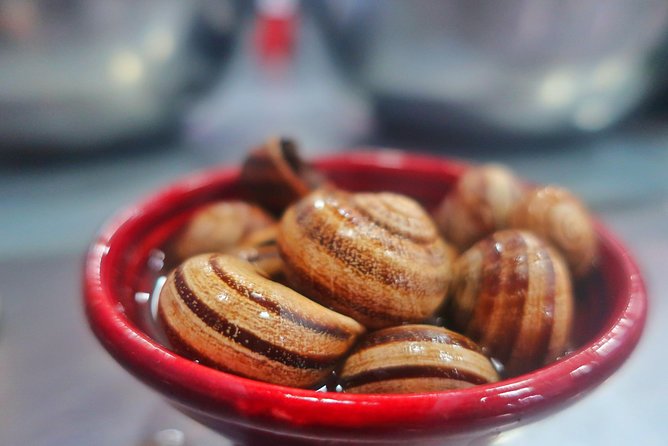
Babbouche, or Moroccan snails, is the more adventurous stop. The snails are cooked slowly in an aromatic herbal broth. You do not have to pretend that every dish will be your favorite, but this is exactly the kind of local specialty that is difficult to understand from a menu alone. The portions are tasting portions, so you can try it without committing to a full bowl.
Mint tea and msemmen provide a calmer pause. Msemmen is a pan-fried Moroccan pancake, served here with honey and cheese. The crisp, layered texture works well with tea, and the stop gives your guide a chance to explain how tea and shared snacks fit into ordinary social life.
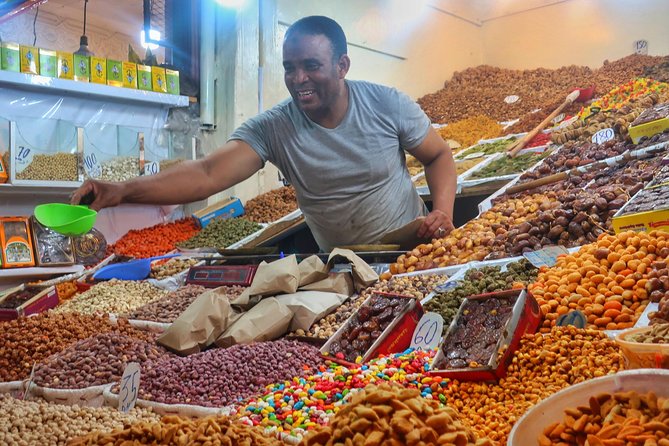
Fakya is another cultural stop rather than just a snack. It is a festive mix of dried fruit and nuts, prepared for celebrations and shared with family and friends. You can think of it as a small taste of Moroccan hospitality and occasion food.
The route may also include Moroccan olives, with several varieties ranging from green and creamy to more seasoned styles. Olives are easy to overlook when ordering a meal, yet they are a central part of Moroccan tables. Tasting several kinds side by side makes the difference clear.
Route two: street food around Jemaa el-Fna
The second possible route focuses more heavily on the food culture around Jemaa el-Fna. Msemen Amer is a filled version of the Moroccan pancake, with savory ingredients such as spiced vegetables. It is often associated with teatime and offers a heartier, more filling bite than plain msemmen.
Harira and chebakia appear on this route as well. If you have not encountered the pairing before, it is worth paying attention to the contrast: warm, savory soup alongside a sweet, sesame-coated pastry.
Makkla bel kefta is a Moroccan take on shakshouka, combining spiced meat with eggs in a sauce. This is one of the more substantial samples and helps explain why Moroccan food can feel both comforting and strongly seasoned without relying on extreme heat.
Sfenj is a traditional Moroccan doughnut, crisp outside and airy inside. It is a simple street snack, but the freshness matters. Served hot, it shows why a food tour can be more useful than ordering a familiar dessert in a restaurant.
Lhindiya, or cactus fruit, offers a break from cooked food. It is cool and refreshing in warm weather, with a texture and flavor unlike the standard fruit you may see at hotel breakfast.
Rass mbekher is the most challenging item on the route. This delicately steamed sheep’s head is seasoned with cumin. The tour gives you a chance to try a small portion and decide how far you want to go. If you are uncomfortable with offal or less familiar cuts, tell the guide early so you know what choices are available.
Panaché is a colorful smoothie made with seasonal fruit. Khoudenjal, a hot Moroccan drink, may also appear. Together, these samples show the range of the evening, from dense pastries and meat to cooling fruit and warming drinks.
A completely different kind of day in Marrakech:
- Marrakech: Quad Bike Tour to Palm Oasis and Jbilat Desert
★ 4.8 · 11,831 reviews - Marrakesh: Majorelle Garden Entry Tickets
★ 4.5 · 9,651 reviews - Marrakech Quad Bike Experience: Desert and Palmeraie
★ 4.5 · 9,509 reviews - Marrakech: Balloon Flight, Berber Breakfast & Certificate
★ 4.8 · 8,164 reviews
The herbalist stop: useful or unnecessary?
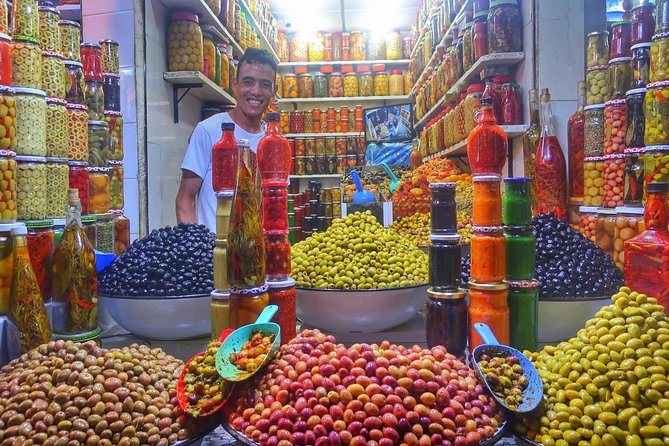
Depending on the route and timing, your group may stop at a traditional herbalist shop. This can be a pleasant break, since you may learn about Moroccan spices, teas, and herbs, drink mint tea, and use the restroom.
It is not strictly a food stop, though. Some people enjoy the explanation and the chance to look around. Others find that the visit turns into a sales pitch and takes too much time from the meal. One account describes roughly 20 minutes spent listening to claims about herbs and teas, while another found the stop enjoyable but longer than expected.
My advice is simple: treat it as an optional cultural pause, not a promised highlight. You do not need to buy anything. If you are mainly interested in eating, politely ask how long the stop will last and whether it can be shortened.
Rooftop dinner near the square
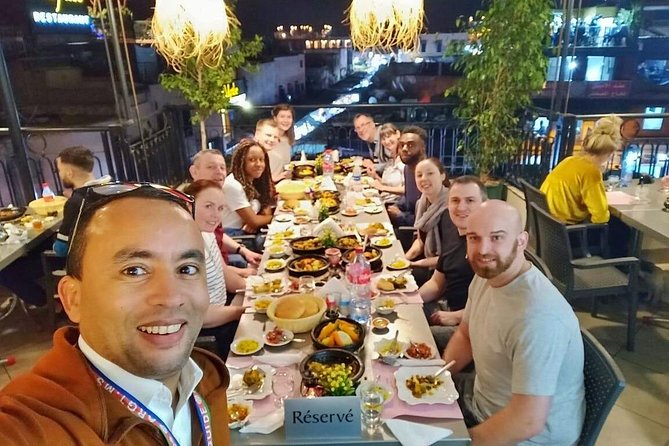
The evening ends with a sit-down Moroccan dinner at a rooftop restaurant. This is an important part of the value because the earlier tastings are not meant to replace a meal. You get a chance to sit, slow down, and enjoy the view and atmosphere around Jemaa el-Fna.
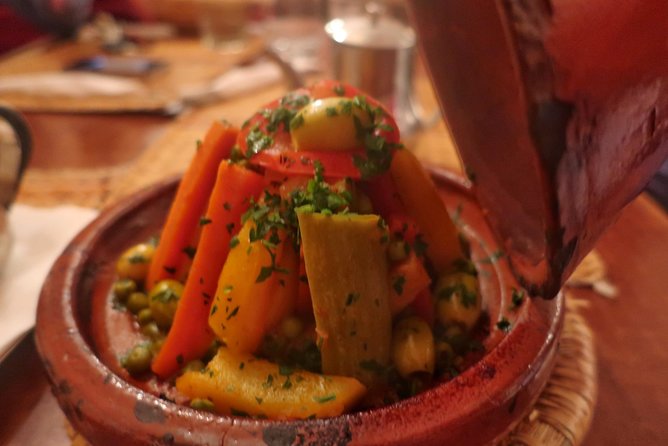
The dinner includes three courses, dessert, and menu choices. Exact dishes can vary, so do not book this expecting one particular tagine or couscous plate. The point is a proper Moroccan meal after a procession of small samples.
The rooftop setting also changes the mood. After weaving through narrow lanes and crowded food areas, you can look out over the square and take in the evening from above. Several guests have singled out this final meal and the view as a high point.
Still, keep your expectations sensible. This is a group dinner, not a private tasting menu. The restaurant meal can be good without being the finest food you eat in Marrakech. The strongest part of the evening is the combination of route, guide, samples, and setting.
The guides make the difference
The experience depends heavily on the person leading it. Mehdi, Houssaine, Hamza, Ali, Mohamed, and Mo have each been praised for being friendly, clear, and attentive. Hamza in particular has been credited with explaining both food and local culture while keeping the evening moving. Mohamed has also been noted for helping a late-arriving solo participant catch up with the group and receive the missed tasting.
That kind of practical help matters. The medina is made up of tight lanes, busy intersections, and small food counters. A good guide keeps the group together, explains what you are eating before you taste it, and makes the evening feel relaxed rather than like a series of rushed transactions.
There have also been problems with guide changes and delayed starts. One evening began about 30 minutes late after a replacement guide was called in, though the group was notified. Another complaint involved a guide changing restaurants while negotiating prices, which was especially difficult for a parent managing a stroller on stairs.
If you use a stroller, mention it when booking. The route through the old medina includes narrow passages and stairs at some restaurants, and the operator says dietary needs should also be shared after booking.
Timing, group size, and practical comfort
The tour lasts about three hours. In practice, the pace may feel different depending on the group, crowds, guide, and number of tasting stops. Some people find the evening full and satisfying, while others feel their particular version moved too quickly.
Wear comfortable shoes. You are walking through the old medina, stopping at small food places, and ending at a rooftop restaurant. Keep your belongings secure in crowded areas and bring an appetite rather than a large meal beforehand.
The tour is near public transportation, but hotel pickup and drop-off are not included. You meet and finish at Poste du Maroc. Confirmation is provided at booking, and free cancellation is available up to 24 hours before the start time.
Vegetarian and other dietary needs can be accommodated if you tell the operator after booking. Do not wait until the first food stop if you have a serious allergy or firm restriction. The route includes meat, dairy, nuts, and foods prepared in small local venues, so early notice is important.
Who should book it?
I would choose this for a first visit to Marrakech, a solo evening, or anyone who wants to try local foods without planning a route through the medina. It is especially good for people who enjoy small portions, unusual dishes, and explanations about why foods are eaten the way they are.
Families can also enjoy it, particularly if children are open to sweets, pancakes, soup, and fruit. The snails and sheep’s head are optional choices in spirit, even if they form part of the route. Ask the guide about alternatives if needed.
I would be more cautious if you dislike crowds, have limited mobility, need a quiet dinner, or want a carefully controlled fine-dining experience. The medina is not a polished food hall, and the herbalist visit may not suit everyone.
Should you book this Marrakech food tour?
Yes, if you want a generous introduction to Moroccan food and a guide to lead you through the medina. The combination of many tastings, mint tea, cultural explanation, and a three-course rooftop dinner gives you more than a standard restaurant booking for $54.45.
Book with three expectations: the exact foods can change, the evening may include an herbalist shop, and the guide strongly shapes the result. Tell the operator about dietary needs, children, or a stroller before arrival. If you do that and come hungry, this is a practical and memorable way to get your first taste of Marrakech.
FAQ
How long does the Marrakech food tour last?
The experience lasts approximately three hours.
Where does the tour begin?
It begins at Poste du Maroc on Rue Beni Marine in Marrakech.
Where does the tour end?
The activity ends back at the meeting point.
Is dinner included?
Yes. The tour includes a three-course Moroccan dinner at a rooftop restaurant, with different menu options.
What foods might I taste?
Possible tastings include Moroccan pastries, coconut macaroons, kaab ghzal, harira, chebakia, olives, msemmen, Moroccan snails, sfenj, cactus fruit, stuffed pancakes, kefta with eggs, fruit smoothies, and other local specialties.
Is mint tea included?
Yes. Authentic Moroccan mint tea is included, although the precise route and stops can vary by guide and season.
How many people can join the tour?
The maximum group size is 15 people.
Can I request vegetarian food or address dietary needs?
Yes. You should tell the operator after booking so the team can make appropriate arrangements.
What is the cancellation policy?
You can cancel for a full refund up to 24 hours before the experience start time. Changes or cancellations made less than 24 hours before the start time are not accepted for a refund.
Just added around Marrakech
- Quad in the Palmeraie of Marrakech★ 5.0 · 41 reviews
- Marrakech Desert Camel Ride★ 5.0 · 17 reviews
- Sunset Camel Ride in the Palm Grove Of Marrakech★ 5.0 · 34 reviews
- Private Airport Transfer from or to Marrakech Menara Airport.★ 4.5 · 63 reviews
- Marrakech The History and Culture Day Trip★ 4.5 · 45 reviews
- Marrakech: Tailor-Made City Tour With Your Own Private Guide★ 4.9 · 236 reviews
- Marrakech palm grove: Sunset camel ride★ 4.8 · 194 reviews
- Sparkling Marrakech through the eyes of your local Guide★ 4.7 · 247 reviews
Food Tours, compared.
Evening Marrakech: Gastronomic and Market Tour Inside the Medina
Read our review →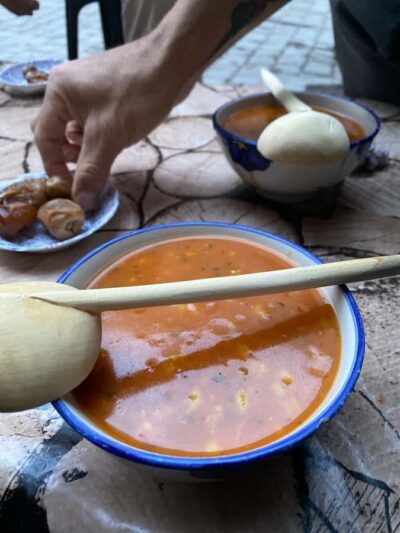
Marrakech Night Street Food Tour / Taste The Real Marrakech
Read our review →
Authentic Food Tour in Agadir – Eat Like A Local
Read our review →
Casablanca Food Tour – Moroccan Street Food Tour
Read our review →Browse the lists this tour appears in