
Reviewed · MULTI-DAY TOURS IN CASABLANCA
12 Days Private Luxury Sightseeing Tour in Morocco
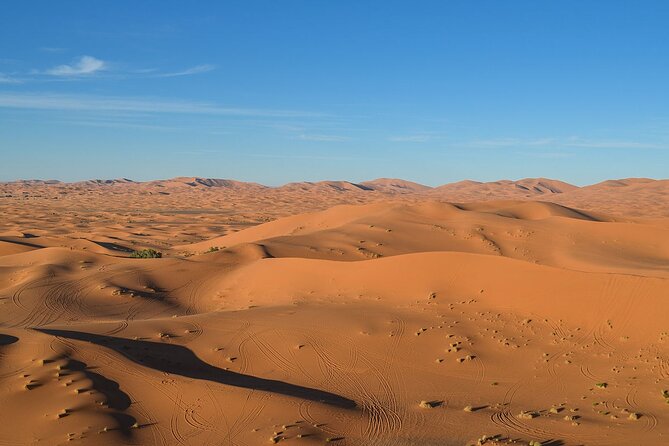
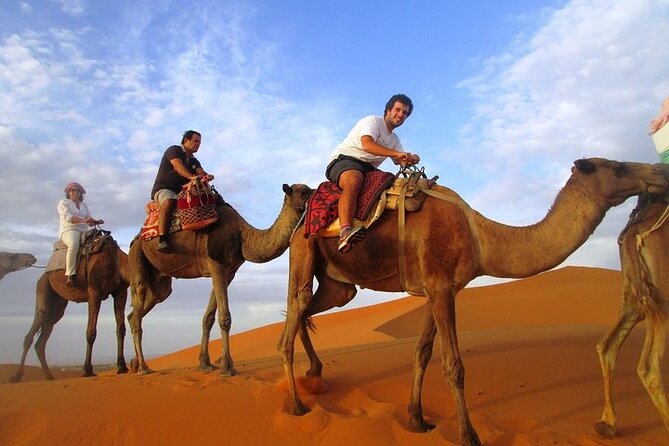
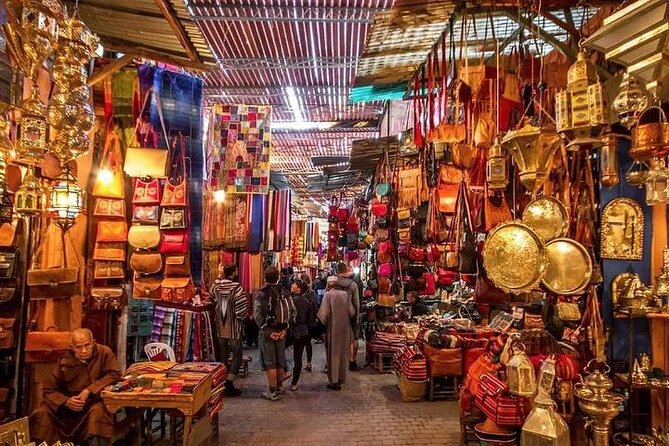
The most memorable part of this 12-day Morocco circuit is its range. You move from the Atlantic coast to imperial cities, cedar forests, desert dunes, mountain gorges, kasbahs, and the fishing port of Essaouira without having to arrange each transfer yourself. The night in a luxury nomad tent near Merzouga, followed by a camel ride and sunset over the dunes, is the trip’s big cinematic moment.
I like the private format, which lets your group adjust the pace, and I like the practical comfort of an air-conditioned vehicle with airport pickup, hotel breakfasts, and a guide with you throughout. The company has also used guides and drivers such as Radouan, Rachid, Momo, Abdel, Hassan, Idir, and Aissa on other Morocco trips, though your assigned team is not specified in advance.
The main consideration is the pace. This is a packed route with several long road days, and many famous attractions charge separate admission. At $4,548.23 per person, the value depends heavily on your group size, the exact hotels supplied, and how much you appreciate having the complicated transport handled for you.
Key points to know before booking
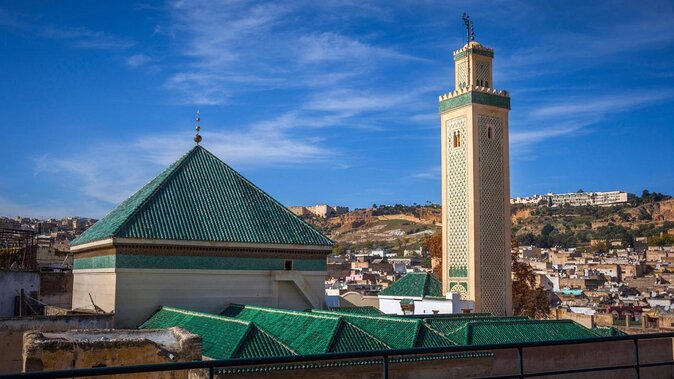
- Casablanca to El Jadida in 12 days: The route covers Morocco’s major regions, from the Hassan II Mosque and Fes medina to the Sahara and Atlantic coast.
- Private air-conditioned transport: You travel with only your own group, and the daily pace can be adjusted rather than following a fixed large-group schedule.
- Luxury stays with one desert night: The package includes 5-star accommodation with breakfast and a luxury nomad tent in the Merzouga desert.
- A strong Sahara sequence: Camel riding, sunset on the dunes, a traditional tea welcome, and a night beneath the stars form the trip’s emotional high point.
- Many entrance fees are extra: Allow for the listed admissions, including Hassan II Mosque, Bahia Palace, Jardin Majorelle, and several medersas and museums.
- Well praised for organization: The most consistent strengths are responsive planning, good accommodation, helpful main guides and drivers, and a polished start-to-finish service.
Why this route gives you a broad taste of Morocco
This is not a slow, single-region holiday. It is a grand circuit designed to show you as much of Morocco as possible in less than two weeks. You see royal cities, Muslim architecture, Berber villages, palm oases, desert country, Atlantic beaches, and old Portuguese fortifications.
That breadth is the tour’s greatest strength. If you are visiting Morocco once and want the classic highlights, you will not spend much time wondering what to do next. Your route and transport are arranged, and the private setup means you can ask for pauses, photo stops, or a slower morning when the schedule allows.
The tradeoff is that Morocco is large. A route linking Casablanca, Fes, Merzouga, Marrakech, Essaouira, and Casablanca requires substantial time in the vehicle. You should see the driving as part of the journey, not as empty space between sights. The reward is the changing scenery, from green northern plains to cedar forests, high mountain roads, dry valleys, and desert dunes.
More Multi-Day Tours in Casablanca
- 10 Day Desert Tour From Casablanca via the Imperial Cities
★ 5.0 · 254 reviews - 10D 9N Private Morocco Tour From Casablanca By Imperial Cities And South Desert
★ 5.0 · 156 reviews - 7 Days Luxury Desert Tour From Casablanca to Marrakech via fez -Camel trekking
★ 5.0 · 146 reviews
Day 1: Casablanca and the Hassan II Mosque
Your arrival begins with an airport greeting and transfer into Casablanca. The first major visit is the Hassan II Mosque, one of the country’s great architectural sights and one of the rare Moroccan mosques open to non-Muslim visitors.
The planned visit lasts about two hours, but admission is not included. The listed price is 13 euros per person. Your guide explains Muslim religious traditions and the building’s design, making this more than a quick photo stop.
Dinner at Rick’s Café is available by prior reservation. The restaurant recreates the atmosphere associated with the film Casablanca, with arches, balconies, a piano bar, and a courtyard setting near the old medina. It is a fun choice for movie fans, but dinner is not included, and you should reserve ahead.
Day 2: Meknes, wine country, and the road to Fes
Meknes gives you a useful change of mood after Casablanca. The day can include a winery visit near the city, where Morocco’s only controlled designation of origin wine area produces bottles in a warm Mediterranean climate. You can sample wines with lunch or during a picnic at the farmhouse.
This is an unusual stop on a Morocco itinerary and may appeal to you if you want more than monuments and medinas. The winery visit is described as free, but you should confirm exactly what tasting and meal arrangements apply before departure.
In Meknes, Dar Jamai Museum occupies an old palace with a mosque, hammam, gardens, and displays of Moroccan painting, jewelry, pottery, and textiles. Admission is listed at 1 euro. You also see Bab Mansour, the city’s grandest gate, and the Mausoleum of Mouley Ismail. Non-Muslims cannot enter the hall containing the sultan’s remains, but the courtyard and exterior details still make the stop worthwhile.
The day ends in Fes, with a panoramic view of the city from a café. This is a fairly full day, so do not expect a leisurely, unstructured afternoon.
Day 3: The Fes medina on foot
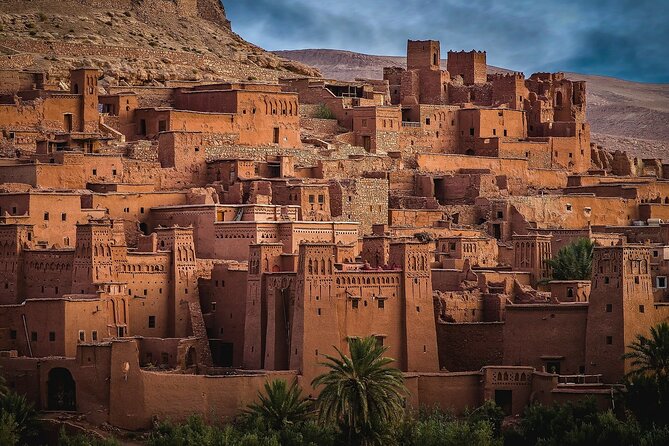
Fes is where having a private city guide matters most. The old medina contains more than 9,000 streets, and its narrow routes can feel confusing even when you have a map. A dedicated guide takes you through the city’s religious schools, palaces, Jewish quarter, and historic lanes.
The medina is a UNESCO World Heritage Site and was a major center of learning by the 13th century. The experience is less about checking off isolated buildings and more about seeing how workshops, shops, homes, schools, and mosques fit into one dense old city.
Chouara Tannery is a brief but memorable stop. From an overlook, you can see the colored dye pools and the traditional leather process. The nearby shops are tourist-oriented, so treat this as a place to understand the craft rather than a signal to buy something immediately.
The day also includes Al-Attarine Madrasa and Bou Inania Madrasa. Their carved wood, tilework, plaster decoration, and courtyards show why Fes is one of Morocco’s essential cultural stops. Admission is extra, with Al-Attarine listed at 2 euros and Bou Inania at 2 euros.
You can look into the Karaouine Mosque from outside, but non-Muslims cannot enter. This is a good example of why expectations matter: the tour gives you access to many important sites, but not every interior.
A completely different kind of day in Casablanca:
- From Marrakech: Casablanca Tour with Hassan II Mosque Visit
★ 4.7 · 4,756 reviews - Casablanca: Hassan II Mosque Premium Tour with Entry Ticket
★ 4.5 · 2,971 reviews - Casablanca City Tour with Hassan II mosque ticket
★ 5.0 · 2,480 reviews - Casablanca Day Tour from Marrakech and Big Mosque Visit
★ 4.8 · 2,394 reviews
Day 4: Cedar forests and the Middle Atlas
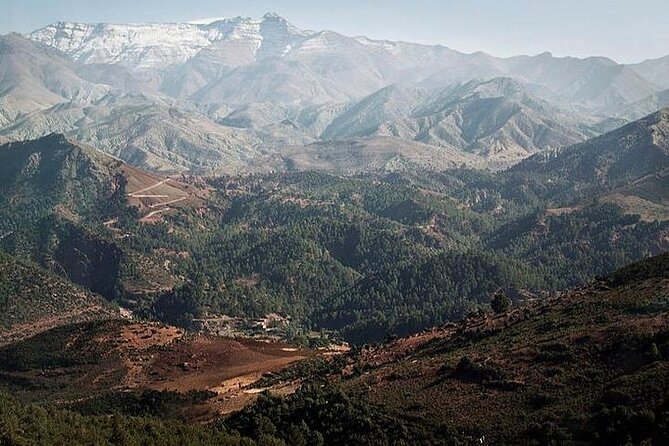
The drive south takes you into the Middle Atlas, with a stop around Ifrane and the cedar forests near Azrou. This is one of the route’s quieter days. Instead of tiled courtyards and crowded market lanes, you get mountain air, forest scenery, springs, waterfalls, and small Berber villages.
The program also mentions a farm producing homemade cheese and organic honey. That kind of food stop gives the day a more local feel, though the exact farm visit may depend on timing and conditions.
This is a five-hour touring day, not counting the onward drive and any extra pauses. The forests make a welcome break before the desert section, but the full route remains active. Pack a layer, since mountain temperatures can be cooler than Casablanca or Marrakech.
Day 5: From Midelt and the Ziz Valley to Merzouga
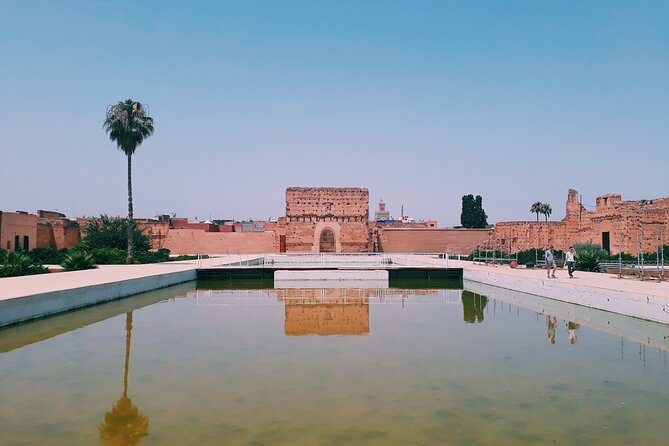
Day five is one of the major transition days. You stop briefly in Midelt, located between the Middle and High Atlas, then continue toward Erfoud and the Ziz Valley.
The Ziz Valley brings a dramatic change in color and vegetation. Palm groves and an oasis appear in an otherwise dry setting, and a panoramic stop helps you understand how important water is to settlement in southern Morocco.
Near Erfoud, fossil excavations are part of the story. The area contains trilobites and other ancient fossils, evidence that the Sahara region was once under the ocean. The stop is brief, but it adds a useful geological layer to the journey.
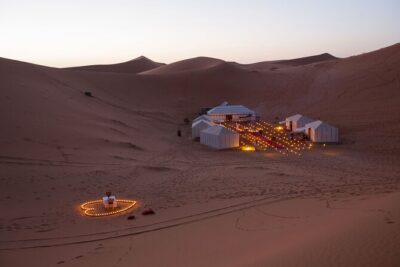
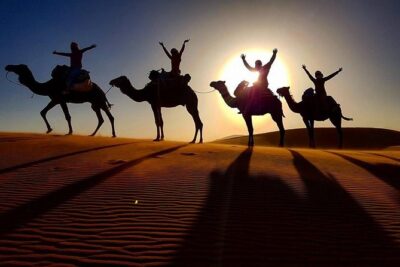
In Merzouga, you receive traditional Moroccan tea before heading into the dunes. The program includes a camel ride of about an hour, sunset from a dune, and a night in a luxury nomad tent. Quad bikes and other desert activities are available for an added adventure, but they are not identified as included in the price.
The desert night is a highlight, but keep your expectations practical. A luxury tent is more comfortable than basic camping, yet this is still an open desert setting. Temperatures can change sharply, and the schedule depends on daylight and weather.
Day 6: Todra Gorge, the Dades Valley, and Skoura
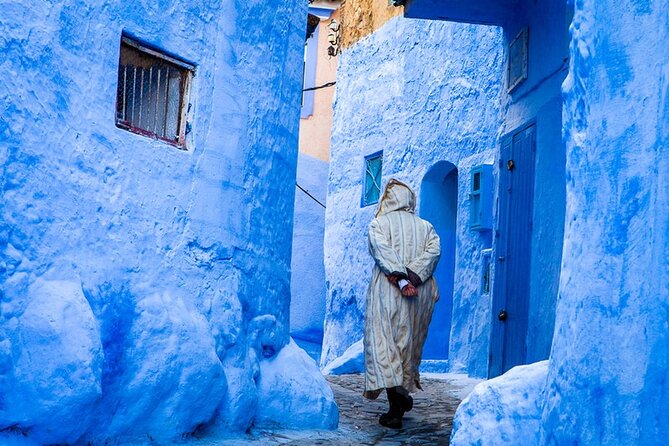
The morning begins with the desert waking up. You can climb a dune for the early light before leaving Merzouga for the Todra Gorge.
The gorge’s rock walls rise as high as 600 meters, with a narrow passage in places. You have about two hours to see the cliffs, walk a little, and take photographs. It is a striking contrast to the open sand of the previous evening.
You then pass through the Dades Valley, with its green strips of farmland and birdsong, before reaching the rose-growing area around Kalaat Mgouna. The route continues to Skoura, a palm oasis where you spend the night.
This day is a good reminder that the desert portion is not only about dunes. The south offers rock walls, farm valleys, palms, roses, and old fortified settlements, each separated by long stretches of road.
Day 7: Kasbahs, Ait Benhaddou, and Marrakech
The Route of the One Thousand Kasbahs links villages and fortified buildings that once supported trade between the Sahara and Marrakech. In Ouarzazate, you can visit Kasbah Taourirt and see the city’s old walls and historic buildings.
The major stop is Ait Benhaddou, a UNESCO World Heritage Site and one of Morocco’s best-known fortified villages. It remains inhabited and has served as a setting for films and television productions, including Gladiator and Game of Thrones.
You should allow two hours here. The earthen buildings and elevated views are photogenic, but the footing can be uneven and the route involves walking. Comfortable shoes are more useful than dress shoes.
The day ends in Marrakech at Jemaa el-Fna. Food stalls, tea, music, and street activity fill the square after dark. You can try tagine, couscous, sandwiches, and other Moroccan dishes at local prices. Dinner is not included, so bring cash and choose your food carefully.
Day 8: Marrakech palaces, gardens, and design
Marrakech receives a full guided day, and the city has enough major sights to fill it. Bahia Palace offers decorated rooms, courtyards, gardens, and craftsmanship from artisans who came from Fes.
Ben Youssef Madrasa is another architectural prize, with a decorated interior and a long connection to Islamic education. Admission is listed at 6 euros. Koutoubia Mosque is free to view from outside and provides one of the city’s most recognizable landmarks.
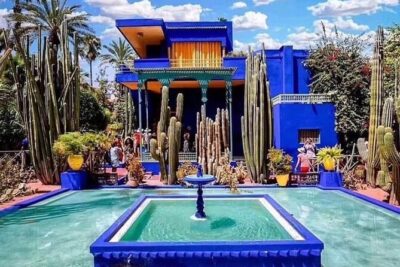
Jardin Majorelle takes more planning. The garden admission is listed at 15 euros, with the Yves Saint Laurent Museum priced separately at 13 euros. The museum adds fashion and modern design to a day otherwise focused on palaces, mosques, and historic schools.
The main guide is dedicated to Marrakech, which is useful because the city’s sights are spread across different areas. Still, admission costs can add up quickly, especially if you visit every listed attraction.
Day 9: A second Marrakech day with room to choose
A free day gives you a break from guided sightseeing. You can revisit the souks, pursue food experiences, or book a hot-air balloon flight over Marrakech and the palmeraie. The balloon ride requires advance booking and is not included.
The remaining options include the Saadian Tombs, Menara Gardens, Almoravid Koubba, and Dar El Bacha Museum of Confluences. The tombs contain members of the Saadian dynasty and cost 7 euros. Menara Gardens are free and provide a calmer setting away from the medina.
Dar El Bacha has a café serving coffees from around the world, while the Almoravid Koubba is a rare surviving building from the 12th century. Their admissions are listed at 6 euros each.
This day improves the overall rhythm of the tour. After a long sequence of transfers and guided visits, you can decide how much more Marrakech you want.
Day 10: Essaouira and the Atlantic air
Essaouira offers a cooler coastal change after Marrakech. Its medina, harbor, art scene, seafood, and argan oil give the day a different character from the inland cities.
You have about six hours for the city. That is enough to walk the old streets, see the port, eat fresh fish, and enjoy the sea air, but it is not enough for an unhurried beach holiday. Jimi Hendrix, Orson Welles, and Bob Marley are all associated with the city’s artistic reputation, and the town remains one of Morocco’s most appealing coastal stops.
The drive from Marrakech and back makes this a long day. I would treat Essaouira as a rewarding excursion rather than expect the slower rhythm of an overnight coastal stay.
Day 11: El Jadida and Portuguese Morocco
You begin with a relaxed morning in Essaouira before continuing to El Jadida. This port city was once controlled by Portugal and is now a UNESCO World Heritage Site.
The main sight is the Manueline cistern, built by the Portuguese in 1514 to store water. You can also see the Chapel of Saint Sebastian and the restored façade of the Church of Our Lady of the Assumption.
This is a less obvious stop than Marrakech or Fes, which is part of its appeal. It adds European and maritime history to a route otherwise dominated by Moroccan dynasties and desert trade.
What the $4,548.23 price includes
The package includes 5-star accommodation with breakfast, one night in a luxury nomad tent, airport pickup and drop-off, private air-conditioned transport, a permanent guide, camel riding, three dinners, and eleven breakfasts.
That is a substantial bundle. You are paying for the vehicle, route planning, accommodation coordination, guiding, and the convenience of moving between distant parts of Morocco with your own group. For a family or group of friends, the private format can make more financial sense than it first appears, especially if the price is based on a shared vehicle and room arrangements.
The price does not include flights, lunches, drinks, snacks, most dinners, or the many optional admissions. If you enter every listed attraction, the published fees total roughly 83 euros per person, before food and personal purchases.
The biggest value question is the accommodation. Ask for the exact hotel and riad names before confirming, since 5-star standards can vary between cities and a desert camp is a different kind of luxury. The strongest praise attached to this company’s tours centers on hotels, organization, drivers, and personal service. One useful caution is that the quality of local city guiding can vary, so ask how long each city guide will stay with you and what is included.
Who should book this private Morocco tour?
I would recommend it to first-time visitors who want a broad national itinerary and do not want to arrange trains, desert transfers, hotels, guides, and airport rides separately. It also suits families and small groups who value privacy and want some control over daily timing.
It is less suited to you if you prefer slow travel, independent wandering, or several free days in each city. The schedule is full, and the long drives are unavoidable. You should also budget beyond the headline price for entrance fees, lunches, drinks, most evening meals, and optional activities.
The company has a strong record of personal service in the supplied feedback, with repeated praise for staff such as Alexandra, as well as guides and drivers who helped shape custom trips. Names frequently associated with positive experiences include Radouan, Rachid, Momo, Abdel, Hassan, Idir, Jamal, Youssef, and Aissa. Your booking should confirm the actual team rather than assume one of these people will lead your tour.
Should you book it?
Book this tour if your priority is seeing Morocco’s major regions in one organized sweep, with private transport, upscale lodging, and a real desert night. The itinerary gives you a strong first look at the country’s cities, mountains, oases, dunes, and coast.
Think twice if you want a relaxed pace or strict control over spending. The price is high, but it covers a lot of difficult logistics. Before paying, confirm the hotel list, vehicle details, assigned guide, group size, included dinners, and which optional stops require advance booking. Those answers will tell you far more about the tour’s true value than the headline price alone.
FAQ
How long is the tour?
The tour lasts approximately 12 days, beginning in Casablanca and ending with a transfer to Casablanca Mohammed V International Airport.
Is this a private tour?
Yes. Only your own group participates, and the daily pace can be adjusted because the transport and touring are private.
What transport is provided?
The tour includes transport by private vehicle with air conditioning and a permanent guide.
Are airport transfers included?
Yes. Pickup from Casablanca airport and drop-off at Casablanca Mohammed V International Airport are included.
What accommodation is included?
The package includes 5-star accommodation with breakfast and one night in a luxury nomad tent at a desert camp.
Is the camel ride included?
Yes. A camel ride in the desert is included.
How many breakfasts and dinners are included?
The package includes 11 breakfasts and three dinners. Lunches, drinks, snacks, and other dinners are not included.
Are attraction entrance fees included?
No. Many entrance fees are separate. Listed examples include Hassan II Mosque, Bahia Palace, Jardin Majorelle, the Yves Saint Laurent Museum, Saadian Tombs, and several medersas and museums.
Can non-Muslims enter the Hassan II Mosque?
The tour describes Hassan II Mosque as one of the rare Moroccan mosques that non-Muslims can visit. Non-Muslims cannot enter the hall containing the remains at the Mausoleum of Mouley Ismail, and the Karaouine Mosque interior is also not open to non-Muslims.
Can I cancel for a full refund?
You can cancel at least 24 hours before the experience start time for a full refund. Cancellations or changes made less than 24 hours beforehand are not refunded, and poor weather or failure to meet the minimum number of participants may lead to an alternate date or a full refund.
Just added around Casablanca
- Exclusive tour of Casablanca with access to the Hassan II Mosque★ 5.0 · 205 reviews
- Your Private Casablanca Transfer★ 5.0 · 52 reviews
- Casablanca Airport Transfer from hotel in Casablanca★ 5.0 · 18 reviews
- 14 Days From Casablanca- Morocco Grand Tour★ 5.0 · 24 reviews
- Casablanca City Tour: Hassan II Mosque, Medina & Hidden Gems★ 4.5 · 38 reviews
- Marrakeck City tour from Casablanca all the day around trip★ 5.0 · 35 reviews
- Religious Casablanca: Private Spiritual Tour Including Hassan II Mosque Visit★ 5.0 · 33 reviews
- Casablanca Night Tour with Andalusian Dinner Show★ 4.5 · 25 reviews
Multi-Day Tours in Casablanca, compared.
10 Day Desert Tour From Casablanca via the Imperial Cities
Read our review →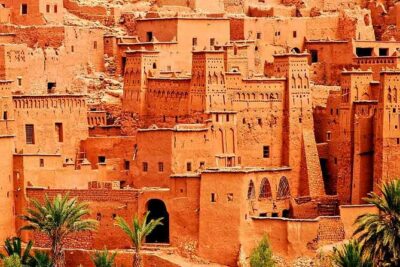
7 Days Luxury Desert Tour From Casablanca to Marrakech via fez -Camel trekking
Read our review →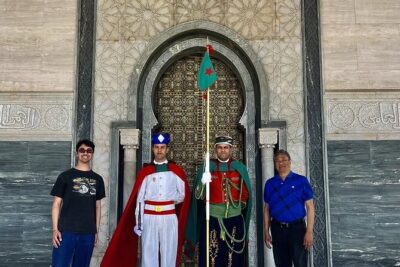
12 Days From Casablanca- Cultural Immersion Tour
Read our review →
Browse the lists this tour appears in