
Reviewed · FOOD TOURS
Marrakech Night Street Food Tour / Taste The Real Marrakech
The main event here is not a single famous dish. It is the sheer range of food packed into one evening, from msemen pancakes and harira to slow-cooked tangia, fried sardines, Jewish donuts, sweets, and fresh juice. You move through the Medina, the Kasbah, and less touristy neighborhoods, stopping at places you would be unlikely to find on your own.
I like two things in particular: the guides explain how food fits into Moroccan life, and the portions are generous enough to make the $56 price feel fair. Nour and Omar receive especially warm praise for their humor and care, while guides such as Mustafa, Mohammad, Khawla, and Noor have also led memorable outings. The main drawback is simple: there may be too much food. Several tours run beyond four hours, and you need to arrive very hungry.
Key points at a glance
- Expect a full meal, not a few samples: You may taste ten or more foods, with substantial servings at several stops.
- Tangia is a major highlight: This slow-cooked meat dish may be prepared for the group and cooked in the embers of a hammam.
- The walking route adds real context: You see parts of the Medina, Kasbah, markets, alleys, and local neighborhoods while learning about food and daily life.
- Guides bring different strengths: Nour and Omar are praised for energy and humor, while Mustafa and Mohammad have shared cooking skills and local food knowledge.
- Vegetarian and vegan needs can be handled: Alternatives are available if you give notice, although the tour is strongest for people happy to try a wide range of dishes.
- Plan for a long evening: The stated duration is four hours, but some outings have lasted five hours or more.
Why this food tour works best on your first night
I often like a food tour early in a trip because it gives you a working map of local eating. This one goes beyond the main square and familiar restaurant menus. You walk through smaller lanes and visit local food stops where the setting may look plain from the outside, yet the cooking can be the reason to stop.
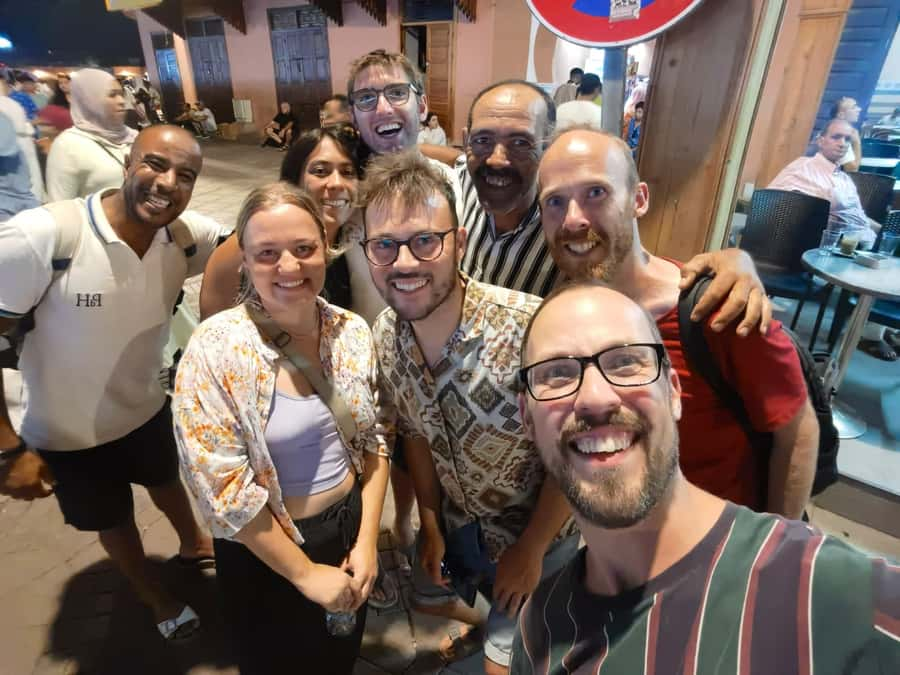
The tour begins in front of Café de France, an easy landmark in central Marrakech. From there, your guide explains the route before leading the group into the city. The evening combines walking, food, and storytelling, so you are not just eating your way through a checklist. You are learning what people cook at home, what they eat on different occasions, and how Moroccan, Berber, and Jewish influences appear in the food.
Nour and Omar are the names most often associated with the experience, and their roles seem to complement each other. Nour is praised for his enthusiasm, cultural explanations, and ability to keep the group laughing. Omar is often described as attentive, flexible, and good at explaining each stop. Other guides, including Mustafa, Mohammad, Khawla, Noor, and Nurdin, have also led the tour, so the exact tone can vary by date.
That variation is worth keeping in mind. A chef-guide such as Mustafa may bring extra insight into cooking methods and may prepare some food himself. A guide such as Khawla may place more focus on the cultural side of local neighborhoods and family cooking. The common thread is food, conversation, and a route designed to take you away from the obvious tourist circuit.
More Food Tours in Marrakech
- Marrakech: Street Food Tour with a Local Guide
★ 4.9 · 3,119 reviews - Marrakech: Street Food Tour by Night
★ 4.8 · 2,838 reviews - Authentic Moroccan Food Tour in Marrakech with Dinner
★ 5.0 · 1,423 reviews
The first tastings: pancakes, soup, and sweet pastries
Early stops introduce some of the most familiar Moroccan flavors. Msemen is a layered, pan-fried pancake with a soft, chewy center and crisp edges. Harcha is another griddled pancake, made with semolina and usually more crumbly in texture. These are useful first tastes because they show how much Moroccan food depends on simple ingredients handled with care.
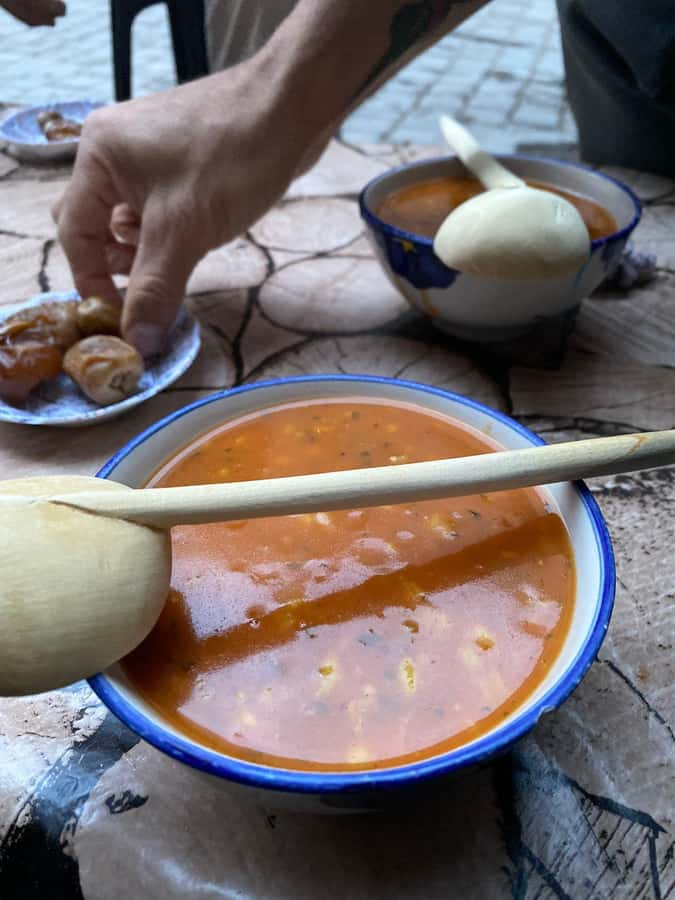
Harira follows or appears among the early savory dishes. This famous soup is listed as vegetarian and is often associated with breaking the fast during Ramadan, though it is enjoyed more widely. It gives you a warm, filling taste of tomatoes, legumes, herbs, and spices without the weight of the meat dishes that come later.
Chebakia brings the first clear sugar hit. These pastries are shaped, fried, and coated with honey or syrup, often with sesame notes. Do not treat the sweets as a token finish. They are part of the main food story, and the tour may keep offering pastries, candies, or other desserts at later stops.
You may also try olives, fresh fruit juice, coffee, Moroccan tea, or other small items along the way. Since all food and drinks are included, you do not need to budget extra for each tasting. That makes the evening easier, though it also means you should pace yourself. A polite bite at every stop can become a very large meal.
Tangia, stews, and the cooking traditions behind them
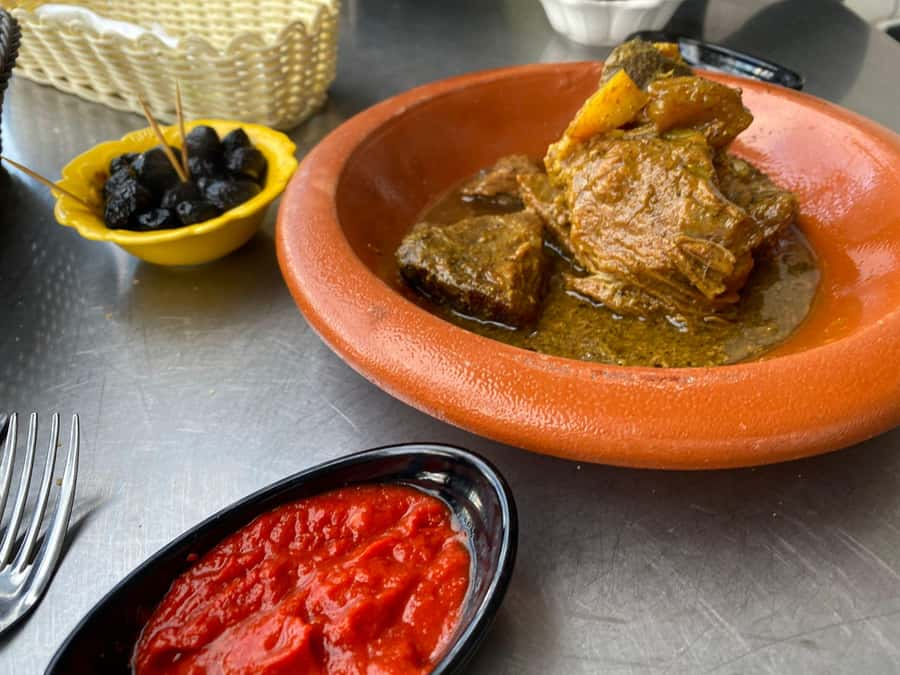
Tangia is the dish that seems to leave the strongest impression. It is a slow-cooked meat preparation traditionally associated with Marrakech. The meat cooks for hours with spices and other simple ingredients until it becomes tender and deeply flavored.
Some versions of this experience include tangia made specially for the group and cooked in the embers or working heat area of a hammam. That is more than a restaurant presentation. It gives you a glimpse of an old practical cooking system tied to the city’s bathhouses and their boilers. The exact preparation depends on the evening and guide, so do not assume this special version appears every time, but it has been a clear highlight on many departures.
The tour also includes Moroccan stews and may feature chicken, beef, or minced liver. These dishes help you compare slow cooking with faster street preparations. Moroccan food can be richly seasoned without being hot in the chili-heavy sense many people expect. Your guide can explain the herbs, spices, cooking times, and occasions linked to each dish.
This is where the tour earns much of its cultural value. A plate of stew is good on its own, but the explanation tells you why it tastes the way it does and where it fits in local life. I like that the guides are not limited to naming ingredients. They also discuss traditions, history, and ordinary routines around food.
Sardines, eggplant, and the less expected stops
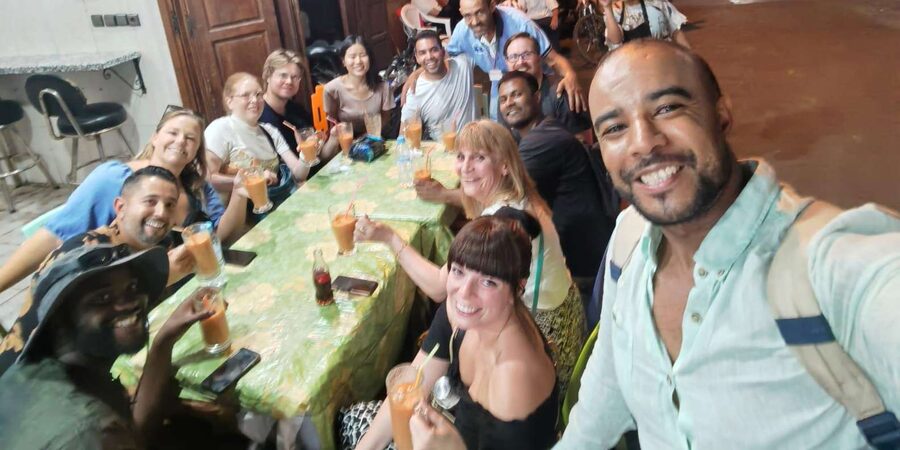
One of the more distinctive tastings is sardine with eggplant. The sardines may be fried and served with vegetables, giving you a very different experience from the soup, pancakes, and stews. It is a practical taste of Morocco’s coastal food traditions, even while you are eating in an inland city.
Lbid o Maticha, described as a Berber omelet with eggs and tomatoes, offers another change of pace. It is humble food, but that is precisely why it matters. A tour that only served famous dishes would give you a polished picture of Moroccan cooking. This stop points toward everyday meals made from basic ingredients.
You may also encounter Chfnj, described here as a Jewish donut served with tea. This is one of the more interesting cultural details in the food lineup. Marrakech cuisine is not one single tradition, and the inclusion of Jewish and Berber foods shows how communities and customs have shaped what is eaten in the city.
Raïb, a frozen yogurt, provides a cool break after fried or heavily cooked dishes. Assir, fresh fruit juice, helps in the same way. The sequence is not a fixed restaurant menu, so the exact order and selection may change. I would treat that as part of a street-food evening rather than a flaw, since local availability and family circumstances can affect the stops.
A completely different kind of day in Marrakech:
- Marrakech: Quad Bike Tour to Palm Oasis and Jbilat Desert
★ 4.8 · 11,831 reviews - Marrakesh: Majorelle Garden Entry Tickets
★ 4.5 · 9,651 reviews - Marrakech Quad Bike Experience: Desert and Palmeraie
★ 4.5 · 9,509 reviews - Marrakech: Balloon Flight, Berber Breakfast & Certificate
★ 4.8 · 8,164 reviews
Walking through the Medina and Kasbah after dark
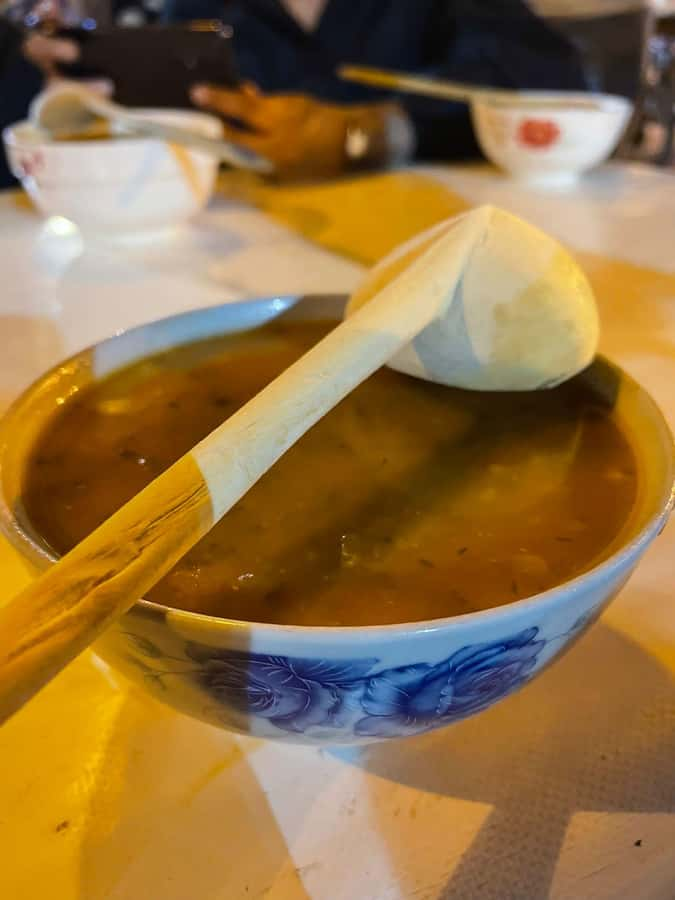
The food is the hook, but the walking route gives the evening its shape. You move through the Medina and Kasbah, along narrow streets and market areas, with stops in places that can be easy to miss when you are exploring alone.
At night, Marrakech feels different from the daytime city. Food stalls, small eateries, local gatherings, and alley traffic create a changing backdrop. You are not simply led from one polished restaurant to another. The route includes neighborhood spots where local people eat and meet.
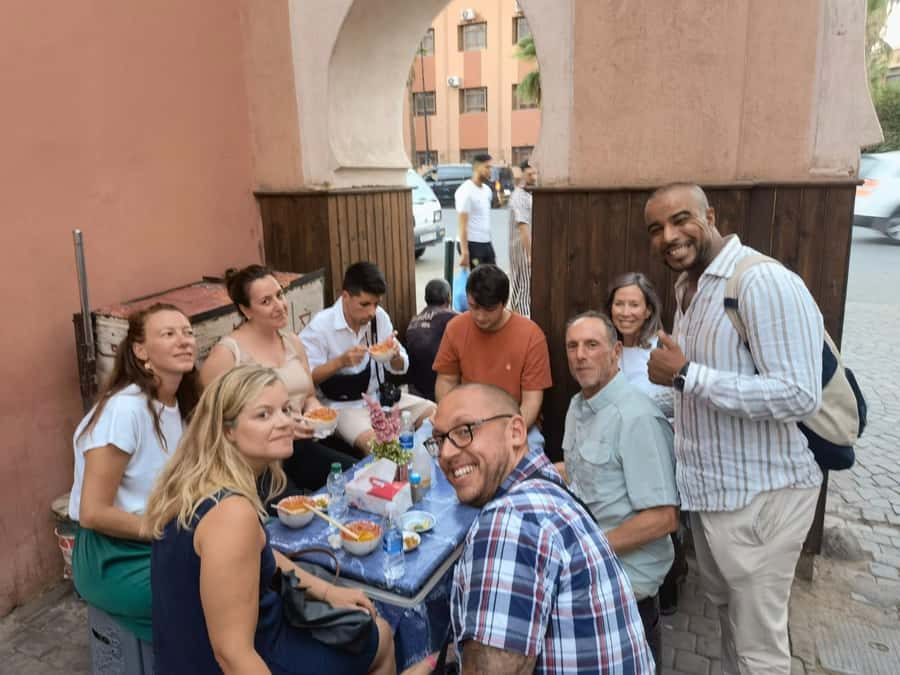
The group is limited to ten people, and many departures have around eight participants. That is a useful size for a Medina walk. It is small enough for the guide to answer questions and keep the group together, but large enough to make the evening social. You may end up sharing a table or comparing reactions with people from several countries.
The walking does require attention. You will be moving through busy streets and uneven lanes while stopping to eat, so comfortable shoes are sensible. The tour is described as wheelchair accessible, but the route includes Medina and Kasbah streets, and conditions can vary. If access is a major concern, ask about the specific route before booking.
How much food will you actually eat?
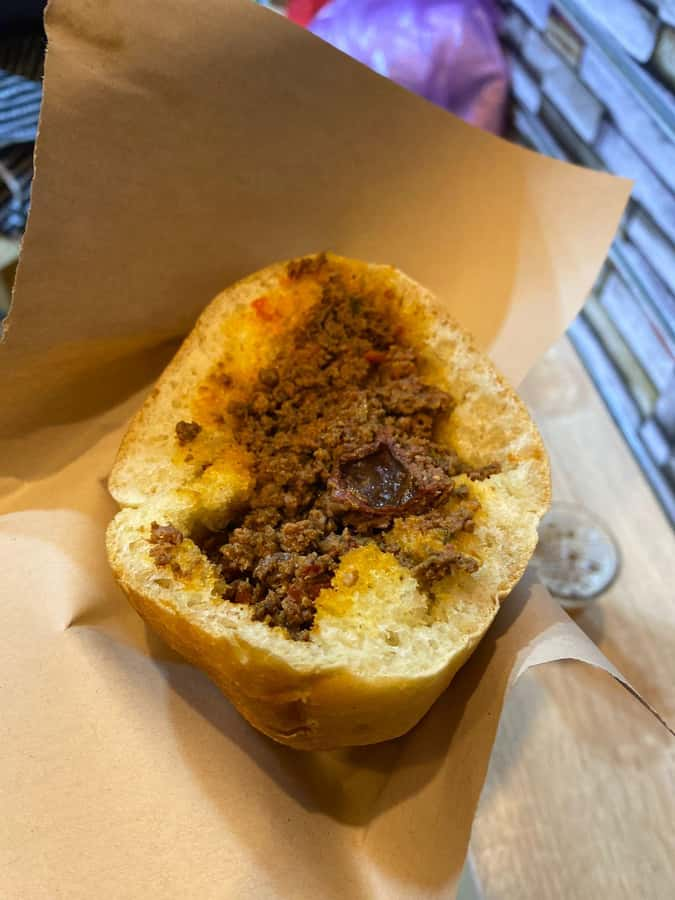
This is the practical issue that comes up again and again: bring an empty stomach. The tour is not built around tiny tasting portions. Several stops provide enough food to count as a proper meal, and the total can be more than you expect.
Some outings have lasted longer than the advertised four hours because the guide wanted the group to try everything. That can be a bonus if you enjoy a slow evening and extra stories. It can feel tiring if you expected a strict four-hour walk or have another booking later.
I would skip a large lunch on the day of the tour. You probably do not need to skip breakfast, but the food arrives in a steady stream, and you may struggle to finish everything by the end. It is fine to taste rather than clean every plate. The generous portions are good value, but they can also be wasteful if you arrive too full or feel obliged to eat beyond comfort.
Vegetarian and vegan visitors can take part, but you should report allergies and dietary needs in advance. The guide can provide alternatives, and vegan options have been arranged at many stops. Still, the advertised selection leans heavily toward meat, sardines, eggs, dairy, and pastries. If you are vegan, the experience may require more substitutions and may not offer the same range as it does for an omnivore.
Is $56 a fair price?
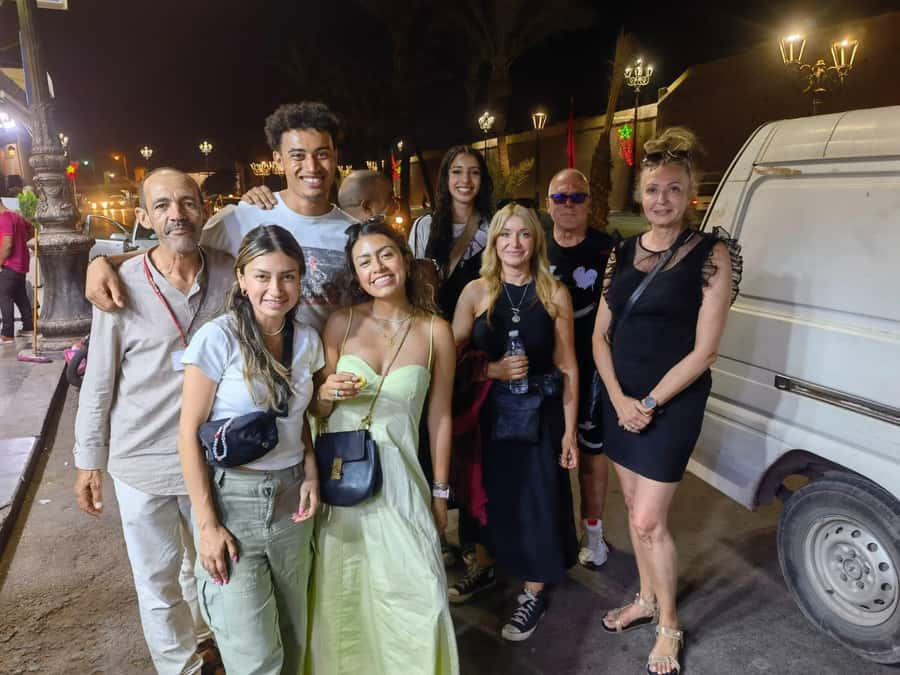
At $56 per person, the price includes a bilingual local guide, all food, coffee or tea, and bottled water. That is important because the number of tastings can be high. If you tried to recreate the evening by ordering a separate dish at every stop, you could easily spend a similar amount while missing the explanations and route.
The value is strongest if you want a meal plus a guided introduction to Marrakech culture. You are paying for several hours of food, walking, local access, and conversation, not just a plate of tangia. The small group also helps the price feel reasonable.
Transportation is not included. The description says the group will walk and drive through different neighborhoods, but it does not spell out how any driving between areas is arranged. Confirm that detail before booking, especially if you are staying outside central Marrakech. The meeting point is in front of Café de France, so you should plan how you will reach and leave that location.
Free cancellation is available up to 24 hours before the tour for a full refund. You can also reserve now and pay later, which helps if your Marrakech plans are still shifting.
Who should book this evening?
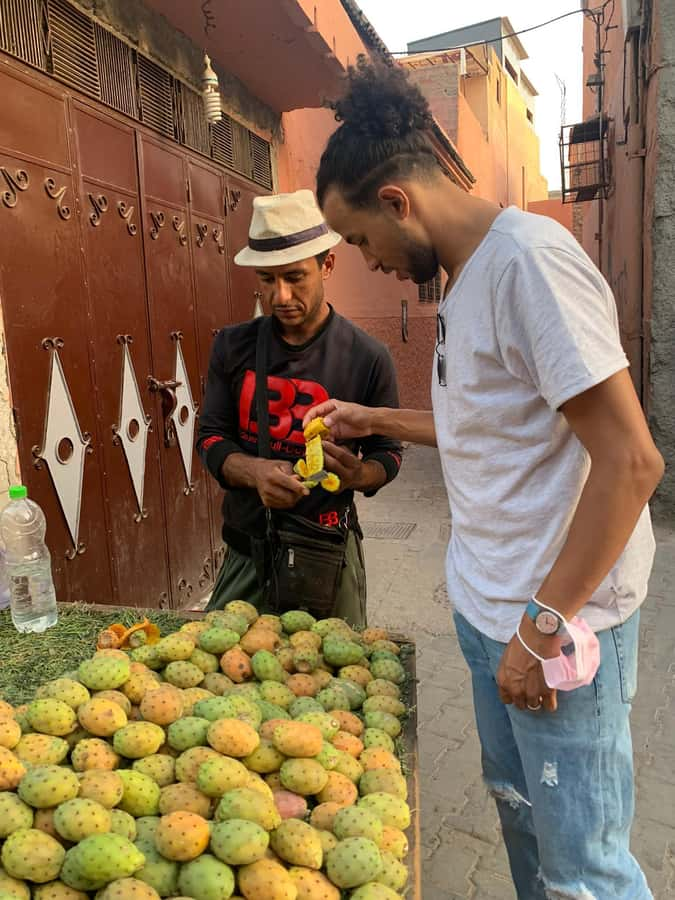
I would choose this tour if you want an easy introduction to Moroccan food without spending your first night guessing which local places are worthwhile. It suits curious eaters, first-time visitors, solo travelers who like meeting a small group, and anyone who wants food combined with city stories.
It is also a good choice for people who prefer local, informal places to polished dining rooms. The guides can point out dishes you may later order on your own, including tangia, and they can suggest restaurants and foods for the rest of your stay.
I would hesitate if you dislike long meals, cannot eat much meat or fried food, or want a tightly timed itinerary. The evening can run past four hours, the portions are large, and the route changes. You should also be comfortable with walking through Medina streets at night.
Should you book the Marrakech Night Street Food Tour?
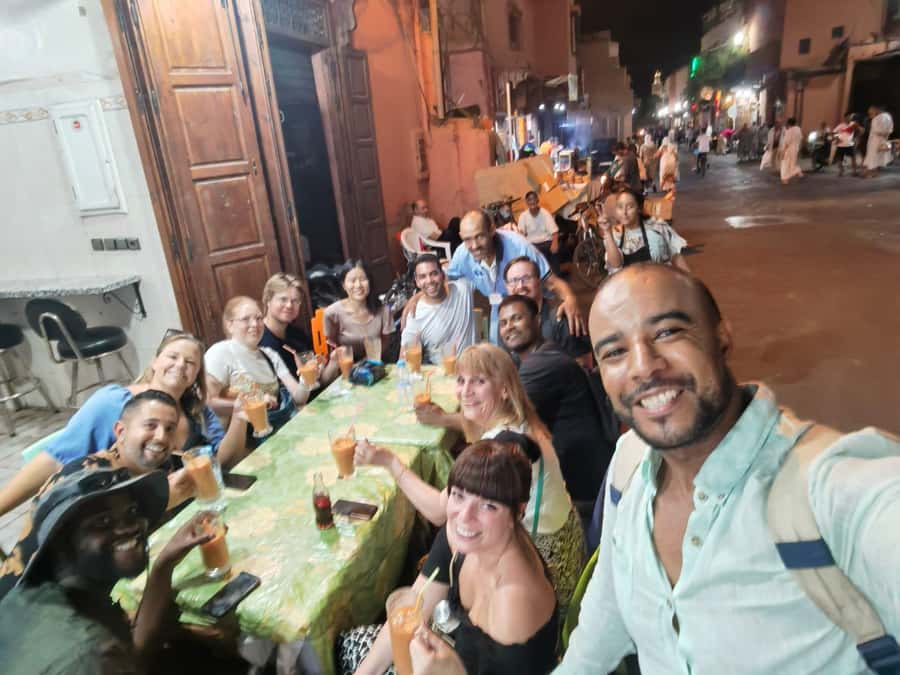
For most visitors, yes, especially if you schedule it on your first evening. The combination of food, local stories, and neighborhood walking gives you a useful start in Marrakech, and the $56 price covers enough food to replace dinner several times over.
Book it if you want tangia, msemen, harira, sardines, sweets, tea, and dishes you may never find alone. Arrive hungry, tell the operator about allergies, wear comfortable shoes, and leave your evening open in case the four-hour plan stretches longer.
Skip it if you want a short, quiet tasting or need a precise finish time. For everyone else, this is a generous, social way to get acquainted with the city through what people cook and eat.
FAQ
Where does the Marrakech Night Street Food Tour meet?
Meet your guide in front of Café de France in Marrakech.
How long does the tour last?
The stated duration is four hours. Some outings have lasted longer, including around five hours.
What is the price?
The price is $56 per person.
What food is included?
Food can include msemen and harcha pancakes, harira, chebakia, tangia, Moroccan stews, sardines with eggplant, Chfnj donuts, Lbid o Maticha, Raïb, fresh fruit juice, sweets, and other local dishes.
Are drinks included?
Yes. Coffee or tea, bottled water, and fresh fruit juice are included among the food and drink offerings.
Is transportation included?
No. Transportation is listed as not included. The experience includes walking and may involve driving between different neighborhoods, so confirm the transport arrangements before booking.
Is the tour suitable for vegetarians and vegans?
Vegetarian and vegan alternatives can be provided, but you should notify the operator about your needs in advance. The standard food selection includes many meat, fish, egg, and dairy dishes.
Is the tour wheelchair accessible?
Yes, the activity is listed as wheelchair accessible.
Can I cancel for a refund?
Yes. You can cancel up to 24 hours in advance for a full refund. Reserve now and pay later is also available.
More Evening Trips in Marrakech
- Marrakech: Medina by Night Walking Tour with Moroccan Tea
★ 4.6 · 586 reviews - Private Tour: Marrakech Medina By Night
★ 5.0 · 389 reviews - Marrakech: Guided Tour by Night
★ 4.7 · 326 reviews - Evening Marrakech: Gastronomic and Market Tour Inside the Medina
★ 4.5 · 283 reviews
Just added around Marrakech
- Quad in the Palmeraie of Marrakech★ 5.0 · 41 reviews
- Marrakech Desert Camel Ride★ 5.0 · 17 reviews
- Sunset Camel Ride in the Palm Grove Of Marrakech★ 5.0 · 34 reviews
- Private Airport Transfer from or to Marrakech Menara Airport.★ 4.5 · 63 reviews
- Marrakech The History and Culture Day Trip★ 4.5 · 45 reviews
- Marrakech: Tailor-Made City Tour With Your Own Private Guide★ 4.9 · 236 reviews
- Marrakech palm grove: Sunset camel ride★ 4.8 · 194 reviews
- Sparkling Marrakech through the eyes of your local Guide★ 4.7 · 247 reviews
Food Tours, compared.
Authentic Moroccan Food Tour in Marrakech with Dinner
Read our review →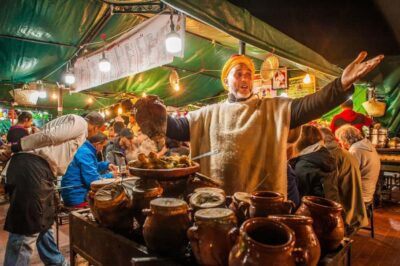
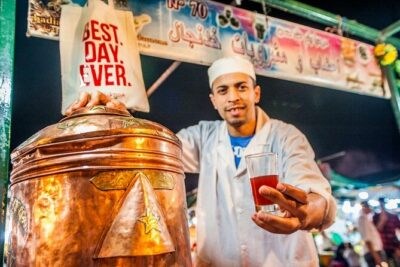
Evening Marrakech: Gastronomic and Market Tour Inside the Medina
Read our review →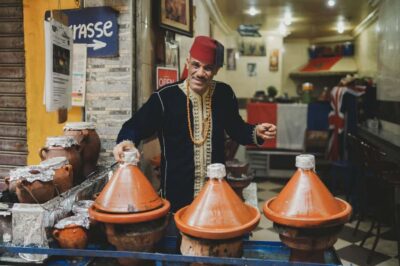

Authentic Food Tour in Agadir – Eat Like A Local
Read our review →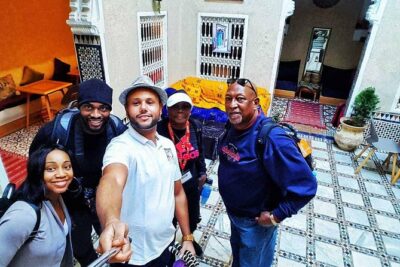
Casablanca Food Tour – Moroccan Street Food Tour
Read our review →Browse the lists this tour appears in