
Reviewed · FOOD TOURS
Marrakech: Local Food Tasting Tour with a Guide
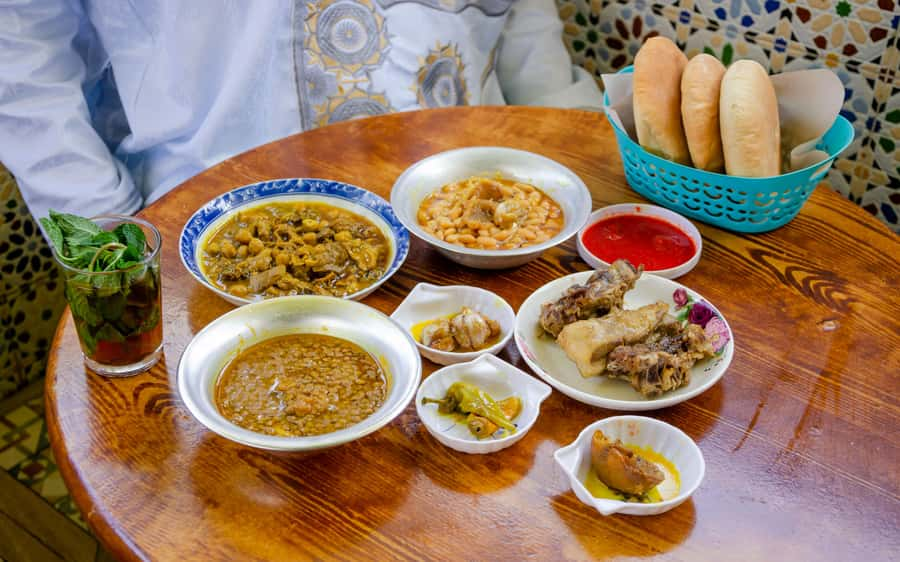
Marrakech’s best food often sits away from the polished restaurant menus. This three-and-a-half-hour walk takes you through the medina and Mellah for 10 local tastings, including harira, msemen, tanjia, barbecue, sweets, fresh drinks, and herbal tea. The most unusual stop is a visit to a lfranatchi, a wood-fired oven used to heat a hammam and cook tanjia.
I like the way this tour connects food with daily Moroccan life, rather than treating each dish as a quick sample. I also like the small group limit of eight, which gives you a better chance to ask questions and keep up in crowded lanes. The main drawback is simple: go hungry, because the food comes steadily and the tour can feel like a lot if you have already eaten.
- Ten tastings in 210 minutes: Expect a full meal’s worth of Moroccan dishes, sweets, fruit drinks, tea, and more.
- Local food away from the main tourist circuit: The route includes areas and eating spots you might not choose on your own.
- A wood-fired tanjia stop: See how this clay-pot dish gets its smoky character.
- A guide-led cultural walk: Mohamed, Mohammed, and Mehdi are among the guides named in recent feedback, though your guide may differ.
- Vegetarian choices are available: Tell the guide about your needs at the start.
- Small group of up to eight: A useful size for food stops and narrow medina streets.
Starting at Argana Cafe in Jemaa el-Fnaa
The meeting point is in Jemaa el-Fnaa Square, in front of Argana Cafe. This is a sensible place to begin because it is easy to identify, but it is also one of Marrakech’s busiest public spaces. Give yourself enough time to find the exact meeting spot without rushing.
The tour then moves into the medina on foot. There is no hotel pickup or transport included, so plan your route to the square before the start time. Comfortable walking shoes matter more here than fashionable ones. The tour lasts 210 minutes, and much of that time is spent on foot over ordinary medina paving.
Your local guide stays with you from the beginning to the end. English and French are offered, and the small group format should make it easier to hear explanations and ask about ingredients, customs, and local eating habits.
The route includes short visits to restaurants and food stops, a photo stop, the Mellah, and a longer guided walk through the medina. It is not just a chain of plates. The food gives you a reason to pay attention to the neighborhoods around you.
The first bites: msemen, harira, dates, and chebakia
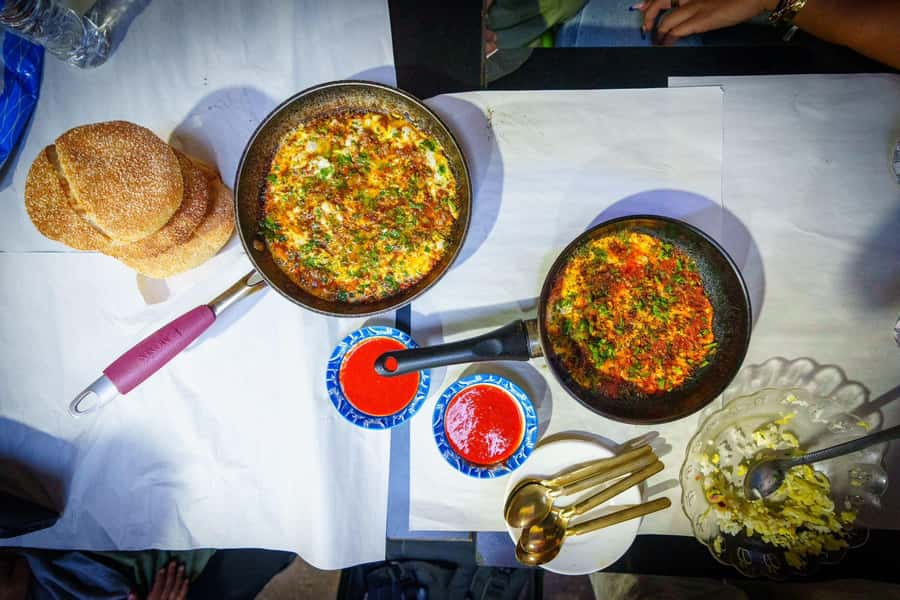
One early tasting is Moroccan msemen, a folded, pan-cooked flatbread served with tomato sauce, onion, coriander, and spices. It is a useful introduction to the tour because it shows how simple ingredients can become a filling snack with plenty of flavor.
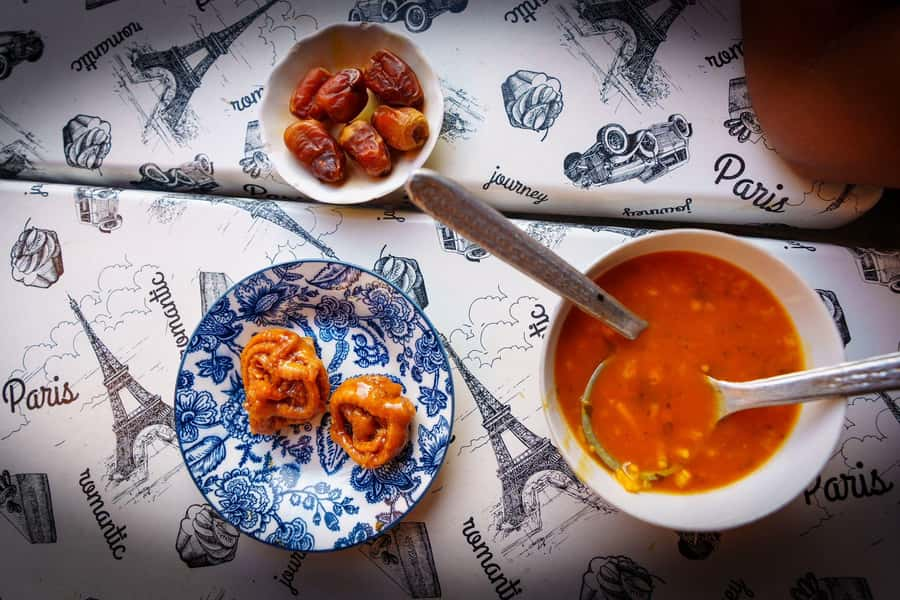
You will also try harira, Morocco’s well-known soup, with dates and chebakia. Harira is especially familiar during Ramadan, but it is an important part of Moroccan food culture at any time. Dates add sweetness, while chebakia is a sticky, sesame-covered pastry often flavored with honey and spices.
This opening section should help you understand the tour’s approach. You are not only tasting famous Moroccan dishes. You are also trying the kinds of foods that make up a normal food day: bread, soup, sweets, fruit, grilled meat, and drinks.
If you are sensitive to spice or sweetness, ask your guide what is coming next. The tour includes many different flavors, and some dishes may be richer or sweeter than you expect.
More Food Tours in Marrakech
- Marrakech: Street Food Tour with a Local Guide
★ 4.9 · 3,119 reviews - Marrakech: Street Food Tour by Night
★ 4.8 · 2,838 reviews - Authentic Moroccan Food Tour in Marrakech with Dinner
★ 5.0 · 1,423 reviews
Makkla bel Kefta and sfenj in the medina
Makkla bel Kefta is another stop on the food trail. The name refers to a kefta-based dish, with seasoned minced meat used in Moroccan cooking. The exact preparation can vary, so your guide is the right person to ask about the ingredients and how the dish is normally served.
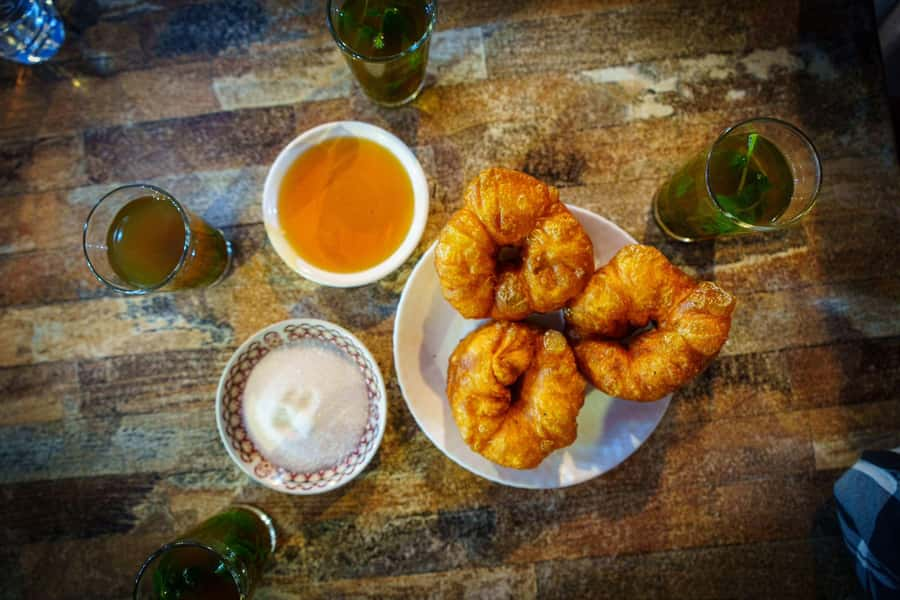
Then comes sfenj, the Moroccan doughnut. This is a pleasant change of pace after savory food, but it also adds to the overall amount you will eat. By the third or fourth stop, you may already feel that you have had a full meal.
That is one of the practical truths about this experience. The word tasting can suggest tiny samples, but you should not count on that. Recent participants have described needing to make room for more food as the walk continued. Eat lightly beforehand, but do not skip water.
The stops also give you a chance to see how food fits into the medina’s daily rhythm. You will pass through local areas and eating places rather than staying only around the most obvious tourist venues.
The lfranatchi and Marrakech’s smoky tanjia
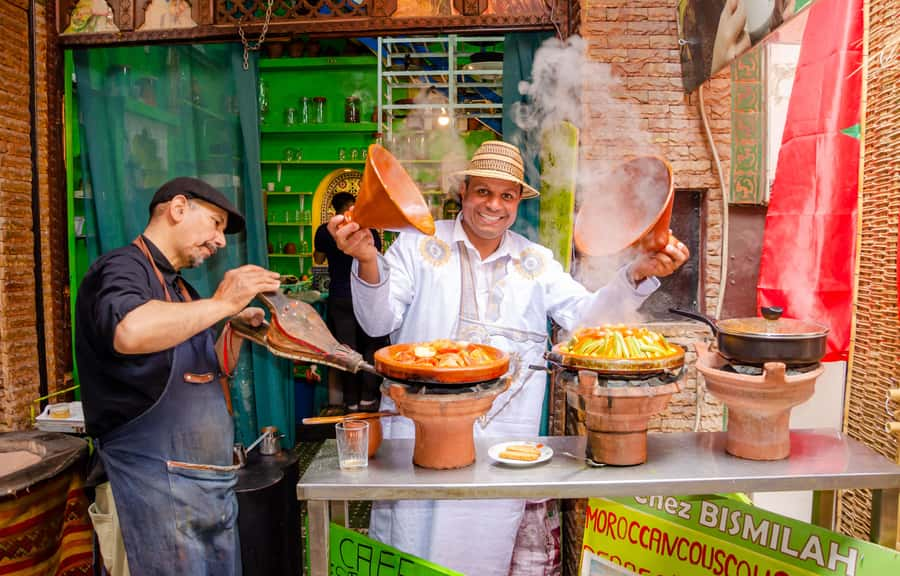
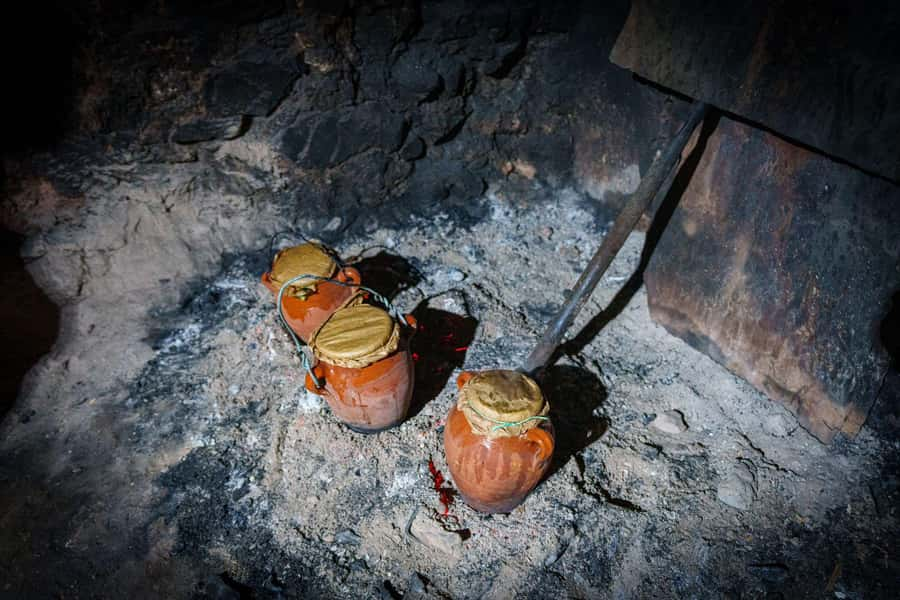
The most distinctive part of the route is the visit to a lfranatchi. This traditional wood-fired oven heats hammams and cooks tanjia, a Moroccan clay-pot dish known for slow cooking and smoky flavors.
Tanjia is closely linked with Marrakech. The dish is prepared in a clay pot and cooked for hours, allowing the meat and seasoning to soften together. The lfranatchi stop gives you context that a restaurant serving tanjia cannot provide. You see the setting where the cooking method belongs.
This is also one of the tour’s strongest cultural moments because the oven has a practical role beyond food. It connects cooking with the hammam, or public bathhouse. That link gives you a better sense of how older neighborhood services worked together.
Do not expect a cooking class or a long demonstration. The information provided describes a visit and tasting, not a hands-on lesson. Still, for many people, this will be the stop they remember most clearly because it explains why tanjia tastes different from an ordinary stew.
Moroccan barbecue and steamed sheep’s head
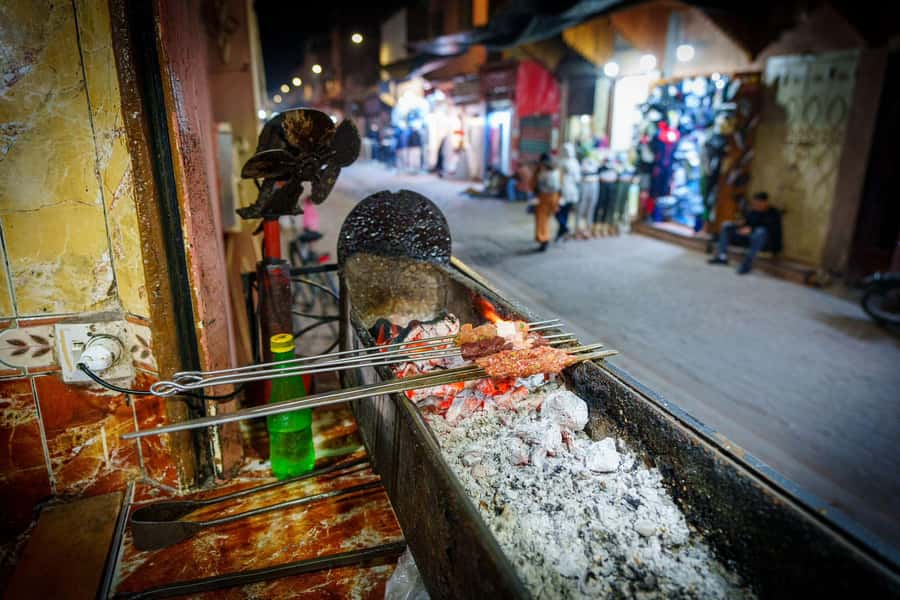
The tour continues with shwa, Moroccan barbecue. The listed choices include beef, turkey, and liver. This is a good stop for comparing different textures and seasonings, but it may be less comfortable for anyone who prefers mild or familiar food.
Another listed tasting is rass lmbkher, steamed sheep’s head with cumin. This is a traditional dish and one of the more adventurous items on the route. You should know about it before booking, especially if you have strong food preferences.
The tour is designed to show you local cuisine as it is actually eaten, not just the safest dishes for an international audience. That is a strength, but it also means the menu may include ingredients you would not order alone.
Vegetarian options are available, so tell the guide at the beginning. The supplied information does not specify every vegetarian dish or promise that each of the 10 tastings can be adapted. If you do not eat meat, ask how the route will be adjusted before you start.
A completely different kind of day in Marrakech:
- Marrakech: Quad Bike Tour to Palm Oasis and Jbilat Desert
★ 4.8 · 11,831 reviews - Marrakesh: Majorelle Garden Entry Tickets
★ 4.5 · 9,651 reviews - Marrakech Quad Bike Experience: Desert and Palmeraie
★ 4.5 · 9,509 reviews - Marrakech: Balloon Flight, Berber Breakfast & Certificate
★ 4.8 · 8,164 reviews
Panache, orange juice, and khodnjal
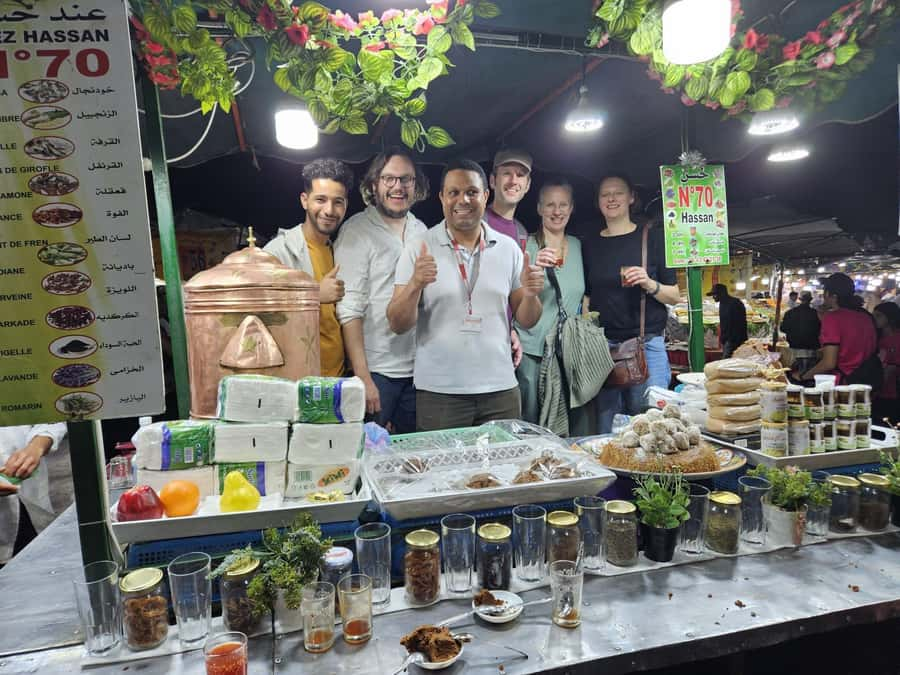
After the heavier food, the tour includes a refreshing drink. Panache is a smoothie made with seasonal fruit blended with milk or an orange juice base. Orange juice is also available as an option.
This part of the route matters because Moroccan food tours can become quite filling. A cool fruit drink gives you a break from meat, bread, pastry, and soup. It also shows a lighter side of local refreshment culture.
You will also try khodnjal, a hot herbal infusion with eucalyptus. It is described as soothing and useful for clearing the senses and aiding digestion. The drink gives the tour a gentle finish, particularly after the richer tastings.
Local sweets and tea are included as well. The precise order may vary, and there are said to be additional surprises, so the published list should be treated as a guide to the food rather than a rigid promise about the exact sequence.
Seeing the Mellah and the less familiar medina
The route includes the Mellah, Marrakech’s historic Jewish quarter, and several parts of the medina. These visits add useful setting to the meal. Food tastes different when you understand the neighborhood where it is bought, prepared, and shared.
You will have a short visit in the Mellah and another in the wider medina, followed by about two hours of guided walking and tasting. That timing means the cultural material is not an afterthought. The walk is a large part of the experience.
A strong guide can make a big difference here. The best use of the tour is to ask questions as you go: What is this ingredient? How is this dish usually eaten? Is it a home food or a street food? Why is this shop busy? The guides praised in the supplied feedback, including Mohamed, Mohammed, and Mehdi, were repeatedly described as friendly, attentive, and passionate. Your guide may be someone else, but the format encourages that same personal exchange.
The route is also useful on your first day in Marrakech. You can learn which foods appeal to you and where local people eat, then return to the medina with more confidence later.
How much food do you really get?
You should plan for a substantial amount of food. The tour lists 10 local tastings, but the menu includes several filling items: msemen, soup, kefta, sfenj, tanjia, barbecue, and sheep’s head, along with sweets and drinks.
I would eat a small breakfast or lunch beforehand, depending on the start time. Do not arrive after a large meal. One recent participant’s advice was direct: go hungry. That is more useful than treating this as a light snack crawl.
The menu may be challenging if you dislike organ meats, lamb, strong spices, or sweet pastries. On the other hand, the wide range is exactly why the tour is useful. You can try a bite without committing to a full restaurant order.
Vegetarians can join, but should speak up early. The tour confirms vegetarian options, but it does not spell out the full replacement menu. The same advice applies to allergies and dietary restrictions: ask before the tasting begins.
Is $45 a fair price?
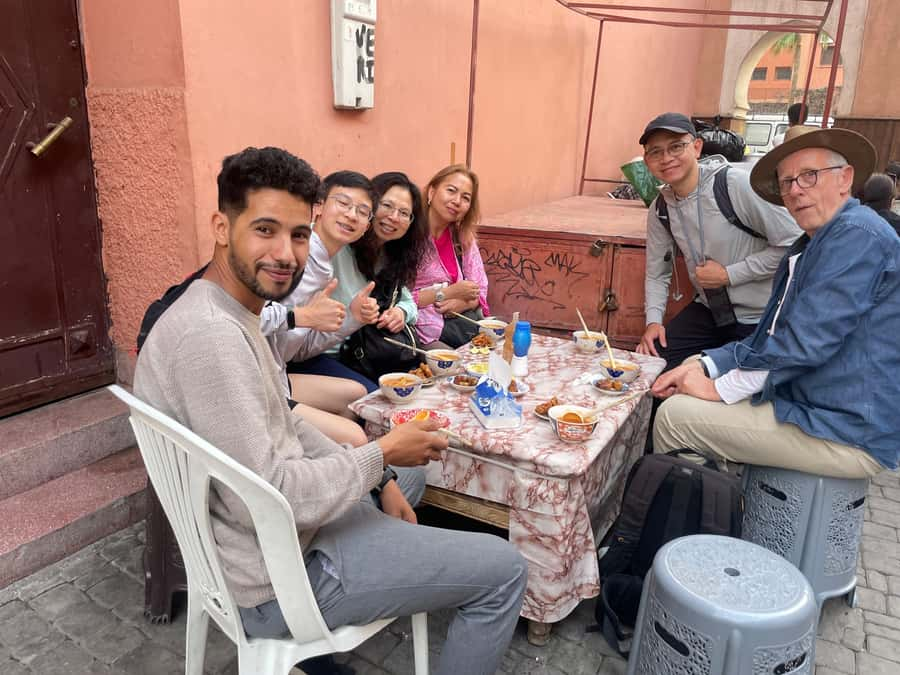
At $45 per person, the cost is reasonable if you would otherwise spend money on several meals and pay separately for a guide. The price includes traditional Moroccan food tastings, local sweets, tea, a personal guide, and a small group capped at eight people.
It also includes access to a route you might find difficult to plan alone. You would need to identify reliable food stalls, understand what to order, find the lfranatchi, and connect the food stops with the Mellah and medina. The guide saves you that work.
The price does not include transportation to the meeting point, alcohol, personal expenses, or extra food outside the tasting menu. Alcohol is not part of the experience, and it is not allowed. Bring some cash for personal purchases if you want to buy something beyond the included tastings, though the supplied information does not specify accepted payment methods.
For a full three-and-a-half hours, the value is strongest if you want both food and local context. If you only want a short snack tour or a formal cooking lesson, this is probably not the right format.
Walking, comfort, and practical limits
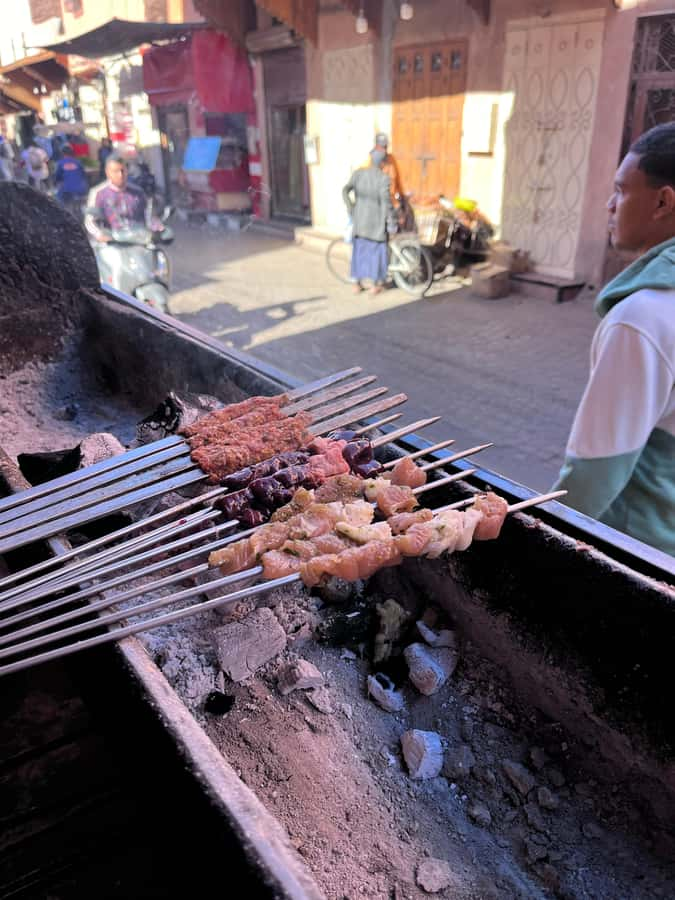
Wear shoes that can handle several hours of walking. Bring a hat, sunscreen, and a camera. Marrakech can be bright, and the route includes outdoor movement between stops.
The group is limited to eight people, which is a real advantage in narrow streets and small food shops. It should also help you hear the guide and ask questions without holding up a large crowd.
The activity information gives conflicting accessibility details. It says wheelchair accessible in one place, but also lists the tour as not suitable for wheelchair users. Since the route involves walking through the medina and local food areas, you should confirm current conditions directly before booking if you use a wheelchair.
Free cancellation is available up to 24 hours before the activity for a full refund. You can also reserve now and pay later, which helps if your Marrakech plans are still shifting.
Who should book this food walk?
This tour suits you if you want to eat beyond the standard tagine and couscous menu. It is particularly useful for first-time visitors who want a guide to local street food, or for repeat visitors looking for less familiar parts of the medina.
It is also a good match for adventurous eaters. Sheep’s head, liver, smoky tanjia, and a range of sweets make this more interesting than a simple pastry-and-tea outing.
Families and mixed groups may also find it workable because the group is small and vegetarian choices are available. Still, children or picky eaters may not enjoy every item, so ask the guide what can be skipped or replaced.
You should reconsider it if you dislike walking, need a tightly controlled menu, or want a quiet seated meal. This is an active food tour, with frequent stops and a broad menu.
Should you book the Marrakech food tasting tour?
I would book this tour if your priority is local food with context, not just a checklist of dishes. The lfranatchi visit, the walk through the Mellah, and the chance to try food in less tourist-focused areas give it more substance than a standard market snack tour.
Book it early in your Marrakech stay if you can. You will get a practical introduction to dishes, drinks, and neighborhoods that can guide the rest of your visit. Arrive hungry, wear good shoes, and tell the guide about dietary needs before the first tasting.
Skip it if you want a polished restaurant experience or cannot manage unfamiliar meats and a large amount of food. For everyone else, $45 is a fair price for a small-group walk that turns Marrakech’s medina into both a meal and a lesson.
FAQ
Where does the Marrakech food tour start?
The meeting point is in Jemaa el-Fnaa Square, in front of Argana Cafe.
How long does the tour last?
The tour lasts 210 minutes, or three and a half hours.
How many food and drink tastings are included?
The experience includes 10 local food and drink tastings, along with additional possible surprises.
What foods are included?
The listed tastings include msemen, harira, dates, chebakia, Makkla bel Kefta, sfenj, tanjia, Moroccan barbecue, steamed sheep’s head with cumin, panache or orange juice, khodnjal, local sweets, and tea.
Are vegetarian options available?
Yes, vegetarian options are available. Tell your guide about your dietary needs at the start of the tour.
Which languages does the guide speak?
The tour is offered with a live guide in English or French.
Is transportation included?
No. Transportation to and from the meeting point is not included.
Is alcohol included?
No. Alcoholic drinks are not included, and alcohol and drugs are not allowed during the activity.
What should I bring?
Bring comfortable walking shoes, a sun hat, sunscreen, and a camera.
Can I cancel the booking for a refund?
You can cancel up to 24 hours in advance for a full refund. The activity also offers a reserve now and pay later option.
Just added around Marrakech
- Quad in the Palmeraie of Marrakech★ 5.0 · 41 reviews
- Marrakech Desert Camel Ride★ 5.0 · 17 reviews
- Sunset Camel Ride in the Palm Grove Of Marrakech★ 5.0 · 34 reviews
- Private Airport Transfer from or to Marrakech Menara Airport.★ 4.5 · 63 reviews
- Marrakech The History and Culture Day Trip★ 4.5 · 45 reviews
- Marrakech: Tailor-Made City Tour With Your Own Private Guide★ 4.9 · 236 reviews
- Marrakech palm grove: Sunset camel ride★ 4.8 · 194 reviews
- Sparkling Marrakech through the eyes of your local Guide★ 4.7 · 247 reviews
Food Tours, compared.
Authentic Moroccan Food Tour in Marrakech with Dinner
Read our review →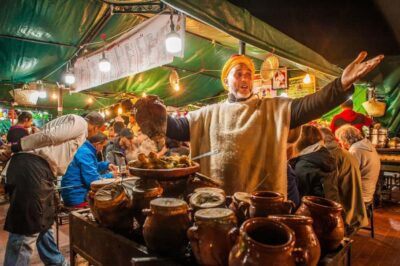
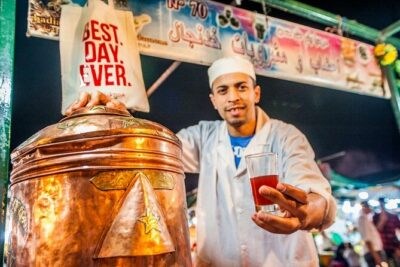
Evening Marrakech: Gastronomic and Market Tour Inside the Medina
Read our review →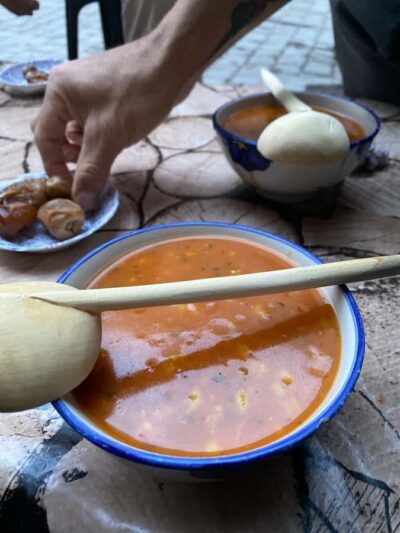
Marrakech Night Street Food Tour / Taste The Real Marrakech
Read our review →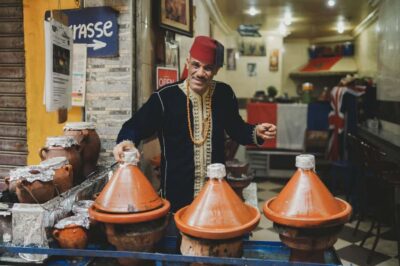
Authentic Food Tour in Agadir – Eat Like A Local
Read our review →
Browse the lists this tour appears in