
Reviewed · MEDINA AND SOUK TOURS
Marakech: Medina Mysteries & Hidden Sites Tour
The best part of this tour is the way it turns Marrakech’s Medina from a confusing maze into a place you can read. You’ll move from Jemaa el-Fna into narrow lanes, working souks, herb stalls, craft shops, and quiet corners where daily life carries on away from the main square. Guides such as Ishmael, Charif, Youssef, Abdul, and Mourad have each brought strong local knowledge and a personal touch.
I like the practical confidence this gives you for exploring on your own later, and I like the chance to see ordinary places such as a local bakery or modest café. The main consideration is that the route can vary by guide, and food, drinks, entrance fees, and hotel transport are not included in the $34 price.
Key points at a glance
- Jemaa el-Fna starting point: Meet in front of Café de France, an easy landmark on Marrakech’s main square.
- Souks with a purpose: Learn how specialized craft areas work instead of simply wandering past shopfronts.
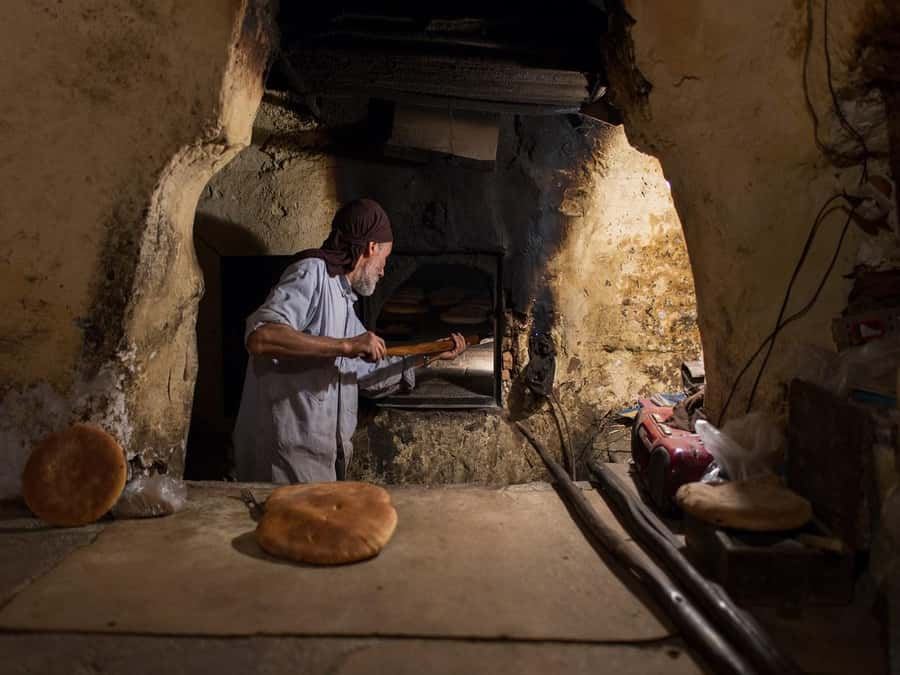
- Local food glimpses: Some routes have included mint tea, flatbread, local coffee, or a visit to a wood-fired bakery, but these are not guaranteed or included.
- Quiet Medina stops: Secret Garden and Ben Youssef Madrassa have appeared on some routes, offering a calmer contrast to the market lanes.
- Three-hour orientation: The tour gives you a useful first look at the old city without taking up a full day.
- Flexible booking: You can cancel up to 24 hours before the tour for a full refund and reserve without paying immediately.
Starting at Café de France in Jemaa el-Fna
Your meeting point is in front of Café de France on Jemaa el-Fna, the large central square of the Medina. This is a sensible place to begin because it is prominent, central, and easy to identify once you reach the square.
Give yourself enough time to find the café and guide. The square can feel confusing at first, especially if you approach through the surrounding lanes. The meeting instructions are simple, but a clear arrival plan matters in Marrakech, where several streets and entrances can look alike.
The opening view gives you an instant sense of the city’s scale. Jemaa el-Fna is not only a place for photos. It is a social stage, meeting point, food area, and gateway into the souks. The tour helps explain what you are seeing rather than leaving you to sort out the square’s many sights on your own.
More Medina and Souk Tours in Marrakech
- Marrakech: Bahia Palace, Saadian Tombs, Souk and Medina Tour
★ 4.7 · 4,974 reviews - Marrakech: Ben Youssef, Secret Garden, & Souks Walking Tour
★ 4.6 · 2,802 reviews - Marrakech: Colorful Medina Souks Guided Walking Tour
★ 4.7 · 2,470 reviews
Reading the Medina one lane at a time
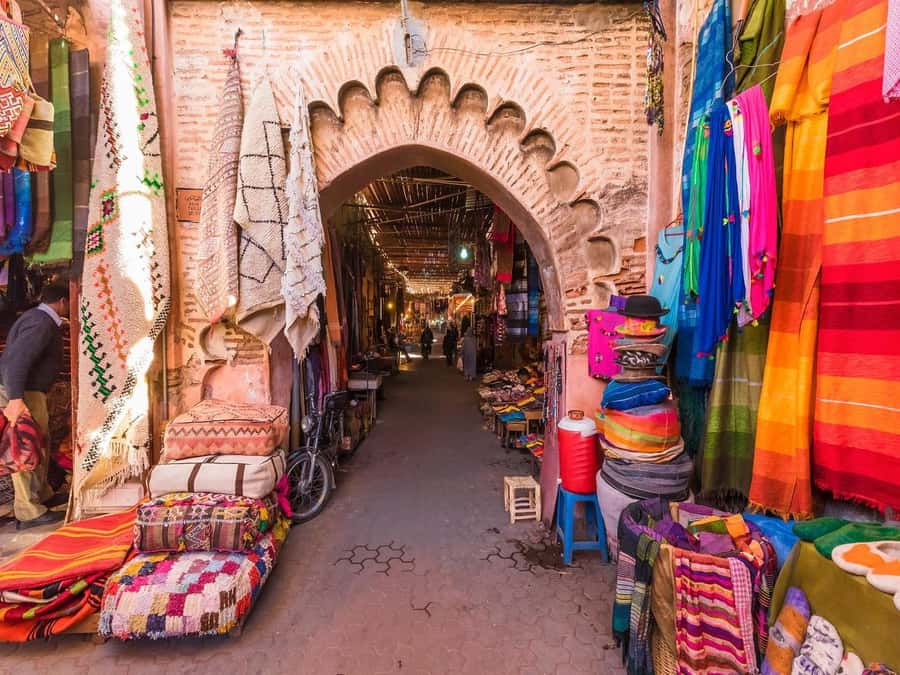
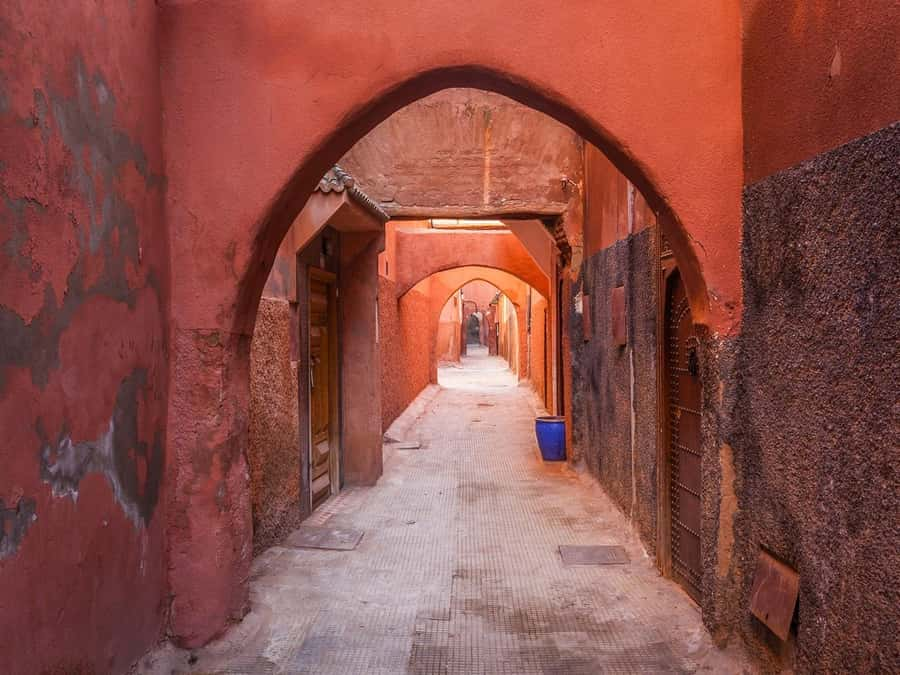
The Medina is easiest to appreciate when you understand that its lanes are not arranged like a modern shopping district. Different trades often cluster together, and a guided walk can show you how the souks function as working neighborhoods rather than a single tourist market.
Expect turns through narrow passages and stops near stalls or workshops connected with specialized crafts. The precise route is not fixed in the information provided, so you should think of this as a guided exploration rather than a rigid checklist of landmarks.
That flexibility is useful. A guide can respond to your questions, point out an active workshop, or take you to a less obvious corner. It also means you should not book this tour expecting every group to follow exactly the same path.
I especially like the practical side of this format. On a first day in Marrakech, you can learn how the lanes connect, where the main square sits in relation to the souks, and how to return to areas you want to explore later. One visitor described leaving with enough confidence to come back to the Medina independently, which is a meaningful benefit in a city where orientation takes time.
Crafts, souks, and the working side of Marrakech
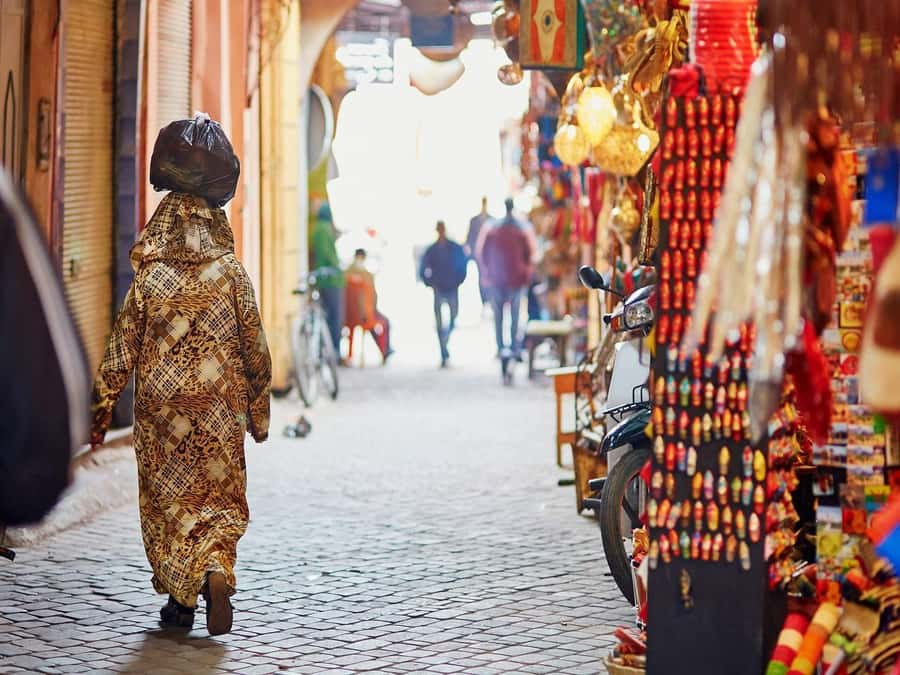
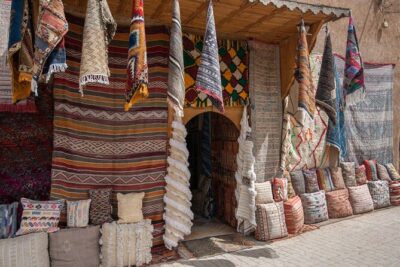
The souks are not just rows of souvenirs. They are places where skills, materials, and sales come together. The tour focuses on specialized crafts, giving you a better chance to understand what different stalls are making and selling.
Your guide may explain the work behind objects you see in the markets, along with the customs and traditions tied to them. This makes the shopping streets more interesting even if you are not planning to buy anything.
You will still encounter sales pitches. That is part of the Medina experience, and a guide can make the setting less intimidating. You can ask questions about an item, learn how a craft is used, and decide for yourself if a shop deserves more of your time.
The tour is not described as a shopping excursion, so you should not assume that buying stops are the main purpose. At the same time, a route through the souks naturally brings you close to shops and stalls. If you prefer to browse without pressure, tell your guide early and make your interests clear.
Several guides have been praised for their care, humor, and willingness to answer questions. Ishmael, for example, has been especially helpful with suggestions and even assisted with arranging a return taxi. Charif has taken care to respond to questions and show quieter parts of the Medina. These details point to a tour that works best when you treat it as a conversation, not just a march between sights.
What Jemaa el-Fna reveals about the city
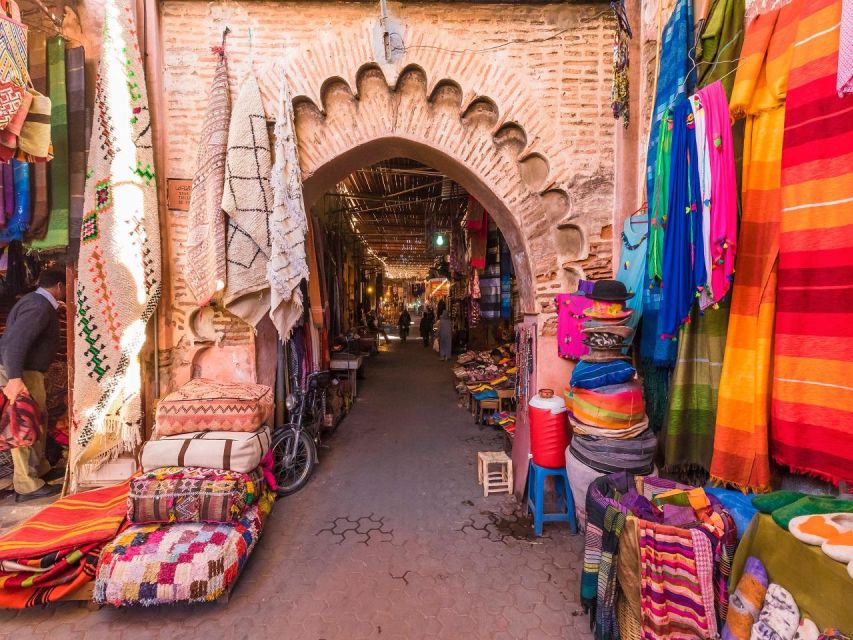
Jemaa el-Fna can seem chaotic if you only pass through it. A guide gives you a better way to understand why this square matters and how its role changes through the day.
The tour promises context about the square’s mysteries and traditions, though the exact stories depend on your guide. Expect an explanation of the square as part of Marrakech’s cultural life, followed by movement into the lanes that surround it.
This stop is valuable because it sets up the rest of the walk. The square is open and exposed, while the souks are tight, shaded, and layered with activity. Moving between the two shows you how the Medina changes from a broad public gathering space to a network of commercial and residential streets.
It is also worth remembering that Jemaa el-Fna is an active public place, not a quiet museum. Crowds, noise, and distractions are part of the experience. If you want long periods for photography or people-watching, three hours may feel busy. If you want an introduction with plenty of movement, the pace should suit you.
A completely different kind of day in Marrakech:
- Marrakech: Quad Bike Tour to Palm Oasis and Jbilat Desert
★ 4.8 · 11,831 reviews - Marrakesh: Majorelle Garden Entry Tickets
★ 4.5 · 9,651 reviews - Marrakech Quad Bike Experience: Desert and Palmeraie
★ 4.5 · 9,509 reviews - Marrakech: Balloon Flight, Berber Breakfast & Certificate
★ 4.8 · 8,164 reviews
Small food discoveries, from mint tea to wood-fired bread
Food is not included, but local eating customs can still become part of the walk. Ishmael has taken a group to a modest café serving mint tea and flatbread, while another route included a visit to a bakery where bread was cooked in a wood-fired oven.
These stops are useful because they show everyday Medina life rather than a polished restaurant setting. A small bakery can reveal more about local routines than another souvenir shop, and a simple tea stop gives you a chance to pause and ask questions.
You should treat these moments as possible additions, not promised itinerary items. The official inclusions cover bottled water and a local professional guide, not lunch, drinks, or snacks. If your guide suggests a café, you should expect to pay for anything you order.
The tour can also include local coffee or a stop with herbalists. Abdul, for example, has taken people through that part of the Medina, and another guide gave out small branches of aromatic herbs. These touches depend on the day and the guide, but they show how the walk can connect markets with smells, tastes, and household traditions.
Secret Garden and Ben Youssef Madrassa
Some routes have included the Secret Garden and Ben Youssef Madrassa. They are useful contrasts to the narrow market lanes, but you should confirm with your guide if these are important priorities because the route is not presented as a guaranteed entrance tour for both sites.
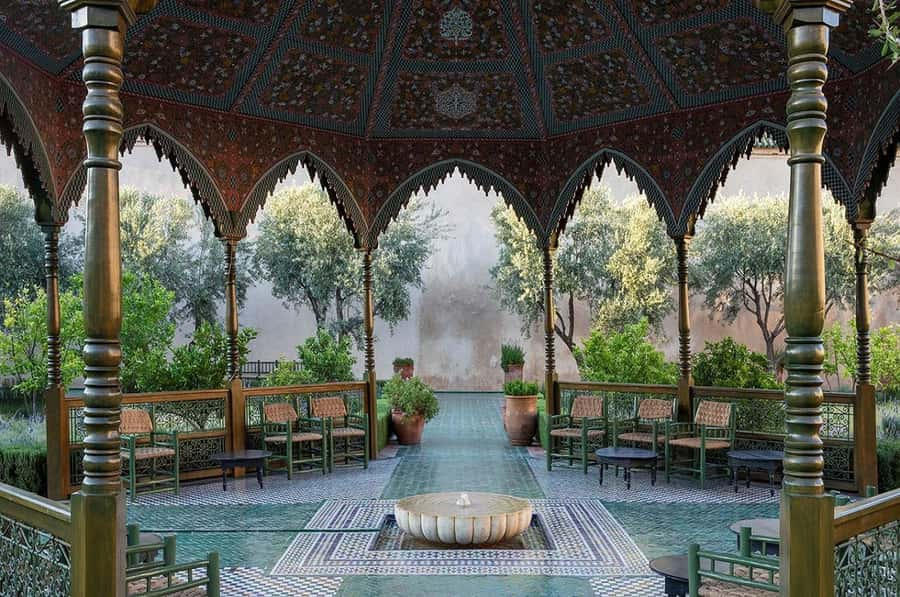
The Secret Garden provides a cooler, quieter break from the noise of the souks. Its appeal is not only the garden itself but the change in mood. After weaving through crowded commercial streets, a calm courtyard can make Marrakech feel surprisingly spacious.
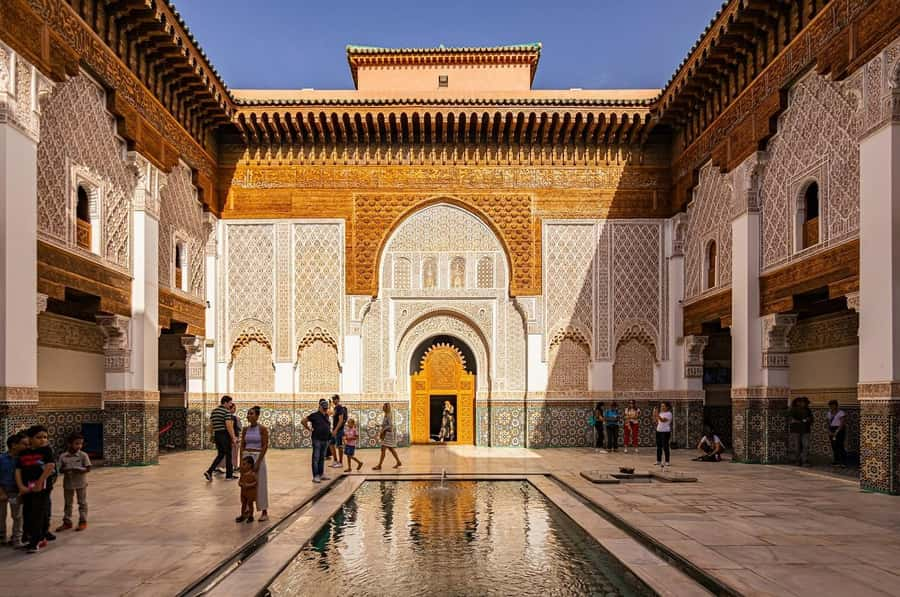
Ben Youssef Madrassa adds architectural and educational context. If your guide includes it, you can connect the Medina’s streets with its historic institutions and religious architecture. The supplied details do not state that an admission ticket is included, so ask before assuming entry costs are covered.
These stops also affect how much time remains for the souks. A three-hour walk can offer a broad introduction, but it cannot give every site a long visit. If you want detailed time inside major monuments, a dedicated museum or architecture tour may be a better fit.
Three hours at the right pace
The full experience lasts three hours and begins and ends at Café de France. There is no hotel pickup or drop-off, so you are responsible for reaching Jemaa el-Fna and continuing to your next destination afterward.
A start and finish in the same place is helpful for a first Medina walk. You do not have to learn a new meeting point at the end, and you can return to the square for further exploring, arrange a taxi, or walk back toward your accommodation.
The length suits several kinds of visitors. You can take it on your first morning to get oriented, use it as a cultural introduction before independent shopping, or fit it into a day that includes other Marrakech sights.
Three hours also places limits on the experience. You will see a selection of lanes, markets, and cultural sites, not every corner of the old city. The route may feel full if you stop often for questions, photographs, tea, or shopping. That is not necessarily a flaw, but you should choose this tour for an introduction rather than an exhaustive study.
Bottled water is included, which is useful during a walk through the Medina. Comfortable walking shoes and practical clothing are sensible choices, though no special equipment is listed.
Guides, languages, and the human side of the walk
The tour is offered with live guides speaking Arabic, English, or French. That range makes it useful for many visitors, but you should select your language carefully when booking and confirm that it matches your needs.
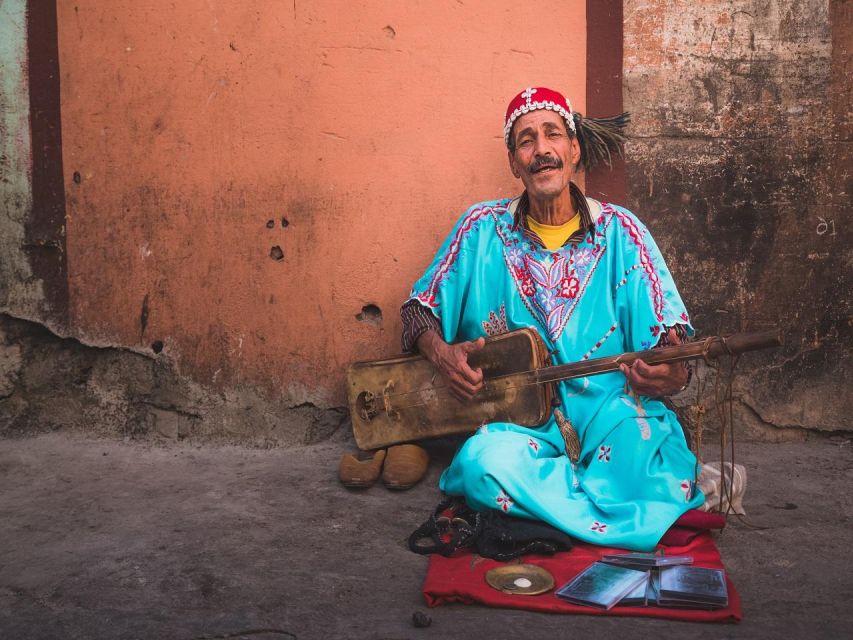
The guide is the heart of this experience. The strongest examples include Ishmael’s humor and practical help, Charif’s careful answers and attention, Youssef’s historical explanations, Abdul’s friendly approach, and Mourad’s focus on the city’s culture and past.
Those names do not guarantee who will lead your particular group. They do show the kind of guiding the tour can provide: personal stories, answers to questions, suggestions for later, and an effort to connect you with places that are easy to miss.
I would use the walk to ask practical questions. Ask where to return for a particular craft, how to identify the main square, which nearby sites need separate admission, and how to arrange transportation after the tour. A good guide can make the rest of your stay easier, not just fill three hours.
Is $34 good value?
At $34 per person, the price is reasonable if you want a local guide to make sense of the Medina. You are paying for three hours of walking, explanation, orientation, and access to a more personal reading of the souks. Bottled water is included, but meals, drinks, tickets, and hotel transport are not.
The value depends on how you use the tour. If you spend the walk asking questions and noting places to revisit, it can save you time and reduce the stress of finding your way later. If you simply want a fast list of famous monuments, the flexible route may feel less focused.
The strongest value comes from the everyday details: the local café, a bakery with a wood-fired oven, herbalists, craft areas, and quieter lanes. These are the parts that help you understand how the Medina works.
You should budget separately for anything you eat or drink and for possible entrance fees. The tour itself does not promise a meal or admission to every site discussed.
Who should book this Medina walk?
I recommend this tour most for first-time visitors, people staying near the old city, and anyone who wants help getting oriented before exploring alone. It also suits visitors who prefer local stories and working markets to a long list of formal monuments.
It is a good choice if you enjoy asking questions, browsing crafts, and noticing small details. The guides have shown flexibility by adding a bakery, café, Secret Garden, Ben Youssef Madrassa, or other local stops when appropriate.
You may want a different experience if you need a fixed route, guaranteed monument entry, hotel transport, or a full day devoted to architecture. The tour is active and flexible, with the possible noise and crowding that come with Jemaa el-Fna and the souks.
The tour has an overall rating of 4.7 from 29 reviews, and the strongest praise centers on the guides’ historical understanding, kindness, humor, and ability to reveal places beyond the main routes. That matches the tour’s main strength: it helps you feel less like you are passing through the Medina and more like you understand how to move through it.
Should you book it?
Book this tour if you want a reasonably priced first look at Marrakech’s old city, especially if the souks feel intimidating or you want local context before returning on your own. The three-hour length, central meeting point, and multilingual guiding make it easy to fit into a wider visit.
Go in expecting a flexible walking route, not a guaranteed menu of every famous sight. If you value craft areas, local food glimpses, quiet courtyards, and useful orientation, the $34 cost is fair. If your priority is included food, private transport, or guaranteed access to major monuments, check the details carefully or choose a more specialized tour.
FAQ
Where does the Medina Mysteries & Hidden Sites Tour begin?
The tour begins in front of Café de France on Jemaa el-Fna, the main square in Marrakech’s Medina.
How long does the tour last?
The guided tour lasts three hours and returns to Café de France.
What languages are available?
Live guides are available in Arabic, English, and French.
Is hotel pickup and drop-off included?
No. Hotel pickup and drop-off are not included, so you must reach the meeting point and arrange your transportation afterward.
Is food included in the tour price?
No. Food, drinks, and lunch are not included. Bottled water is included. Some routes may stop for mint tea, flatbread, coffee, or a bakery visit, but you should pay for any food or drink you order.
Can I cancel the booking?
Yes. You can cancel up to 24 hours in advance for a full refund. The booking option also allows you to reserve now and pay later.
Just added around Marrakech
- Quad in the Palmeraie of Marrakech★ 5.0 · 41 reviews
- Marrakech Desert Camel Ride★ 5.0 · 17 reviews
- Sunset Camel Ride in the Palm Grove Of Marrakech★ 5.0 · 34 reviews
- Private Airport Transfer from or to Marrakech Menara Airport.★ 4.5 · 63 reviews
- Marrakech The History and Culture Day Trip★ 4.5 · 45 reviews
- Marrakech: Tailor-Made City Tour With Your Own Private Guide★ 4.9 · 236 reviews
- Marrakech palm grove: Sunset camel ride★ 4.8 · 194 reviews
- Sparkling Marrakech through the eyes of your local Guide★ 4.7 · 247 reviews
Medina and Souk Tours, compared.
Bahia Palace, Saadian Tombs, Souk and Medina Tour
Read our review →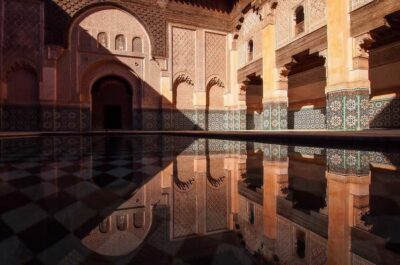
Ben Youssef, Secret Garden, & Souks Walking Tour
Read our review →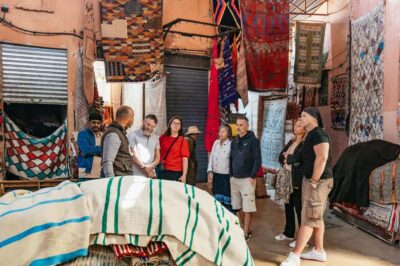
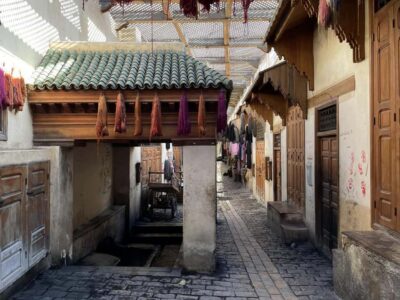
Museum, Al Attarine Madrasa & Tannery and Medina Tour
Read our review →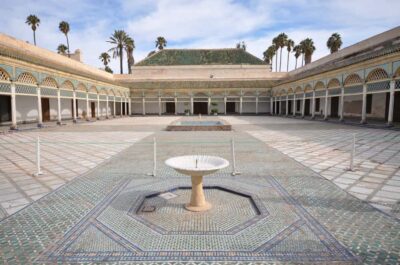
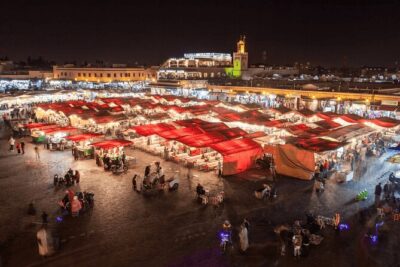
Bahia Palace, Madrasa Ben Youssef and Medina Tour
Read our review →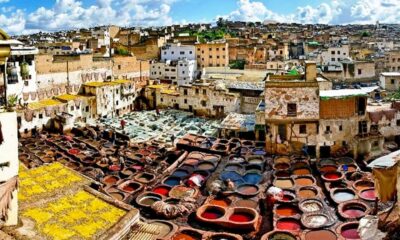
Explore Fes: Unforgettable Guided Walking Tour of the Medina
Read our review →Browse the lists this tour appears in