
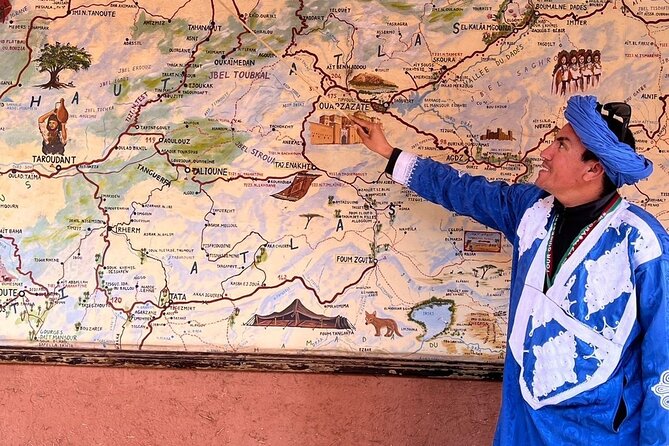
Reviewed · 3-DAY EXPERIENCES
3 Days 2 Nights Marrakech to Merzouga – Sahara Tour Adventure
The big prize here is a night in the Sahara. From Marrakech, you cross the High Atlas and Morocco’s southern valleys before riding a camel into the Erg Chebbi dunes for sunset, dinner, music, and a night in a Berber tent or beneath the stars.
I like the way the trip combines famous sights with smaller cultural details, including Berber villages, palm groves, kasbah stories, and local life in the southeast. I also like the value: two nights of lodging, two breakfasts, two dinners, transport, and the camel ride are included for $173.79 per person.
The trade-off is simple: three days is a tight schedule. You spend many hours in the vehicle, especially on the return to Marrakech, and stops are short. This is a good desert introduction, not a slow, leisurely tour of southern Morocco.
Key points to know before you book
- Camel ride into Erg Chebbi: Expect roughly an hour on camelback before sunset, followed by sandboarding, dinner, and Berber music around a fire.
- A full southern Morocco route: Ait Ben Haddou, Ouarzazate, the Valley of the Roses, Dades Gorge, Todra Gorge, Rissani, and Merzouga all fit into three days.
- Guide-led cultural context: Lahcen and his nephew Oumama are named as guides, with strong language skills and a focus on Berber life and local history.
- Most evening costs are covered: Accommodation, two breakfasts, two dinners, and the desert camp experience are included. Lunches are not listed as included.
- Small or large group potential: The maximum group size is 30, though some departures have been much smaller, including one reported group of seven.
- Physical effort matters: You need moderate fitness for long road days, walking around historic sites, and riding a camel over sand.
Why the Sahara night is worth the long road from Marrakech
Marrakech is not close to the Sahara. Reaching Merzouga means crossing the High Atlas and traveling through a changing series of valleys, gorges, villages, and dry plains. That distance is the reason this trip feels full, but it is also why the schedule can feel rushed.
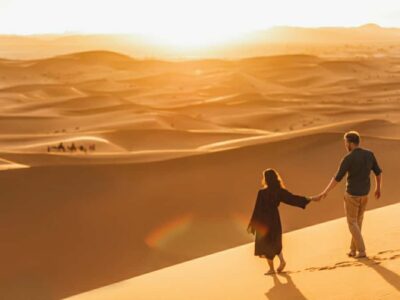
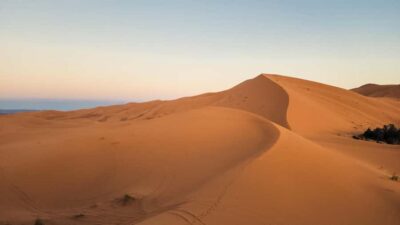
The payoff comes on the second afternoon. At Merzouga, you leave the vehicle and ride a camel for about an hour toward the Erg Chebbi dunes. The timing is designed for sunset, when the sand turns warm orange and the shadows stretch across the ridges.
After sunset, you reach camp for dinner and Berber music around an open fire. Sandboarding is also included, so you can make the evening active rather than simply watching the sky. The sleeping arrangements are Berber tents or a place beneath the stars. Some accommodation details vary, but the supplied information and direct experiences describe tents that may include heating, showers, and running toilets. Confirm the exact camp setup before departure if those comforts matter to you.
This is the part of the tour that gives it real appeal. A quick desert photo stop would not be enough. Here, you spend the night, eat dinner in the dunes, and have time to see the desert after dark.
More Multi-Day Tours in the Sahara Desert:
- From Marrakech: 3-Day Merzouga and Sahara Desert Tour
★ 4.9 · 15,308 reviews - From Marrakech: Merzouga 3-Day Desert Safari with Food
★ 4.7 · 12,232 reviews - 3 Days Desert Tour From Marrakech To Merzouga Dunes & Camel Trek
★ 5.0 · 10,125 reviews
Day one: Ait Ben Haddou and the road through the valleys
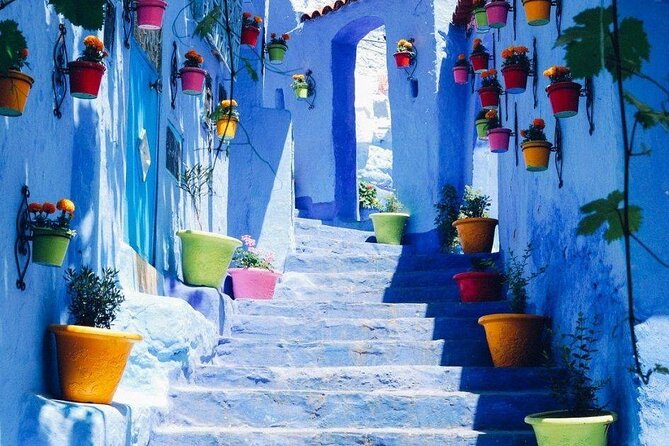
The tour starts at 8 a.m. from Jemaa el-Fnaa, with pickup also offered from your hotel or riad. The first day carries you south across the High Atlas toward Ait Ben Haddou.
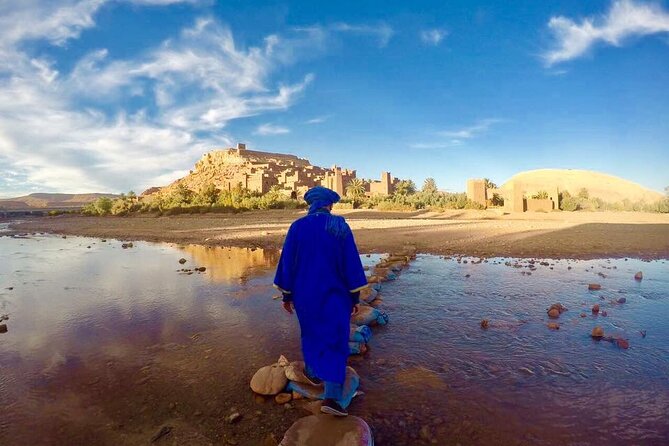
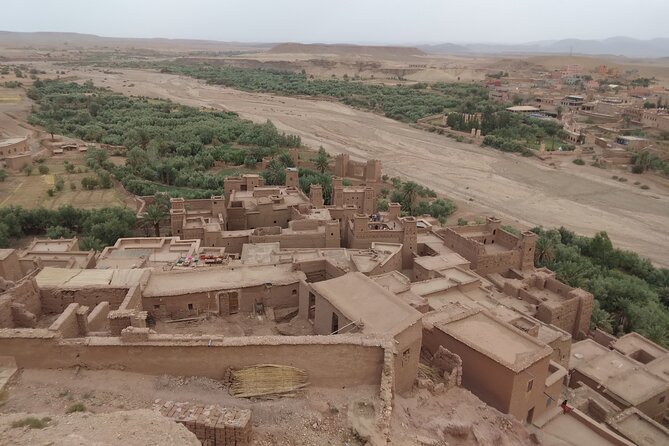
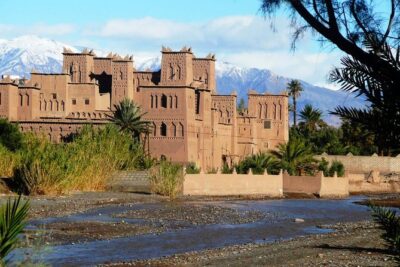
Ait Ben Haddou is the strongest historic stop on the first day. The fortified ksar sits in the foothills on the southern side of the High Atlas and is built in the earthen architectural style associated with southern Morocco. Its clustered walls, towers, and narrow passages are striking even before you know that the site has appeared in several films.
You have about two hours here, which is enough time to see the main lanes and take in the setting. Listen closely as your guide explains the kasbahs and the people who lived along these trade routes. The site is famous, so it can feel more polished and busy than the smaller villages later in the trip, but it earns its place on the route.
The next stop is Ouarzazate, known as a gateway to the desert. The city is home to the large Taourirt Kasbah, a former 19th-century palace with views across the dry country around town. The scheduled stop is only 30 minutes, so think of it as a quick orientation rather than a full city visit.
That short timing is one of the tour’s limits. You will see Ouarzazate, but you will not have much time to explore its kasbah in detail. The city is also scheduled for lunch on the third day, so you may get a second brief look on the return.
The Valley of the Roses and the Dades Gorge
From Ouarzazate, the route reaches the Valley of the Roses. The valley lies between El Kelaa des M’Gouna and Boumalne Dades, at the foot of the High Atlas. Rose hedges protect fields of barley, corn, potatoes, and other crops, creating a sharp contrast with the surrounding dry hills.
The roses are harvested in May, and their scent fills the valley for a short period before picking begins. The flowers are used to make rose essence and rose water, products linked to local farming and perfume production. The planned stop lasts 30 minutes, so you should expect a scenic pause and explanation rather than a long walk through the fields.
The first overnight is in the Dades Gorge. Here, rust-red and mauve rock folds around a valley watered by the Dades River. Irrigation channels carry water to wheat fields and orchards of figs, almonds, and olives. The gorge is one of the best places on this route to see how farming survives in a dry region.
You stay in this area for the night, with accommodation and dinner included. Since the exact lodging can vary, ask what type of room and facilities are planned for your departure. The key value is that the first day does not continue all the way to the desert. Stopping in Dades breaks up the journey and lets you experience the gorge at a more sensible pace.
Day two: Todra Gorge before the dunes
The second day begins with Todra Gorge, where the Todra River has cut through limestone over many centuries. The canyon walls rise more than 400 meters in places, giving the gorge a stark, almost prehistoric look.
The scheduled visit is only 30 minutes. That is enough for photographs and a short walk, but not enough for a serious hike, climbing session, or extended exploration. The gorge is also used by cyclists, bikers, hikers, and climbers, so active visitors may wish they had more time here.
Still, the short stop works well in the context of this particular tour. You are not booking a hiking trip. You are heading for the desert, and Todra adds one more dramatic change of scenery before the road reaches Merzouga.
The route then continues toward the dunes. This is another long day, with about 13 hours assigned to the Merzouga portion of the itinerary. The schedule sounds generous because it includes the transfer, camel ride, sunset, camp activities, and overnight stay. You should be ready for a full day with limited downtime.
More Three-Day Trips in the Sahara Desert:
- 3-Day Marrakech to Merzouga Desert Tour: Camel Rides & Overnights
★ 5.0 · 8,734 reviews - 3-Day Marrakech to Fes Sahara Desert Tour via Merzouga
★ 5.0 · 6,546 reviews - Marrakech: 3-Day Merzouga Desert Experience Camel & Meals
★ 4.6 · 6,252 reviews - 3-Day Tour to Merzouga Erg Chebbi with Food & Camel Trek
★ 5.0 · 1,770 reviews
Sunset, sandboarding, and a night in Berber camp
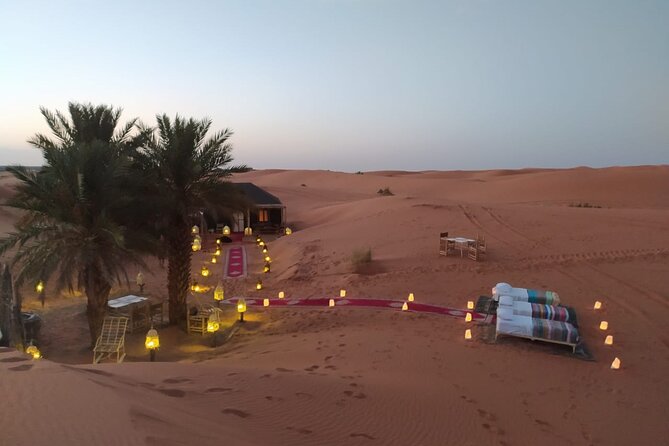
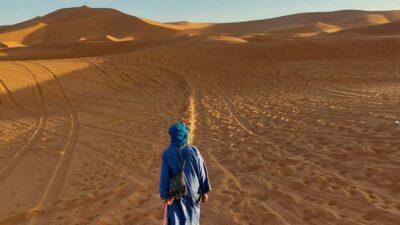
At Merzouga, the camel ride is the central activity. The camels carry you across the sand toward camp, usually at an unhurried pace that allows you to watch the dunes change color. Camel riding can be tiring on the legs and back, so take the moderate fitness guidance seriously.
Once at the camp, you can try sandboarding on the dunes. It is a simple activity, but the setting makes it memorable. You can also join the evening music around the open fire before dinner.
Dinner and breakfast are included during the tour, but the supplied information specifies two dinners and two breakfasts rather than every meal. Lunches are not listed as included. Plan to pay for lunch along the road, and expect stops chosen for convenience and local food rather than a fully planned restaurant experience.
The camp night is the emotional center of the trip. You are not simply looking at the Sahara from a roadside viewpoint. You are sleeping there, with the option of a tent or open sky. On clear nights, the desert offers a strong view of stars and shooting stars.
Some direct accounts describe heated tents and useful facilities such as showers and running toilets. Do not assume every departure has the same setup, though. Camp standards can differ, and the basic tour description allows for more than one style of tent. If comfort is a priority, ask the operator what is included at your camp.
Day three: Rissani and the long return to Marrakech
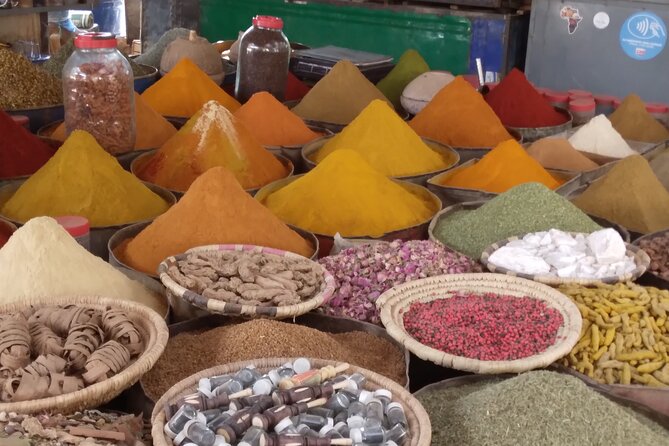
The final day is mostly a return journey. The route passes through Rissani, a historic town in the southeast, though the planned stop is only about 10 minutes. That is enough for a short pause, not a full market or town visit.
You return to Ouarzazate for lunch, with about an hour scheduled there. Again, lunch is not stated as included, so budget for this meal. The stop breaks up the drive, but the final push to Marrakech is still long.
The return section takes about eight hours. You are dropped at Jemaa el-Fnaa according to the meeting information, while the tour highlights also describe drop-off at your hotel or riad. Because those details differ, confirm the exact end point before booking, especially if you have luggage or an evening train, flight, or reservation.
This final day is the clearest reason to choose your travel dates carefully. After a late night in the desert, an eight-hour drive can feel hard. The road scenery helps, but the tour is designed to connect Marrakech and Merzouga efficiently, not to provide a restful final morning.
What the $173.79 price really covers
At $173.79 per person, the price is strong for the number of elements packed into the trip. You receive transport from Marrakech, two nights of accommodation, two breakfasts, two dinners, the camel ride, the desert camp, and stops at major southern Morocco sights.
The price becomes especially useful if you want one booking to handle the difficult transport between Marrakech and Merzouga. Arranging the desert transfer, overnight stays, camel ride, and return separately can take more time and may not give you the same local guidance.
The main extra expense is lunch. You may also want to budget for drinks, personal purchases, and any optional entrance fees if a stop requires them. The itinerary lists admission as free at the main stops, but always confirm what is covered at the time of booking.
Group size deserves attention. The maximum is 30 people, which is large enough to affect the pace and the feel of the vehicle. At the same time, some departures have had only seven people. Ask about the expected group size if that will shape your decision.
The guides and the cultural side of the trip
Lahcen is named repeatedly as a guide, with Oumama, his nephew, also involved on some departures. Their role appears to go beyond steering the vehicle. You can expect explanations about southern Morocco, Berber life, the kasbahs, villages, farming, and the desert communities along the route.
Language ability may also help. Lahcen is described as speaking several languages, including Spanish, and one account specifically notes that he could connect with Mexican Spanish and local expressions. That kind of ease can make a long road day more enjoyable, especially when you want to ask questions rather than simply watch scenery pass by.
The cultural value is strongest when the guide links places together. A rose valley is more meaningful when you understand how irrigation and farming work there. A kasbah is more than a photo stop when you hear how southern communities used these fortified settlements. A desert camp feels less staged when the evening music and food are explained in context.
Keep your expectations measured. This is still a budget group tour, and the short stops do not allow for deep study of every town. But the guide support gives the road journey a clear purpose.
Who should book this three-day desert trip
I would recommend this tour to you if the Sahara is a must-see and you have only a few days from Marrakech. It works particularly well for first-time visitors who want the major sights, a camel ride, an overnight camp, and a taste of Berber culture in one package.
It also suits people who value convenience over freedom. You will not need to plan the long transfer, locate a desert camp, or arrange the camel ride yourself. The trade is a fixed schedule and long driving days.
I would be more cautious if you want long walks, quiet mornings, private transport, or extended time at each historic site. Todra Gorge, Ouarzazate, Rissani, and the Valley of the Roses receive short visits. The desert night receives the most attention.
You should also think about your comfort with group travel and camel riding. The group can reach 30 people, and a camel crossing over sand is not a soft, easy chair ride. Moderate fitness is required.
Should you book it?
Book this tour if your priority is reaching the Sahara from Marrakech without complicated planning. The combination of Ait Ben Haddou, Dades Gorge, Todra Gorge, Merzouga, camel riding, sandboarding, dinner, music, and desert camping is a lot for $173.79.
Skip it if you need a slow pace or cannot manage long hours in a vehicle. Before paying, confirm the group size, exact accommodation, camp facilities, lunch arrangements, guide assignment, and final drop-off point. With those details clear, this is a practical and spirited first taste of Morocco’s southern desert country.
FAQ
Where does the tour start?
The listed meeting point is Jemaa el-Fnaa in Marrakech, with an 8 a.m. start. Pickup is also offered from your hotel or riad.
Where does the tour end?
The activity information says it ends back at the meeting point, with drop-off at Jemaa el-Fnaa. The tour highlights also mention hotel or riad drop-off, so confirm the exact arrangement before departure.
Is accommodation included?
Yes. Accommodation for two nights is included. The first overnight is in the Dades Gorge area, and the second is in Berber tents or beneath the stars near Merzouga.
Are meals included?
Two breakfasts and two dinners are included. Lunches are not listed as included, so you should budget for them.
Is the camel ride included?
Yes. The tour includes a camel ride of about one hour from Merzouga to the desert camp in Erg Chebbi.
What is the maximum group size?
The maximum group size is 30 people. Some departures may be smaller.
Can I cancel for a full refund?
You can cancel at least 24 hours before the start time for a full refund. Changes or cancellations made less than 24 hours before departure are not accepted for a refund. If poor weather causes the operator to cancel, you will be offered another date or a full refund.
Just added around the Sahara Desert
- 4 Day desert trip from Fes to Marrakech and 2 night in merzouga★ 4.5 · 19 reviews
- 2 Days Sahara Group Tour Fez to Marrakech via Merzouga★ 5.0 · 49 reviews
- Private Fez to Marrakech Via Merzouga desert tour 3days★ 5.0 · 25 reviews
- shared group Fez To Fez via Merzouga Desert Tour 2 Days/ 1 Night★ 5.0 · 29 reviews
- Shared Group Fez To Marrakech via Merzouga Desert Tour 2 Days★ 5.0 · 18 reviews
- Fez to Marrakech via Merzouga Desert – 3 Day Desert Tour★ 5.0 · 120 reviews
- Fes to Fes 2 days via Merzouga desert tour★ 5.0 · 24 reviews
- 3 Days Desert Tour from Fes to Marrakech via Merzouga★ 5.0 · 24 reviews
3-Day Experiences, compared.
3-Day Tour to Merzouga Erg Chebbi with Food & Camel Trek
Read our review →
3Day Luxurious Merzouga Tour w/ Camel & Quad Option
Read our review →
Browse the lists this tour appears in