
Reviewed · MULTI-DAY TOURS IN CASABLANCA
10 Days Tour From Casablanca, Morocco
The best part of this 10-day private Morocco tour is its sweep: you go from Casablanca’s Atlantic coast to Roman ruins, medieval cities, Atlas Mountain roads, and the orange dunes of Merzouga. The camel ride and night in the Sahara are the emotional high point, but the trip earns its keep by linking them with Fes, Rabat, Marrakech, and the old caravan routes.
I like two things here. First, a private vehicle gives your group room to adjust the pace, something that matters on long drives. Second, the Merzouga day goes beyond a quick camel ride, with Gnawa music in Khamlia, a nomad-family visit, desert viewpoints, and a 4×4 outing. The main drawback is the road time: Days 5 and 7 involve long hours in the vehicle, and the camel ride can be uncomfortable for some people.
Key points to know
- Sahara focus: Spend time around Erg Chebbi, ride camels to camp, and watch sunset and sunrise over the dunes.
- Four imperial-city stops: Visit Rabat, Fes, Meknes, and Marrakech, each with a different feel and purpose.
- Private format: Only your group participates, with pickup at Mohammed V Airport and a private air-conditioned vehicle.
- Culture beyond monuments: Meet nomad families, hear Gnawa music in Khamlia, and see pottery and zellij tile work in Fes.
- Big driving days: The route covers a great deal of Morocco, including the Middle, High, and Anti-Atlas regions.
- Price and meals: At $1,100 per person, the package includes transport, guide-driver service, camel trekking, nine breakfasts, and three dinners, but not lunches, entrance fees, or flights.
From Casablanca’s mosque to Rabat’s royal monuments
Your tour begins at Mohammed V Airport in Casablanca. Pickup depends on your arrival time, so an early landing gives you more room for sightseeing on the first day. The first major stop is Hassan II Mosque, Morocco’s largest mosque and one of the few in the country open to non-Muslim visitors.
Admission is not included, and the visit depends on timing. If your flight arrives late, the mosque may become a quick stop or disappear from the day altogether. If time allows, the route may also include the Corniche and Pigeon Square before continuing to Rabat for the night.
Rabat is a sensible first base. On Day 2, you see the Kasbah of the Udayas, an old fortified quarter with narrow lanes and Atlantic views, then the Hassan Tower and the Mausoleum of Mohammed V. These stops give you a useful introduction to Morocco’s royal and religious traditions before the route turns north.
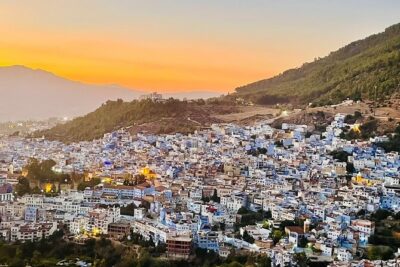
The drive to Chefchaouen passes through the Rif region and smaller villages. You get a free afternoon in the blue-painted town, which is a welcome change from a tightly scheduled monument tour. Use it to walk, take photographs, and sit with mint tea. The itinerary does not specify a guided visit in Chefchaouen, so you should expect independent time here.
More Multi-Day Tours in Casablanca
- 10 Day Desert Tour From Casablanca via the Imperial Cities
★ 5.0 · 254 reviews - 10D 9N Private Morocco Tour From Casablanca By Imperial Cities And South Desert
★ 5.0 · 156 reviews - 7 Days Luxury Desert Tour From Casablanca to Marrakech via fez -Camel trekking
★ 5.0 · 146 reviews
Chefchaouen, Volubilis, and Meknes in one long day
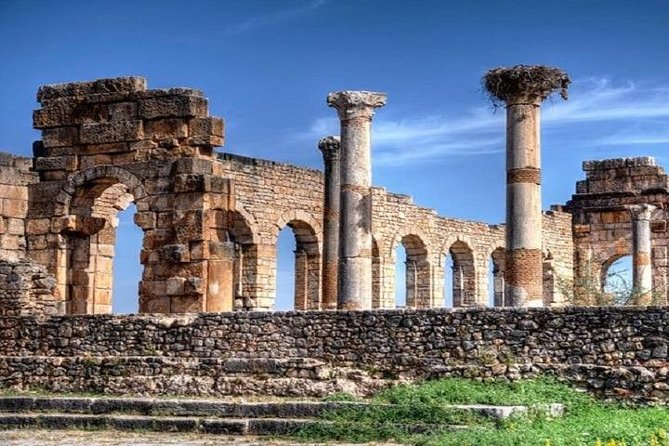
Day 3 combines several very different places. You leave Chefchaouen, pass through Wazan and other Rif villages, then head toward Volubilis. The Roman ruins are the main reason to stop, with columns, mosaics, and remains that connect Morocco to the wider Roman world.
The visit is listed at about an hour. That is enough for a useful look, but not enough for a slow archaeological study. Entrance is not included, so keep some cash available for site fees and other stops where admission is charged.
Meknes follows with a lunch stop and time around its huge medina walls, Bab El Mansour, and the shrine of Moulay Ismail. Meknes is less hectic than Marrakech and less maze-like than Fes, making it a good place to see monumental gates and imperial architecture without spending a full day.
You then continue to Fes for the night. This is a busy day with several changes of scene, and the schedule may feel rushed if you want long visits at both Volubilis and Meknes. The benefit is efficiency: you cover two major sites without sacrificing the following full day in Fes.
Fes, Morocco’s great medieval city
Fes receives a full guided day, which is exactly what this city needs. Its medina is dense, confusing, and packed with working trades. A local guide helps you understand the route instead of spending the day guessing which alley leads where.
The planned stops include the Royal Palace gate, the Mellah, and the University of Karaouine, founded in 859. You also visit a traditional tannery, where the old leather-making process remains a major part of the city’s identity. The sensory side is real here: leather, dyes, food, and crowded lanes all compete for your attention.
The pottery and zellij tile cooperative adds a hands-on element. You can see how Moroccan tile patterns and pottery are made, and there are opportunities to buy finished pieces. Shopping is part of the visit, so decide in advance what you want to carry home. Ceramic goods can be awkward on a long trip.
The day ends with a panoramic view over the Fes medina and a night in a riad. That view is useful after hours in the lanes because it lets you see how large and tightly packed the old city really is. The riad stay also gives you a more traditional lodging setting than a standard hotel.
The long road from Fes to Merzouga
Day 5 is the trip’s first major endurance test. The drive toward Merzouga takes about nine hours, passing through Ifrane, the cedar forest near Azrou, Midelt, Erfoud, the Ziz Valley, and the High Atlas route toward the Sahara.
Ifrane is known for its Alpine-style appearance and is often called Moroccan Switzerland. Near Azrou, you stop in the cedar forest to see Barbary apes in their natural habitat. These stops break up the drive and show how sharply Morocco’s climate and terrain can change.
Midelt is the planned lunch point. Lunch is not included in the tour price, so budget for meals throughout the road days. Later, Erfoud brings fossils and date palms, while the Ziz Valley offers one of the route’s most striking changes from mountain country to desert approach.
You spend the night in a hotel near the dunes rather than going straight to camp. That is practical. After a long drive, you can sleep properly before the full Merzouga outing and camel trek.
A completely different kind of day in Casablanca:
- From Marrakech: Casablanca Tour with Hassan II Mosque Visit
★ 4.7 · 4,756 reviews - Casablanca: Hassan II Mosque Premium Tour with Entry Ticket
★ 4.5 · 2,971 reviews - Casablanca City Tour with Hassan II mosque ticket
★ 5.0 · 2,480 reviews - Casablanca Day Tour from Marrakech and Big Mosque Visit
★ 4.8 · 2,394 reviews
A full Merzouga day with music, nomads, and dunes
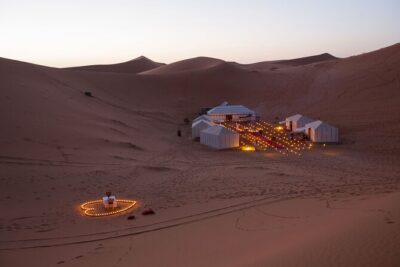
The Merzouga excursion is more than a staged sunset ride. In a 4×4 with air conditioning, you visit Merzouga Lake if water is present, then continue to Khamlia, known as the Black Town. There you hear traditional Gnawa music and have mint tea.
The route then follows old Paris-Dakar roads toward black mountains, with views toward the Erg Chebbi dunes and the Algerian border. You also visit phosphate mines and a ruined French village. These details give the desert day more texture than a simple drive to the camp.
The most meaningful stop is with nomad families in Berber tents. You have tea and see something of their way of life. The itinerary presents this as a meeting, not a full cultural workshop, so approach it with respect and keep your expectations modest. You are seeing one part of a difficult, mobile lifestyle, not receiving a complete portrait of it.
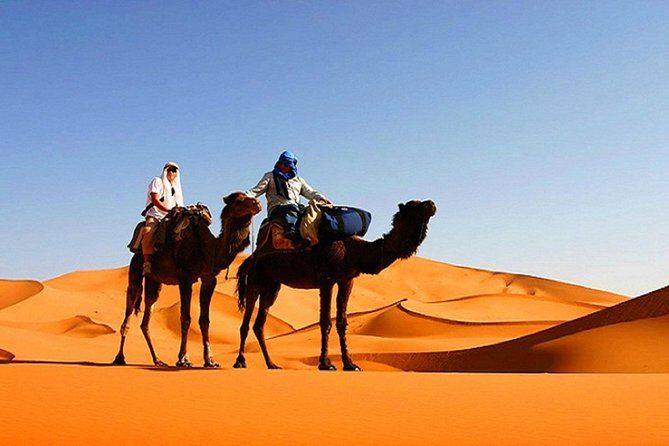
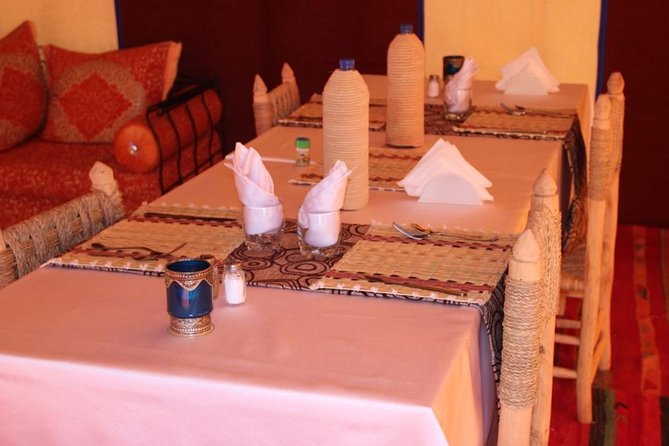
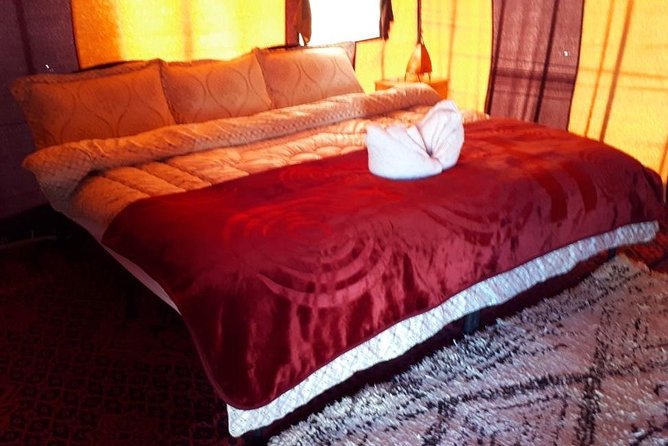
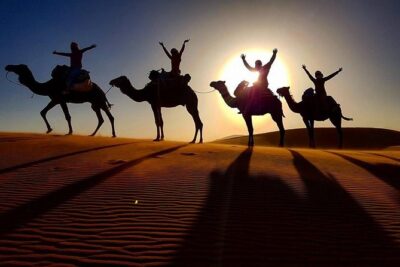
Later, you take a camel trek of about an hour and a half to the desert camp. The ride includes time to climb a dune and watch the sunset. Camp tents come with mattresses, blankets, and cushions. Dinner, music, and a bonfire are part of the desert experience described by the tour materials and guest accounts, but the included-meal wording is slightly unclear, so confirm exactly which three dinners are covered before booking.
Camel riding is memorable, but it is not soft. One account specifically noted discomfort and cold at night. Wear long trousers, bring a warm layer even in warm months, and do not assume the desert stays hot after dark.
Sunrise at Erg Chebbi and the road to Todra Gorge
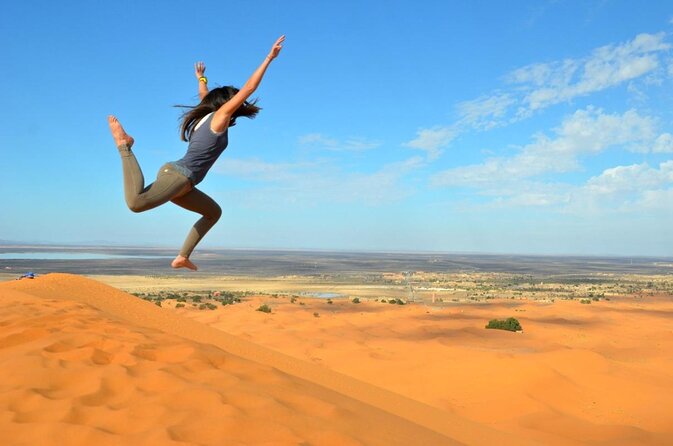
Day 7 begins before sunrise. The dunes turn orange as the light changes, and this is one of the strongest photographic moments of the tour. After breakfast, you can return by camel or take a vehicle from the camp.
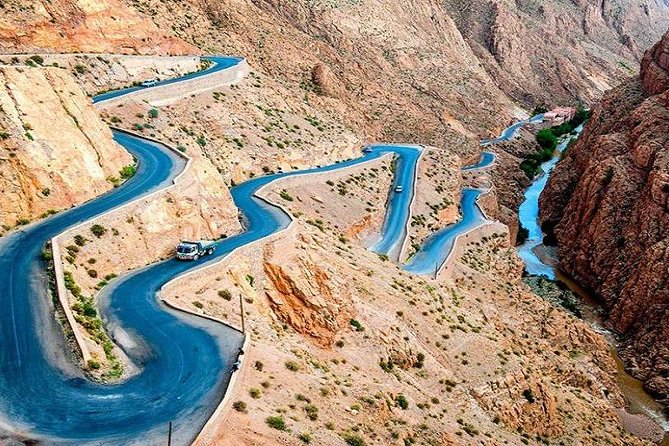
Then the route heads toward Dades through Tinghir and the Todra Valley. Todra Gorge is known for cliffs reaching about 300 meters, with a narrow section reported at roughly 10 meters across. You have time for a short walk and lunch in the valley near the High Atlas.
This is a good example of why the tour appeals to people who want more than cities. The road connects palms, bare rock, village life, and canyon walls in one day. The tradeoff is another substantial transfer after an early start. If you need slow mornings, this schedule will feel demanding.
The night is spent in the Dades Valley near the gorge. The route does not list the exact hotel, so treat the accommodation description as comfortable but not a promise of a particular standard or property.
Kasbah country, Ouarzazate, and Ait Ben Haddou
Day 8 follows the Road of a Thousand Kasbahs toward Marrakech. You pass through Kalaat Mgouna, famous for roses and its May festival, and stop in Skoura to see the 18th-century Kasbah of Ameridhil.
The route continues to Ouarzazate, Morocco’s film center. Taourirte Kasbah and Cinema Atlas Studio are listed stops. Admission fees are not included, and the schedule may require choosing which sites to enter if time or budget is tight.
Ait Ben Haddou is the day’s major sight. This fortified village is a UNESCO site, built by the Berber chieftain El Glaoui Et-Hami in the late 13th century, and still home to Berber families. Its mud-brick buildings and hilltop setting explain why it has appeared in films and television productions.
You receive a guided tour, then cross the High Atlas toward Marrakech. The day is listed at about six hours, though photo stops and visits can stretch it. The mountain road is scenic, but anyone prone to motion sickness should prepare for a winding ride.
Marrakech from Jemaa el-Fna to Majorelle Garden
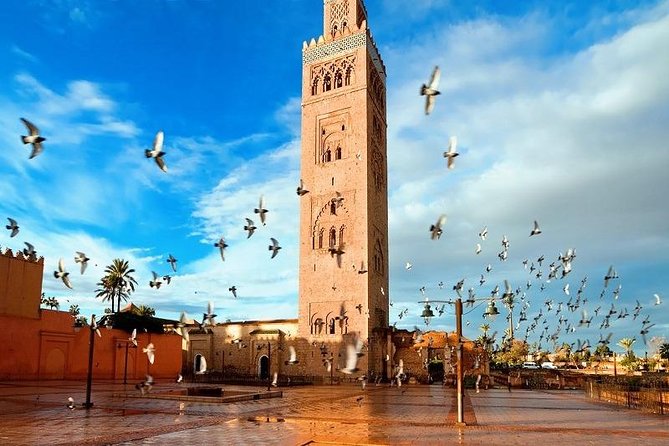
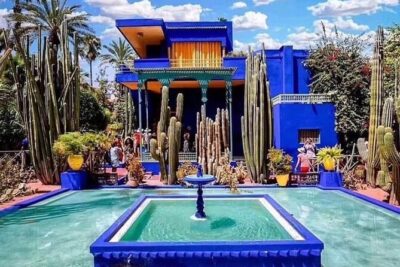
Marrakech gets a local guide on Day 9. The itinerary includes Jemaa el-Fna, the Koutoubia Mosque, the souks, palaces, museums, Gueliz, the Menara gardens, and Majorelle Garden.
That is a lot for three hours, so expect an overview rather than a complete tour of every site. Jemaa el-Fna and the souks are best understood with some free time, but the schedule does not clearly promise a long independent afternoon. Ask your guide how much time is available if you want to shop or return to a particular place.
The contrast between the old medina and Gueliz is useful. You see both historic Marrakech and its newer city side. A final night in a riad keeps the trip’s traditional lodging style going before the return drive.
The final transfer to Casablanca
Day 10 is the return from Marrakech to Casablanca Airport, listed at about three hours. This timing matters if you have an international flight. Since the tour ends back at the starting meeting point, give yourself plenty of breathing room rather than scheduling a tight departure.
The tour includes an air-conditioned vehicle and guide-driver service, which is important on a route this long. The private format means only your group participates, and group discounts may be available. Confirmation is sent within 48 hours, subject to availability.
At $1,100 per person, the value depends on how much you use the included transport and guiding. You are paying for ten days of routing, a private vehicle, city guiding, desert logistics, camel trekking, nine breakfasts, and three dinners. You still need to cover flights, lunches, entrance tickets, and some dinners, so the final cost will be higher.
The price is strongest for couples, families, or friends who want a private route without arranging every transfer themselves. It is less attractive if you prefer slow travel, public transport, or several nights in one city.
What to pack and how to judge the pace
Bring comfortable walking shoes for Fes, Volubilis, Ait Ben Haddou, and Todra Gorge. Pack sun protection, a scarf or light layer for the desert, and something warm for the camp because desert nights can be cold.
You should also plan for repeated early starts and long road days. The tour is not physically extreme, but it asks you to handle many changes of hotel and several hours in the vehicle. Most people can participate, and service animals are allowed.
The strongest parts are the Sahara camp, sunrise over Erg Chebbi, the private format, and the variety of settings. The weaker points are the compressed visits in some cities, unclear meal details, extra entrance fees, and the demanding distance between Fes and Merzouga.
Should you book this 10-day Morocco tour?
Book it if you want Morocco’s major cities and the Sahara in one organized trip, especially if a private vehicle and flexible group arrangements matter to you. The desert portion is particularly well developed, with 4×4 touring, Khamlia music, a nomad visit, camel trekking, and a camp night rather than a quick photo stop.
Think twice if you dislike long drives or want deep, unhurried time in each city. Before paying, confirm the three included dinners, camp standard, entrance costs, and the exact timing of your airport transfer. With those points clear, this is a strong choice for a first Morocco visit that puts the Sahara at the center without leaving out the imperial cities.
FAQ
Where does the tour start and finish?
It starts at Mohammed V Airport in Casablanca, Morocco, and ends back at the meeting point after the drive from Marrakech to Casablanca Airport.
Is this a private tour?
Yes. Only your group participates in the activity, and a private air-conditioned vehicle is provided.
What meals are included?
The tour includes nine breakfasts and three dinners. Lunches are not included, and the supplied details also list dinner among the items not included, so confirm which three dinners are covered before booking.
Are entrance fees included?
No. Entrance fees are not included. This applies to attractions such as Hassan II Mosque, Volubilis, and other sites that charge admission.
Is camel trekking included?
Yes. A camel is included for each person, with a camel trek of about one and a half hours to the Erg Chebbi desert camp.
How long is the drive from Fes to Merzouga?
The drive on Day 5 is listed at about nine hours, with stops in Ifrane, the cedar forest near Azrou, Midelt, Erfoud, and the Ziz Valley.
What is the cancellation policy?
You can receive a full refund if you cancel at least three full days before the experience start time. Cancellations or changes made less than three full days before the start are not accepted for a refund.
Just added around Casablanca
- Exclusive tour of Casablanca with access to the Hassan II Mosque★ 5.0 · 205 reviews
- Your Private Casablanca Transfer★ 5.0 · 52 reviews
- Casablanca Airport Transfer from hotel in Casablanca★ 5.0 · 18 reviews
- 14 Days From Casablanca- Morocco Grand Tour★ 5.0 · 24 reviews
- Casablanca City Tour: Hassan II Mosque, Medina & Hidden Gems★ 4.5 · 38 reviews
- Marrakeck City tour from Casablanca all the day around trip★ 5.0 · 35 reviews
- Religious Casablanca: Private Spiritual Tour Including Hassan II Mosque Visit★ 5.0 · 33 reviews
- Casablanca Night Tour with Andalusian Dinner Show★ 4.5 · 25 reviews
Multi-Day Tours in Casablanca, compared.
10 Day Desert Tour From Casablanca via the Imperial Cities
Read our review →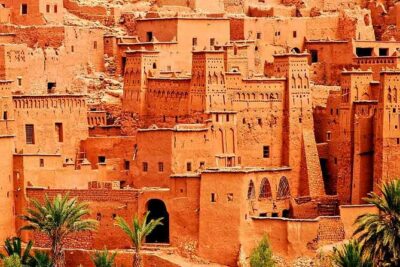
7 Days Luxury Desert Tour From Casablanca to Marrakech via fez -Camel trekking
Read our review →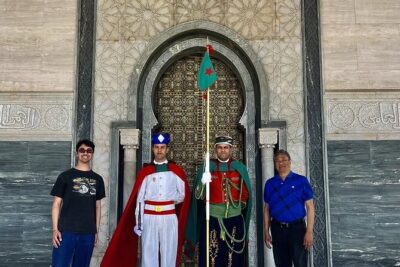
12 Days From Casablanca- Cultural Immersion Tour
Read our review →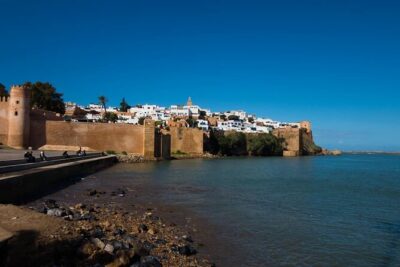
Browse the lists this tour appears in